
Many men avoid serious conversations due to emotional upbringing, fear of conflict, or feeling unprepared to respond. Understanding these underlying reasons—and learning how to create a safe space for dialogue—can transform your relationship and deepen emotional intimacy.
Key Takeaways
- Emotional conditioning plays a big role: Many men are taught from a young age to suppress emotions, making serious talks feel uncomfortable or unnatural.
- Fear of saying the wrong thing: Guys often avoid deep conversations because they worry about being misunderstood or causing more problems.
- Conflict avoidance is common: Some men see serious talks as confrontational and prefer to keep the peace by staying silent.
- They may not know how to express feelings: Emotional vocabulary and communication skills aren’t always taught, leaving men feeling lost in emotional discussions.
- Timing and environment matter: Bringing up heavy topics during stress or in public can trigger withdrawal—choose calm, private moments instead.
- Building trust takes time: Creating a safe emotional space where vulnerability is rewarded, not punished, encourages openness.
- Small steps lead to big changes: Start with low-pressure check-ins and gradually build toward deeper conversations.
📑 Table of Contents
- Why Do Guys Avoid Serious Conversations?
- The Emotional Upbringing: Why Men Struggle with Vulnerability
- Fear of Conflict: When Serious Talks Feel Like Battles
- The Timing Trap: When and Where You Talk Matters
- Communication Styles: Men vs. Women (and Why It Matters)
- Building Emotional Safety: How to Encourage Openness
- When Avoidance Becomes a Pattern: Knowing When to Seek Help
- Conclusion: Turning Avoidance into Connection
Why Do Guys Avoid Serious Conversations?
Let’s be real—nobody loves a heavy talk. But when it comes to relationships, serious conversations aren’t just nice to have; they’re essential. They’re how we build trust, resolve conflicts, and grow closer. So why do so many guys seem to dodge them like they’re avoiding a pop quiz?
You’ve probably been there: you bring up how you’re feeling, maybe about the relationship, your future, or something that’s been bothering you—and suddenly, he changes the subject, gives a one-word answer, or says, “I’m fine,” even though it’s clear he’s not. It’s frustrating. It can even feel like he doesn’t care. But here’s the truth: most of the time, it’s not about you. It’s about how he’s wired, how he was raised, and what he’s afraid of.
Understanding why guys avoid serious conversations isn’t about making excuses—it’s about gaining insight. When you know the “why,” you can respond with empathy instead of frustration. And that empathy? It’s the first step toward real connection.
This article will walk you through the most common reasons men shy away from deep talks, how societal norms shape their behavior, and—most importantly—what you can do to encourage more open, honest communication. Whether you’re in a new relationship or have been together for years, these insights can help you create a stronger emotional bond.
The Emotional Upbringing: Why Men Struggle with Vulnerability

Visual guide about Why Do Guys Avoid Serious Conversations
Image source: realestlove.com
Let’s start at the beginning—childhood. From a young age, many boys are taught to “be strong,” “tough it out,” or “don’t cry.” These messages aren’t just random sayings; they’re part of a broader cultural script that discourages emotional expression in men. Think about it: how often do we praise little girls for being “in touch with their feelings,” while boys are told to “man up” when they’re upset?
This emotional conditioning doesn’t just fade away. It follows men into adulthood, shaping how they handle stress, conflict, and intimacy. When a serious conversation comes up—say, about commitment, jealousy, or future plans—it can trigger that old programming: “Don’t show weakness.” “Don’t let them see you’re unsure.” “If you talk about feelings, you’ll lose control.”
The “Stoic Hero” Myth
We’ve all seen the movies: the hero who saves the day without saying a word, the quiet guy who never complains, the man who “handles his business” without help. These cultural archetypes reinforce the idea that real men don’t need to talk about their emotions. They just *deal* with things.
But in real life, that kind of silence can be damaging. When men internalize this stoic ideal, they see emotional openness as a sign of weakness—not strength. So when you ask, “How are you really feeling?” or “What do you think about us moving in together?”, he might freeze. Not because he doesn’t care, but because he doesn’t know how to respond without feeling exposed.
Emotional Vocabulary Gap
Here’s a little secret: many men weren’t taught how to name their emotions. While girls are often encouraged to talk about feelings—“Are you sad? Angry? Hurt?”—boys are more likely to be told to “get over it” or “stop being dramatic.” As a result, they grow up with a limited emotional vocabulary.
Imagine trying to describe a color you’ve never seen. That’s what it’s like for some men when asked to explain their feelings. They might feel anxious, overwhelmed, or sad—but they can’t put it into words. So instead of fumbling through an explanation, they shut down. It’s not avoidance; it’s overwhelm.
And let’s be honest—most of us don’t respond well when we don’t understand something. If he can’t articulate what he’s feeling, he might assume the conversation will go nowhere. So he avoids it altogether.
Practical Tip: Help Him Find the Words
You can’t change his upbringing overnight—but you can help bridge the gap. Try using simple, non-judgmental language when asking about his feelings. Instead of “Why are you so distant?” try “I’ve noticed you’ve been quiet lately. Is something on your mind?”
You can also offer options: “Are you feeling stressed? Overwhelmed? Or maybe just tired?” This gives him a starting point. Over time, as he gets more comfortable naming emotions, he’ll become better at expressing them on his own.
Fear of Conflict: When Serious Talks Feel Like Battles

Visual guide about Why Do Guys Avoid Serious Conversations
Image source: realestlove.com
Let’s face it—serious conversations can feel like walking into a minefield. One wrong word, and boom. So it’s no surprise that many guys would rather avoid them altogether.
But why? Isn’t talking supposed to *prevent* conflict?
For some men, the opposite feels true. They see serious talks as potential arguments—especially if past discussions have turned heated. Maybe he’s been criticized before for “not caring enough” or “not listening.” Maybe he’s afraid of saying the wrong thing and making things worse.
The Fear of Failure
Men are often socialized to be problem-solvers. When something goes wrong, the expectation is: *Fix it.* But emotional issues—like hurt feelings, insecurity, or relationship doubts—aren’t problems you can just “fix” with logic or action.
So when you bring up a serious topic, he might feel pressure to have the right answer, the perfect response, or a solution. And if he doesn’t? He might feel like he’s failed you. That fear of failure can be paralyzing.
Imagine this: You say, “I feel like we’re not as connected as we used to be.” He hears: “You’re not doing enough. Fix it.” But he doesn’t know *how* to fix it. So instead of admitting that, he shuts down. It’s not that he doesn’t care—it’s that he feels helpless.
Avoidance as Self-Protection
Let’s be real: conflict is uncomfortable. No one likes feeling criticized, misunderstood, or attacked. For men who’ve been taught to equate emotional openness with vulnerability, a serious talk can feel like stepping into the spotlight—exposed and unprepared.
So they avoid it. Not because they don’t love you, but because they’re protecting themselves from pain. It’s a defense mechanism, plain and simple.
And here’s the kicker: the more you push, the more he might pull away. If he feels cornered or judged, his instinct might be to retreat—even if that means seeming distant or uninterested.
Practical Tip: Create a Safe Space
The key is to make serious conversations feel safe, not scary. Start by setting the tone. Instead of launching into a heavy topic out of the blue, say something like, “I’d love to talk about us sometime—just to check in and see how we’re both feeling. No pressure, just us.”
Use “I” statements instead of “you” accusations. For example:
– “I’ve been feeling a little disconnected lately” instead of “You never talk to me.”
– “I’d love to hear your thoughts on the future” instead of “When are you going to commit?”
This reduces defensiveness and opens the door for honest dialogue.
The Timing Trap: When and Where You Talk Matters
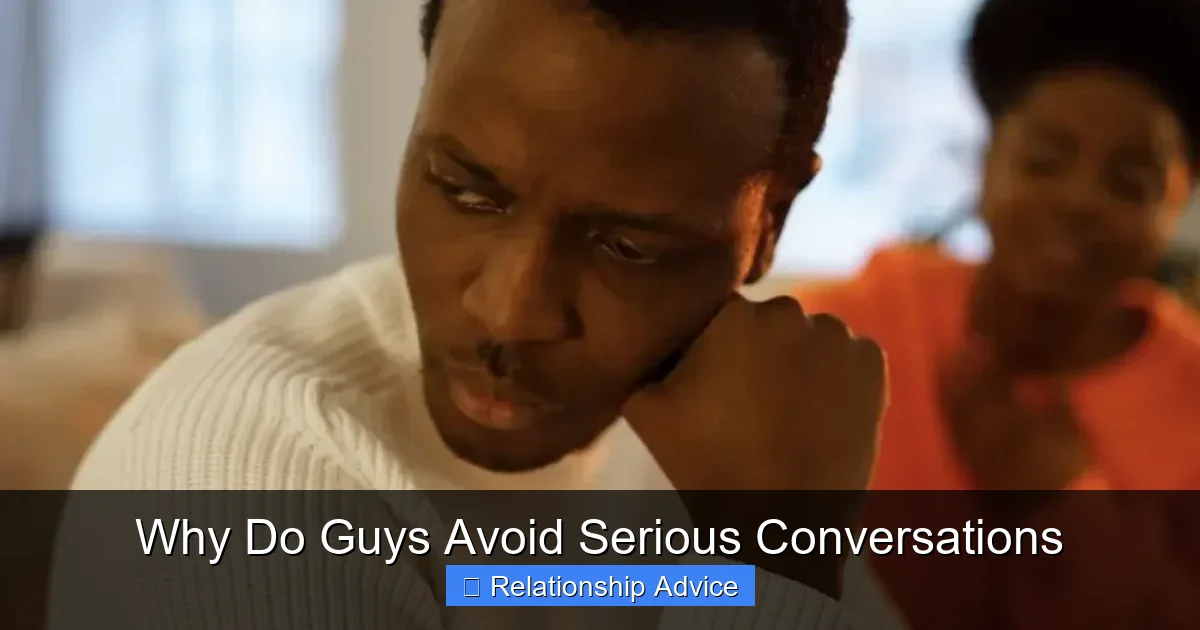
Visual guide about Why Do Guys Avoid Serious Conversations
Image source: realestlove.com
You could have the most thoughtful, well-intentioned conversation in the world—but if the timing is off, it won’t land.
Let’s say you bring up your relationship concerns right after he gets home from a stressful day at work. He’s tired, hungry, and mentally checked out. You’re asking him to shift into deep emotional mode—and he just can’t do it.
Or maybe you try to talk during a movie, in a crowded restaurant, or while he’s scrolling on his phone. These environments aren’t conducive to real connection. They send the message: “This isn’t important enough to give my full attention.”
The Myth of “Right Now”
We’ve all been guilty of this: feeling upset and wanting to talk *immediately*. But urgency doesn’t equal readiness. Just because you’re ready to talk doesn’t mean he is.
Men often need time to process. They might not respond right away because they’re thinking—not ignoring you. Rushing them can backfire, making them feel pressured and less likely to open up.
Choosing the Right Moment
So when *is* the right time? Look for moments when you’re both relaxed, undistracted, and emotionally available. Maybe it’s during a quiet walk, over a cup of coffee on a Sunday morning, or after a fun date when the mood is light.
Avoid high-stress times: right before a big meeting, during a family event, or when one of you is sick or exhausted.
And always ask: “Is now a good time to talk?” This simple question shows respect for his mental space and increases the chances he’ll actually listen.
Practical Tip: Schedule Check-Ins
If serious talks keep getting postponed, try scheduling them. Say, “How about we set aside 20 minutes this weekend to just talk about us? No distractions, just us.” This takes the pressure off and gives him time to mentally prepare.
Think of it like a relationship maintenance appointment—something you both prioritize, not something you dread.
Communication Styles: Men vs. Women (and Why It Matters)
Here’s a truth bomb: men and women often communicate differently. And when those styles clash, misunderstandings happen.
Women tend to process emotions by talking them out. We share, we reflect, we seek connection through dialogue. Men, on the other hand, often process internally. They think, they analyze, they solve—silently.
So when you say, “Let’s talk about how we’re feeling,” he might hear: “Let’s dissect every little thing until I feel better.” And that can feel overwhelming.
The “Fix-It” Mentality
Many men are wired to fix problems. So when you bring up an emotional issue, his first instinct might be to offer solutions: “Just do this,” “Try that,” “You should…”
But sometimes, you don’t want a fix. You just want to be heard.
This mismatch can lead to frustration on both sides. You feel dismissed; he feels like his help isn’t appreciated.
The Silence Isn’t Always Disinterest
When a man goes quiet during a serious talk, it doesn’t always mean he’s checked out. He might be processing, thinking, or trying to find the right words. Silence doesn’t equal rejection.
But if you interpret it that way, you might push harder—which can make him shut down even more.
Practical Tip: Clarify Your Needs
Be clear about what you’re looking for. If you just want to vent, say so: “I don’t need advice right now—I just need you to listen.” If you want his opinion, ask: “What do you think we should do about this?”
This helps him understand your expectations and reduces confusion.
Building Emotional Safety: How to Encourage Openness
At the heart of every serious conversation is trust. If a man doesn’t feel safe being vulnerable, he won’t open up—no matter how much he loves you.
So how do you build that safety?
It starts with consistency. Show him that when he shares something personal, you respond with empathy, not judgment. That when he admits he’s unsure, you don’t criticize him for it.
Reward Vulnerability
When he does open up—even a little—acknowledge it. Say, “Thank you for sharing that with me. I really appreciate your honesty.” This reinforces that vulnerability is safe and valued.
Avoid sarcasm, eye-rolling, or minimizing his feelings. Even small reactions can make him hesitant to speak up again.
Be Patient
Change doesn’t happen overnight. If he’s used to avoiding serious talks, it will take time to build new habits. Celebrate small wins: a longer conversation, a more thoughtful response, a moment of genuine connection.
Don’t expect him to become a relationship guru overnight. Progress, not perfection, is the goal.
Practical Tip: Lead by Example
Model the kind of communication you want to see. Share your own feelings openly and calmly. When you’re vulnerable, you give him permission to be vulnerable too.
For example: “I’ve been feeling a little insecure lately about our future. I know it’s not fair to put that on you, but I wanted to be honest because I value our relationship.”
This sets a tone of mutual respect and emotional honesty.
When Avoidance Becomes a Pattern: Knowing When to Seek Help
Let’s be clear: avoiding *occasional* serious talks is normal. But if it becomes a consistent pattern—where he shuts down, changes the subject, or refuses to engage—it might signal a deeper issue.
Maybe he’s dealing with anxiety, depression, or past trauma. Maybe he’s afraid of commitment. Or maybe he just doesn’t know how to communicate in a healthy way.
In these cases, gentle encouragement might not be enough.
Signs It’s Time to Talk to a Professional
– He consistently avoids all emotional topics
– Conversations turn into arguments or silence
– You feel emotionally disconnected most of the time
– He dismisses your concerns or minimizes your feelings
– You’ve tried multiple approaches with little change
Couples counseling or individual therapy can provide tools and support for both of you. It’s not a sign of failure—it’s a sign of commitment to your relationship.
Practical Tip: Suggest Therapy as a Team Effort
Instead of saying, “You need to go to therapy,” try: “I’ve been thinking it might help us to talk to someone together—just to strengthen our communication. What do you think?”
Frame it as a positive step forward, not a criticism.
Conclusion: Turning Avoidance into Connection
So why do guys avoid serious conversations? Often, it’s not because they don’t care—it’s because they’re afraid, unprepared, or conditioned to stay silent. But that doesn’t mean change isn’t possible.
By understanding the root causes—emotional upbringing, fear of conflict, timing, communication styles, and lack of safety—you can approach these talks with more empathy and patience. And with small, consistent efforts, you can create a relationship where deep conversations aren’t feared, but welcomed.
Remember: it’s not about forcing him to talk. It’s about creating a space where he *wants* to talk. Where he feels safe, heard, and valued. That kind of connection doesn’t happen overnight—but it’s worth every step.
Start small. Be kind. Listen more than you speak. And above all, believe that even the quietest man has something important to say—if you give him the chance.
Frequently Asked Questions
Why do men shut down during serious conversations?
Men often shut down because they feel overwhelmed, unprepared, or afraid of saying the wrong thing. Emotional conditioning and fear of conflict can make deep talks feel threatening, leading to withdrawal as a defense mechanism.
Is it normal for guys to avoid talking about feelings?
Yes, it’s common due to societal norms that discourage emotional expression in men. However, with patience and the right approach, many men can learn to open up over time.
How can I get my partner to talk more about our relationship?
Create a safe, non-judgmental space, use “I” statements, choose calm moments, and acknowledge his efforts. Avoid pressuring him—instead, invite conversation with curiosity and empathy.
What if he refuses to have serious talks at all?
If avoidance is persistent and affecting your relationship, consider suggesting couples counseling. A therapist can help both of you develop healthier communication patterns in a supportive environment.
Can men learn to be more emotionally open?
Absolutely. With time, practice, and a supportive partner, men can expand their emotional vocabulary and become more comfortable with vulnerability and deep conversations.
Should I stop bringing up serious topics if he avoids them?
No—but adjust your approach. Focus on timing, tone, and framing. Instead of demanding answers, invite dialogue gently and consistently, showing that openness is safe and valued.