

Arguments are natural, but what you do afterward determines your relationship’s health. This guide reveals practical, research-backed steps to repair emotional damage, rebuild trust, and grow closer—instead of drifting apart.
We’ve all been there—voices raised, words flung like darts, and that heavy silence that follows. Arguments happen. They’re not the problem. What *really* matters is what you do after. Too often, couples either sweep things under the rug or let resentment simmer until the next blow-up. But it doesn’t have to be that way. There’s a better path—one that doesn’t just patch things up temporarily but actually strengthens your bond over time.
The truth is, conflict is inevitable in any close relationship. You’re two different people with unique backgrounds, communication styles, and emotional triggers. But how you handle those moments of tension defines the health of your partnership. The goal isn’t to avoid arguments—it’s to recover from them in a way that leaves both of you feeling heard, respected, and closer than before. This guide will walk you through exactly what to do after an argument that actually works—not just for the moment, but for the long haul.
Key Takeaways
- Take a cooling-off period: Step away briefly to calm your emotions before re-engaging—this prevents escalation and allows rational thinking.
- Initiate a sincere apology: Acknowledge your role without defensiveness; focus on impact, not just intent.
- Listen to understand, not to win: Practice active listening by paraphrasing your partner’s feelings and validating their experience.
- Repair through small gestures: Rebuild connection with kind actions—like making coffee or sending a thoughtful text—that show care.
- Reflect and learn together: Discuss what triggered the argument and how you can handle similar situations better in the future.
- Seek professional support if needed: Couples therapy isn’t a last resort—it’s a proactive tool for deeper understanding and lasting change.
- Prioritize emotional safety: Create a relationship culture where disagreements feel safe, not threatening, so arguments become growth opportunities.
📑 Table of Contents
1. Take a Strategic Cooling-Off Period
Let’s start with the first and most crucial step: giving yourselves space. When emotions are running high, your brain’s rational thinking center (the prefrontal cortex) essentially goes offline. You’re operating from your amygdala—the part that handles fear and survival. In this state, you’re not capable of productive conversation. Trying to “work it out” right after a heated exchange often leads to more hurt, not healing.
Why a break helps: A cooling-off period allows your nervous system to reset. It gives you time to breathe, reflect, and return to the conversation with clarity instead of reactivity. Think of it like letting a storm pass—you wouldn’t try to fix a roof while the wind is still howling.
How long should the break last?
There’s no one-size-fits-all answer, but most experts recommend 20 to 30 minutes—long enough to calm down, but not so long that the issue feels abandoned. If the argument happened at night, it’s okay to say, “I need to sleep on this. Can we talk tomorrow morning?” Just make sure you follow through.
What to do during the break
- Go for a short walk or do some light stretching.
- Practice deep breathing: inhale for 4 counts, hold for 4, exhale for 6.
- Journal your thoughts—what upset you? What might your partner be feeling?
- Avoid ruminating or rehearsing comebacks. Focus on calming your body first.
Example in action
Sarah and Mark had a blow-up over household chores. Sarah felt overwhelmed; Mark felt criticized. Instead of continuing, Sarah said, “I need 30 minutes to cool down. Can we talk after dinner?” Mark agreed. During her break, Sarah took a walk and realized she was stressed about work, not just the dishes. When they reconnected, she led with, “I’m sorry I snapped. I’ve been stressed, and I took it out on you.” That small shift changed everything.
2. Initiate a Genuine Apology
Once you’ve calmed down, the next step is to apologize—but not just any apology. A real apology isn’t about saying “I’m sorry” to end the fight. It’s about taking responsibility, showing empathy, and rebuilding trust.
The problem with weak apologies: Phrases like “I’m sorry you felt that way” or “I’m sorry, but you started it” shift blame and invalidate your partner’s feelings. They sound defensive, not sincere. A true apology centers on your actions and their impact.
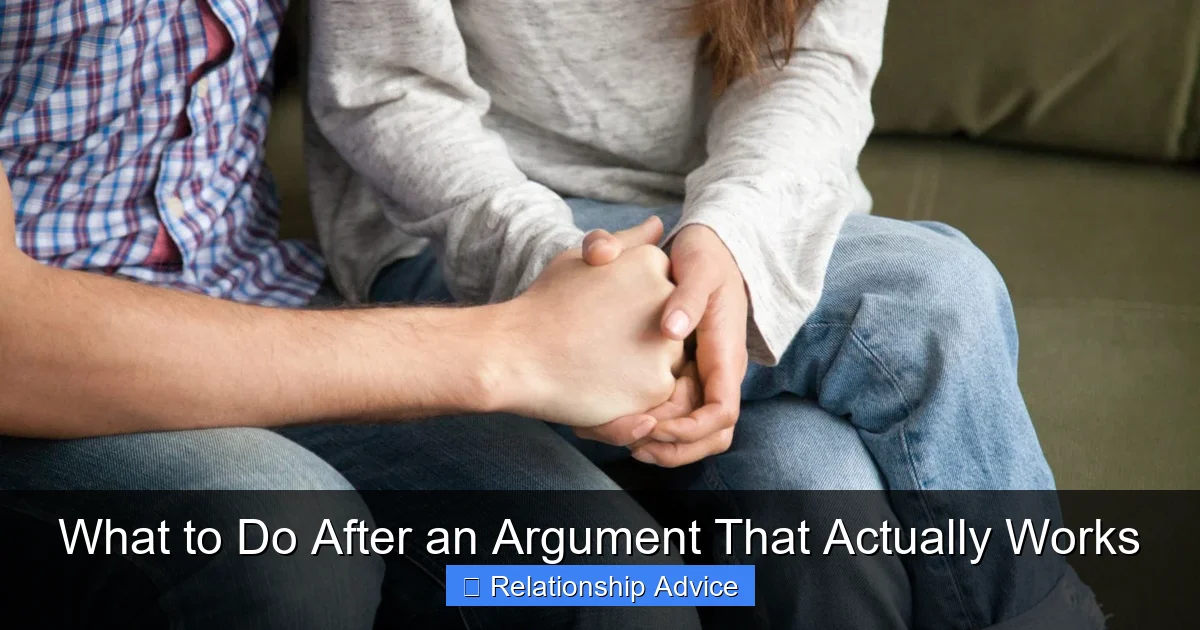
Visual guide about What to Do After an Argument That Actually Works
Image source: allprodad.com
What makes an apology effective?
A powerful apology includes three key elements:
- Acknowledgment: “I realize I raised my voice during our argument.”
- Responsibility: “That wasn’t fair to you, and I take full responsibility.”
- Repair: “I want to do better. Can we talk about how I can handle frustration differently?”
Apologize for your role, not just your intent
It’s easy to say, “I didn’t mean to hurt you.” But your partner doesn’t care about your intent—they care about how they felt. Focus on the impact: “I see now that when I interrupted you, it made you feel dismissed. That wasn’t okay.”
Example in action
After a fight about plans, Jake told his partner, “I’m sorry I canceled our dinner last minute. I know it made you feel unimportant, and that’s not how I want you to feel. I should’ve communicated better.” His partner responded, “Thank you for saying that. I really needed to hear it.”
3. Practice Active Listening to Rebuild Connection
Apologizing is important, but it’s only half the equation. The other half is listening—really listening. Too often, we listen to respond, not to understand. We’re already crafting our rebuttal while our partner is still speaking. That’s not connection; that’s competition.
Active listening is the antidote: It’s about giving your full attention, validating your partner’s feelings, and showing that you truly care about their experience—even if you disagree.
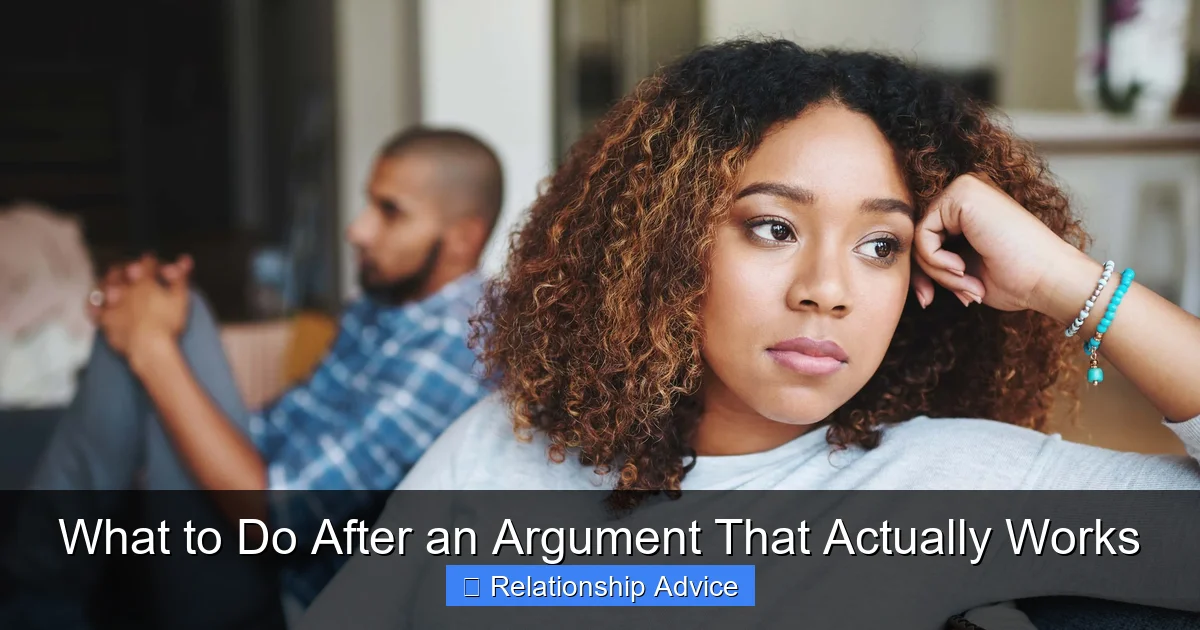
Visual guide about What to Do After an Argument That Actually Works
Image source: valleyoaks.org
How to listen actively
- Put away distractions: Phone down, eye contact, no multitasking.
- Paraphrase what you heard: “So what I’m hearing is that you felt ignored when I didn’t ask about your day.”
- Validate their feelings: “That makes sense. I’d feel upset too if that happened to me.”
- Ask open-ended questions: “Can you tell me more about how that made you feel?”
- Avoid interrupting or defending: Let them finish before you respond.
Why validation matters
Validation doesn’t mean you agree with everything your partner says. It means you acknowledge their right to feel the way they do. Saying “I get why you’re upset” is far more healing than “You’re overreacting.”
Example in action
After a disagreement about finances, Lena said to her partner, “I hear that you’re worried about our savings, and you feel like I’m not taking it seriously. That must be really stressful for you.” Her partner, who had been defensive, softened and said, “Yeah… I just want us to be secure.” That simple acknowledgment opened the door to a real conversation.
4. Repair with Small, Meaningful Gestures
Words are important, but actions speak louder—especially after a conflict. Emotional wounds need time to heal, and small, consistent gestures can speed up that process. These aren’t grand romantic gestures (though those have their place). They’re everyday acts of kindness that say, “I still care about you.”
Why small gestures work: After an argument, trust and safety feel fragile. A warm touch, a kind word, or a thoughtful action rebuilds that sense of security. It shows your partner that you’re not holding a grudge and that the relationship still matters to you.
Visual guide about What to Do After an Argument That Actually Works
Image source: i.ytimg.com
Ideas for repair gestures
- Make their favorite breakfast.
- Send a sweet text during the day: “Thinking of you. Hope your day is going well.”
- Leave a note on their pillow: “I’m glad we’re working through this together.”
- Give them a hug—even if they don’t initiate it.
- Do a chore they usually handle without being asked.
Timing matters
Don’t wait for your partner to “earn” kindness. Be the first to extend it. It sets a tone of generosity and breaks the cycle of resentment.
Example in action
After a fight about parenting styles, Tom noticed his wife seemed distant. The next morning, he made her coffee just how she likes it and left it on her nightstand with a note: “I love you. Let’s talk tonight.” She later said that small act made her feel seen and loved, even after the argument.
5. Reflect and Learn Together
Once the immediate emotions have settled, it’s time to look forward. The goal isn’t to rehash every detail of the argument, but to understand what triggered it and how you can prevent or handle it better next time.
This is where growth happens: Couples who reflect together after conflicts build stronger communication skills and deeper empathy. They turn arguments into opportunities for growth, not just repair.
How to reflect effectively
Set aside 15–20 minutes for a calm, focused conversation. Use these questions as a guide:
- “What was the real issue behind our argument?”
- “What triggered my reaction? Was it about this situation, or something else?”
- “How can we communicate better next time?”
- “What do we each need to feel heard and respected?”
Avoid blame and focus on patterns
Instead of saying, “You always do this,” try, “I noticed that when we talk about money, we both get defensive. How can we approach it differently?”
Create a “conflict agreement”
Some couples find it helpful to create a simple agreement about how they’ll handle disagreements. For example:
- We’ll take a 30-minute break if voices are raised.
- We’ll use “I” statements instead of “you” accusations.
- We’ll check in weekly to talk about how we’re feeling in the relationship.
Example in action
After several arguments about time management, Priya and Carlos realized they were both stressed about work. They decided to set a weekly “check-in” to share their schedules and emotional loads. Now, when tensions rise, they can say, “Let’s talk about this during our check-in,” which reduces reactivity.
6. Know When to Seek Professional Help
Let’s be honest: some arguments don’t resolve easily. If you’re stuck in a cycle of blame, withdrawal, or repeated fights about the same issues, it might be time to bring in a neutral third party.
Couples therapy isn’t a failure—it’s a tool: Just like you’d see a doctor for a persistent cough, seeing a therapist for relationship struggles is a sign of strength, not weakness. A trained professional can help you uncover deeper patterns, improve communication, and rebuild trust.
Signs you might need support
- Arguments leave you feeling more disconnected than before.
- You avoid talking about certain topics out of fear.
- One or both of you shut down or stonewall during conflicts.
- You’re having the same argument over and over.
- You feel emotionally unsafe or disrespected.
What therapy can offer
A good therapist will:
- Help you identify unhealthy patterns (like criticism, defensiveness, or contempt).
- Teach you communication skills like nonviolent communication (NVC).
- Guide you in rebuilding emotional intimacy.
- Provide a safe space to express vulnerable feelings.
Example in action
After years of unresolved fights about intimacy, Maya and Jordan started therapy. Their therapist helped them see that their arguments were really about fear of rejection. With guidance, they learned to express their needs gently and listen without judgment. Today, they say therapy saved their marriage.
7. Build a Culture of Emotional Safety
Finally, the most powerful thing you can do after an argument is to work on preventing the next one—not by avoiding conflict, but by creating a relationship where conflict feels safe.
Emotional safety is the foundation: When both partners feel safe to express their feelings without fear of punishment or withdrawal, arguments become less threatening and more productive.
How to foster emotional safety
- Normalize vulnerability: Share your fears and insecurities openly.
- Respond with empathy, not judgment: When your partner shares something hard, say “Thank you for telling me” instead of “Why didn’t you say something sooner?”
- Apologize quickly and sincerely: Don’t let resentment build.
- Celebrate repair: Acknowledge when you’ve worked through a tough moment together.
Make repair a habit
The more you practice repairing after arguments, the easier it becomes. Over time, it stops feeling like a chore and starts feeling like a natural part of your relationship rhythm.
Example in action
Every Friday night, Alex and Sam have a “relationship check-in.” They talk about what’s going well, what’s been hard, and how they can support each other. This routine has made it easier for them to address issues before they escalate.
Conclusion
Arguments are not the enemy of a strong relationship—poor recovery is. What you do after a disagreement shapes the future of your connection. By taking a cooling-off period, offering a sincere apology, listening actively, repairing with kindness, reflecting together, seeking help when needed, and building emotional safety, you transform conflict from a threat into a tool for growth.
Remember, no couple is perfect. But couples who learn to recover well are the ones who stay together—and thrive. So the next time voices rise and emotions flare, don’t panic. You’ve got a plan. You know what to do after an argument that actually works. And that makes all the difference.
Frequently Asked Questions
How long should I wait to talk after an argument?
Wait until you’re both calm—usually 20 to 30 minutes. If it’s late, it’s okay to say, “Let’s talk tomorrow.” Just make sure you follow through and don’t let the issue linger unresolved.
What if my partner won’t apologize?
Focus on your own actions. You can’t control their response, but you can model accountability. Say, “I’m sorry for my part in this,” and invite dialogue: “I’d love to hear your perspective when you’re ready.”
Is it normal to argue often in a relationship?
Yes—frequent disagreements are normal, especially in close relationships. What matters is how you handle them. Healthy couples argue but also repair well and grow from the experience.
Can small gestures really fix a big argument?
Yes. Small acts of kindness rebuild trust and show your partner you still care. They don’t erase the issue, but they create emotional safety so you can address it together.
Should we avoid arguing altogether?
No. Avoiding conflict leads to resentment. It’s better to argue respectfully and recover well. Conflict, when handled right, deepens understanding and intimacy.
When is it time to see a couples therapist?
If arguments leave you feeling worse, if you’re stuck in a cycle, or if you feel emotionally unsafe, it’s time to seek help. Therapy is a proactive step, not a last resort.