
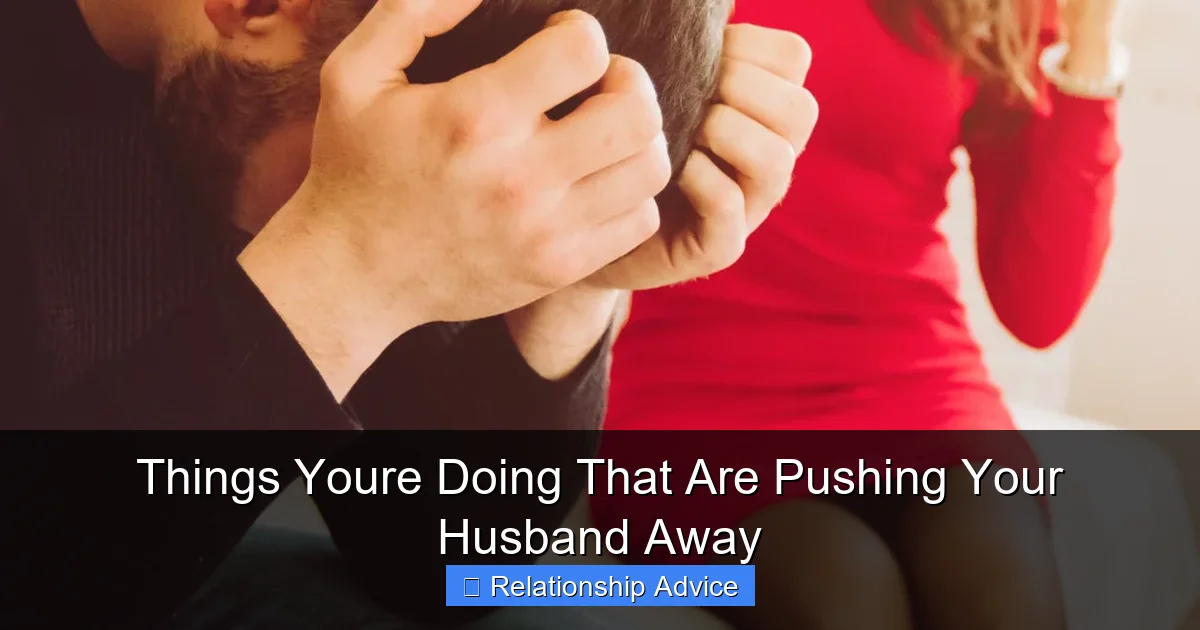
Many women unknowingly push their husbands away through everyday behaviors like criticism, lack of appreciation, or emotional distance. This article reveals common relationship pitfalls and offers practical, compassionate solutions to rebuild intimacy and strengthen your marriage.
Key Takeaways
- Constant criticism damages emotional safety: Harsh words, even if meant constructively, can erode your husband’s confidence and willingness to engage.
- Neglecting appreciation kills motivation: Failing to acknowledge his efforts makes him feel invisible and unvalued in the relationship.
- Emotional unavailability creates distance: Withholding feelings or shutting down during conversations prevents deep connection.
- Controlling behavior undermines trust: Micromanaging decisions or questioning motives can make him feel disrespected and micromanaged.
- Ignoring intimacy weakens the bond: Skipping physical affection or romantic gestures reduces emotional and physical closeness.
- Comparing him to others breeds resentment: Mentioning exes, friends, or family members as “better” triggers insecurity and defensiveness.
- Prioritizing others over your marriage strains connection: Consistently placing work, kids, or friends above quality time together signals low priority.
📑 Table of Contents
- Introduction: The Silent Drift in Marriage
- 1. Constant Criticism: The Erosion of Emotional Safety
- 2. Lack of Appreciation: The Invisible Wall
- 3. Emotional Unavailability: The Silent Barrier
- 4. Controlling Behavior: The Erosion of Trust
- 5. Neglecting Intimacy: The Fading Spark
- 6. Comparing Him to Others: The Invisible Wound
- 7. Prioritizing Everything Else Over Your Marriage
- Conclusion: Small Changes, Big Impact
Introduction: The Silent Drift in Marriage
Marriage is one of life’s most rewarding journeys—but it’s also one of the most delicate. Even couples who start with deep love and shared dreams can slowly drift apart, not because they stopped caring, but because small, repeated behaviors chip away at their connection. You might be thinking, “I love my husband more than anything—why would he pull away?” The truth is, many of the things pushing your husband away aren’t malicious. They’re often unconscious habits, stress responses, or outdated communication patterns that have become normalized over time.
Imagine this: You’re both exhausted after a long day. He comes home, drops his bag, and heads to the couch. Instead of greeting him warmly, you launch into a list of things that need fixing—the leaky faucet, the overdue bills, how he forgot to pick up the kids. He sighs, retreats further, and by bedtime, you’re both lying back-to-back, emotionally miles apart. Sound familiar? This isn’t about blame. It’s about awareness. Most women want their marriages to thrive, but without recognizing these subtle yet powerful behaviors, even the strongest relationships can falter.
1. Constant Criticism: The Erosion of Emotional Safety
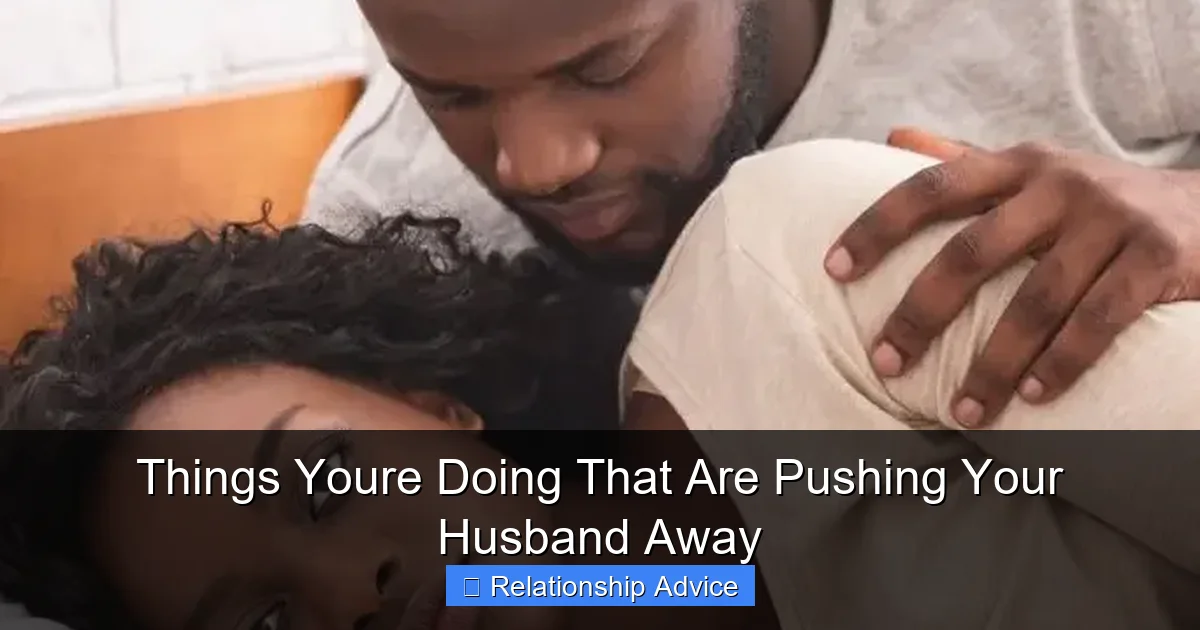
Criticism is one of the most common—and damaging—behaviors in marriage. It doesn’t always look like yelling or name-calling. Sometimes, it’s a sigh, a sarcastic comment, or a backhanded compliment like, “Wow, you actually cleaned the kitchen—guess miracles do happen.” These remarks may seem minor, but they accumulate. Over time, they make your husband feel like he can’t do anything right, which leads to defensiveness, withdrawal, or even resentment.
Visual guide about Things Youre Doing That Are Pushing Your Husband Away
Image source: realestlove.com
Why Criticism Hurts More Than You Think
When someone is constantly criticized, their brain goes into self-protection mode. They start avoiding conversations, shutting down emotionally, or even pulling away physically. This isn’t about being “too sensitive”—it’s about emotional safety. Your husband needs to feel that he can be himself around you, make mistakes, and still be loved. Constant criticism shatters that sense of security.
Real-Life Example: The “Fix-It” Wife
Sarah noticed her husband, Mark, was becoming quieter at home. When she asked what was wrong, he said, “I feel like I’m always being corrected.” She was stunned. She thought she was helping—pointing out when he left dishes in the sink, reminding him to call his mom, suggesting better ways to manage the budget. But Mark felt like he was walking on eggshells. “Every time I do something,” he said, “it’s followed by, ‘You should’ve done it this way.’” Sarah didn’t realize her well-intentioned feedback felt like constant judgment.
How to Shift from Criticism to Constructive Feedback
The key is to replace criticism with curiosity and kindness. Instead of saying, “You never listen,” try, “I felt unheard when you didn’t respond to my question earlier. Can we talk about that?” Focus on the behavior, not the person. Use “I” statements to express your feelings without blaming. And most importantly, balance feedback with appreciation. For every piece of constructive input, offer two genuine compliments. This creates a positive emotional environment where growth feels safe, not threatening.
2. Lack of Appreciation: The Invisible Wall
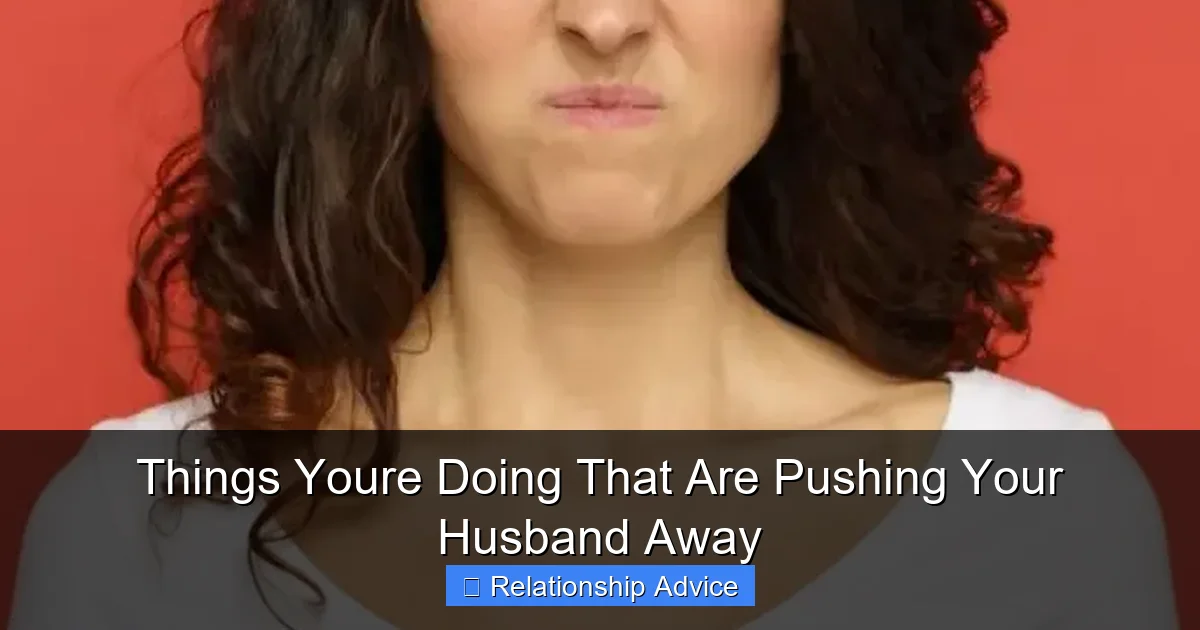
Appreciation is the glue that holds relationships together. When your husband feels seen, valued, and thanked for his efforts, he’s more likely to stay engaged, contribute, and invest in the marriage. But when appreciation is missing, even the smallest tasks—like taking out the trash or fixing a broken toy—start to feel like thankless chores. Over time, this leads to emotional disengagement.
Visual guide about Things Youre Doing That Are Pushing Your Husband Away
Image source: realestlove.com
The Psychology of Feeling Unseen
Humans are wired to seek validation. When your partner consistently goes unnoticed, it triggers feelings of insignificance. Your husband may start to wonder, “Does she even notice what I do?” or “Why bother trying if nothing I do matters?” This isn’t about ego—it’s about emotional nourishment. Just like plants need water, relationships need gratitude to thrive.
Common Scenarios Where Appreciation Gets Lost
Think about the last time your husband cooked dinner, helped with the kids, or handled a stressful work call while you were busy. Did you say thank you? Or did you assume it was “just his job”? Many women fall into the trap of taking their partner’s efforts for granted. They assume love means never having to say thanks. But the opposite is true: love means noticing, acknowledging, and celebrating the small things.
Simple Ways to Show Genuine Appreciation
Start a daily gratitude habit. Each evening, share one thing you appreciated about your husband that day. It could be as simple as, “Thanks for making coffee this morning—it really helped me start the day.” Be specific. Instead of “You’re a great dad,” say, “I loved how you played soccer with the kids today—they were laughing so hard.” And don’t forget non-verbal appreciation: a warm hug, a smile, or a note left on his pillow can speak volumes.
3. Emotional Unavailability: The Silent Barrier
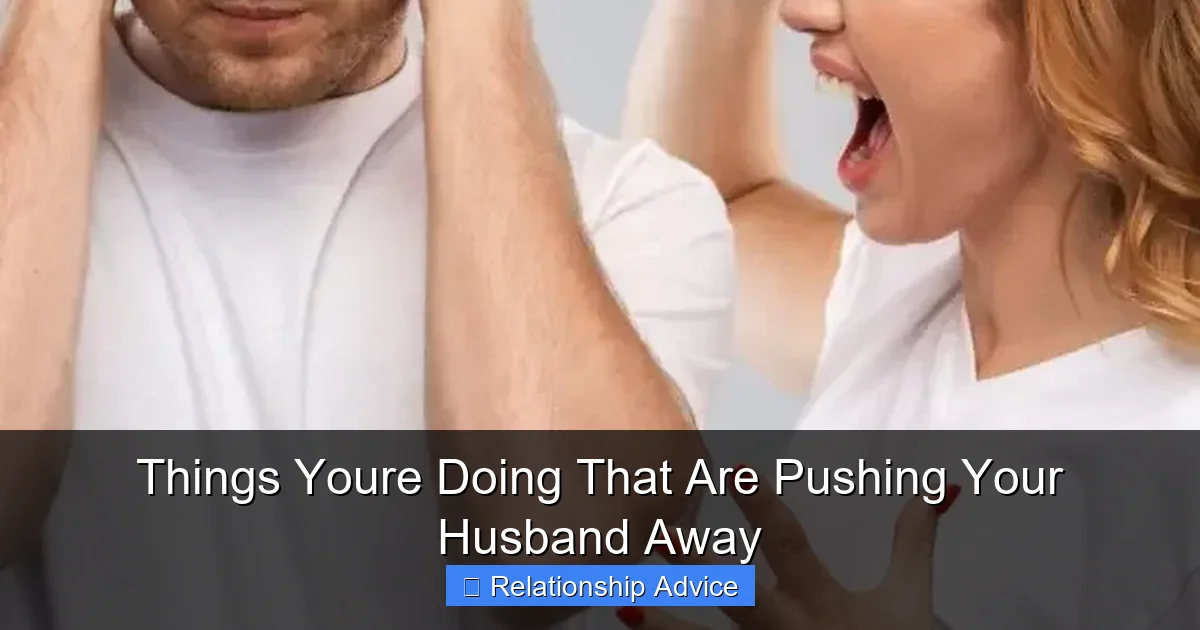
Emotional intimacy is the heartbeat of a strong marriage. But when one partner becomes emotionally unavailable—shutting down, avoiding deep conversations, or dismissing feelings—the connection weakens. Your husband may feel like he’s talking to a wall, which leads to frustration, loneliness, and eventual withdrawal.
Visual guide about Things Youre Doing That Are Pushing Your Husband Away
Image source: realestlove.com
Signs You Might Be Emotionally Distant
Do you change the subject when he tries to talk about his feelings? Do you respond to his concerns with solutions instead of empathy? Do you avoid vulnerability by staying busy or distracted? These are red flags. Emotional unavailability isn’t about not caring—it’s about fear. Fear of conflict, fear of vulnerability, or fear of not having the “right” answer can cause you to shut down.
The Impact on Your Husband
When your husband shares something personal—like stress at work or anxiety about the future—and you respond with, “Just relax” or “You’ll figure it out,” he feels dismissed. He may stop opening up altogether, believing you’re not a safe space for his emotions. This creates a cycle: the less he shares, the less connected you feel, and the more distant you both become.
How to Reopen the Emotional Channel
Start by practicing active listening. When your husband speaks, put your phone down, make eye contact, and listen to understand—not to fix. Reflect back what you hear: “It sounds like you’re really overwhelmed with the new project.” Validate his feelings: “That makes sense—anyone would feel stressed in that situation.” And when you’re ready, share your own emotions too. Vulnerability invites vulnerability. The more you open up, the safer he’ll feel doing the same.
4. Controlling Behavior: The Erosion of Trust
Control in a marriage often masquerades as care. “I’m just trying to help,” or “I only want what’s best for us,” are common justifications. But when your husband feels micromanaged—whether it’s about finances, parenting, or how he spends his free time—it breeds resentment. He may start to feel like he’s not trusted, not respected, or not capable of making his own decisions.
Subtle Forms of Control
Control doesn’t always look like dictatorship. It can be subtle: questioning every purchase, suggesting “better” ways to do things, or expecting him to check in constantly. Even well-meaning suggestions can feel controlling if they’re frequent and unsolicited. For example, saying, “Maybe you should’ve called the plumber sooner,” after a pipe bursts implies he failed.
The Message It Sends
When you control, you send the message: “I don’t trust you to handle this.” This undermines his confidence and autonomy. Over time, he may stop making decisions altogether, waiting for you to take the lead. Or worse, he may rebel—making impulsive choices just to assert independence. Either way, the partnership suffers.
How to Foster Mutual Respect and Autonomy
Start by asking instead of telling. Instead of, “You should do it this way,” try, “What do you think is the best approach here?” Give him space to make decisions, even if they’re not perfect. Celebrate his efforts, not just the outcomes. And practice trust-building: let him handle tasks without hovering. If a mistake happens, respond with support, not blame. “That didn’t go as planned—how can we fix it together?”
5. Neglecting Intimacy: The Fading Spark
Intimacy isn’t just about sex—it’s about closeness, affection, and emotional connection. When physical and romantic gestures fade, the relationship can feel more like a business partnership than a love story. Your husband may still love you, but without intimacy, he may start to feel more like a roommate than a partner.
The Domino Effect of Lost Intimacy
Intimacy builds over time through small, consistent actions: a morning kiss, a hand squeeze during a movie, a flirtatious text during the day. When these disappear, the emotional distance grows. Your husband may interpret the lack of affection as disinterest or rejection, even if that’s not your intention.
Common Reasons Intimacy Fades
Life gets busy. Kids, work, chores—they all demand attention. But when intimacy becomes the lowest priority, it sends a powerful message: “You’re not important right now.” Other factors include unresolved conflict, stress, or assuming that love means never having to try anymore. But intimacy requires effort, especially in long-term relationships.
Ways to Rekindle Connection
Schedule regular date nights—even if it’s just a walk after dinner. Initiate physical touch: hold hands, hug when he walks in the door, or cuddle while watching TV. Flirt with him like you did when you were dating. And don’t forget emotional intimacy: share your dreams, fears, and joys. The more connected you feel emotionally, the more natural physical intimacy becomes.
6. Comparing Him to Others: The Invisible Wound
Comparisons are toxic, even when they’re meant as motivation. Saying things like, “My friend’s husband always helps with the kids,” or “Your brother never forgets our anniversary,” may seem harmless, but they cut deep. They imply that your husband isn’t measuring up—and that you’d rather be with someone else.
Why Comparisons Backfire
No one likes to be measured against others. When your husband hears comparisons, he feels judged, inadequate, and defensive. He may start to resent the people you mention or even pull away emotionally. Worse, he may begin to believe he’ll never be “good enough” for you.
How to Focus on Your Unique Partnership
Instead of comparing, celebrate what makes your relationship special. Focus on his strengths: “I love how you always make me laugh,” or “You’re such a calm presence when things get stressful.” Build him up, don’t tear him down. And if you’re feeling frustrated, talk about your needs directly: “I’d love it if we could spend more one-on-one time together,” instead of, “Why can’t you be more like so-and-so?”
7. Prioritizing Everything Else Over Your Marriage
It’s easy to let marriage fall to the bottom of the priority list. Work deadlines, kids’ schedules, social obligations—they all demand attention. But when your husband consistently feels like an afterthought, he may start to question his place in your life.
The Message of Low Priority
When you cancel date nights for work, skip intimate moments for TV, or spend more time on your phone than talking to him, he feels secondary. This isn’t about being selfish—it’s about balance. A strong marriage requires intentional time and energy.
How to Reclaim Your Connection
Schedule regular couple time—just the two of you. Put it on the calendar like any other important appointment. Protect that time fiercely. Put phones away, turn off distractions, and focus on each other. Even 20 minutes of quality conversation can make a difference. And remember: investing in your marriage isn’t selfish—it benefits your entire family.
Conclusion: Small Changes, Big Impact
No marriage is perfect, and no one expects you to be. But the good news is, most of the behaviors pushing your husband away can be changed—with awareness, effort, and compassion. It starts with recognizing the patterns, taking responsibility, and choosing connection over comfort. You don’t need to overhaul your entire relationship overnight. Start small: say thank you more, listen without fixing, and make time for each other. These tiny shifts create ripples of change that can transform your marriage from strained to strong, from distant to deeply connected. Remember, love isn’t just a feeling—it’s a practice. And every day, you have the power to choose it.
Frequently Asked Questions
Is it normal for couples to drift apart over time?
Yes, it’s completely normal. Life stressors, routines, and responsibilities can create distance. The key is recognizing the drift early and taking small, consistent steps to reconnect.
How can I talk to my husband about these issues without starting a fight?
Choose a calm moment, use “I” statements, and focus on your feelings—not his faults. For example, “I’ve been feeling a bit disconnected lately, and I’d love to spend more quality time together.”
What if my husband isn’t receptive to change?
Change takes time. Start with your own behavior—show appreciation, listen more, and initiate connection. Often, one partner’s positive shift inspires the other to respond in kind.
Can these behaviors be reversed if we’ve been married for years?
Absolutely. It’s never too late to rebuild intimacy and trust. Many couples report stronger relationships after addressing these issues, even after decades of marriage.
Should I seek couples therapy if we’re struggling?
Therapy can be incredibly helpful, especially if communication has broken down. A trained counselor can guide you both toward healthier patterns and deeper understanding.
How often should we show appreciation in our marriage?
Aim for daily. Small, consistent gestures—like a thank you, a hug, or a kind word—build emotional safety and keep the connection strong over time.