
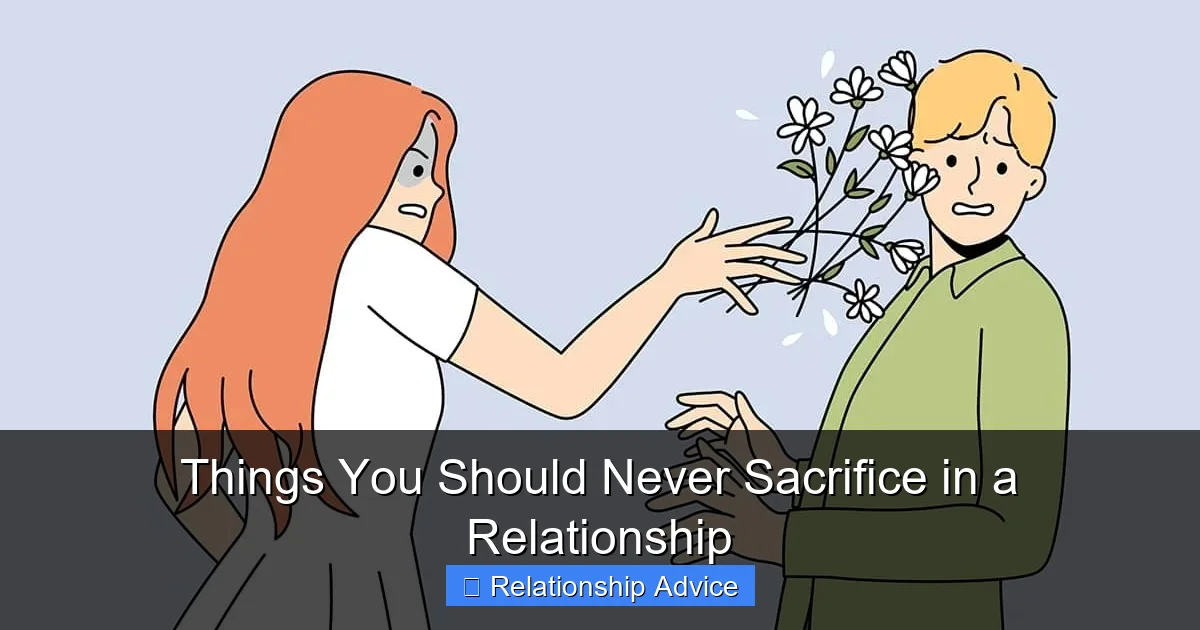
Every relationship requires compromise, but some things should never be sacrificed—like your self-worth, boundaries, or personal growth. This guide reveals the non-negotiables that keep love strong, respectful, and fulfilling for both partners.
Key Takeaways
- Your Self-Respect: Never stay in a relationship that makes you feel small, unheard, or undervalued. Self-respect is the foundation of healthy love.
- Personal Boundaries: Healthy relationships thrive on clear, respected boundaries. Sacrificing them leads to resentment and emotional exhaustion.
- Individual Identity: Losing yourself in a partner weakens the relationship. Maintain your hobbies, friends, and personal goals.
- Open Communication: Avoiding tough conversations or hiding your feelings erodes trust. Honest dialogue is essential for intimacy.
- Mutual Trust and Honesty: Without trust, love cannot survive. Never compromise integrity or tolerate deceit, even in small matters.
- Emotional Safety: You should feel safe expressing your emotions without fear of judgment, ridicule, or retaliation.
- Personal Growth: A supportive partner encourages your growth, not stifles it. Never sacrifice your dreams for the sake of the relationship.
📑 Table of Contents
- Introduction: The Fine Line Between Compromise and Sacrifice
- 1. Never Sacrifice Your Self-Respect
- 2. Never Sacrifice Your Personal Boundaries
- 3. Never Sacrifice Your Individual Identity
- 4. Never Sacrifice Open and Honest Communication
- 5. Never Sacrifice Trust and Honesty
- 6. Never Sacrifice Emotional Safety
- 7. Never Sacrifice Your Personal Growth
- Conclusion: Love Should Lift You Up, Not Weigh You Down
Introduction: The Fine Line Between Compromise and Sacrifice
Love isn’t about losing yourself—it’s about finding a deeper version of yourself alongside someone who truly sees and values you. Every healthy relationship involves some level of compromise. You might adjust your schedule to spend time together, learn to appreciate your partner’s favorite movie, or even try a new cuisine you didn’t think you’d like. These small sacrifices are part of building closeness and showing care.
But there’s a crucial difference between healthy compromise and harmful sacrifice. Compromise means both partners give a little to meet in the middle. Sacrifice, especially when one-sided, often means giving up something essential—your values, your peace, your identity—just to keep the relationship going. And that’s where trouble begins.
Too many people stay in relationships that drain them emotionally, mentally, or even physically, believing that love requires endless self-denial. But real love doesn’t ask you to disappear. It invites you to grow, to be seen, and to thrive—not just survive. The truth is, sacrificing core parts of who you are may keep a relationship intact for a while, but it will eventually crack under the weight of resentment, loneliness, and unmet needs.
1. Never Sacrifice Your Self-Respect
Visual guide about Things You Should Never Sacrifice in a Relationship
Image source: elizegan.com
Your self-respect is the quiet voice inside that tells you when something feels wrong. It’s the inner compass that guides you toward choices that honor your worth. When you sacrifice self-respect in a relationship, you’re essentially telling yourself—and your partner—that your feelings, needs, and boundaries don’t matter.
What Does Sacrificing Self-Respect Look Like?
Imagine constantly apologizing for things that aren’t your fault. Or staying silent when your partner makes a hurtful comment because you’re afraid of conflict. Maybe you ignore red flags—like disrespect, manipulation, or emotional unavailability—because you’re afraid of being alone. These are all signs that your self-respect is being eroded.
For example, Sarah stayed with her partner for two years even though he frequently canceled plans last minute, dismissed her career goals, and mocked her interests. She told herself, “He’s just stressed,” or “He doesn’t mean it that way.” But deep down, she felt invisible. She stopped speaking up, stopped defending her opinions, and started doubting her own judgment. That’s not love—that’s self-betrayal.
Why Self-Respect Matters
When you lose self-respect, you lose your sense of agency. You begin to believe you don’t deserve better. And that mindset makes it harder to leave unhealthy dynamics, even when they’re clearly damaging. Over time, low self-respect can lead to anxiety, depression, and a loss of identity.
On the flip side, maintaining self-respect strengthens your relationships. When you value yourself, you attract partners who value you too. You set clearer boundaries, communicate more confidently, and refuse to tolerate mistreatment. You become a better partner—not because you’re perfect, but because you’re whole.
How to Protect Your Self-Respect
Start by checking in with yourself regularly. Ask:
– Do I feel good about how I’m being treated?
– Am I being asked to change who I am to make my partner comfortable?
– Do I feel proud of the way I behave in this relationship?
If the answer to any of these is “no,” it’s time to reflect. Practice saying “no” without guilt. Stand up for your needs, even if it feels uncomfortable. And remember: loving someone doesn’t mean accepting abuse—emotional, verbal, or physical.
Self-respect isn’t selfish. It’s essential. And it’s the first thing you should never sacrifice.
2. Never Sacrifice Your Personal Boundaries
Visual guide about Things You Should Never Sacrifice in a Relationship
Image source: i.pinimg.com
Boundaries are the invisible lines that define what you will and won’t accept in a relationship. They protect your emotional, mental, and physical well-being. Without them, you risk becoming a people-pleaser, a doormat, or a prisoner in your own life.
What Are Healthy Boundaries?
Boundaries aren’t walls—they’re guidelines. They might include:
– Not answering texts after 10 p.m. unless it’s an emergency
– Refusing to lend money if it puts you in financial strain
– Asking your partner not to speak to you in a raised voice
– Needing alone time after a long week
These aren’t demands—they’re expressions of your needs. And they’re not negotiable just because your partner “doesn’t understand” or “feels left out.”
The Danger of Sacrificing Boundaries
When you consistently ignore or abandon your boundaries, you send a message: your comfort doesn’t matter. This can lead to burnout, resentment, and emotional exhaustion.
Take Mark, for example. He worked long hours and valued his weekend downtime. But his partner insisted on spending every Saturday together, even when Mark was clearly drained. Instead of speaking up, Mark agreed—every time. He started dreading weekends, feeling guilty for wanting space, and eventually became irritable and distant. His partner interpreted this as disinterest, not realizing Mark had sacrificed his need for rest to keep the peace.
Over time, Mark’s resentment grew. He began to associate the relationship with stress, not joy. And that’s the danger: sacrificing boundaries doesn’t strengthen love—it weakens it.
How to Set and Maintain Boundaries
Start small. Identify one boundary you’ve been ignoring—maybe it’s needing time to yourself, or not tolerating sarcasm. Then, communicate it clearly and calmly.
For example:
“I love spending time with you, but I need one evening a week to recharge. It’s not about you—it’s about my mental health.”
Be prepared for pushback. Some partners may feel threatened or rejected. That’s not your fault. A healthy partner will respect your needs, even if they don’t fully understand them.
And remember: boundaries aren’t about control—they’re about care. You’re not trying to change your partner; you’re protecting your peace.
3. Never Sacrifice Your Individual Identity
Visual guide about Things You Should Never Sacrifice in a Relationship
Image source: i1.wp.com
It’s natural to want to merge lives with your partner—share friends, hobbies, and routines. But when you lose your sense of self in the process, the relationship suffers.
The Myth of “We” Over “I”
Many couples fall into the trap of prioritizing “we” at the expense of “I.” They stop pursuing personal goals, drop old friendships, or abandon hobbies to spend every moment together. While closeness is important, complete fusion can be suffocating.
Think about it: if you’re only defined by your relationship, what happens if it ends? You risk losing not just your partner, but your entire sense of identity.
Signs You’re Losing Yourself
– You’ve stopped doing things you used to love
– You feel anxious when you’re not with your partner
– Your opinions always align with your partner’s—even when they don’t feel right
– You’ve drifted apart from friends or family
– You can’t remember the last time you did something just for you
This isn’t intimacy—it’s enmeshment. And it creates dependency, not partnership.
Why Individuality Strengthens Relationships
When both partners maintain their individuality, the relationship becomes richer. You bring new experiences, perspectives, and energy to the table. You grow separately—and together.
For instance, Lisa loved painting. When she started dating Alex, she stopped going to her weekly art class to spend more time with him. At first, it felt romantic. But after months of putting his needs first, she felt empty. When she finally returned to painting, she was surprised by how much joy it brought her—and how much more present she was with Alex.
Healthy relationships don’t require you to shrink. They encourage you to expand.
How to Maintain Your Identity
– Keep up with your hobbies, even if your partner isn’t interested
– Spend time with friends and family independently
– Set personal goals unrelated to the relationship
– Practice self-reflection: Who am I outside of this partnership?
Remember: you’re not just a partner. You’re a whole person with dreams, passions, and a life beyond the relationship.
4. Never Sacrifice Open and Honest Communication
Communication is the lifeline of any relationship. Without it, misunderstandings grow, resentment builds, and intimacy fades.
The Cost of Avoiding Tough Conversations
Many people avoid difficult topics to keep the peace. They don’t bring up financial concerns, sexual dissatisfaction, or emotional needs because they fear conflict. But silence isn’t peace—it’s suppression.
For example, Jenna noticed her partner had become distant. Instead of asking what was wrong, she assumed he was just busy. Weeks passed. The distance grew. She started feeling insecure, wondering if she’d done something wrong. But she never asked. Eventually, the silence became a wall between them.
When they finally talked, her partner admitted he’d been stressed about work—but felt shut out because Jenna never reached out. Both had suffered in silence, each assuming the worst.
Why Honesty Matters
Honesty builds trust. It shows your partner that you’re willing to be vulnerable, even when it’s hard. And it creates space for real connection.
But honesty doesn’t mean being harsh. It means being clear, kind, and direct. Instead of saying, “You never listen to me,” try, “I feel unheard when I’m interrupted. Can we work on that?”
How to Communicate Better
– Use “I” statements to express your feelings without blaming
– Listen to understand, not to respond
– Address issues early, before they escalate
– Be willing to apologize and accept apologies
And remember: good communication isn’t about winning arguments—it’s about understanding each other.
5. Never Sacrifice Trust and Honesty
Trust is the glue that holds relationships together. Without it, every interaction feels uncertain, every promise feels fragile.
The Fragility of Trust
Trust isn’t built overnight—and it can be shattered in an instant. A lie, even a small one, can create doubt. A broken promise can lead to insecurity. And once trust is damaged, it takes time, consistency, and effort to rebuild.
For example, when Tom discovered his partner had hidden a credit card debt, he felt betrayed—not just by the debt, but by the secrecy. Even though the amount wasn’t huge, the lie made him question everything: What else was being hidden? Could he believe anything she said?
Why Honesty Is Non-Negotiable
Honesty isn’t just about big truths—it’s about the small ones too. It’s about admitting when you’re wrong, sharing your fears, and being transparent about your actions.
A relationship built on half-truths or omissions is built on sand. It may look stable, but it won’t withstand storms.
How to Build and Maintain Trust
– Be reliable: Do what you say you’ll do
– Be transparent: Share your thoughts and feelings openly
– Admit mistakes: Apologize sincerely and make amends
– Give your partner the benefit of the doubt—but don’t ignore red flags
And if trust is broken, address it directly. Rebuilding trust is possible, but it requires both partners to be committed to change.
6. Never Sacrifice Emotional Safety
You should feel safe expressing your emotions in a relationship—whether it’s joy, sadness, anger, or fear. Emotional safety means you can be vulnerable without fear of judgment, ridicule, or retaliation.
Signs of an Unsafe Emotional Environment
– Your partner mocks your feelings
– You’re punished for expressing anger or sadness
– You feel like you have to “walk on eggshells”
– Your emotions are dismissed as “dramatic” or “overreacting”
These behaviors create a climate of fear. And fear kills intimacy.
Why Emotional Safety Matters
When you feel safe, you’re more likely to share your true self. You’re more open, more connected, and more willing to work through challenges together.
But when you’re afraid to be honest, you build walls. You stop sharing. You stop trusting. And the relationship becomes a performance—not a partnership.
How to Create Emotional Safety
– Validate your partner’s feelings, even if you don’t agree
– Avoid sarcasm, eye-rolling, or dismissive language
– Create space for difficult conversations
– Practice empathy: Try to see things from their perspective
And if your partner consistently makes you feel unsafe, it’s a red flag. No one deserves to feel afraid in their own relationship.
7. Never Sacrifice Your Personal Growth
A healthy relationship should inspire you to grow—not hold you back. If your partner discourages your goals, mocks your ambitions, or makes you feel guilty for pursuing your passions, it’s a sign of trouble.
The Danger of Stagnation
When you stop growing, you start resenting. You may feel trapped, unfulfilled, or like you’re losing yourself.
For example, when Rachel wanted to go back to school, her partner said, “Why bother? You’ll just quit again.” He didn’t support her dream—he undermined it. And over time, Rachel began to believe him. She stayed in a job she hated, afraid to try again.
But growth isn’t just about big achievements. It’s about learning, evolving, and becoming the person you want to be.
How to Support Each Other’s Growth
– Celebrate each other’s successes
– Encourage new challenges and goals
– Be a cheerleader, not a critic
– Grow together—take a class, travel, or start a project
Remember: a partner who loves you wants you to thrive—not just survive.
Conclusion: Love Should Lift You Up, Not Weigh You Down
Relationships are meant to be sources of joy, support, and growth—not sacrifice and suffering. While compromise is natural, sacrificing your core values, boundaries, or identity is not.
True love doesn’t ask you to disappear. It invites you to be fully seen, fully heard, and fully yourself. It respects your limits, honors your truth, and encourages your dreams.
So the next time you’re tempted to give up something important for the sake of peace or approval, pause. Ask yourself: Is this compromise—or is this sacrifice? Am I choosing love, or am I losing myself?
Because the healthiest relationships aren’t built on what you give up—they’re built on what you gain: mutual respect, deep connection, and the freedom to be authentically you.
And that’s worth protecting.
Frequently Asked Questions
Is it ever okay to sacrifice something in a relationship?
Yes, healthy compromise is normal—like adjusting schedules or trying new activities together. But never sacrifice your core values, self-respect, or personal well-being. Compromise should be mutual, not one-sided.
How do I know if I’m sacrificing too much?
If you feel drained, resentful, or like you’re losing yourself, you may be sacrificing too much. Ask yourself: Do I feel valued? Am I growing? Can I be honest without fear?
What if my partner doesn’t respect my boundaries?
A healthy partner will listen and adjust. If they dismiss or punish you for setting boundaries, it’s a red flag. You deserve to be with someone who respects your needs.
Can a relationship survive after trust is broken?
Yes, but it requires honesty, accountability, and consistent effort from both partners. Rebuilding trust takes time and commitment—and sometimes professional help.
How do I rebuild my identity after losing it in a relationship?
Start by reconnecting with old hobbies, spending time with friends, and setting personal goals. Therapy or journaling can also help you rediscover who you are outside of the relationship.
What’s the difference between love and sacrifice?
Love uplifts, supports, and respects. Sacrifice—especially when one-sided—drains, diminishes, and controls. Real love never asks you to lose yourself.