
When your wife starts pulling away emotionally, physically, or mentally, it may be a sign she’s checked out of the marriage. Recognizing these warning signals early can help you address issues before it’s too late—or prepare for what comes next.
Key Takeaways
- Emotional detachment is a major red flag: If your wife no longer shares her feelings, avoids deep conversations, or seems indifferent to your life, she may be emotionally disengaged.
- Decreased physical intimacy often signals disconnection: A sudden drop in affection, sex, or even casual touch can indicate she’s no longer invested in the relationship.
- She prioritizes everything else over the relationship: When work, friends, hobbies, or even screen time consistently come before quality time with you, it’s a sign of shifting priorities.
- Communication has become superficial or hostile: Short, clipped responses, frequent arguments over small things, or complete silence are all signs of emotional withdrawal.
- She avoids future planning together: If she shuts down talks about vacations, finances, or long-term goals, she may not see a shared future with you.
- Increased criticism or contempt is a serious warning: Constant nitpicking, sarcasm, or eye-rolling can erode connection and signal deep dissatisfaction.
- Seeking external validation is common: If she’s suddenly more active on social media, flirts with others, or spends excessive time with certain friends, it may reflect unmet needs.
📑 Table of Contents
- Introduction: The Silent Drift in Marriage
- Emotional Detachment: The Quietest Red Flag
- Decreased Physical Intimacy: When Touch Fades Away
- She Prioritizes Everything Else Over the Relationship
- Communication Breakdown: From Connection to Conflict
- She Avoids Future Planning Together
- Increased Criticism or Contempt
- She Seeks External Validation
- Conclusion: What Comes Next?
Introduction: The Silent Drift in Marriage
Marriage is built on connection—emotional, physical, and mental. But sometimes, even in the most committed relationships, one partner begins to drift away. It doesn’t always happen overnight. More often, it’s a slow, quiet process that creeps in like fog, leaving you wondering when exactly things changed. You might notice she’s quieter at dinner, less interested in weekend plans, or seems distracted even when you’re sitting right next to her. At first, you brush it off as stress or a busy season. But over time, the distance grows, and you’re left asking: *Is she still in this marriage?*
Recognizing the signs your wife has checked out of the marriage isn’t about assigning blame. It’s about awareness. It’s about understanding that relationships require ongoing effort, and when one person stops investing, the foundation begins to crack. The good news? Spotting these signs early gives you a chance to respond—whether that means having a tough conversation, seeking counseling, or preparing for a difficult transition.
This article will walk you through the most common indicators that your wife may be emotionally or mentally disengaged from your marriage. We’ll explore what these behaviors look like in real life, why they matter, and what you can do about them. Whether you’re hoping to rebuild your connection or simply seeking clarity, understanding these signs is the first step toward healing—or honest closure.
Emotional Detachment: The Quietest Red Flag

Visual guide about Signs Your Wife Has Checked Out of the Marriage
Image source: bonobology.com
One of the earliest and most telling signs your wife has checked out of the marriage is emotional detachment. This doesn’t mean she’s angry or confrontational—in fact, it’s often the opposite. She may seem calm, polite, even pleasant. But beneath the surface, there’s a growing emotional distance that’s hard to ignore.
She No Longer Shares Her Inner World
In healthy marriages, partners regularly share their thoughts, dreams, fears, and daily experiences. But when a wife checks out emotionally, she stops opening up. You might ask, “How was your day?” and get a one-word answer: “Fine.” Or she might talk about surface-level things—work tasks, errands, the weather—but avoid anything deeper. She doesn’t tell you about a problem at work that’s bothering her, or a funny moment with a friend, or even how she *feels* about something important.
For example, imagine she comes home from a stressful meeting. In the past, she might have vented to you, leaned on your shoulder, or asked for advice. Now, she just says, “It was a long day,” and goes to take a shower. She’s not inviting you into her emotional world anymore. That’s a red flag.
She Seems Indifferent to Your Life
Another sign of emotional detachment is when your wife shows little interest in your life. She doesn’t ask about your day, your goals, or your challenges. If you share exciting news—like a promotion or a personal achievement—she might offer a polite “That’s nice” but doesn’t celebrate with you. If you’re going through a tough time, she doesn’t offer comfort or support.
This indifference can be especially painful because it feels like rejection. You’re still trying to connect, but she’s no longer meeting you halfway. Over time, this one-sided effort can leave you feeling lonely, even when you’re living under the same roof.
She Avoids Deep Conversations
When a wife checks out emotionally, she often avoids meaningful conversations. Topics like your future together, relationship issues, or personal growth become off-limits. If you try to bring up something important—like how you’ve been feeling disconnected—she might change the subject, say she’s too tired, or shut down entirely.
This avoidance isn’t just about being busy. It’s a defense mechanism. She may be afraid of conflict, overwhelmed by unresolved issues, or simply no longer see the point in trying to fix things. But by dodging these talks, she’s preventing any chance of reconnection.
What You Can Do
If you notice emotional detachment, don’t panic. Instead, try to create safe spaces for conversation. Choose a calm moment—maybe during a walk or over coffee—and gently express your feelings. Say something like, “I’ve noticed we haven’t been talking as much lately, and I miss that connection. Can we talk about how we’re both feeling?”
Avoid blaming language. Focus on “I” statements (“I feel lonely when we don’t talk”) rather than “you” statements (“You never listen to me”). This reduces defensiveness and opens the door for honest dialogue.
If she’s unwilling to engage, consider suggesting couples counseling. A therapist can help you both communicate more effectively and uncover the root of the emotional distance.
Decreased Physical Intimacy: When Touch Fades Away
Visual guide about Signs Your Wife Has Checked Out of the Marriage
Image source: realestlove.com
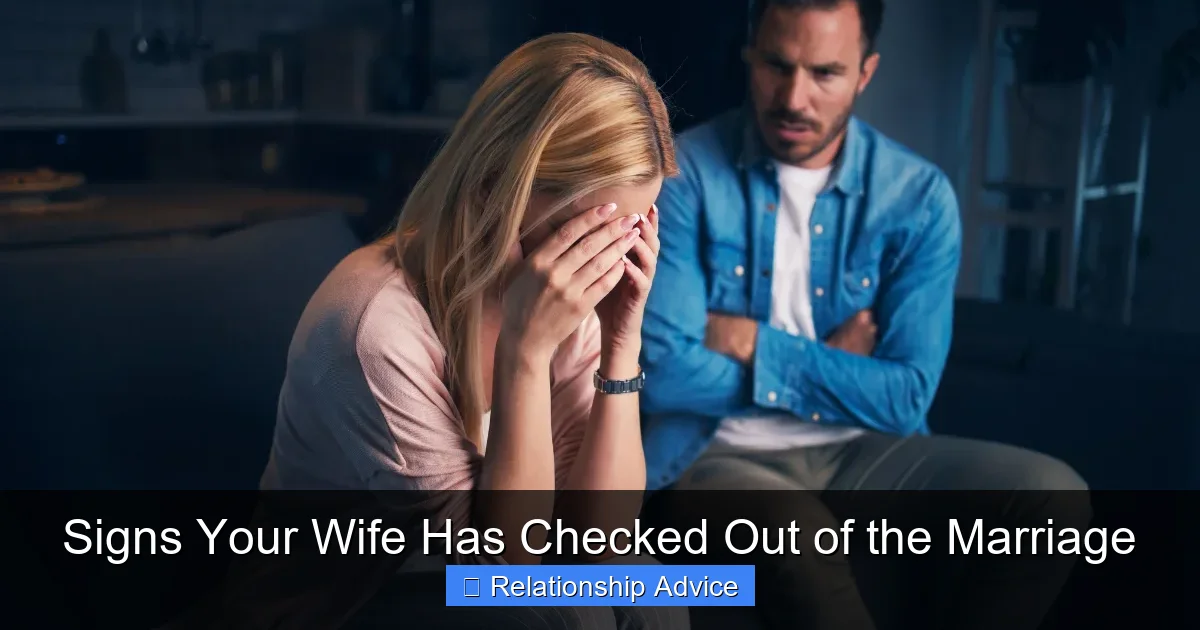
Physical intimacy is a cornerstone of marital connection. It’s not just about sex—it’s about affection, closeness, and nonverbal communication. When a wife checks out of the marriage, physical intimacy often declines sharply. This can be one of the most painful signs to witness, because touch is such a powerful way we express love and care.
A Drop in Sexual Intimacy
A sudden or gradual decrease in sex is a common sign your wife has emotionally disengaged. She might reject your advances, claim she’s tired, or initiate less frequently. Over time, sex may become mechanical, infrequent, or completely absent.
This doesn’t always mean she’s having an affair. Sometimes, it’s a symptom of deeper emotional disconnection. When someone feels unheard, unappreciated, or resentful, they often withdraw physically as well. The body follows the heart.
For example, you might notice that she no longer initiates intimacy, even on special occasions like anniversaries or date nights. Or when you do have sex, it feels routine—like a chore rather than a shared experience. These changes can be subtle at first, but they add up.
Loss of Everyday Affection
Beyond sex, everyday affection often fades too. She might stop holding your hand, giving you hugs, or kissing you goodbye. You might reach out to touch her shoulder while watching TV, and she subtly pulls away. These small gestures matter. They’re the glue that keeps couples connected throughout the day.
When affection disappears, the relationship starts to feel more like a roommate situation than a partnership. You’re sharing space, but not intimacy.
She Seems Uncomfortable with Physical Closeness
Another sign is when your wife seems uncomfortable with physical closeness, even in non-sexual ways. She might avoid sitting next to you on the couch, flinch when you touch her arm, or sleep on the edge of the bed. These behaviors suggest she’s not just emotionally distant—she’s physically pulling away too.
This discomfort can stem from unresolved conflict, resentment, or a sense of being trapped. It’s her body’s way of creating space, even if she hasn’t said a word.
What You Can Do
If physical intimacy has declined, start by addressing the emotional connection first. Rebuilding trust and communication often leads to a natural return of affection.
You might say, “I’ve noticed we haven’t been as close physically lately, and I miss that. I’d love to feel connected again. Can we talk about what’s going on?”
Avoid pressuring her for sex. That can increase tension and make things worse. Instead, focus on small gestures—holding hands, giving a back rub, or sitting close while watching a movie. These non-demanding acts can slowly rebuild comfort and closeness.
If the issue persists, consider seeing a sex therapist or counselor. They can help you both explore underlying issues and rebuild intimacy in a safe, supportive environment.
She Prioritizes Everything Else Over the Relationship

Visual guide about Signs Your Wife Has Checked Out of the Marriage
Image source: bonobology.com
When a wife checks out of the marriage, her priorities often shift. Suddenly, work, hobbies, friends, or even screen time take precedence over quality time with you. This isn’t just about being busy—it’s about where she’s investing her energy and attention.
Work or Hobbies Come First
It’s normal for people to have passions outside the marriage. But when your wife consistently chooses work, a side project, or a hobby over spending time with you, it’s a sign of disengagement.
For example, she might stay late at the office every night, even when there’s no urgent deadline. Or she might spend hours on her phone scrolling social media, watching shows, or playing games—while ignoring your attempts to connect.
This isn’t just about time management. It’s about emotional availability. When someone is checked out, they often seek fulfillment elsewhere because the marriage no longer provides it.
She Spends More Time with Friends—or Alone
Another red flag is when your wife starts spending more time with friends—or alone—than with you. She might plan frequent outings with her girlfriends, go on solo trips, or retreat to another room to “have some space.”
While independence is healthy, a sudden increase in solo time can signal emotional withdrawal. She may be using these activities to avoid intimacy, process her feelings, or simply escape the relationship.
She Avoids Date Nights or Shared Activities
If you suggest a date night, a weekend getaway, or even a simple walk together, and she consistently declines or makes excuses, it’s a clear sign she’s no longer prioritizing the relationship.
She might say she’s tired, has other plans, or just doesn’t feel like it. Over time, these rejections add up, leaving you feeling unwanted and unimportant.
What You Can Do
If your wife is prioritizing other things over the marriage, try to understand why. Is she stressed? Bored? Feeling unappreciated? Have an open, non-judgmental conversation.
Say, “I’ve noticed we haven’t been spending as much time together lately. I miss us. Can we talk about what’s going on and how we can reconnect?”
Suggest small, low-pressure activities—like cooking dinner together, taking a walk, or watching a show side by side. The goal isn’t to force intimacy, but to create opportunities for connection.
If she continues to pull away, consider whether she’s open to change. Sometimes, people check out because they feel stuck or unfulfilled. Counseling can help you both explore these feelings and decide on a path forward.
Communication Breakdown: From Connection to Conflict
Communication is the lifeline of any relationship. When it breaks down, the marriage suffers. One of the most telling signs your wife has checked out is a shift in how you communicate—from open and supportive to superficial, hostile, or completely silent.
Conversations Are Short and Superficial
In a disconnected marriage, conversations often become transactional. You talk about logistics—who’s picking up the kids, what’s for dinner, when the bills are due—but avoid deeper topics.
You might ask, “How are you?” and get a robotic “Fine.” There’s no curiosity, no emotional exchange. It’s like talking to a coworker, not a partner.
This surface-level communication creates emotional distance. You stop feeling seen, heard, or understood.
Frequent Arguments Over Small Things
Another sign is an increase in petty arguments. She might snap at you for leaving dishes in the sink, criticize your tone of voice, or get annoyed over minor inconveniences.
These conflicts aren’t really about the dishes or the tone. They’re symptoms of underlying resentment. When someone is checked out, they often project their dissatisfaction onto small issues because they can’t—or won’t—address the real problems.
Silence or Stonewalling
Perhaps the most painful communication breakdown is silence. Your wife might stop talking altogether—giving you the silent treatment, avoiding eye contact, or retreating into her phone or TV.
This stonewalling is a form of emotional withdrawal. It’s her way of shutting down, protecting herself, or expressing anger without words. But it leaves you feeling isolated and powerless.
What You Can Do
If communication has broken down, focus on rebuilding it gently. Start with small, positive interactions—compliment her, ask about her day, or share something funny.
Avoid arguing when emotions are high. Instead, say, “I want to understand you better. Can we talk when we’re both calm?”
If silence or hostility continues, suggest couples therapy. A therapist can teach you both healthier communication patterns and help you break negative cycles.
She Avoids Future Planning Together
When a wife checks out of the marriage, she often stops envisioning a shared future. She avoids talks about long-term goals, big purchases, or even weekend plans. This avoidance is a strong indicator that she no longer sees herself building a life with you.
She Shuts Down Talks About the Future
If you bring up ideas like buying a house, traveling, or retirement plans, she might change the subject, say “We’ll see,” or express disinterest.
This isn’t just indecisiveness. It’s a sign she’s emotionally disengaged. She may be afraid of commitment, unsure about the relationship, or simply not invested in a future with you.
She Makes Plans Without You
Another red flag is when she starts making plans independently—booking trips with friends, signing up for classes, or making career moves—without including you.
This unilateral decision-making shows she’s no longer considering you as a partner. She’s living her life separately, even if you’re still married.
What You Can Do
If your wife avoids future planning, have an honest conversation. Say, “I’ve noticed we haven’t been talking about our future lately. I’d love to hear your thoughts. Where do you see us in five years?”
Listen without judgment. She may be feeling stuck, scared, or uncertain. Give her space to share, and be open to her perspective.
If she continues to avoid these talks, it may be time to consider counseling or individual therapy to explore your own feelings and next steps.
Increased Criticism or Contempt
Criticism and contempt are among the most damaging behaviors in a marriage. When a wife checks out, she may start nitpicking, mocking, or expressing disdain—often over small things.
Constant Nitpicking
She might criticize your habits, appearance, or choices—constantly. “You always leave your socks on the floor.” “Why did you say that at dinner?” These comments erode your confidence and create resentment.
Sarcasm and Eye-Rolling
Contempt often shows up as sarcasm, eye-rolling, or dismissive body language. These behaviors signal disrespect and can destroy emotional safety.
What You Can Do
If criticism or contempt is present, address it directly. Say, “When you criticize me like that, it makes me feel unloved. Can we talk about what’s really going on?”
Focus on rebuilding respect and kindness. Avoid retaliating with criticism. Instead, model the behavior you want to see.
If the pattern continues, seek professional help. Contempt is a strong predictor of divorce, and it requires intervention to heal.
She Seeks External Validation
When a wife checks out, she may start seeking validation outside the marriage—through social media, friendships, or even flirtation.
Increased Social Media Activity
She might post more selfies, share personal updates, or engage heavily with others online. This can be a way to feel seen and appreciated when the marriage no longer provides that.
Flirting or Emotional Affairs
In some cases, she may develop close emotional bonds with others—sharing intimate thoughts, spending excessive time with a coworker, or flirting openly.
These behaviors suggest unmet emotional needs. She’s looking for connection, excitement, or validation elsewhere.
What You Can Do
If you notice these signs, talk to her calmly. Say, “I’ve noticed you’ve been spending a lot of time on social media/reconnecting with old friends. I want to understand what you’re looking for.”
Avoid accusations. Focus on your feelings and needs. Rebuilding connection starts with honesty and empathy.
Conclusion: What Comes Next?
Recognizing the signs your wife has checked out of the marriage is painful, but it’s also powerful. Awareness gives you choices. You can try to rebuild, seek help, or prepare for change.
Remember, checking out doesn’t always mean the end. Sometimes, it’s a cry for help—a signal that something needs to change. With honesty, effort, and support, many couples find their way back.
But if she’s truly gone, it’s okay to grieve and move forward. Your worth isn’t defined by her presence. You deserve a relationship where you’re seen, valued, and loved.
Take the first step today—whether that’s a conversation, a therapy session, or simply reflecting on your needs. You’re not alone.
Frequently Asked Questions
How do I know if my wife is checked out or just stressed?
Stress can cause temporary distance, but if the emotional and physical withdrawal lasts for weeks or months—and she avoids addressing it—it’s likely more than stress. Look for patterns, not isolated incidents.
Can a marriage recover after one partner checks out?
Yes, many marriages recover with effort, communication, and professional help. But both partners must be willing to work on the relationship. If only one person is invested, recovery is unlikely.
Should I confront my wife if I think she’s checked out?
Yes, but do it gently. Use “I” statements and focus on your feelings, not accusations. Say, “I feel disconnected and want to understand what’s going on,” rather than “You’re ignoring me.”
Is it too late if she’s already emotionally distant?
It’s not too late unless both of you have given up. Emotional distance can be reversed with honesty, therapy, and consistent effort. But it requires mutual commitment.
What if she denies there’s a problem?
Denial is common. She may be scared, in shock, or unwilling to face the truth. Give her time, but also seek support for yourself—through friends, family, or a therapist.
Should I wait for her to come back, or take action?
Don’t wait passively. Take action by initiating conversations, suggesting counseling, or reflecting on your own role. But also prepare emotionally for any outcome—reconnection or separation.