
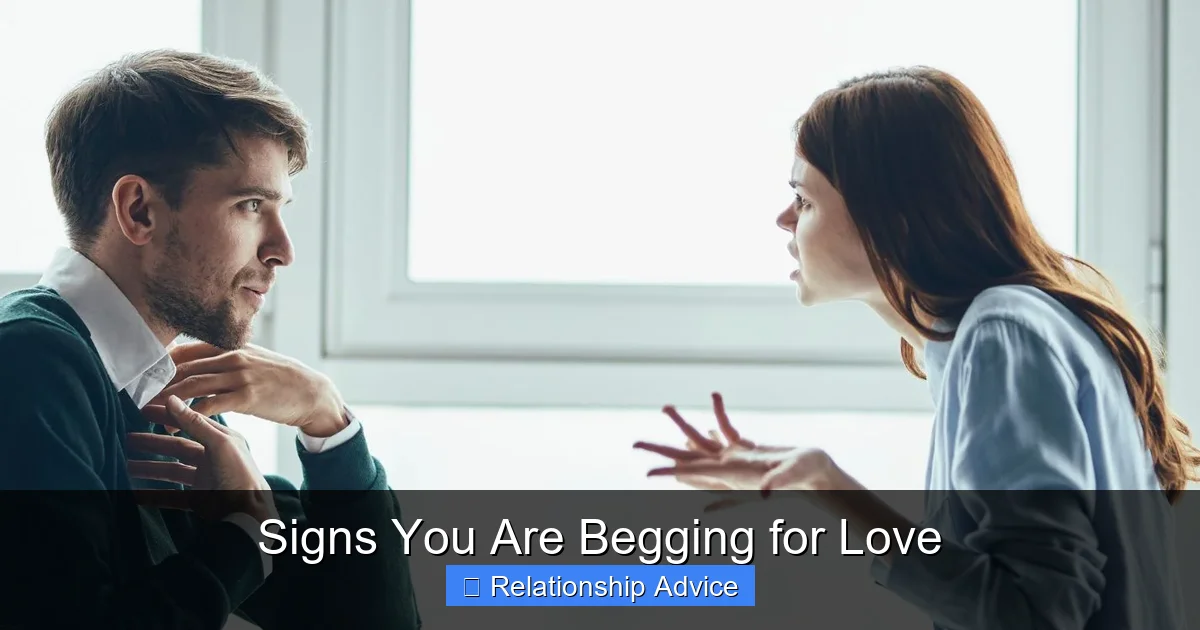
If you’re constantly seeking validation, tolerating disrespect, or sacrificing your needs to keep someone close, you might be begging for love. This emotional pattern stems from insecurity and can sabotage your relationships. But recognizing these signs is the first step toward building self-worth and attracting genuine connection.
Key Takeaways
- You ignore red flags to keep someone interested: Staying in unhealthy dynamics because you fear being alone is a major sign of begging for love.
- You over-communicate to gain reassurance: Sending multiple texts, calling repeatedly, or needing constant updates shows emotional dependency.
- You apologize for things you didn’t do: Saying sorry just to keep the peace reveals a lack of self-respect and fear of rejection.
- You change yourself to fit someone else’s expectations: Altering your personality, interests, or values to please a partner is a form of emotional begging.
- You feel anxious when they don’t respond quickly: Overanalyzing silence or delayed replies signals low self-worth and emotional neediness.
- You tolerate emotional or physical mistreatment: Accepting disrespect, manipulation, or abuse because you “need” love is dangerous and unsustainable.
- You believe you don’t deserve better: This core belief fuels the cycle of begging and prevents you from setting healthy boundaries.
📑 Table of Contents
- Introduction: The Hidden Pain of Begging for Love
- What Does “Begging for Love” Really Mean?
- Sign You’re Begging for Love: You Ignore Red Flags
- Sign You’re Begging for Love: You Over-Communicate for Reassurance
- Sign You’re Begging for Love: You Apologize for Things You Didn’t Do
- Sign You’re Begging for Love: You Change Yourself to Please Others
- Sign You’re Begging for Love: You Tolerate Mistreatment
- How to Stop Begging for Love and Start Attracting It
- Conclusion: You Deserve Love—Not Begging
Introduction: The Hidden Pain of Begging for Love
Have you ever found yourself sending one text after another, hoping for a reply? Or maybe you’ve stayed in a relationship long after it stopped making you happy—just because you were afraid of being alone? If so, you might be begging for love without even realizing it.
Begging for love isn’t about grand gestures or dramatic declarations. It’s subtle. It’s the quiet desperation that builds when you start prioritizing someone else’s comfort over your own well-being. It’s when your self-worth becomes tied to their attention, approval, or affection. And while it may feel like love at the moment, it’s actually a cry for validation—one that often leads to more pain than peace.
This behavior doesn’t happen overnight. It usually grows from deeper emotional wounds—past rejections, childhood neglect, or a history of unstable relationships. But the good news? Once you recognize the signs, you can break free. You can learn to love yourself first, so you no longer need to beg for it from others.
What Does “Begging for Love” Really Mean?
Visual guide about Signs You Are Begging for Love
Image source: media.tenor.com
At its core, begging for love is when you compromise your dignity, boundaries, and self-respect in an attempt to earn affection. It’s not about expressing your feelings—it’s about pleading for them to be returned, often at any cost.
Think of it like this: healthy love is mutual. It flows both ways. But when you’re begging, the flow is one-sided. You’re pouring your energy into someone who may not even realize—or care—that you’re running on empty.
This pattern often shows up in romantic relationships, but it can also appear in friendships, family dynamics, or even workplace relationships. The common thread? You’re giving more than you’re receiving, and you’re doing it because you believe you need that person’s approval to feel whole.
The Emotional Roots of Begging for Love
So why do people beg for love? It usually starts with unmet emotional needs. Maybe you grew up in a home where love was conditional—given only when you behaved a certain way. Or perhaps you’ve experienced repeated rejection, making you believe that you have to “earn” love to keep it.
These experiences shape your attachment style. If you have an anxious attachment style, for example, you might crave closeness but fear abandonment. That fear drives you to cling, over-communicate, or tolerate poor treatment—just to avoid being left.
Low self-esteem plays a huge role too. When you don’t believe you’re worthy of love, you’ll accept scraps instead of a full meal. You might think, “This is the best I can get,” or “If I don’t settle, I’ll end up alone.” But that mindset keeps you stuck in a cycle of emotional dependency.
How Begging for Love Hurts You
Begging for love doesn’t just affect your relationships—it damages your mental and emotional health. Over time, it leads to anxiety, depression, and a deep sense of shame. You start to believe that you’re not enough, that you have to work harder, be more, do more—just to be seen.
And here’s the cruel irony: the more you beg, the less likely you are to receive genuine love. People sense desperation, and it pushes them away. Healthy partners want someone who is confident, grounded, and secure—not someone who’s clinging to them for survival.
So if you’ve been begging for love, know this: you’re not weak. You’re hurting. And healing is possible.
Sign You’re Begging for Love: You Ignore Red Flags
Visual guide about Signs You Are Begging for Love
Image source: media3.giphy.com
One of the clearest signs you’re begging for love is when you ignore obvious red flags—just to keep someone in your life.
Maybe they cancel plans last minute, don’t text back for days, or flirt with others in front of you. Deep down, you know something’s off. But instead of walking away, you make excuses: “They’re just busy,” “They’re stressed,” or “They’ll change.”
This isn’t love. This is denial.
Why We Ignore Red Flags
We ignore red flags because we’re afraid of being alone. The thought of starting over, of being single, of facing rejection—it feels scarier than staying in a bad situation. So we rationalize, minimize, and convince ourselves that things will get better.
But here’s the truth: if someone isn’t treating you with respect, consistency, or kindness, they’re not the right person for you. And no amount of waiting or hoping will change that.
Real-Life Example: Sarah’s Story
Sarah dated a man who was emotionally unavailable. He’d disappear for weeks, then reappear with grand gestures—flowers, long texts, promises of change. Each time, Sarah believed him. She told herself, “He’s trying,” or “He just needs time.”
But the pattern never changed. And each time he left, Sarah felt worse about herself. She started to think, “Maybe I’m too much,” or “Maybe I’m not lovable enough.”
Eventually, Sarah realized she wasn’t in love—she was begging. She was clinging to the idea of a relationship because she feared being alone. Once she recognized that, she was able to walk away and start healing.
How to Stop Ignoring Red Flags
The first step is awareness. Ask yourself:
– Am I making excuses for their behavior?
– Do I feel anxious or insecure when they’re not around?
– Am I staying because I’m afraid of being single?
If you answered yes, it’s time to pause. Take a step back. Talk to a trusted friend or therapist. And remember: a healthy relationship doesn’t require you to ignore your instincts.
Sign You’re Begging for Love: You Over-Communicate for Reassurance
Visual guide about Signs You Are Begging for Love
Image source: gifdb.com
Do you find yourself texting someone multiple times a day, even when they haven’t replied? Do you send long messages just to get a simple “k” in return? If so, you might be over-communicating to gain reassurance—another classic sign of begging for love.
This behavior often stems from anxiety. You’re not just checking in—you’re seeking validation. You need to hear from them to feel secure, to know you’re still on their mind.
The Cycle of Needy Communication
Here’s how it usually goes:
1. You send a message.
2. They don’t reply right away.
3. You start to panic.
4. You send another message, maybe with a joke or a question to “lighten the mood.”
5. Still no reply.
6. You send a third message: “Hey, you there?” or “Everything okay?”
Before you know it, you’ve sent five texts in an hour—and you’re still waiting.
This isn’t communication. It’s emotional begging.
Why This Hurts Your Relationship
Over-communication can push people away. It signals neediness, not confidence. And while some people might respond out of guilt, that’s not real connection. Real love doesn’t require constant proof.
Plus, it drains your energy. You’re spending mental and emotional resources trying to earn someone’s attention—instead of focusing on your own life, goals, and happiness.
How to Break the Cycle
Start by setting boundaries—with yourself.
– Wait at least 24 hours before sending a follow-up text.
– Focus on your own activities instead of waiting for a reply.
– Remind yourself: “Their silence is not a reflection of my worth.”
You can also practice self-soothing techniques, like deep breathing, journaling, or calling a friend. The goal isn’t to stop caring—it’s to stop depending on someone else’s response to feel okay.
Sign You’re Begging for Love: You Apologize for Things You Didn’t Do
Have you ever said “I’m sorry” just to keep the peace—even when you didn’t do anything wrong?
Maybe your partner got upset over something small, and instead of standing your ground, you apologized to calm them down. Or maybe you said sorry after they ignored you, just to “fix” the situation.
This is a subtle but powerful sign of begging for love. You’re sacrificing your truth to avoid conflict, because you’re afraid that speaking up will make them leave.
The Psychology Behind Unnecessary Apologies
Apologizing when you’re not at fault often comes from a fear of rejection. You believe that if you don’t smooth things over, the relationship will fall apart. So you take responsibility—even when it’s not yours to take.
This behavior can also stem from childhood. If you grew up in a household where conflict was punished or avoided, you might have learned that peacekeeping is more important than honesty.
But here’s the problem: constant unnecessary apologies erode your self-respect. They teach others that your boundaries don’t matter. And they reinforce the belief that you have to earn love through compliance.
How to Stop Apologizing for Everything
Start by noticing when you say “sorry” out of habit. Ask yourself:
– Did I actually do something wrong?
– Am I apologizing to avoid conflict?
– Would I say this to a friend in the same situation?
If the answer is no, try replacing “I’m sorry” with something more honest:
– “I hear that you’re upset.”
– “I didn’t mean to upset you, but I don’t think I did anything wrong.”
– “Let’s talk about what’s really going on.”
It might feel uncomfortable at first. But over time, you’ll build confidence in standing your ground—without losing love.
Sign You’re Begging for Love: You Change Yourself to Please Others
Do you hide your opinions, suppress your emotions, or pretend to like things you don’t—just to fit in with someone?
Maybe you stopped hanging out with your friends because your partner didn’t like them. Or you started dressing a certain way, even though it doesn’t feel like you. Or you agreed to plans you didn’t want to go to, just to spend time with them.
This is another sign of begging for love. You’re altering your identity to make yourself more “lovable”—but in doing so, you’re losing yourself.
The Cost of Losing Yourself
When you change who you are to please someone else, you send a message: “I’m not enough as I am.” And that belief becomes a self-fulfilling prophecy.
You start to feel disconnected—from your values, your passions, your truth. And the person you’re trying to impress? They’re not falling in love with the real you. They’re falling for a version you created to survive.
That’s not love. That’s performance.
How to Reclaim Your Authentic Self
Start small.
– Say “no” to something you don’t want to do.
– Share an opinion that might be unpopular.
– Spend time doing something just because you enjoy it—not because someone else does.
Ask yourself:
– Who am I when no one is watching?
– What do I truly value?
– What makes me feel alive?
Reconnecting with your authentic self takes time. But every step you take builds self-worth—and attracts people who love you for who you really are.
Sign You’re Begging for Love: You Tolerate Mistreatment
Perhaps the most dangerous sign of begging for love is tolerating emotional or physical abuse.
This doesn’t always look like yelling or hitting. Sometimes it’s subtle: guilt-tripping, gaslighting, silent treatment, or constant criticism. But the effect is the same—you feel small, ashamed, and unworthy.
And yet, you stay. Because you believe you need this person. Because you think you don’t deserve better. Because the fear of being alone is greater than the pain of staying.
Why We Stay in Toxic Relationships
Staying in a harmful relationship often comes from a deep belief: “This is all I deserve.” That belief can be rooted in past trauma, low self-esteem, or societal messages that tell us love means sacrifice.
We also confuse intensity with intimacy. If someone is passionate, dramatic, or unpredictable, we might mistake that for love—even when it’s actually control or manipulation.
But real love doesn’t hurt. It doesn’t make you feel afraid, anxious, or worthless. It lifts you up. It makes you feel safe.
How to Break Free
If you’re in a relationship where you’re being mistreated, your first step is to recognize it. Acknowledge that what you’re experiencing is not love—it’s harm.
Then, reach out for support. Talk to a trusted friend, family member, or therapist. If you’re in immediate danger, contact a domestic violence hotline or local shelter.
Remember: you deserve to be treated with kindness, respect, and dignity. And no one has the right to take that away from you.
How to Stop Begging for Love and Start Attracting It
Breaking the cycle of begging for love starts with one thing: self-love.
You can’t pour from an empty cup. And you can’t attract healthy love if you don’t believe you’re worthy of it.
Step 1: Build Your Self-Worth
Start by practicing self-compassion. Talk to yourself like you would a good friend. When you make a mistake, don’t beat yourself up. Instead, say, “It’s okay. I’m learning.”
Do things that make you feel good—exercise, journal, spend time in nature, pursue a hobby. These small acts remind you that your happiness doesn’t depend on someone else.
Step 2: Set Healthy Boundaries
Boundaries aren’t walls—they’re guidelines for how you want to be treated. They protect your energy and teach others how to respect you.
Start by identifying your limits. What behaviors are unacceptable? What do you need to feel safe and valued?
Then, communicate them clearly. For example:
– “I need space when I’m stressed.”
– “I won’t tolerate being spoken to disrespectfully.”
– “I value honesty, so please don’t lie to me.”
You don’t have to be harsh. You can be kind and firm at the same time.
Step 3: Focus on Your Own Growth
When you’re not begging for love, you have more energy to invest in yourself. Use that time to grow—emotionally, mentally, spiritually.
Take a class. Read self-help books. Go to therapy. Travel. Learn a new skill. The more you expand your world, the less you’ll rely on one person to fill it.
And as you grow, you’ll naturally attract people who match your energy—people who respect you, value you, and love you without conditions.
Conclusion: You Deserve Love—Not Begging
Begging for love is a painful cycle. It leaves you feeling drained, unworthy, and stuck. But it’s not your fault. It’s a pattern—one that can be unlearned.
The first step is awareness. Recognize the signs: ignoring red flags, over-communicating, apologizing unnecessarily, changing yourself, tolerating mistreatment. These are not signs of love. They’re signs of need.
But here’s the truth: you don’t need to beg for love. You deserve to receive it freely, without conditions, without sacrifice.
Start by loving yourself. Set boundaries. Honor your needs. And trust that the right people will stay—not because you begged them to, but because they choose to.
Love should never feel like a plea. It should feel like a choice—yours and theirs. And when it does, you’ll know you’ve finally stopped begging… and started living.
Frequently Asked Questions
What does it mean to beg for love?
Begging for love means compromising your self-respect, boundaries, and emotional well-being in an attempt to earn someone’s affection. It often involves ignoring red flags, over-communicating, or tolerating mistreatment out of fear of being alone.
How do I know if I’m begging for love?
Ask yourself if you’re apologizing for things you didn’t do, changing yourself to please someone, or feeling anxious when they don’t respond. If you’re sacrificing your needs to keep someone close, you might be begging for love.
Can begging for love turn into a real relationship?
Rarely. Begging often pushes people away because it signals neediness, not confidence. Real, healthy relationships are built on mutual respect, not dependency or desperation.
How do I stop begging for love?
Start by building self-worth through self-care, therapy, and setting boundaries. Focus on your own growth and stop seeking validation from others. When you love yourself, you’ll attract healthier connections.
Is it wrong to want reassurance in a relationship?
No—wanting reassurance is normal. But if you’re constantly seeking it because you don’t feel secure, it may signal deeper insecurities. Work on building internal confidence rather than relying on external validation.
What if I’m afraid of being single?
That fear is valid, but staying in a bad relationship out of fear won’t bring happiness. Use the time alone to heal, grow, and rediscover yourself. You’ll be stronger and more ready for love when it comes.