
If your confidence, intelligence, or assertiveness sometimes makes your partner or others feel uneasy, you might be an intimidating wife—not a bad one. This doesn’t mean you need to dim your light; it means learning how to shine in a way that invites closeness, not distance.
Key Takeaways
- High confidence can be misread as dominance: When you know your worth and speak your mind, others may perceive you as intimidating—even if that’s not your intention.
- Your success may trigger insecurity: If you’re more accomplished, earn more, or lead in areas your partner doesn’t, it can unintentionally create emotional distance.
- Direct communication can feel harsh: Being clear and honest is a strength, but without softening your tone, it may come across as critical or cold.
- Independence can be mistaken for disinterest: When you don’t rely on your partner for validation or decisions, they might feel less needed or valued.
- Strong boundaries are healthy—but can seem rigid: Setting limits is essential, but if not communicated with warmth, they may feel like walls instead of guides.
- You may unintentionally overshadow your partner: Whether in social settings or at home, your presence might dominate conversations or decisions, making others feel small.
- Being an intimidating wife isn’t a flaw—it’s a signal: It’s a sign of your strength, but also a cue to reflect on how you express it within your relationship.
📑 Table of Contents
- What Does It Mean to Be an Intimidating Wife?
- Sign #1: You’re More Accomplished Than Your Partner
- Sign #2: You Make Decisions Without Consulting Your Partner
- Sign #3: You’re Emotionally Self-Sufficient—Maybe Too Self-Sufficient
- Sign #4: You’re Highly Opinionated—and Not Afraid to Say So
- Sign #5: You Set Strong Boundaries—But They Feel Like Walls
- Sign #6: You’re the “Go-To” Person—Even When You Don’t Want To Be
- Conclusion: Strength Doesn’t Have to Be Intimidating
What Does It Mean to Be an Intimidating Wife?
Being an intimidating wife doesn’t mean you’re bossy, controlling, or unkind. In fact, many women who fit this description are some of the most capable, compassionate, and driven people in their homes and communities. The issue isn’t who you are—it’s how your strengths are being perceived.
Think of it like this: a bright light can illuminate a room, but if it’s too harsh, people might squint or look away. That doesn’t mean the light is bad. It just means it needs the right lampshade. Similarly, your confidence, intelligence, and independence are gifts—but they can unintentionally make your partner or others feel small, insecure, or overshadowed if not expressed with emotional awareness.
This dynamic often arises in relationships where one partner (usually the wife) is highly accomplished, emotionally mature, or assertive. She may have a successful career, strong opinions, or a no-nonsense approach to problem-solving. While these traits are admirable, they can create an invisible barrier if not balanced with empathy, softness, and intentional connection.
It’s important to clarify: being intimidating isn’t the same as being toxic. You’re not doing anything “wrong” by being strong or successful. But if your partner seems hesitant to share their thoughts, avoids deep conversations, or appears emotionally distant, it might be worth exploring whether your presence—however well-intentioned—is creating unintentional pressure.
The goal isn’t to become less of who you are. It’s to become more aware of how you show up in your relationship—and to find ways to let your strength coexist with warmth, openness, and mutual respect.
Sign #1: You’re More Accomplished Than Your Partner
Visual guide about Signs You Are an Intimidating Wife
Image source: cdn.powerofpositivity.com
One of the most common signs you’re an intimidating wife is when your achievements—career, education, financial success, or personal growth—outshine your partner’s. This isn’t about competition; it’s about perception. When one person consistently appears “ahead” in life, it can trigger feelings of inadequacy, even in the most loving relationships.
For example, imagine you’re a senior manager at a Fortune 500 company, while your husband works in a stable but less high-profile role. You’re invited to speak at conferences, receive promotions, and manage large teams. You’re proud of your work—and rightfully so. But if your partner starts downplaying your successes (“Oh, another promotion? Must be nice.”) or avoids talking about your career altogether, it could be a sign they feel overshadowed.
This isn’t necessarily jealousy. It’s more about identity and self-worth. Many people tie their sense of value to their accomplishments. When their partner seems to “have it all,” it can unconsciously make them feel like they’re falling short—even if they’re happy in their own path.
How to Navigate This Without Diminishing Your Success
First, celebrate your wins—but do it in a way that includes your partner. Instead of saying, “I got the promotion! I’m finally where I deserve to be,” try, “I’m so excited about this new role. I couldn’t have gotten here without your support.” This acknowledges your achievement while validating their role in your journey.
Second, create space for your partner’s wins, even the small ones. Did they fix the dishwasher? Cook a great meal? Finish a project at work? Celebrate those moments with the same enthusiasm you’d want for yourself. This builds a culture of mutual appreciation.
Finally, have open conversations about how you both feel about success. Ask questions like, “Do you ever feel like I’m too focused on my career?” or “How do you feel when I talk about my work?” These aren’t accusations—they’re invitations to connect. You might discover that your partner feels proud but unsure how to show it, or that they’re quietly struggling with their own goals.
Remember: your success doesn’t diminish your partner’s worth. But how you share it can either build bridges or create distance.
Sign #2: You Make Decisions Without Consulting Your Partner
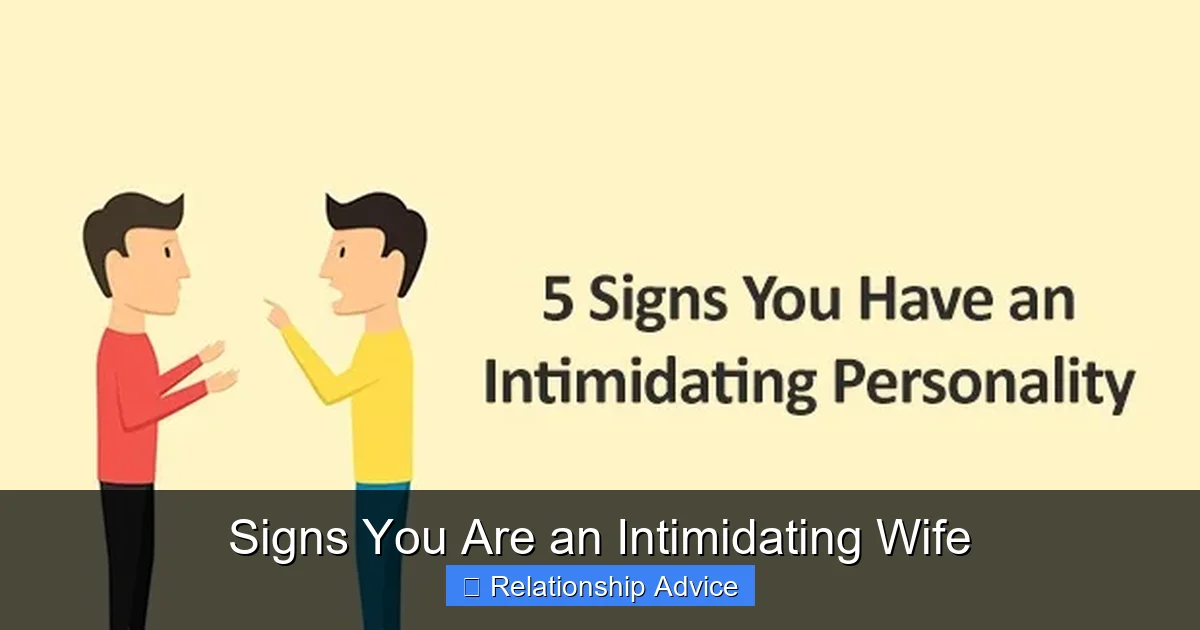
Visual guide about Signs You Are an Intimidating Wife
Image source: 4.bp.blogspot.com
Another sign you might be an intimidating wife is when you’re so used to being in control that you start making decisions—big and small—without checking in with your partner. This often happens when you’re highly capable, organized, or used to managing things on your own.
For instance, you might book a family vacation, sign the kids up for extracurriculars, or even make major financial decisions without discussing them first. You’re not trying to exclude your partner; you’re just efficient. But over time, this can make them feel like a bystander in their own life.
Your partner might start saying things like, “You always know what’s best,” or “Why bother asking me? You’ll just do what you want anyway.” These comments aren’t necessarily complaints—they’re cries for inclusion.
Why This Happens—and How to Fix It
This pattern often stems from past experiences where you had to be self-reliant. Maybe you grew up in a household where you had to fend for yourself, or perhaps your partner has historically been passive in decision-making. Over time, you’ve taken the reins—not because you don’t trust them, but because it’s faster and easier.
But in a partnership, decisions should be shared, even if one person takes the lead. The key is to involve your partner in the process, not just the outcome.
Try this: the next time you’re planning something—whether it’s a weekend trip or a home renovation—say, “I’ve been thinking about this, and I’d love your input. What do you think?” Even if you’ve already done the research, inviting their opinion makes them feel valued.
You can also assign roles based on strengths. Maybe you handle finances because you’re good with numbers, but your partner chooses the vacation destination because they love travel. This creates balance and shared ownership.
And if your partner hesitates to contribute, don’t rush in. Give them space to think. Say, “No pressure—just let me know what you’re thinking when you’re ready.” Sometimes, people need time to process before they feel confident sharing their thoughts.
Sign #3: You’re Emotionally Self-Sufficient—Maybe Too Self-Sufficient
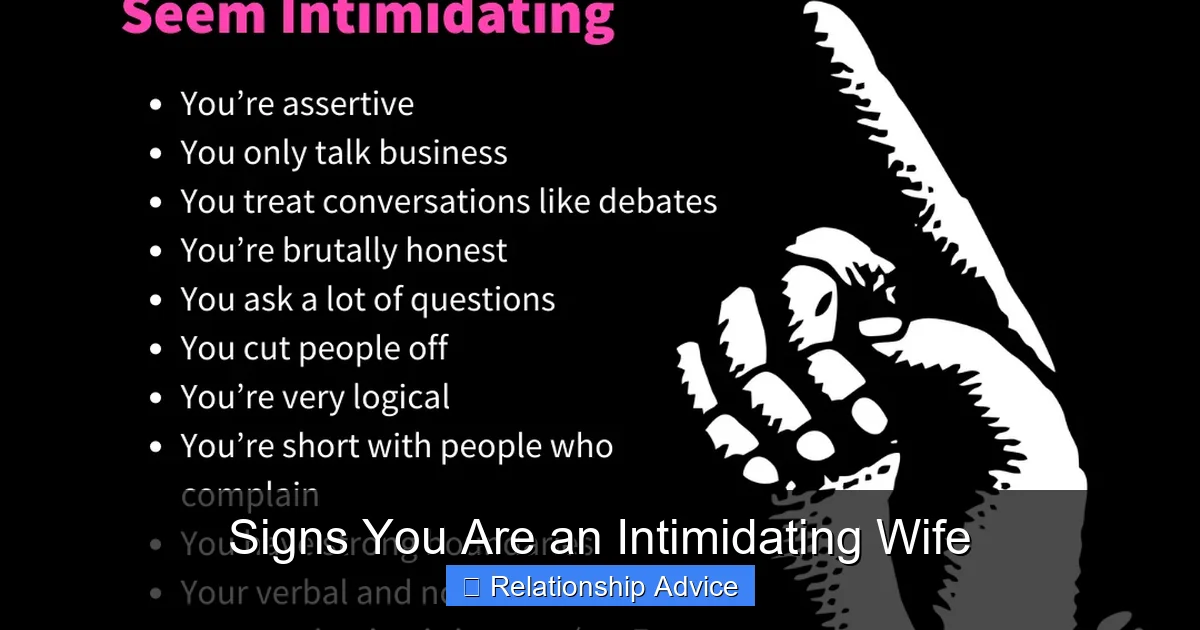
Visual guide about Signs You Are an Intimidating Wife
Image source: niagarainstitute.com
Being emotionally strong is a gift. You don’t fall apart under pressure. You process your feelings quickly and move on. You don’t need constant reassurance or hand-holding. But here’s the catch: when you’re too self-sufficient, your partner might feel like they’re not needed—or worse, that you don’t trust them with your emotions.
This is a common trait among intimidating wives. You’ve learned to rely on yourself because it’s safer, faster, and more reliable. But in a marriage, emotional intimacy requires vulnerability. If you never lean on your partner, they may start to wonder, “Do they even need me?”
For example, when you’re stressed about work, you might go for a run, journal, or talk to a friend—but not your spouse. You’re not trying to shut them out; you’re just used to handling things alone. But your partner might interpret this as emotional distance or disinterest.
How to Invite Your Partner Into Your Inner World
Start small. The next time you’re upset, try saying, “I’m feeling overwhelmed about something, and I could really use your support.” You don’t have to dump everything on them—just let them know you’re opening the door.
You can also practice sharing your thoughts before you’ve fully processed them. Instead of saying, “I’ve figured it out,” try, “I’m still working through this, but here’s what’s on my mind.” This shows that you value their perspective, even if you don’t need them to “fix” anything.
Another tip: ask for their help in areas where you’re strong. For instance, say, “I’m great at planning, but I’m not as good at remembering birthdays. Could you help me stay on top of that?” This gives them a role without making them feel inferior.
And don’t forget to celebrate their emotional support. When they listen, validate your feelings, or offer a comforting word, say, “Thank you for being here for me. That really helped.” This reinforces that their presence matters.
Sign #4: You’re Highly Opinionated—and Not Afraid to Say So
If you’re the kind of wife who speaks her mind without hesitation, you might be unintentionally intimidating. You don’t sugarcoat things. You see a problem and you address it. You have strong views on politics, parenting, finances, and lifestyle—and you’re not shy about sharing them.
While this honesty is refreshing and often appreciated, it can also make others feel like they’re walking on eggshells. Your partner might hesitate to share their opinion, fearing it will be shot down or criticized. Friends might avoid deep conversations with you, worried they’ll say the “wrong” thing.
This doesn’t mean you should stop being honest. But it does mean learning how to express your opinions in a way that invites dialogue, not defensiveness.
How to Share Your Views Without Shutting Others Down
One strategy is to use “I” statements instead of “you” statements. Instead of saying, “You never listen to me,” try, “I feel unheard when I’m interrupted.” This focuses on your experience rather than blaming the other person.
You can also soften your tone. Instead of saying, “That’s a terrible idea,” try, “I see it differently. Here’s why…” This opens the door for discussion instead of shutting it.
Another tip: ask questions before offering your opinion. For example, “What do you think about this?” or “How do you feel about that decision?” This shows respect for their perspective and gives them space to speak.
And when your partner disagrees with you, resist the urge to “win” the argument. Instead, say, “That’s interesting. I hadn’t thought of it that way.” This validates their viewpoint and encourages mutual respect.
Remember: being opinionated isn’t the problem. It’s how you share those opinions that determines whether they build connection or create distance.
Sign #5: You Set Strong Boundaries—But They Feel Like Walls
Strong boundaries are essential in any healthy relationship. They protect your time, energy, and emotional well-being. But when boundaries are set without warmth or explanation, they can feel cold, rigid, or even punitive.
For example, you might say, “I need two hours of quiet time every evening,” or “I don’t discuss work after 7 p.m.” These are reasonable requests—but if delivered like a decree, they can make your partner feel shut out.
An intimidating wife often has excellent boundaries because she’s learned the hard way what happens when they’re crossed. But in a marriage, boundaries work best when they’re communicated with care and collaboration.
How to Set Boundaries That Connect, Not Isolate
Start by explaining the “why” behind your boundary. Instead of saying, “I need quiet time,” say, “I’ve noticed I’m more patient and present with the family when I have a little downtime to recharge. That’s why I’d like to have two quiet hours each evening.”
You can also invite your partner into the process. Ask, “What boundaries do you need to feel your best?” This creates mutual respect and shows that you value their needs too.
And be flexible when possible. If your partner has a special request—like watching a movie together during your usual quiet time—say, “I usually need that time to unwind, but I’d love to make an exception tonight.” This shows that your boundaries aren’t rigid rules, but guidelines for well-being.
Finally, express gratitude when your boundaries are respected. A simple “Thank you for giving me that space—it really helps me be a better partner” goes a long way.
Sign #6: You’re the “Go-To” Person—Even When You Don’t Want To Be
If friends, family, or even your partner constantly turn to you for advice, solutions, or decision-making, it’s a sign of your competence—but also a potential red flag. Being the “fixer” can make you feel indispensable, but it can also isolate you and burden your relationship.
Your partner might say things like, “You always know what to do,” or “Why ask me? You’ll just figure it out anyway.” While this might sound like praise, it can actually reflect their sense of helplessness or lack of agency.
Over time, this dynamic can create resentment—on both sides. You may feel overwhelmed by the constant demand for your input, while your partner may feel powerless or unimportant.
How to Share the Load Without Losing Your Identity
Start by encouraging your partner to problem-solve on their own. When they come to you with an issue, ask, “What do you think you should do?” or “Have you considered this option?” This empowers them to take ownership.
You can also delegate tasks—even ones you’re good at. Say, “I know I’m great at planning, but I’d love it if you took the lead on this trip. I’ll support you, but it’s your project.”
And don’t forget to ask for help yourself. Say, “I’m stuck on this decision. Can you help me think it through?” This shows that you value their input and aren’t afraid to be vulnerable.
Finally, celebrate their successes—especially when they solve something without you. Say, “I’m so proud of how you handled that! You really stepped up.” This reinforces their confidence and strengthens your partnership.
Conclusion: Strength Doesn’t Have to Be Intimidating
Being an intimidating wife isn’t a flaw—it’s a reflection of your strength, intelligence, and independence. But like any powerful force, your presence needs to be balanced with awareness, empathy, and intention.
The goal isn’t to become less of who you are. It’s to become more mindful of how you show up in your relationship. By softening your tone, inviting collaboration, and creating space for your partner’s voice, you can maintain your power while deepening your connection.
Remember: a strong marriage isn’t about who’s in charge. It’s about two people who feel seen, valued, and safe—even when one of them shines a little brighter. You don’t have to dim your light to let your partner glow. You just have to learn how to shine together.
Frequently Asked Questions
Is being an intimidating wife a bad thing?
No, it’s not inherently bad. Many intimidating wives are confident, capable, and successful. The issue arises when their strengths unintentionally make their partner feel small or excluded. It’s about balance, not blame.
How can I tell if my partner feels intimidated by me?
Signs include hesitation to share opinions, avoiding deep conversations, or making passive comments like “You always know best.” Open, non-judgmental communication is the best way to understand their feelings.
Should I change who I am to avoid being intimidating?
No. You don’t need to change your core self. Instead, focus on how you express your strengths—so they invite connection rather than create distance.
What if my partner is just insecure?
Insecurity can play a role, but it’s not the whole story. Even confident people can feel overshadowed. The solution is mutual support, not one person dimming their light.
Can an intimidating wife have a healthy marriage?
Absolutely. With awareness, communication, and intentional effort, strong women can build deeply loving and balanced relationships.
How do I talk to my partner about this without sounding critical?
Frame the conversation around connection, not correction. Say, “I’ve noticed I might come across as intense sometimes. I want us to feel close—how can I show up better for you?”