
Relationships end for many reasons, and often one partner checks out long before the breakup happens. Recognizing the signs the relationship is over for him can save you emotional pain and help you move forward with clarity and confidence.
Key Takeaways
- Emotional withdrawal is a major red flag: If he stops sharing feelings, avoids deep conversations, or seems distant, he may have emotionally left the relationship.
- Lack of effort in daily interactions: When he stops initiating plans, forgets important dates, or shows indifference, it’s a sign he’s no longer invested.
- Increased criticism or defensiveness: Constant nitpicking, sarcasm, or shutting down during discussions often signals resentment or disengagement.
- Avoidance of future plans: If he dodges talks about vacations, moving in, or long-term goals, he may not see a future with you.
- Physical and intimate distance: A noticeable decline in affection, touch, or sexual intimacy often reflects a deeper emotional disconnection.
- He prioritizes everything else over you: When work, friends, or hobbies consistently come first, it shows where your relationship ranks in his life.
- You feel more alone than connected: If you’re constantly questioning his feelings or feeling unsupported, the relationship may already be over for him.
📑 Table of Contents
- Introduction: When Love Fades in Silence
- Emotional Withdrawal: The First Major Sign
- Lack of Effort: When Actions Speak Louder Than Words
- Increased Criticism and Defensiveness
- Avoidance of Future Plans
- Physical and Intimate Distance
- He Prioritizes Everything Else Over You
- Conclusion: Trust Your Gut and Move Forward
Introduction: When Love Fades in Silence
Relationships are built on connection, trust, and mutual effort. But sometimes, one person quietly steps back—without saying a word. You might notice small changes at first: he’s less responsive to texts, cancels plans last minute, or seems distracted when you’re together. You brush it off as stress or a busy week. But over time, the pattern continues. The warmth fades. The conversations grow shallow. And you start to wonder: *Is this relationship over for him—even if he hasn’t said it yet?*
It’s a painful realization, but one that many people face. Men, like anyone, don’t always communicate their feelings directly—especially when it comes to ending a relationship. Instead of saying “I’m done,” they often pull away slowly, leaving their partner confused and heartbroken. Recognizing the signs the relationship is over for him isn’t about jumping to conclusions. It’s about paying attention to behavior, not just words. Because actions—or the lack of them—speak louder than promises.
This article will help you identify the subtle and not-so-subtle signals that he’s emotionally checked out. Whether you’re in a long-term partnership or a newer relationship, understanding these signs can empower you to make informed decisions about your future. You deserve honesty, respect, and love that’s actively shown—not just assumed. Let’s explore what it really means when a man is no longer invested in a relationship.
Emotional Withdrawal: The First Major Sign
Visual guide about Signs the Relationship Is Over for Him
Image source: lauradoyle.org
One of the earliest and most telling signs the relationship is over for him is emotional withdrawal. This doesn’t always mean he’s angry or confrontational. In fact, it often looks like quiet detachment. He stops sharing his day, his thoughts, or his feelings. Conversations become surface-level—weather, work, TV shows—but nothing personal or meaningful.
He Stops Opening Up
In healthy relationships, partners feel safe to be vulnerable. They talk about fears, dreams, and insecurities. But when a man is pulling away, he shuts down emotionally. You might ask, “How are you really doing?” and get a one-word answer like “Fine” or “Busy.” He avoids deep talks, changes the subject, or gives vague responses. Over time, you stop asking because you know you won’t get a real answer.
For example, imagine you’re going through a tough time at work. In the past, he’d listen, offer support, and maybe even share a similar experience. Now, he barely looks up from his phone. When you try to talk, he says, “That sucks,” and changes the channel. This isn’t just disinterest—it’s emotional disengagement.
He Becomes Emotionally Unavailable
Emotional unavailability goes beyond not talking. It’s when he stops responding to your emotional needs altogether. If you’re sad, he doesn’t comfort you. If you’re excited about something, he doesn’t share in your joy. He might offer a quick “That’s nice” but doesn’t ask follow-up questions or show genuine interest.
This creates a one-sided dynamic. You’re still emotionally invested, but he’s not meeting you halfway. You start carrying the emotional weight of the relationship alone. And that’s exhausting.
He Avoids Conflict—But Not in a Healthy Way
Some people avoid conflict because they value peace. But when a man is emotionally checked out, he avoids conflict because he doesn’t care enough to resolve it. Instead of talking through disagreements, he shuts down, walks away, or gives the silent treatment. He might say, “I don’t want to fight,” but what he really means is, “I don’t want to engage.”
This passive approach leaves problems unresolved and builds resentment. You feel unheard, and he feels relieved to avoid the conversation. It’s a lose-lose.
What You Can Do
If you notice emotional withdrawal, don’t ignore it. Have an honest conversation. Say something like, “I’ve noticed we haven’t been connecting like we used to. I miss talking to you. Is everything okay?” Give him space to respond—but also be prepared for the possibility that he’s not willing to open up. If he continues to shut you out, it may be time to reevaluate the relationship.
Lack of Effort: When Actions Speak Louder Than Words
Visual guide about Signs the Relationship Is Over for Him
Image source: cdn.mamamia.com.au
Love is shown through actions, not just words. When a man is truly invested, he makes an effort—small gestures, thoughtful surprises, consistent communication. But when the relationship is over for him, that effort disappears. He stops trying, and it shows in everyday behaviors.
He Stops Initiating Contact
In the early stages of a relationship, he was probably the one texting first, calling just to say hi, or suggesting plans. Now, you’re always the one reaching out. You text, he replies hours later—if at all. You call, he says he’s busy. You suggest a date, and he “forgets” or cancels.
This shift isn’t just about being busy. It’s about priority. When someone cares, they make time. When they don’t, they find excuses. If you’re constantly initiating and he’s barely responding, it’s a strong sign he’s no longer invested.
He Forgets Important Dates
Anniversaries, birthdays, even small milestones—these matter in a relationship. They show that you’re remembered and valued. But when a man is checked out, he starts forgetting. He might remember his best friend’s birthday but not yours. He’ll say, “Oh, I totally forgot,” with no apology or effort to make it up to you.
This isn’t just forgetfulness. It’s indifference. He’s not making you a priority, so your special moments slip his mind.
He Shows No Interest in Your Life
Does he ask about your day? Your goals? Your family? If not, it’s a red flag. A man who cares wants to know what’s going on in your world. He asks questions, remembers details, and shows genuine interest. But when he’s emotionally gone, he tunes out. You could tell him something important, and he’ll forget it by the next day.
For instance, you mention a big presentation at work. A week later, he asks, “Did that thing at work ever happen?” That’s not just forgetful—it’s disinterested.
He Doesn’t Make Time for You
Time is one of the most valuable things we give. When a man is serious about a relationship, he carves out time for his partner—even when life gets busy. But if he’s always “too busy” for dates, calls, or even a quick coffee, it’s a sign he’s deprioritizing you.
He might say, “I’m swamped with work,” but then post pictures of him hanging out with friends. Or he’ll promise to spend time together “next week”—but next week never comes. This inconsistency shows where you stand.
What You Can Do
Effort is a two-way street. If you’re the only one putting in work, it’s time to address it. Say, “I’ve noticed I’m always the one planning things or reaching out. I’d love it if you took more initiative.” If he responds positively and starts making an effort, that’s a good sign. But if he brushes it off or doesn’t change, it may be time to move on.
Increased Criticism and Defensiveness
Visual guide about Signs the Relationship Is Over for Him
Image source: choosingtherapy.com
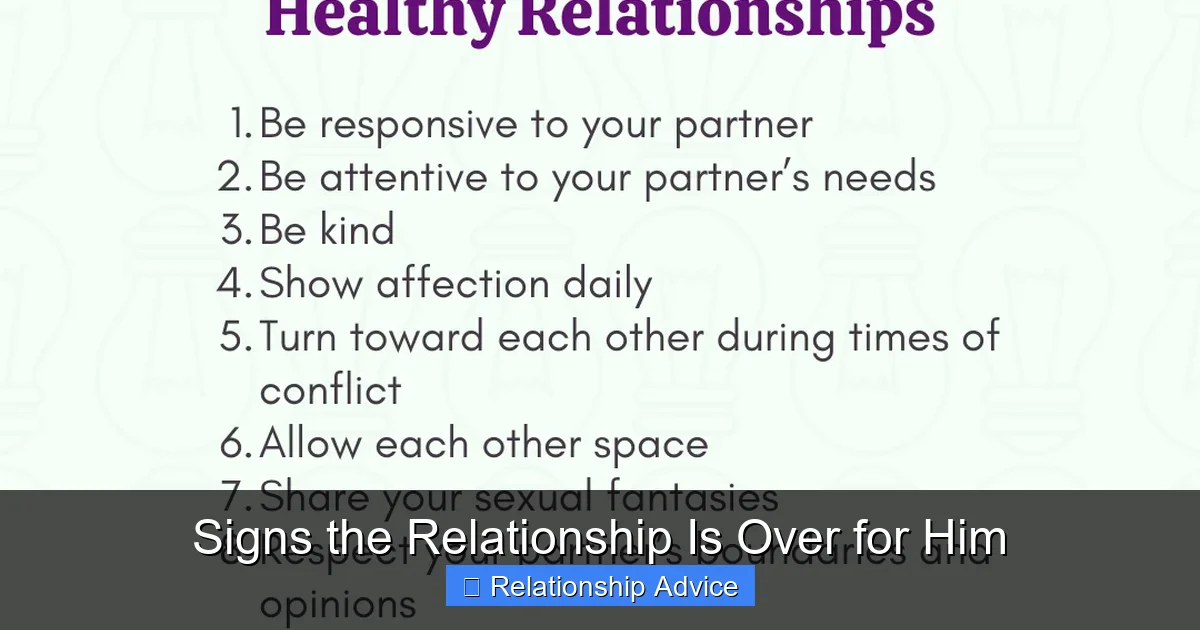
When a relationship is healthy, partners support and uplift each other. But when one person is emotionally disengaged, criticism often increases. It might start small—a sarcastic comment, a backhanded compliment—but it grows over time. He becomes more critical, more defensive, and less willing to see your perspective.
He Nitpicks Everything
Suddenly, nothing you do is good enough. He criticizes how you cook, how you dress, how you talk to friends. It’s not constructive feedback—it’s constant nitpicking. He might say, “You always leave your shoes in the hallway,” or “Why do you always take so long to get ready?”
This isn’t about the shoes or the time. It’s about frustration. He’s unhappy, and he’s taking it out on you. Criticism becomes his way of expressing dissatisfaction—without addressing the real issue.
He Gets Defensive Over Small Things
In a strong relationship, partners can handle gentle feedback. But when a man is checked out, he becomes overly sensitive. Bring up a concern—like him not helping with chores—and he immediately gets defensive. “I do plenty around here!” or “You’re always criticizing me!”
This defensiveness shuts down communication. Instead of listening, he attacks. Instead of resolving issues, he escalates them. It creates a toxic cycle where you feel like you can’t speak up without starting a fight.
He Uses Sarcasm or Passive-Aggressive Comments
Sarcasm can be playful in small doses. But when it becomes frequent, it’s a weapon. He might say, “Oh, great, another one of your brilliant ideas,” or “Sure, let’s do whatever you want—like always.” These comments are meant to belittle, not connect.
Passive-aggressive behavior—like giving the silent treatment, making snide remarks, or “forgetting” to do things you asked—shows he’s unhappy but unwilling to communicate directly. It’s a coward’s way of expressing anger.
What You Can Do
If criticism and defensiveness are increasing, address it calmly. Say, “I’ve noticed we’ve been arguing more, and I feel like we’re not hearing each other. Can we talk about what’s really going on?” If he’s willing to reflect and change, there’s hope. But if he continues to criticize or shut down, it may be a sign the relationship is over for him.
Avoidance of Future Plans
One of the clearest signs the relationship is over for him is when he avoids talking about the future. In healthy relationships, partners discuss goals, dreams, and plans together. But when a man is emotionally checked out, he dodges these conversations—or gives vague, non-committal answers.
He Changes the Subject
You bring up a vacation idea, and he says, “Maybe someday.” You mention moving in together, and he laughs it off: “We’re not there yet.” You talk about marriage, and he says, “Let’s not get ahead of ourselves.”
These responses aren’t just cautious—they’re evasive. He’s not saying “no,” but he’s not saying “yes” either. He’s keeping his options open while keeping you at arm’s length.
He Makes Excuses for Not Committing
When you push for clarity, he makes excuses. “I’m not ready.” “We’re too young.” “Let’s just see how things go.” These aren’t reasons—they’re delays. He’s not willing to invest in a future with you, but he doesn’t want to lose you either.
This creates a limbo state. You’re waiting for him to be ready, but he may never be. And in the meantime, you’re putting your life on hold.
He Doesn’t Include You in His Plans
Does he talk about his future without you? “I’m thinking of moving to another city.” “I might go back to school.” “I’m considering a job overseas.” These are major life decisions—and he’s making them solo.
If he’s not including you in his future vision, it’s a strong sign he doesn’t see you as part of it. He’s planning a life—just not one with you.
What You Can Do
Don’t wait indefinitely for him to “be ready.” Have a direct conversation: “I care about you, and I want to build a future together. But I need to know if you see that happening.” If he can’t give you a clear answer, it may be time to walk away.
Physical and Intimate Distance
Physical intimacy is a key part of romantic relationships. It’s not just about sex—it’s about affection, connection, and closeness. When a man is emotionally checked out, this intimacy often fades. He becomes physically distant, and the spark disappears.
He Stops Initiating Physical Contact
In the past, he might have held your hand, kissed you goodbye, or cuddled on the couch. Now, he doesn’t initiate touch. You reach for his hand, and he pulls away. You try to hug him, and he stiffens. Physical affection becomes rare—or one-sided.
This isn’t just about sex. It’s about comfort and connection. When he stops touching you, it’s a sign he’s no longer feeling close.
Sex Becomes Routine or Nonexistent
Sexual intimacy often declines when emotional intimacy fades. He might still have sex, but it feels mechanical—like a chore, not a connection. Or he might avoid it altogether, saying he’s “tired” or “not in the mood”—every single time.
This isn’t always about attraction. It’s about emotional availability. When a man is checked out, he doesn’t feel connected enough to be intimate.
He Avoids Being Alone with You
Does he suggest group hangouts instead of date nights? Does he invite friends over when you want quiet time together? This avoidance of one-on-one time is a red flag. He’s not avoiding *you*—he’s avoiding intimacy.
Being alone together creates vulnerability. It requires emotional presence. And if he’s not willing to be present, he’ll find ways to stay busy—or surrounded by others.
What You Can Do
Talk about intimacy openly. Say, “I’ve noticed we’re not as close physically as we used to be. I miss that connection. Can we talk about what’s going on?” If he’s willing to work on it, great. If not, it may be a sign the relationship is over.
He Prioritizes Everything Else Over You
When a man is truly invested, you’re a priority—not an afterthought. But when the relationship is over for him, everything else comes first: work, friends, hobbies, even his phone.
Work Always Comes First
It’s normal for work to be busy sometimes. But if he’s *always* working late, canceling plans for work, or talking about work nonstop, it’s a sign you’re not a priority. He might say, “I have to do this for my career,” but what he’s really saying is, “My career matters more than us.”
Friends and Hobbies Take Precedence
He makes time for golf with the guys, video games, or weekend trips—but not for you. You suggest a date, and he says, “I already made plans.” But when his friends call, he drops everything.
This isn’t about balance. It’s about choice. He’s choosing other things over you—repeatedly.
He’s Always on His Phone
If he’s scrolling through his phone during dinner, ignoring you during conversations, or texting others while you’re together, it’s a sign he’s mentally checked out. His attention is elsewhere—even when he’s physically present.
What You Can Do
Ask yourself: *Do I feel like a priority?* If the answer is no, it’s time to have a conversation. But remember—you can’t force someone to prioritize you. You can only choose whether to stay in a relationship where you’re not valued.
Conclusion: Trust Your Gut and Move Forward
Recognizing the signs the relationship is over for him isn’t about blaming or accusing. It’s about honesty—with yourself and with him. Relationships require mutual effort, emotional connection, and shared vision. When one person checks out, the foundation crumbles.
You might love him. You might still hope for change. But love isn’t enough if it’s not reciprocated. You deserve a partner who shows up—emotionally, physically, and mentally. Someone who makes you feel seen, heard, and valued.
If you’ve noticed multiple signs—emotional withdrawal, lack of effort, criticism, avoidance of the future, physical distance, or deprioritization—it’s time to face the truth. The relationship may already be over for him. And that’s okay.
Letting go is hard, but it’s also liberating. It opens the door to healing, growth, and eventually, a love that’s truly mutual. You don’t need to stay in a relationship that’s already ended in his heart. Trust your instincts. Honor your worth. And take the next step—toward a future that’s full of real, active love.
Frequently Asked Questions
How do I know if he’s just stressed or if the relationship is really over?
Stress can cause temporary distance, but it usually doesn’t last for weeks or months. If he’s consistently withdrawn, avoids plans, and shows no effort to reconnect, it’s likely more than stress. Pay attention to patterns, not just isolated incidents.
Should I confront him if I think the relationship is over for him?
Yes, but do it calmly and honestly. Say something like, “I’ve noticed some changes, and I’m feeling disconnected. I’d like to talk about where we stand.” This gives him a chance to respond—and you clarity on his intentions.
Can a relationship recover if one person has emotionally checked out?
It’s possible, but only if both people are willing to work on it. If he’s open to counseling, communication, and change, there’s hope. But if he’s resistant or indifferent, recovery is unlikely.
What if he says he loves me but acts distant?
Words matter, but actions matter more. If he says “I love you” but doesn’t show it through effort, time, or emotional availability, his actions are telling the real story. Love should be felt, not just spoken.
How long should I wait for him to change?
You don’t need to wait indefinitely. If you’ve communicated your needs and seen no real change in 4–6 weeks, it’s time to reevaluate. Your emotional well-being shouldn’t depend on someone else’s willingness to change.
Is it selfish to leave if I think the relationship is over for him?
No. Staying in a one-sided relationship out of guilt or hope isn’t fair to either of you. You deserve a partnership where both people are fully invested. Leaving isn’t selfish—it’s self-respect.