

If your partner suddenly stops putting in effort, ignores your needs, or treats you like a backup plan, he might be taking you for granted. Recognizing these signs early can help you reclaim your worth and decide whether the relationship is truly fulfilling.
Key Takeaways
- He stops initiating contact: If you’re always the one texting, calling, or planning dates, it’s a red flag he’s not prioritizing you.
- Your efforts go unnoticed: When he doesn’t acknowledge your sacrifices or support, it shows a lack of appreciation.
- He cancels plans last minute: Frequent cancellations without valid reasons suggest you’re not a priority in his life.
- He expects you to fix his problems: If he leans on you emotionally but doesn’t reciprocate, the relationship is one-sided.
- He doesn’t include you in his future: Avoiding talks about long-term plans means he may not see you as part of his life ahead.
- He takes your kindness for weakness: If he pushes boundaries and you keep forgiving him, he may assume you’ll always tolerate it.
- You feel drained, not energized: Healthy relationships uplift you—if you constantly feel exhausted or unappreciated, something’s off.
📑 Table of Contents
- Introduction: When Love Feels One-Sided
- He Only Shows Up When It’s Convenient for Him
- Your Efforts Go Unnoticed—or Worse, Unappreciated
- He Cancels Plans—and Doesn’t Seem to Care
- He Relies on You Emotionally—But Doesn’t Give Back
- He Doesn’t Include You in His Future
- You Feel Drained, Not Energized
- Conclusion: Reclaim Your Worth
Introduction: When Love Feels One-Sided
You remember the early days—the sweet texts, the surprise coffee runs, the way he looked at you like you were the only person in the room. Back then, every little gesture felt meaningful. But lately, something’s shifted. You’re doing all the heavy lifting: planning dates, remembering important dates, offering emotional support, and still, you feel invisible. Sound familiar?
It’s not that he’s suddenly a bad person. It’s that he’s gotten comfortable. And in that comfort, he’s started taking you for granted. This doesn’t happen overnight. It creeps in slowly—through missed calls, half-hearted apologies, and a growing sense that you’re giving more than you’re receiving. You might even blame yourself: “Maybe I’m asking too much,” or “He’s just busy.” But here’s the truth: love shouldn’t feel like a chore. And if you’re constantly questioning whether he values you, it’s time to pay attention.
Recognizing the signs he’s taking you for granted isn’t about pointing fingers or starting a fight. It’s about honoring your worth. Every relationship requires effort from both sides. When one person stops trying, the balance breaks. And while it’s easy to make excuses for someone you care about, ignoring the warning signs can lead to resentment, loneliness, and emotional burnout. The good news? Once you spot the patterns, you can take action—whether that means having a heart-to-heart, setting boundaries, or walking away.
He Only Shows Up When It’s Convenient for Him

Visual guide about Signs Hes Taking You for Granted
Image source: realestlove.com
One of the clearest signs he’s taking you for granted is when his presence in your life depends entirely on his schedule—not yours. If he only reaches out when he’s bored, lonely, or needs something, but disappears when you need support, that’s a major red flag.
You’re His Backup Plan
Think about the last time you needed him. Maybe you were stressed at work, going through a family issue, or just wanted to talk. Did he show up? Or did he say he was “too busy” or “not in the mood”? Now compare that to when *he* needed something—a ride, advice, or someone to vent to. Chances are, he expected you to drop everything.
This pattern creates an unhealthy dynamic: you’re always available, but he’s only available when it suits him. Over time, you start to feel like a convenience—not a partner. For example, Sarah noticed her boyfriend would text her every night around 10 p.m., right after he finished watching his show. But when she tried to call him during a tough day at work, he said he was “winding down” and couldn’t talk. That’s not balance. That’s using you as an emotional crutch when it’s easy.
He Doesn’t Respect Your Time
Another telltale sign? He treats your time like it’s less valuable than his. He might show up late to dates, cancel plans with little notice, or expect you to rearrange your schedule on a whim. Meanwhile, he gets upset if you’re even five minutes late.
Take Mark, who would often reschedule date nights because “something came up”—usually a last-minute hangout with friends. But when Lisa had to cancel once due to a family emergency, he acted hurt and said, “I was really looking forward to seeing you.” Double standards like this reveal a lack of respect. If he truly valued you, he’d treat your time with the same importance he expects for his own.
What You Can Do
Start by paying attention to the pattern. Keep a mental (or written) note of when he reaches out and why. If 80% of his contact is self-serving, it’s time to speak up. Try saying:
“I’ve noticed that we mostly connect when you need something. I’d love it if we could spend more quality time together, not just when it’s convenient for you.”
If he responds with defensiveness or doesn’t change his behavior, it’s a sign he’s not willing to put in the effort. And that’s okay—you deserve someone who shows up consistently, not just when it’s easy.
Your Efforts Go Unnoticed—or Worse, Unappreciated
Visual guide about Signs Hes Taking You for Granted
Image source: realestlove.com
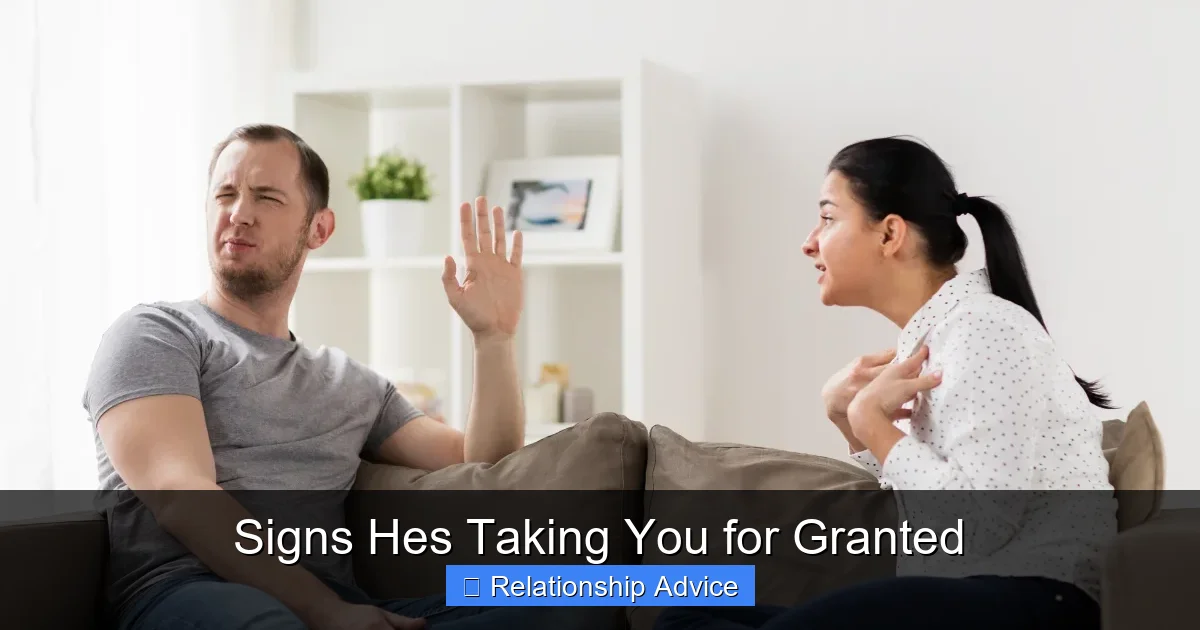
You remember his favorite meal and cook it for him. You listen to him vent about his day without interrupting. You surprise him with little gifts or notes just because. These acts of love matter. But if he never acknowledges them—or worse, expects them as the norm—he’s taking your kindness for granted.
He Doesn’t Say “Thank You”
Gratitude is a small word with a big impact. When someone thanks you, it validates your effort and shows they see you. But if you’re constantly doing things for him and he never says “thank you,” it sends a message: your work isn’t valued.
For instance, Emma would always pack her boyfriend lunch when he forgot his, drive him to appointments when his car was in the shop, and help him study for exams. But he never thanked her. When she finally brought it up, he shrugged and said, “That’s what partners do, right?” Wrong. Partners *choose* to do things for each other—and they appreciate it when it happens.
He Expects You to Read His Mind
Another sign? He gets upset when you don’t do something he never asked for. Maybe he’s mad you didn’t pick up his dry cleaning, even though he didn’t tell you it was ready. Or he’s disappointed you didn’t plan a surprise date, even though he never expressed interest in one.
This is emotional laziness. Healthy relationships involve communication, not mind-reading. If he expects you to anticipate his needs without telling you, he’s placing an unfair burden on you. And when you inevitably fall short (because you’re not a mind reader), he acts hurt—shifting the blame onto you.
What You Can Do
Start expressing your needs clearly. Instead of assuming he should know, say:
“I’d love it if you thanked me when I do something kind for you. It makes me feel appreciated.”
Also, stop doing things out of obligation. If you’re only helping because you feel guilty saying no, that’s a problem. Set boundaries. For example, if he asks you to pick up his dry cleaning again, say:
“I’m happy to help sometimes, but I can’t be responsible for your errands. Maybe we can figure out a system that works for both of us?”
When you stop over-giving, you’ll quickly see who steps up—and who doesn’t.
He Cancels Plans—and Doesn’t Seem to Care
Visual guide about Signs Hes Taking You for Granted
Image source: herway.net
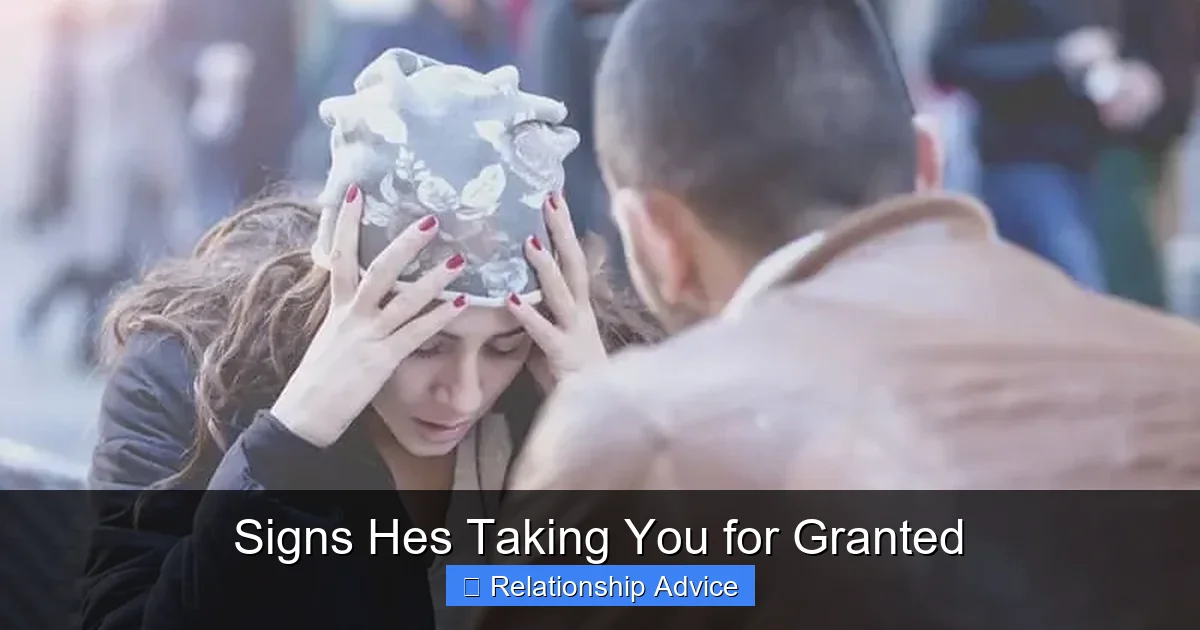
We all have busy lives. Sometimes plans change. But if he cancels on you frequently—and doesn’t seem bothered by it—he’s sending a clear message: you’re not a priority.
Last-Minute Cancellations Are the Norm
If he regularly texts you an hour before a date saying, “Sorry, can’t make it,” or “Something came up,” pay attention. Is “something” always more important than you? Is he canceling for reasons that seem flimsy—like “I’m tired” or “I forgot I had plans with friends”?
Jake used to cancel dinner plans with his girlfriend, Lisa, at least once a week. His excuses ranged from “My boss asked me to stay late” to “I just want to stay in and watch TV.” But when Lisa canceled once due to illness, he got upset and said, “You never prioritize us.” That’s not fair. And it’s not sustainable.
He Doesn’t Reschedule
A respectful partner doesn’t just cancel—they make it right. If he truly values your time, he’ll suggest a new date or ask how he can make it up to you. But if he leaves you hanging with no follow-up, it shows he doesn’t care about the impact on you.
For example, after canceling their third movie night in a row, Mark didn’t suggest another time. When Sarah asked, “When can we reschedule?” he said, “I don’t know, maybe next week?” That lack of initiative speaks volumes.
What You Can Do
Stop accepting last-minute cancellations without consequences. The next time he cancels, say:
“I understand things come up, but I’d appreciate it if you gave me more notice. And let’s pick a new time now so I can plan around it.”
If he brushes it off or doesn’t reschedule, take it as a sign. You deserve someone who respects your time enough to follow through.
He Relies on You Emotionally—But Doesn’t Give Back
Emotional support is a two-way street. In a healthy relationship, both partners listen, validate, and comfort each other. But if he only shares his problems and never asks about yours, the relationship becomes unbalanced.
You’re His Therapist, Not His Partner
If he calls you after a bad day at work, vents about his boss, and expects you to fix it—but never asks how *you’re* doing—he’s using you as an emotional dumping ground. This isn’t partnership; it’s dependency.
Take Rachel, who listened to her boyfriend complain about his job for months. She offered advice, encouraged him to look for new opportunities, and even helped him update his resume. But when she lost her job, he said, “That sucks,” and changed the subject. That’s not support. That’s taking.
He Doesn’t Celebrate Your Wins
A loving partner celebrates your successes as if they were their own. But if you get a promotion, finish a big project, or achieve a personal goal, and he responds with a half-hearted “Cool” or “Good for you,” it shows he’s not truly invested in your happiness.
For example, when Maria got accepted into grad school, her boyfriend said, “That’s great, but it’s going to be hard with your schedule.” No excitement. No pride. Just doubt. That kind of response can make you feel small—and make you question whether he even wants you to succeed.
What You Can Do
Start by modeling the behavior you want. When he shares something, respond with empathy—but also share your own feelings. Say:
“I’m sorry you’re stressed about work. I’ve been feeling overwhelmed too. Can we talk about both of our days?”
If he shuts you down or changes the subject, point it out gently:
“I notice we mostly talk about your problems. I’d love it if we could support each other equally.”
If he’s unwilling to meet you halfway, it’s a sign the relationship isn’t balanced.
He Doesn’t Include You in His Future
Love isn’t just about the present—it’s about building a future together. If he avoids talking about long-term plans, introduces you as “a friend,” or makes decisions without considering you, he may not see you as part of his life ahead.
He Avoids “The Future” Talk
Does he dodge questions like “Where do you see us in five years?” or “What are your plans for the summer?” If so, he might be keeping you at arm’s length emotionally.
For instance, when asked about moving in together, David said, “I don’t know, maybe someday.” But when his friend asked about buying a house, he had a detailed plan. That inconsistency shows where his priorities lie.
You’re Not Part of His Social Circle
A partner who values you will want you to meet his friends and family. But if he keeps you separate—introducing you as “my girlfriend” but never inviting you to gatherings—it suggests he’s not serious.
Take Lisa, who dated her boyfriend for over a year but was never invited to family dinners or friend hangouts. When she asked why, he said, “They’re not really into meeting new people.” That’s not an excuse—it’s avoidance.
What You Can Do
Bring up the future in a low-pressure way. Say:
“I’ve been thinking about our future. What are your thoughts on living together or traveling together next year?”
Pay attention to his response. Is he open? Evasive? Dismissive? His answer will tell you everything you need to know.
You Feel Drained, Not Energized
At the end of the day, how do you feel after spending time with him? Refreshed? Happy? Or emotionally exhausted?
If you constantly feel drained, anxious, or unappreciated, the relationship is taking more than it’s giving. Healthy love should lift you up—not wear you down.
You Second-Guess Yourself
When someone takes you for granted, you start to doubt your worth. You wonder: “Am I too needy?” “Do I expect too much?” “Is it my fault he’s pulling away?”
But here’s the truth: you’re not the problem. You’re giving your best to a relationship that isn’t reciprocating. And that’s not your fault.
You’re Afraid to Speak Up
If you’re scared to voice your needs because you fear he’ll get angry, leave, or guilt-trip you, that’s a sign of imbalance. Love should feel safe—not like walking on eggshells.
What You Can Do
Check in with yourself regularly. Ask:
“Do I feel valued in this relationship?”
“Am I growing, or just surviving?”
If the answer is no, it’s time to reevaluate. You deserve a partner who cherishes you—not one who only shows up when it’s convenient.
Conclusion: Reclaim Your Worth
Recognizing the signs he’s taking you for granted isn’t about blame—it’s about clarity. It’s about understanding whether this relationship is meeting your emotional needs or slowly eroding your self-worth.
You are not a backup plan. You are not a convenience. You are a person with feelings, dreams, and boundaries—and you deserve to be treated with respect.
If he’s willing to change, great. Have an honest conversation. Set boundaries. Give him a chance to step up. But if he continues to dismiss your efforts, cancel plans, or make you feel small, it may be time to walk away.
Remember: love shouldn’t feel like a sacrifice. It should feel like coming home. And if your home doesn’t feel safe, it’s okay to look for one that does.
Frequently Asked Questions
How can I tell if he’s taking me for granted or just busy?
If he’s truly busy, he’ll make time when it matters and communicate openly. But if he’s always “too busy” for you but finds time for others, it’s a sign he’s not prioritizing you.
Should I confront him about feeling taken for granted?
Yes—but do it calmly and clearly. Use “I” statements like, “I feel unappreciated when my efforts go unnoticed,” instead of blaming him.
Can a relationship recover from one partner taking the other for granted?
Yes, if both people are willing to change. It requires honesty, effort, and a commitment to balance. But if only one person is trying, it’s unlikely to last.
What if he says I’m overreacting?
Your feelings are valid. If he dismisses your concerns, it’s a red flag. A loving partner will listen—not minimize your emotions.
How do I stop feeling guilty for setting boundaries?
Boundaries aren’t selfish—they’re necessary. You can’t pour from an empty cup. Protecting your energy is an act of self-respect.
When is it time to leave the relationship?
If you’ve communicated your needs, set boundaries, and he still doesn’t change, it may be time to go. You deserve a partner who values you every day—not just when it’s convenient.