
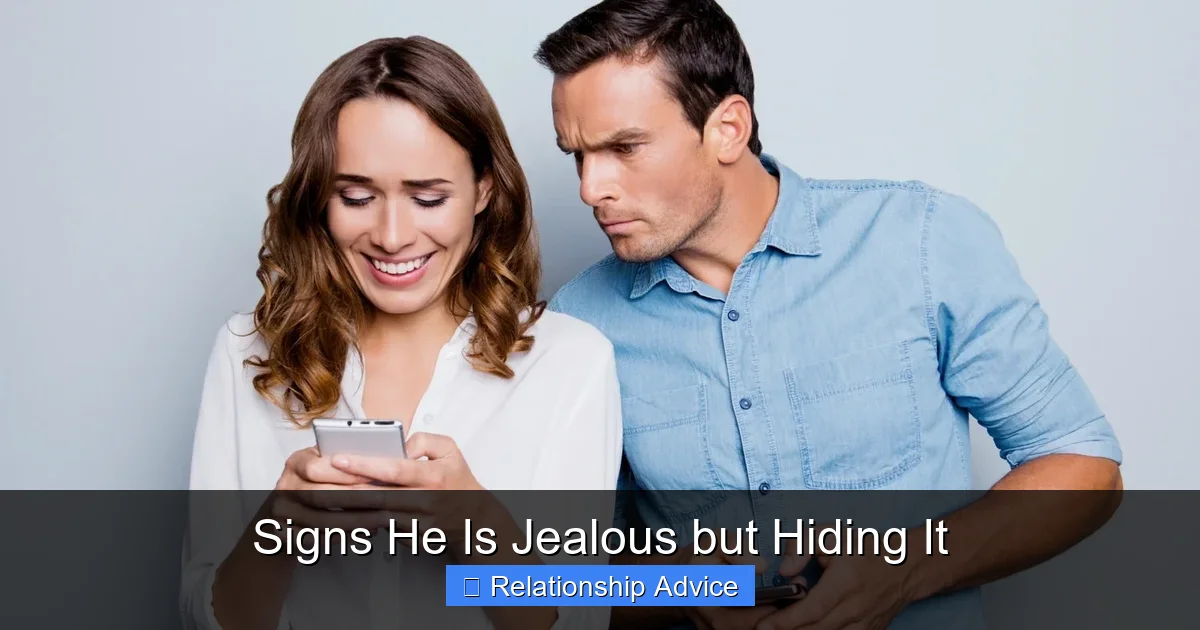
If your guy acts off when you talk to others, gives short replies, or suddenly becomes overly busy, he might be jealous but hiding it. These quiet cues often stem from insecurity, not disinterest—and recognizing them can help you address the root issue with empathy and honesty.
Key Takeaways
- He becomes unusually quiet or withdrawn around people he perceives as threats, even if he acts normal otherwise.
- His tone shifts subtly—sarcasm, clipped responses, or forced cheerfulness may mask underlying jealousy.
- He overanalyzes your interactions with others, asking pointed questions or making assumptions without evidence.
- Body language betrays him: crossed arms, avoiding eye contact, or standing closer to you in social settings.
- He suddenly finds reasons to be “busy” when you mention plans with friends—especially male friends.
- He compares himself indirectly, dropping comments about his job, looks, or achievements to measure up.
- He tests your loyalty subtly, like joking about you dating someone else or asking hypothetical questions about attraction.
📑 Table of Contents
- Why Men Hide Jealousy (And What It Really Means)
- Subtle Behavioral Shifts That Reveal Hidden Jealousy
- Body Language Clues You Can’t Ignore
- Verbal Cues That Mask Insecurity
- Changes in Routine and Availability
- How to Respond When You Notice the Signs
- When Hidden Jealousy Becomes a Problem
- Building Trust to Reduce Hidden Jealousy
- Final Thoughts: Love, Trust, and Emotional Honesty
Why Men Hide Jealousy (And What It Really Means)
Let’s be real—jealousy isn’t just a plot twist in romantic movies. It’s a real, raw emotion that shows up in everyday relationships, often when we least expect it. But here’s the twist: many men don’t wear their jealousy on their sleeve. Instead, they bury it under layers of silence, sarcasm, or fake indifference. Why? Because society still whispers that “real men” shouldn’t feel insecure. So instead of saying, “I’m worried you’ll leave me,” they shut down, act cold, or pretend everything’s fine—even when it’s not.
Understanding this hidden jealousy isn’t about calling him out or making him feel ashamed. It’s about recognizing the vulnerability behind the behavior. When a man hides his jealousy, it usually stems from fear—fear of losing you, fear of not being enough, or fear of looking weak. And while jealousy itself isn’t inherently bad (it can signal care and attachment), how it’s expressed matters. The key is spotting the signs early so you can address it together, before resentment builds or trust erodes.
The Emotional Roots of Hidden Jealousy
Jealousy often grows in the soil of past experiences. Maybe he’s been cheated on before. Maybe he grew up in a household where emotions were dismissed. Or perhaps he’s just naturally more anxious in relationships. Whatever the cause, hiding jealousy is rarely about you—it’s about his inner world. He might worry that if he admits he’s jealous, you’ll think he’s controlling or insecure. So he bottles it up, hoping it’ll go away.
But emotions don’t disappear when ignored. They leak out in subtle ways: a tightened jaw when you mention your coworker, a sudden interest in your weekend plans, or a comment that sounds lighthearted but carries a sting. These aren’t red flags of toxicity—they’re cries for reassurance disguised as indifference. And if you know what to look for, you can respond with compassion instead of confusion.
Subtle Behavioral Shifts That Reveal Hidden Jealousy
Visual guide about Signs He Is Jealous but Hiding It
Image source: realestlove.com
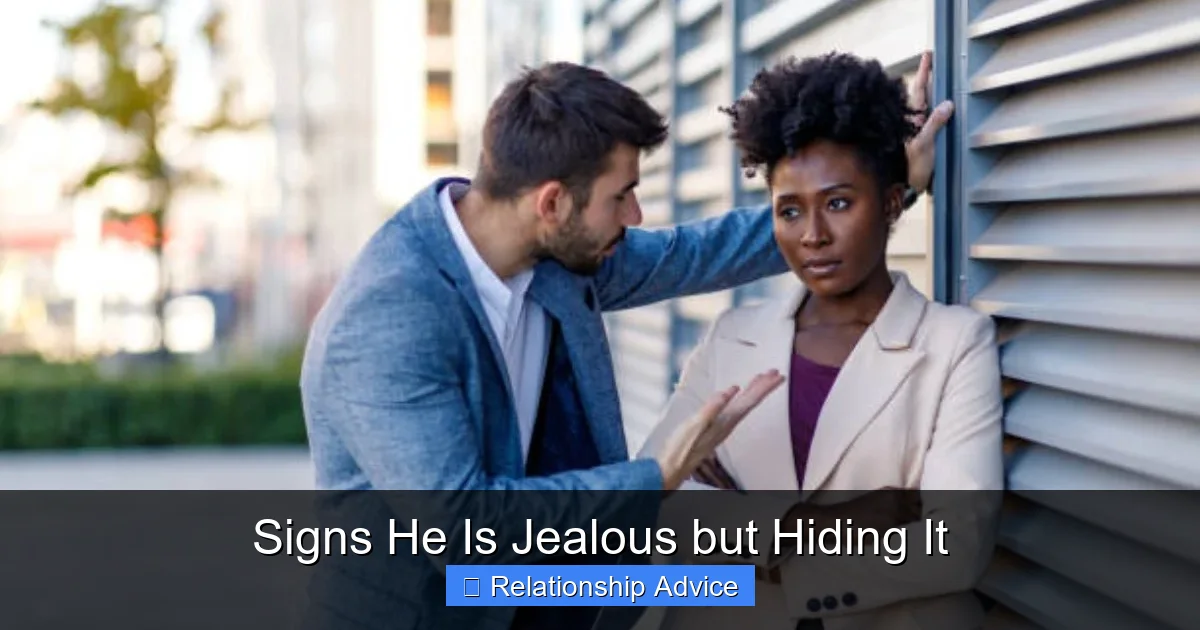
One of the biggest clues that he’s jealous but hiding it? His behavior changes—just not in the obvious ways. He won’t yell or accuse. Instead, he’ll pull back, act distracted, or seem “off” without explanation. These shifts are often so subtle that you might blame yourself (“Did I do something wrong?”) or dismiss them as stress. But pay attention: consistent patterns matter more than isolated incidents.
For example, imagine you go out with friends and post a photo with a male coworker. Normally, he’d comment with a heart or a joke. But this time? Silence. Or worse—a dry “Looks fun” that feels more like a verdict than a compliment. That’s not indifference. That’s jealousy simmering beneath the surface.
He Becomes Quiet or Withdrawn Around Certain People
Notice how he acts when you’re around specific individuals—especially men he doesn’t know well. Does he suddenly go quiet? Avoid joining conversations? Or pretend to be on his phone? These aren’t signs of rudeness—they’re signs of discomfort. He might feel threatened, even if there’s no real reason to. And instead of saying, “I feel uneasy,” he retreats.
This withdrawal isn’t about you being inappropriate. It’s about his perception. Maybe he’s comparing himself. Maybe he’s imagining scenarios that haven’t happened. But his silence speaks volumes. If he’s usually chatty but clams up around your friend Jake—the one who always tells funny stories—take note. It’s not Jake he’s avoiding. It’s the idea of you enjoying someone else’s company more than his.
He Overanalyzes Your Conversations and Plans
Another telltale sign? He starts asking more questions—but not the kind that show genuine interest. These are the ones that feel like interrogations disguised as curiosity.
“Who were you texting earlier?”
“How come you’re hanging out with Mark again?”
“Do you really need to go to that work event?”
On the surface, they sound reasonable. But the tone, timing, and frequency reveal the truth. He’s not just checking in—he’s scanning for threats. And when he hides his jealousy, these questions come wrapped in casualness. He might laugh while asking, or follow up with, “Just wondering!” But the underlying worry is real.
Pay attention to the context. If he only asks these questions after you mention a male friend, or if he drills you for details about who’s there, what you’re doing, and how long you’ll be out—that’s not curiosity. That’s jealousy in disguise.
Body Language Clues You Can’t Ignore
Visual guide about Signs He Is Jealous but Hiding It
Image source: realestlove.com
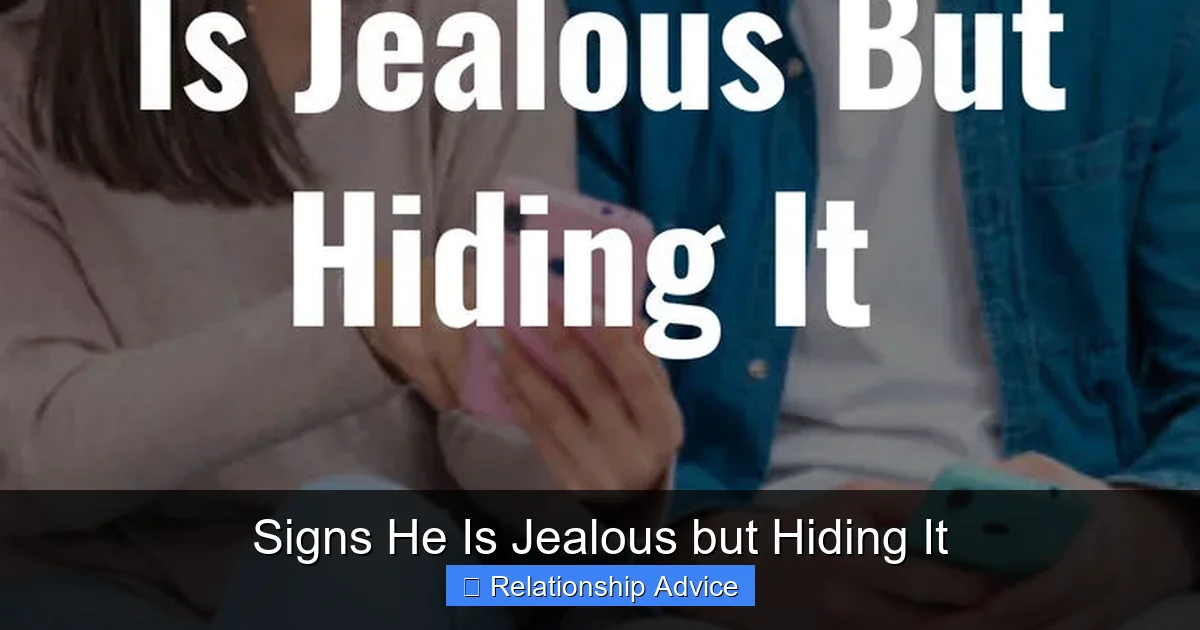
Words can lie. Tone can be faked. But body language? That’s harder to control. When a man is jealous but trying to hide it, his body often betrays him. These nonverbal cues are quick, instinctive, and revealing—if you know where to look.
Crossed Arms, Avoided Eye Contact, or Tense Posture
Imagine you’re at a party, laughing with a group that includes a guy he doesn’t know. You glance over at him, and what do you see? Arms tightly crossed. Eyes fixed on his drink. Shoulders tense. He might even be leaning away from the group, creating physical distance.
This isn’t just “being shy.” It’s a defensive posture. Crossed arms signal封闭 (closed-off) energy. Avoided eye contact suggests discomfort or avoidance. And tension in the shoulders? That’s stress. His body is saying, “I don’t like this,” even if his mouth says, “I’m fine.”
Another clue? He might stand unusually close to you when others are around—not in a romantic way, but in a possessive one. Like he’s marking territory without saying a word. Or he might position himself between you and someone else, subtly blocking access. These aren’t aggressive moves, but they’re protective—and protection often stems from fear.
Microexpressions: The Fleeting Faces of Jealousy
Ever seen someone’s face change for just a split second—like a shadow passing over it? That’s a microexpression. These tiny, involuntary facial movements last less than a second but reveal true emotions. And when it comes to hidden jealousy, they’re gold.
Watch his face when you mention someone he might see as a rival. Does his eyebrow twitch? Does his lip tighten? Does he force a smile that doesn’t reach his eyes? These fleeting reactions are hard to fake. They’re the emotional truth breaking through his calm exterior.
For instance, you might say, “My friend Alex is visiting this weekend,” and see a flash of irritation cross his face—before he quickly replaces it with a nod. That’s not nothing. That’s jealousy, caught in the act.
Verbal Cues That Mask Insecurity
Visual guide about Signs He Is Jealous but Hiding It
Image source: truemedallion.com
Men who hide jealousy often use words as shields. They’ll make jokes, ask hypotheticals, or drop backhanded compliments—all while pretending they’re just being playful or curious. But beneath the surface, these comments are loaded with unspoken worry.
Sarcasm and Backhanded Compliments
“Oh, great. Another guy who thinks he’s funny.”
“Must be nice to have so many options.”
“I guess you’ll be too busy for me now, huh?”
These sound like jokes—but they’re not. They’re passive-aggressive digs wrapped in humor. He’s using sarcasm to express discomfort without taking responsibility for it. And the more he does it, the more it chips away at your confidence and the relationship’s safety.
Backhanded compliments are another red flag. “You look nice—for once.” “That guy seems smart… for a change.” These aren’t compliments. They’re comparisons, and they reveal insecurity. He’s not just commenting on you—he’s measuring himself against others.
Hypothetical Questions and “What If” Scenarios
“What if you met someone better than me?”
“Would you ever date someone like that?”
“Do you think he’s your type?”
These questions seem innocent, but they’re tests. He’s probing your loyalty, your standards, your feelings—without directly asking. And when he hides his jealousy, he frames them as curiosity: “Just wondering!” or “I’m not jealous, I swear!”
But the repetition and timing give him away. If he asks these questions after you mention a new coworker, or when you’re getting ready to go out, it’s not random. It’s fear speaking through hypotheticals.
Changes in Routine and Availability
When jealousy is hidden, it often shows up in behavior—not words. One of the clearest signs? He suddenly becomes “too busy” when you have plans that involve others.
He’s Suddenly Unavailable When You Mention Social Plans
You say, “I’m grabbing dinner with Sarah and her boyfriend tonight.”
He replies, “Oh. I’ve got that thing. Can’t make it.”
But last week, he dropped everything to join you for coffee with a friend. Now? He’s suddenly swamped. Coincidence? Maybe. But if this pattern repeats—especially when your plans include people he perceives as threats—it’s likely jealousy-driven avoidance.
He’s not avoiding you. He’s avoiding the situation. Being around you while you interact with others makes him uncomfortable. So he removes himself, hoping the discomfort will disappear. But it doesn’t. It just builds.
He Overcompensates with Attention—Then Pulls Back
Another pattern? He showers you with affection right before you see someone else—then goes cold afterward.
Example: The night before you meet up with an old friend, he texts you sweet messages, plans a surprise, or acts extra loving. But the day after? Radio silence. Short replies. Distant tone.
This isn’t inconsistency—it’s emotional whiplash caused by jealousy. The pre-event attention is reassurance-seeking: “Please remember you love me.” The post-event withdrawal is insecurity: “Did I lose you?”
It’s a cycle that leaves you confused. One day he’s all in. The next, he’s gone. And if you don’t recognize the jealousy behind it, you might think he’s losing interest—when really, he’s scared.
How to Respond When You Notice the Signs
Spotting hidden jealousy is one thing. Responding wisely is another. The goal isn’t to shame him or prove you’re loyal. It’s to create a safe space where he can express his fears without fear of judgment.
Start with Empathy, Not Accusations
Instead of saying, “You’re being jealous again,” try:
“I noticed you seemed quiet when I mentioned hanging out with Jake. Is everything okay?”
This opens the door without blame. You’re observing behavior, not attacking character. And when he feels safe, he’s more likely to admit, “Yeah, I guess I felt a little insecure.”
Avoid phrases like “You always” or “You never.” They put him on defense. Instead, use “I” statements:
“I feel confused when you pull away after I talk about my friends. I want us to feel secure together.”
Reassure Without Overcompensating
Reassurance is important—but don’t overdo it. You’re not responsible for managing his emotions. You can say, “I love you, and my friendships don’t change that,” without cutting off your social life.
Set boundaries gently:
“I understand you feel uneasy, and I care about that. But I also need to spend time with my friends. Can we talk about how to make that work for both of us?”
This balances empathy with self-respect.
Encourage Open Communication
Invite him to share his feelings—without pressure. Try:
“If something bothers you, I’d rather you tell me than hold it in. We’re a team.”
You might also suggest regular check-ins: “How are you feeling about us this week?” This normalizes emotional honesty and reduces the need for hidden jealousy.
And if he struggles to open up? Be patient. Change takes time. But consistency in your response—calm, kind, and clear—will build trust over time.
When Hidden Jealousy Becomes a Problem
Not all jealousy is unhealthy. But when it’s hidden, it can fester. Watch for signs that it’s crossing into control or manipulation:
– He demands access to your phone or social media.
– He criticizes your friends or tries to isolate you.
– He uses guilt to keep you from seeing others (“If you really loved me, you’d cancel”).
– He becomes angry or passive-aggressive when you don’t comply.
These aren’t signs of love—they’re signs of insecurity turned toxic. And if they persist, it’s time to have a serious conversation—or consider whether the relationship is truly safe and supportive.
Remember: healthy jealousy is fleeting and expressed openly. Unhealthy jealousy is controlling, repetitive, and hidden. Know the difference.
Building Trust to Reduce Hidden Jealousy
The best way to reduce hidden jealousy? Build a foundation of trust. When he feels secure, he’s less likely to hide his emotions—or act them out in subtle ways.
Be Transparent (But Not Overbearing)
Share your plans openly: “I’m meeting Sarah for lunch tomorrow—want to join?” This isn’t about permission. It’s about inclusion. Transparency reduces mystery, and mystery fuels insecurity.
But don’t feel obligated to report every detail. You’re not on trial. Balance honesty with autonomy.
Celebrate His Strengths
Insecurity often comes from comparison. So remind him of what makes him special—not in a flattery way, but in a genuine one.
“I love how you always know how to make me laugh.”
“You’re so thoughtful—I noticed you remembered my favorite snack.”
These affirmations reinforce his value in your life, reducing the fear of being replaced.
Create Shared Experiences
Jealousy thrives in isolation. Connection reduces it. Plan activities you both enjoy—cooking together, hiking, game nights. Shared positive experiences build emotional safety and remind him that he’s your priority.
And when you do spend time with others? Invite him when appropriate. Inclusion beats exclusion every time.
Final Thoughts: Love, Trust, and Emotional Honesty
Hidden jealousy isn’t a dealbreaker—but ignoring it can be. The signs are there, if you know how to look. The quiet withdrawals, the sarcastic jokes, the sudden busyness—they’re not random. They’re cries for reassurance from a man who’s afraid to show his fear.
But here’s the good news: you have the power to respond with kindness, clarity, and courage. By recognizing the signs, speaking with empathy, and building trust, you can help him feel safe enough to stop hiding. And when he does? That’s when real intimacy begins.
Remember, love isn’t about perfection. It’s about presence. It’s about showing up—even when emotions are messy, even when fear whispers lies. And if you’re both willing to do that, hidden jealousy doesn’t have to stay hidden. It can become a bridge to deeper connection.
So the next time he acts off, don’t assume the worst. Assume he’s human. And then—gently, honestly—invite him to share what’s really going on. Because the most powerful thing you can offer isn’t proof of your loyalty. It’s the space to be vulnerable, together.
Frequently Asked Questions
Is it normal for men to hide jealousy?
Yes, it’s common. Many men are taught to suppress emotions like insecurity or fear, so they hide jealousy instead of expressing it openly. This doesn’t mean it’s healthy—just that it’s a learned behavior.
How can I tell if his jealousy is unhealthy?
Unhealthy jealousy involves control, isolation, guilt-tripping, or repeated accusations without cause. If he tries to limit your freedom or reacts with anger when you see friends, it’s time to set boundaries.
Should I confront him directly about his jealousy?
Approach with care. Instead of accusing, express concern: “I’ve noticed you seem uneasy when I talk about my friends. I want us to feel secure together.” This invites dialogue without blame.
Can hidden jealousy turn into trust issues?
Yes, if unaddressed. Repeated hidden jealousy can erode trust over time, especially if it leads to passive-aggressive behavior or emotional withdrawal. Open communication is key to prevention.
What if he denies being jealous?
Don’t push. Say, “I believe you,” and shift focus to how you both can feel more secure. Denial is common—give him space to process, but stay consistent in your openness.
How long does it take to overcome hidden jealousy?
It varies. With patience, honesty, and mutual effort, many couples see improvement in weeks or months. But if patterns persist, consider couples counseling to build healthier communication skills.