
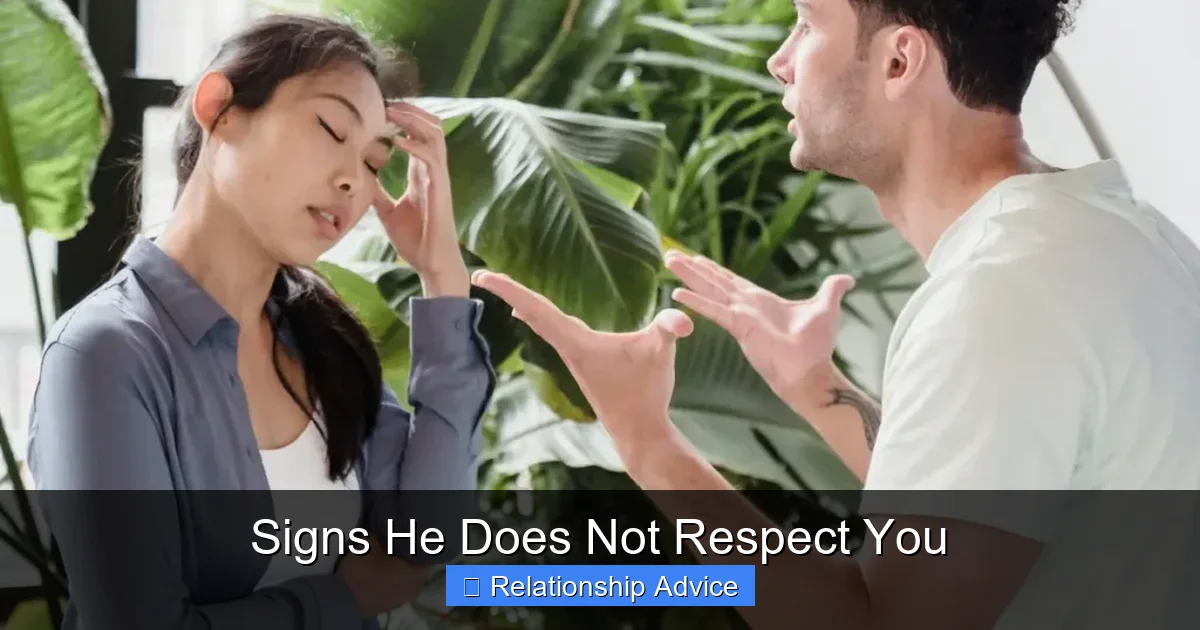
One of the clearest signs he does not respect you is when he consistently dismisses your feelings, opinions, or boundaries. Whether it’s interrupting you, making decisions without you, or belittling your achievements, these behaviors reveal a lack of genuine regard. Respect is the foundation of any healthy relationship—without it, trust and emotional safety erode quickly.
Key Takeaways
- He dismisses your opinions: Consistently ignoring or belittling your thoughts shows lack of respect.
- He breaks promises: Repeatedly failing to follow through erodes trust and respect.
- He disrespects your boundaries: Pushing limits or mocking your needs is a red flag.
- He doesn’t value your time: Chronic lateness or canceling plans signals low priority.
- He avoids accountability: Blaming others instead of owning mistakes reveals disrespect.
- He undermines your goals: Discouraging your ambitions shows disregard for your growth.
📑 Table of Contents
- Signs He Does Not Respect You
- He Dismisses Your Feelings and Opinions
- He Disregards Your Boundaries
- He Doesn’t Value Your Time
- He Lacks Accountability and Blames Others
- He Compares You Unfavorably to Others
- He Doesn’t Support Your Independence
- Summary Table: Key Signs He Does Not Respect You
- Final Thoughts: Trust Your Instincts
Signs He Does Not Respect You
Ever had that gut feeling that something’s off in your relationship—even when everything seems fine on the surface? Maybe he cancels plans last minute, talks over you, or dismisses your feelings like they don’t matter. You keep telling yourself, “He’s just stressed,” or “He didn’t mean it that way.” But deep down, you’re wondering: Does he really respect me?
Respect is the quiet foundation of any healthy relationship. It’s not about grand gestures or constant praise—it’s in the little things: how he listens when you speak, whether he values your time, and if he treats your boundaries like they matter. When respect is missing, love alone can’t hold things together. And the truth is, many of us stay in relationships far too long, mistaking familiarity for affection and silence for peace. But if you’re constantly second-guessing whether you’re being treated fairly, it might be time to look closer.
In this post, we’ll walk through the most telling signs he does not respect you—not to scare you, but to empower you. Because recognizing disrespect isn’t about assigning blame; it’s about reclaiming your worth. Whether you’re dating casually or in a long-term partnership, understanding these red flags can help you decide whether to work on things together or walk away with your dignity intact. Let’s dive in.
He Dismisses Your Feelings and Opinions
One of the clearest signs he does not respect you is when your emotions are routinely minimized or brushed aside. Respect means acknowledging that your feelings are valid—even if he doesn’t agree with them. But when he responds to your concerns with sarcasm, eye rolls, or phrases like “You’re overreacting,” it sends a message: your inner world doesn’t matter.
Visual guide about Signs He Does Not Respect You
Image source: realestlove.com
He invalidates your emotions
Imagine you’re upset because he forgot your anniversary. Instead of apologizing or trying to make it up to you, he says, “It’s just a date. Why are you making such a big deal out of it?” That’s not just careless—it’s dismissive. Validating someone’s feelings doesn’t mean you have to agree with their reaction; it means you recognize that their experience is real to them. When he consistently invalidates your emotions, he’s telling you that your pain isn’t important.
He interrupts or talks over you
Have you ever been mid-sentence, sharing something personal or important, only for him to cut in with his own story or opinion? That’s not just rude—it’s a sign of disrespect. In respectful conversations, both people take turns speaking and truly listen. If he constantly interrupts, finishes your sentences, or changes the subject when you’re opening up, he’s signaling that your voice isn’t worth hearing.
He mocks your passions or goals
Maybe you’ve started a new hobby, enrolled in a course, or shared a dream about changing careers. A respectful partner would encourage you, ask questions, and celebrate your growth. But if he responds with jokes like, “Oh, another one of your little projects?” or “You’ll never actually do that,” he’s not just being skeptical—he’s belittling your ambitions. True respect means supporting your dreams, even if they don’t align with his own.
What you can do: Pay attention to how often your feelings are dismissed. Keep a mental (or written) note of instances where you felt unheard. Then, have an honest conversation: “I’ve noticed that when I share how I feel, sometimes it gets brushed off. It makes me feel like my emotions don’t matter. Can we talk about that?” If he responds defensively or refuses to acknowledge your concern, that’s a red flag.
He Disregards Your Boundaries
Healthy relationships thrive on mutual boundaries—clear lines that protect your emotional, physical, and mental well-being. When someone respects you, they honor those boundaries without pushback. But if he routinely crosses them, ignores your “no,” or pressures you into things you’re uncomfortable with, it’s a major sign he does not respect you.
Visual guide about Signs He Does Not Respect You
Image source: realestlove.com
He pressures you sexually or emotionally
Consent isn’t just about sex—it’s about respecting your right to say no at any time, about anything. If he pushes you to be intimate when you’re not ready, guilt-trips you (“If you loved me, you’d…”), or gets angry when you set limits, that’s a violation of your autonomy. Emotional pressure counts too: if he demands constant attention, gets upset when you spend time with friends, or isolates you from loved ones, he’s treating your boundaries like suggestions.
He ignores your requests repeatedly
Let’s say you’ve asked him multiple times not to show up unannounced at your workplace because it makes you uncomfortable. But he keeps doing it anyway, saying, “I just wanted to surprise you!” Surprises are nice—when they’re welcome. When they’re not, and you’ve clearly said so, continuing the behavior shows a lack of respect for your space and comfort.
He uses guilt or manipulation to get his way
Manipulation often masquerades as care. “I just worry about you,” he says, after checking your phone without permission. Or, “I only say these things because I love you,” after criticizing your appearance. These phrases sound loving on the surface but are often used to justify controlling behavior. Respect means accepting your choices—even when he disagrees.
What you can do: Be clear and direct about your boundaries. Use “I” statements: “I need some alone time on weekends,” or “I’m not comfortable with you texting my friends.” Observe how he responds. Does he listen and adjust? Or does he argue, mock, or ignore you? His reaction will tell you everything you need to know.
He Doesn’t Value Your Time
Time is one of the most precious things we give to others. When someone respects you, they treat your time as valuable—because you are valuable. But if he’s consistently late, cancels plans last minute, or expects you to drop everything for him, it’s a strong indicator that he doesn’t truly respect you.
Visual guide about Signs He Does Not Respect You
Image source: realestlove.com
He’s frequently late or flakes on plans
We all have busy lives. Occasional delays happen. But if he’s always 30 minutes late to dates, shows up unprepared, or cancels plans with a casual “Something came up,” without offering a real explanation or apology, he’s sending a message: your time isn’t important. Compare that to how he treats his own commitments—does he show up on time for work, meetings, or hanging out with his friends? If the answer is yes, the double standard is glaring.
He expects you to prioritize him constantly
It’s normal to make sacrifices in a relationship. But respect means balancing give and take. If he demands your immediate attention—calling or texting repeatedly when you’re busy, getting angry when you can’t drop everything—he’s treating your schedule like an inconvenience. A respectful partner understands that you have a life outside of him and supports your independence.
He wastes your time with empty promises
“I’ll call you tomorrow.” “We’ll go on that trip next month.” “I’m really going to change.” Sound familiar? When promises are made but never kept, it’s not just disappointing—it’s disrespectful. It shows that your time and emotional investment aren’t taken seriously. Over time, these broken commitments erode trust and make you feel like you’re waiting for a version of him that never shows up.
What you can do: Start setting small boundaries around time. If he’s late, don’t wait indefinitely. Say, “I’ll wait 15 minutes, and then I’ll head out.” If he cancels plans, don’t immediately reschedule. Let him take the initiative. His actions will reveal whether he truly values your time—or just expects you to be available whenever it suits him.
He Lacks Accountability and Blames Others
Respect includes taking responsibility for your actions. When someone respects you, they own their mistakes, apologize sincerely, and work to do better. But if he constantly shifts blame, makes excuses, or refuses to admit fault—even when it’s obvious—he’s showing a lack of respect for you and the relationship.
He never apologizes—or gives fake apologies
We’ve all heard the hollow “I’m sorry you feel that way.” That’s not an apology—it’s a deflection. A real apology acknowledges harm: “I’m sorry I yelled at you. That was wrong, and I’ll work on managing my anger.” If he avoids accountability by saying things like “You made me do it” or “I wouldn’t have done that if you hadn’t…”, he’s refusing to take ownership. And that refusal disrespects your experience of the situation.
He blames you for his behavior
Let’s say he snaps at you during an argument. Instead of calming down or reflecting, he says, “You always push my buttons.” Or maybe he forgets to pay a bill, and when you bring it up, he says, “You should’ve reminded me.” This kind of blame-shifting is a classic sign of emotional immaturity and disrespect. It turns your valid concerns into problems you caused.
He refuses to grow or change
People aren’t perfect. We all have flaws. But respect means being open to feedback and willing to grow. If you’ve calmly pointed out a pattern—like how he interrupts you—and he responds with defensiveness, denial, or mockery, he’s showing that your input isn’t valued. Growth requires humility. And humility is a cornerstone of respect.
What you can do: Pay attention to how he handles conflict. Does he listen, reflect, and adjust? Or does he shut down, attack, or blame? You can say, “I’ve noticed that when we disagree, it often ends with me feeling blamed. I’d like us to work on taking responsibility for our parts.” His willingness (or lack thereof) to engage in that conversation will speak volumes.
He Compares You Unfavorably to Others
We all have moments of insecurity, and sometimes people make offhand comments without thinking. But when comparisons become a pattern—especially negative ones—it’s a serious red flag. Constantly measuring you against exes, friends, or even fictional characters sends the message that you’re not enough as you are.
He brings up exes in a flattering way
“My ex always cooked dinner when I got home.” “She never complained about my schedule.” These comments might seem harmless, but they’re not. They subtly imply that you fall short. A respectful partner focuses on your strengths, not someone else’s. If he’s frequently praising past relationships in ways that diminish you, it’s a sign he’s not fully present or appreciative of who you are.
He criticizes your appearance, habits, or choices
“You’d look better if you lost a few pounds.” “Why do you spend so much time on that hobby?” “My mom never did it that way.” These remarks aren’t constructive—they’re critical. Respect means accepting your partner as they are, not as you wish they were. Constant criticism, even disguised as “helpful advice,” erodes self-esteem and shows a lack of appreciation.
He uses comparisons to manipulate
“Other guys would’ve left by now.” “My friends think you’re too sensitive.” These statements aren’t just comparisons—they’re threats. They’re designed to make you feel insecure and compliant. A respectful partner builds you up, not tears you down to control you.
What you can do: Notice the tone and frequency of comparisons. Are they occasional, or do they happen regularly? Do they leave you feeling worse about yourself? If so, address it directly: “When you compare me to others, it makes me feel like I’m not good enough. I’d appreciate it if we could focus on us, not other people.” Watch how he responds. Defensiveness or dismissal means the behavior is unlikely to change.
He Doesn’t Support Your Independence
Love shouldn’t mean losing yourself. A respectful partner encourages your individuality—your friendships, career goals, hobbies, and personal growth. But if he becomes jealous, controlling, or resentful when you pursue your own interests, it’s a sign he doesn’t truly respect you as an autonomous person.
He gets jealous of your friendships
Healthy relationships allow space for other connections. But if he questions your loyalty because you hung out with a friend, demands to know who you’re texting, or guilt-trips you for spending time with family, he’s displaying controlling behavior. Jealousy isn’t love—it’s insecurity, and it often leads to isolation.
He undermines your career or goals
Maybe you got a promotion, and instead of celebrating, he says, “Great, now you’ll be even busier.” Or you’re applying to grad school, and he jokes, “Good luck with that. You’ll probably change your mind.” These comments may seem lighthearted, but they chip away at your confidence. A respectful partner lifts you up, even when your path doesn’t include him every step of the way.
He expects you to revolve around him
It’s normal to make compromises in a relationship. But if every decision—from weekend plans to long-term goals—centers solely on his needs, it’s unbalanced. Respect means considering both people’s desires and finding compromises that honor both. If you’re always the one adjusting, sacrificing, or giving in, it’s a sign he doesn’t value your autonomy.
What you can do: Reclaim your independence. Schedule time for your hobbies, reconnect with friends, and pursue goals that excite you. Observe his reaction. Does he support you? Or does he get upset, withdraw, or try to guilt you into staying home? His response will reveal whether he respects your right to be your own person.
Summary Table: Key Signs He Does Not Respect You
| Sign | What It Looks Like | Why It’s Disrespectful |
|---|---|---|
| Dismisses your feelings | Calls you “too sensitive,” interrupts, mocks your concerns | Invalidates your emotional experience |
| Ignores your boundaries | Pressures you, shows up uninvited, checks your phone | Violates your personal autonomy |
| Disregards your time | Chronically late, cancels plans, makes empty promises | Treats your time as less valuable than his |
| Refuses accountability | Blames you, gives fake apologies, denies fault | Shows lack of maturity and respect for truth |
| Compares you negatively | Praises exes, criticizes your choices, uses others as benchmarks | Undermines your self-worth |
| Undermines your independence | Jealous of friends, dismissive of goals, expects constant attention | Sees you as an extension of himself, not an individual |
Final Thoughts: Trust Your Instincts
Recognizing the signs he does not respect you isn’t about painting someone as a villain. It’s about honoring your own worth. Respect isn’t optional in a healthy relationship—it’s essential. And if you’re seeing multiple red flags, it’s okay to pause and ask: Is this relationship serving me?
You deserve to be with someone who listens when you speak, values your time, honors your boundaries, and celebrates you for who you are—not who they want you to be. That doesn’t mean you have to be perfect. It means you deserve to be treated with kindness, honesty, and dignity.
If you’re unsure, try this: Imagine your best friend in your situation. What would you tell them? Would you encourage them to stay, or to walk away? Often, we’re kinder to others than we are to ourselves. Let that compassion guide you.
And remember: leaving a disrespectful relationship isn’t failure—it’s courage. It’s choosing self-respect over comfort, peace over chaos, and your future over a past that no longer serves you. You are worthy of love that lifts you up, not tears you down. Don’t settle for less.
Frequently Asked Questions
What are the signs he does not respect you in a relationship?
Common signs he does not respect you include dismissing your opinions, interrupting you frequently, or making decisions without considering your feelings. These behaviors show a lack of regard for your thoughts and autonomy.
How can you tell if he disrespects you during arguments?
If he yells, uses insults, or refuses to listen during disagreements, these are clear signs he does not respect you. Healthy communication involves listening and staying calm, even when upset.
Does ignoring your boundaries mean he doesn’t respect you?
Yes, consistently ignoring your boundaries—whether emotional, physical, or personal—is a strong sign he does not respect you. Respectful partners honor your limits and communicate openly about them.
Is it a red flag if he never apologizes or takes responsibility?
Absolutely. If he refuses to apologize or blames you for his mistakes, it shows a lack of accountability and respect. Mutual respect includes owning up to errors and valuing your feelings.
Can someone who loves you still show signs of disrespect?
Unfortunately, yes. Love doesn’t automatically equal respect—someone can care for you but still exhibit disrespectful behaviors like lying or being controlling. True respect is essential for a healthy relationship.
What should you do if you notice signs he does not respect you?
Start by having an honest conversation about how his actions make you feel. If the behavior continues, consider setting firm boundaries or seeking support from a counselor to evaluate the relationship.