
Noticing mixed signals from a woman you’re interested in? She might not be disinterested—she could actually be intimidated by you. Understanding these signs can help you respond with empathy, build confidence, and create a stronger connection.
Have you ever found yourself talking to a woman who seems… off? Maybe she’s usually outgoing and funny, but around you, she becomes quiet, awkward, or even a little cold. You might assume she’s not into you—or worse, that you’ve done something wrong. But what if the truth is the opposite? What if she’s actually intimidated by you?
It’s more common than you think. Attraction and intimidation often go hand in hand, especially when someone feels you’re out of their league, overly confident, or simply radiating a presence that makes them nervous. The problem? Most people misread these signals as disinterest, leading to missed opportunities and unnecessary self-doubt.
Understanding the signs a woman is intimidated by you isn’t about ego or manipulation—it’s about emotional intelligence. When you can recognize her nervousness for what it is, you’re better equipped to respond with kindness, patience, and confidence. Instead of pulling away or overcompensating, you can create a space where she feels safe to open up. And that’s where real connection begins.
Key Takeaways
- Body language reveals hidden feelings: Crossed arms, avoiding eye contact, or fidgeting may signal nervousness, not disinterest.
- She overcompensates with politeness: Excessive compliments or overly formal speech can be a defense mechanism when feeling intimidated.
- She seems distracted or “in her head”: Overthinking your presence may cause her to appear distant or unresponsive.
- She tests your reactions subtly: Playful teasing or probing questions may be her way of gauging your confidence and interest.
- She avoids one-on-one situations: Preferring group settings can be a way to feel safer and less exposed around you.
- Her tone shifts around you: A higher-pitched voice or rushed speech often indicates anxiety triggered by your presence.
- Respond with calm confidence: Easing her discomfort through relaxed body language and genuine conversation helps build trust.
📑 Table of Contents
- Why Women Feel Intimidated (And Why It Matters)
- Body Language Cues That Signal Intimidation
- Verbal and Communication Patterns
- Behavioral Signs in Social Settings
- Emotional Responses and Mood Shifts
- How to Respond When You Notice These Signs
- When Intimidation Turns Into Connection
- Final Thoughts: Turning Nerves Into Connection
Why Women Feel Intimidated (And Why It Matters)
Let’s start with the basics: why would a woman feel intimidated by you in the first place? It’s not always about looks or status. Sometimes, it’s the quiet confidence you carry, the way you speak, or even how others respond to you. Maybe you’re successful, well-spoken, or naturally charismatic—traits that can be inspiring but also overwhelming to someone who’s unsure of their own worth in your presence.
Intimidation often stems from comparison. If she perceives you as more accomplished, attractive, or socially skilled, she might worry she won’t measure up. This isn’t about you being “too much”—it’s about her inner dialogue. She might be thinking, “He’s so put together. What if I say something dumb?” or “Everyone likes him. Why would he want to talk to me?”
And here’s the twist: the very qualities that make you appealing can also trigger her anxiety. A strong handshake, direct eye contact, or a calm demeanor might read as dominance or aloofness to someone who’s nervous. She’s not rejecting you—she’s protecting herself from potential embarrassment or rejection.
Recognizing this dynamic is crucial. When you understand that her behavior isn’t a reflection of your worth but her own insecurities, you stop taking it personally. Instead of thinking, “She doesn’t like me,” you start asking, “How can I make her feel more at ease?” That shift in perspective changes everything.
The Role of Social Conditioning
It’s also worth noting that societal expectations play a role. Women are often taught to be polite, accommodating, and non-confrontational—even when they’re feeling anxious. So instead of saying, “I’m nervous around you,” she might withdraw, over-apologize, or act indifferent. These aren’t signs of dislike; they’re coping mechanisms.
Additionally, if she’s been hurt in past relationships or has low self-esteem, she might assume the worst—even when there’s no evidence. Your confidence could be misinterpreted as arrogance, or your silence as judgment. The key is to look beyond surface behavior and consider the emotional context.
Body Language Cues That Signal Intimidation
Visual guide about Signs a Woman Is Intimidated by You
Image source: selfdevelopmentjourney.com
Body language is one of the most reliable indicators of how someone truly feels—especially when their words don’t match their actions. If a woman is intimidated by you, her body will often betray her nervousness, even if she’s trying to play it cool.
One of the most common signs is avoiding eye contact. Now, this doesn’t mean she never looks at you—it means she breaks eye contact quickly, glances away when you speak, or focuses on something else in the room. This isn’t disinterest; it’s a subconscious attempt to reduce the intensity of the interaction. Direct eye contact can feel confrontational or intimate, and when she’s nervous, she may instinctively pull back.
Another telltale sign is closed-off posture. She might cross her arms, turn her body slightly away from you, or keep a physical barrier between you—like a purse, a table, or even another person. These gestures create distance, both physically and emotionally. It’s her way of saying, “I’m not ready to let you in yet.”
You might also notice fidgeting or nervous habits. Playing with her hair, tapping her fingers, adjusting her clothes, or touching her face are all signs of anxiety. These movements release tension and help her feel more in control. If she’s doing these things only around you—but not with others—it’s a strong clue that you’re the source of her nervous energy.
Microexpressions and Facial Cues
Even brief facial expressions can reveal a lot. Watch for microexpressions—fleeting emotions that flash across her face before she can hide them. A quick smile that disappears, a slight frown when you pause speaking, or widened eyes when you make a joke—these are all clues.
Also pay attention to her smile. A genuine smile reaches the eyes (you’ll see crow’s feet), while a nervous smile is often tight-lipped and short-lived. If she smiles at you but it doesn’t quite reach her eyes, she might be trying to be polite while feeling uneasy.
Proximity and Personal Space
How she positions herself in relation to you matters too. If she consistently keeps more distance than usual, takes a step back when you lean in, or avoids sitting next to you in group settings, she’s likely feeling overwhelmed. On the flip side, if she suddenly gets very close—leaning in to hear you, standing unusually near—it could be a sign she’s trying to overcome her nerves and connect.
Remember: context is key. Compare her behavior around you to how she acts with others. If she’s relaxed and open with friends but stiff and quiet with you, intimidation is a likely explanation.
Verbal and Communication Patterns
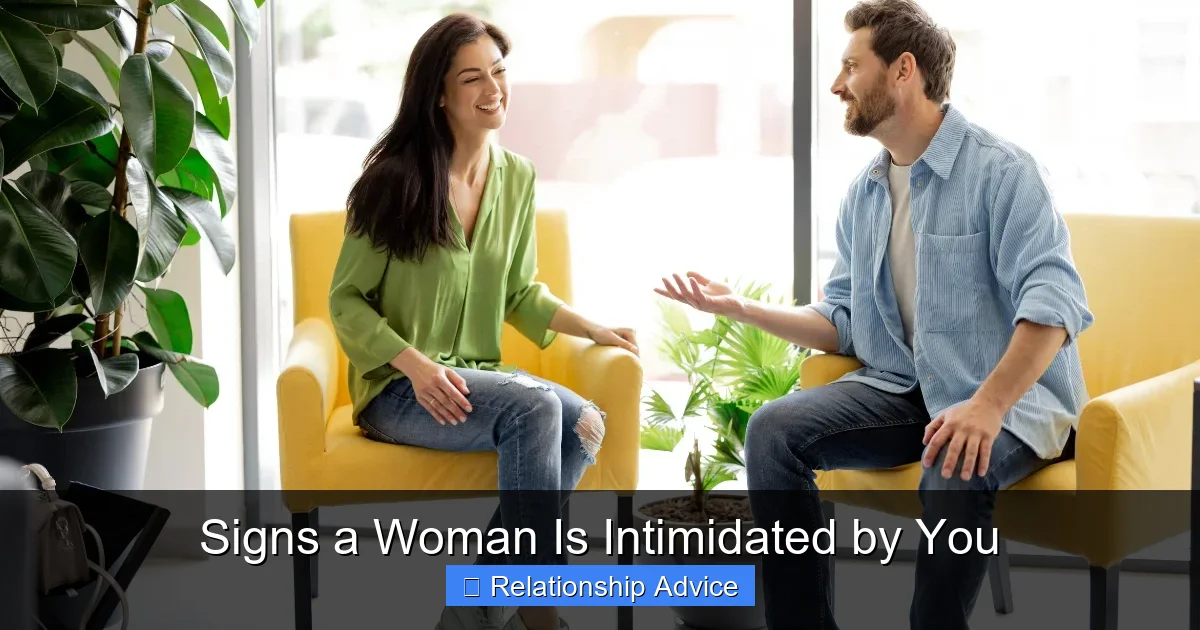
Visual guide about Signs a Woman Is Intimidated by You
Image source: realestlove.com
What she says—and how she says it—can also reveal her level of comfort. When a woman is intimidated, her speech patterns often change in subtle but noticeable ways.
One common sign is over-politeness. She might say “please” and “thank you” excessively, apologize for small things (“Sorry to bother you!”), or use overly formal language. This isn’t necessarily a sign of respect—it’s a buffer. She’s trying to appear agreeable and non-threatening, hoping to avoid conflict or judgment.
You might also notice short or clipped responses. Instead of engaging in conversation, she gives one-word answers or changes the subject quickly. This isn’t rudeness; it’s a defense mechanism. She’s afraid of saying the wrong thing, so she says as little as possible.
Another red flag is rushed or high-pitched speech. When people are nervous, their voice often rises in pitch and speed. She might talk faster than usual, stumble over words, or laugh awkwardly at her own jokes. These are all signs of anxiety, not disinterest.
Testing the Waters
Interestingly, some women respond to intimidation by testing you. She might tease you playfully, challenge your opinions, or ask probing questions like, “So, do you always get what you want?” or “What’s your type?” These aren’t attacks—they’re probes. She’s trying to gauge your confidence, sense of humor, and how you handle pressure.
If you respond with calm humor and authenticity, she’ll feel safer. But if you get defensive or overly serious, she might retreat further.
Silence and Pauses
Don’t mistake silence for disinterest. Sometimes, the most telling moments are the quiet ones. If she goes silent after you speak, it might mean she’s processing what you said—or overthinking her response. Instead of filling the silence immediately, give her a moment. A thoughtful pause can be a sign of respect, not rejection.
Behavioral Signs in Social Settings
Visual guide about Signs a Woman Is Intimidated by You
Image source: realestlove.com
How she acts around you in group settings can be especially revealing. If she’s usually the life of the party but becomes quiet or withdrawn when you’re nearby, that’s a strong indicator of intimidation.
She might also avoid one-on-one interactions. If every time you try to talk privately, she finds an excuse to leave or brings someone else into the conversation, she’s likely feeling exposed. Being alone with you increases the pressure, so she seeks the safety of a crowd.
Another sign is seeking validation from others. She might laugh a little too loudly at someone else’s joke, compliment another person excessively, or position herself near someone she knows well. This is her way of grounding herself and reducing the focus on you.
Group Dynamics and Positioning
Pay attention to where she sits or stands in relation to you. Does she choose a seat far away? Does she angle her body toward others instead of you? These subtle choices reflect her comfort level. If she consistently positions herself at a distance or behind others, she’s likely trying to stay under the radar.
Reactions to Your Success or Attention
If you receive praise, attention, or recognition in a group setting, watch her reaction. Does she look away? Does she seem uncomfortable? If she’s intimidated, your success might trigger feelings of inadequacy. She might not know how to respond—so she disengages.
On the other hand, if she responds with genuine enthusiasm, it’s a good sign she’s comfortable with your presence. But if her reaction feels forced or distant, it’s worth considering the intimidation factor.
Emotional Responses and Mood Shifts
Intimidation often triggers emotional fluctuations. One moment she might seem engaged, and the next, she’s distant or irritable. These mood shifts aren’t random—they’re responses to internal pressure.
For example, she might laugh at your joke one second, then suddenly become serious or quiet. This could mean she’s overanalyzing the interaction: “Was that too much? Did I seem silly?” Her mood dips because she’s caught in a loop of self-doubt.
She might also seem easily flustered. If you compliment her, she blushes, stammers, or changes the subject. This isn’t rejection—it’s overwhelm. Your attention feels intense, and she doesn’t know how to handle it gracefully.
Crying or Emotional Leakage
In rare cases, extreme intimidation can lead to emotional leakage—like tearing up during a conversation or becoming unusually emotional. This isn’t about you being “too much” in a negative way; it’s about her feeling emotionally exposed. If this happens, respond with kindness, not pressure. A simple, “Hey, it’s okay—I’m just here to talk,” can go a long way.
How to Respond When You Notice These Signs
Recognizing the signs is only half the battle. The real skill lies in how you respond. Your goal isn’t to “fix” her or prove your worth—it’s to create a safe, relaxed environment where she can be herself.
Start by lowering the intensity. If she’s nervous, matching her energy with high confidence or rapid-fire conversation will only make it worse. Instead, slow down. Speak calmly, smile warmly, and give her space to breathe.
Use open body language. Uncross your arms, lean back slightly, and avoid staring. Make eye contact, but don’t hold it too long—soft glances are more inviting than intense gazes.
Ask Open-Ended, Low-Pressure Questions
Instead of asking, “So, what do you do?” try something more relaxed: “What’s been the highlight of your week?” or “Any fun plans coming up?” These questions are easy to answer and don’t feel like an interview.
Also, share a little about yourself. Vulnerability is disarming. If you mention a small mistake you made or a funny mishap, it humanizes you and reduces the power imbalance. She’ll see you as approachable, not intimidating.
Validate Her Feelings (Without Assuming)
You don’t need to say, “You seem nervous.” That could backfire. Instead, create a tone of acceptance. Say things like, “I love how thoughtful you are,” or “It’s cool how you see things differently.” These affirmations build confidence without pressure.
And if she does something awkward—like spilling her drink or forgetting a word—laugh it off with her. Say, “Happens to the best of us!” This shows you’re not judging, and it eases her anxiety.
Give Her an “Out”
Sometimes, the best thing you can do is make it easy for her to leave. Say, “No pressure to stay—I know you’ve got a lot going on.” This gives her control, which reduces fear. When people feel they can exit freely, they’re more likely to stay and engage.
When Intimidation Turns Into Connection
The good news? Many strong relationships begin with a moment of intimidation. That initial nervousness can evolve into deep respect and attraction—if handled well.
As she becomes more comfortable, you’ll notice the signs shifting. She’ll hold eye contact longer, laugh more freely, and initiate conversations. She might even tease you or share personal stories. These are signs she’s letting her guard down.
The key is patience. Don’t rush the process. Let her set the pace. If you push too hard, you’ll reinforce her fear. But if you stay consistent, kind, and confident, she’ll begin to see you as a safe person—not a threat.
And remember: her intimidation says more about her than it does about you. It means you’ve made an impression. That’s not something to fear—it’s something to work with.
Final Thoughts: Turning Nerves Into Connection
Understanding the signs a woman is intimidated by you isn’t about manipulation or ego. It’s about empathy, awareness, and emotional intelligence. When you can read the subtle cues—the crossed arms, the rushed speech, the polite distance—you gain insight into her inner world.
And with that insight comes power: the power to respond with grace, to ease her discomfort, and to build a connection based on mutual respect.
So the next time a woman seems off around you, don’t assume the worst. Ask yourself: Could she be intimidated? If so, meet her nervousness with calm confidence. Speak gently, listen deeply, and give her space to breathe.
Because sometimes, the most intimidating person in the room isn’t the one who’s loud or dominant—it’s the one who’s quietly kind, consistently present, and unshaken by the moment. And that’s exactly the kind of person worth getting to know.
Frequently Asked Questions
Is it bad if a woman is intimidated by me?
Not necessarily. Intimidation often stems from admiration or insecurity, not dislike. It means you’ve made an impression. The key is to respond with empathy and help her feel safe, not pressured.
How can I tell if she’s intimidated or just not interested?
Look for mixed signals. If she avoids eye contact but still engages in conversation, or seems nervous but initiates contact, she’s likely intimidated. True disinterest usually involves consistent avoidance and lack of engagement.
Should I confront her about being nervous?
It’s usually better not to point it out directly. Instead, create a relaxed environment through your tone, body language, and conversation. Let her open up on her own terms.
Can intimidation turn into attraction?
Absolutely. Many relationships begin with a sense of awe or nervousness. As trust builds, that initial intimidation can evolve into deep respect and romantic interest.
What if I’m the one feeling intimidated?
That’s okay too. Acknowledge your own nerves, and focus on being authentic. Shared vulnerability often creates stronger connections than perfection.
How long does it take for someone to overcome intimidation?
It varies. Some people warm up in minutes; others need weeks. Be patient, consistent, and respectful of her pace. Pressure only increases anxiety.