
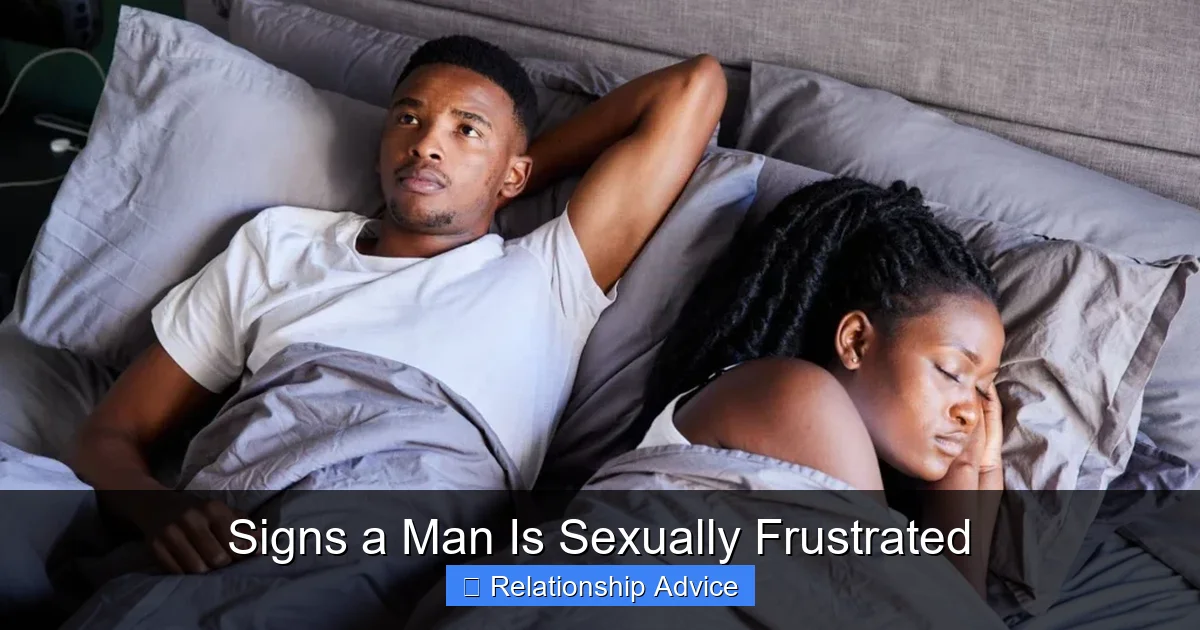
Sexual frustration in men often manifests in ways that go unnoticed, affecting mood, behavior, and intimacy. Recognizing these signs early can help improve communication, strengthen relationships, and restore emotional balance. This guide explores the key indicators and offers practical advice for addressing the issue with empathy and understanding.
Key Takeaways
- Increased irritability and mood swings: A common emotional sign of sexual frustration is heightened frustration over small issues, often leading to arguments or withdrawal.
- Withdrawal from intimacy: Men may avoid physical contact or sex altogether, not out of disinterest, but as a response to unmet needs or fear of rejection.
- Excessive focus on sex: Constantly bringing up sex, watching porn frequently, or making suggestive comments can signal unmet sexual desires.
- Poor sleep and fatigue: Hormonal imbalances from sexual frustration can disrupt sleep patterns, leading to restlessness or exhaustion.
- Changes in self-esteem: Feeling undesirable or rejected can lower confidence, affecting how a man views himself and his relationship.
- Increased risk-taking or impulsivity: Some men may engage in reckless behavior, such as flirting or substance use, as a coping mechanism.
- Open communication is key: Addressing sexual frustration requires honest, non-judgmental conversations to rebuild connection and intimacy.
📑 Table of Contents
Understanding Sexual Frustration in Men
Sexual frustration is more than just a lack of sex—it’s a complex emotional and psychological state that can deeply affect a man’s well-being. When a man’s sexual needs aren’t met over time, it can lead to a buildup of tension, anxiety, and dissatisfaction. This isn’t always about frequency; sometimes, it’s about quality, connection, or feeling desired. Unfortunately, many men suffer in silence, either out of shame, fear of rejection, or societal pressure to “tough it out.”
But here’s the truth: sexual frustration is normal. It happens in long-term relationships, during periods of stress, after childbirth, or when life gets busy. The problem arises when it’s ignored. Left unaddressed, it can erode trust, create resentment, and even lead to infidelity or emotional detachment. Recognizing the signs early is the first step toward healing and reconnecting.
In this article, we’ll explore the most common signs a man is sexually frustrated—emotional, behavioral, and physical. We’ll also offer practical tips for couples to navigate this sensitive topic with compassion and openness. Whether you’re in a relationship or trying to understand a partner, this guide will help you foster deeper intimacy and mutual satisfaction.
Emotional Signs of Sexual Frustration

Visual guide about Signs a Man Is Sexually Frustrated
Image source: realestlove.com
One of the earliest and most telling signs a man is sexually frustrated is a shift in his emotional state. He may seem more on edge, easily irritated, or emotionally distant. These changes aren’t always obvious at first, but over time, they can become hard to ignore.
Increased Irritability and Mood Swings
Imagine your partner snapping over something small—like a misplaced remote or a slow internet connection. While these moments happen to everyone, frequent outbursts over minor issues could be a red flag. Sexual frustration often manifests as low-grade anger or frustration that has nowhere to go. The body’s built-up sexual tension can amplify stress responses, making a man more reactive than usual.
For example, John, a 34-year-old father of two, started arguing with his wife over household chores. At first, she thought he was just stressed from work. But after weeks of tension, she realized his irritability spiked after they’d gone several nights without intimacy. Once they talked openly, John admitted he felt “on edge” and “like everything was getting to him.” That’s when they both understood—his frustration wasn’t about the dishes; it was about unmet emotional and physical needs.
Emotional Withdrawal and Detachment
Another emotional sign is withdrawal. A man who’s sexually frustrated may pull away emotionally, becoming less engaged in conversations, avoiding deep talks, or spending more time on his phone or computer. This isn’t necessarily about disinterest in the relationship—it’s often a defense mechanism. He may feel rejected, unwanted, or unsure how to express his needs without sounding demanding.
Sarah noticed her husband, Mark, had become quieter over the past few months. He used to share his day with her, but now he’d come home, eat dinner, and retreat to the living room to watch TV. When she asked if something was wrong, he’d shrug and say, “Everything’s fine.” But Sarah sensed a disconnect. After some gentle probing, Mark admitted he felt “invisible” in the bedroom. He didn’t want to pressure her, so he stopped initiating altogether. His emotional withdrawal was a silent cry for connection.
Feelings of Inadequacy or Low Self-Esteem
Sexual frustration can also chip away at a man’s self-worth. If he feels undesirable or repeatedly rejected, he may start questioning his attractiveness, masculinity, or value in the relationship. This can lead to negative self-talk, avoidance of social situations, or even depression.
For instance, David, a 40-year-old teacher, began avoiding date nights with his wife. When she asked why, he confessed he felt “like she’d rather be anywhere else.” He’d noticed she seemed tired or distracted during their time together and assumed it was because of him. In reality, she was dealing with work stress, but David internalized it as personal rejection. His confidence took a hit, and he started doubting his ability to satisfy her.
These emotional signs are often subtle but powerful. They signal that something deeper is going on—something that deserves attention and care.
Behavioral Changes to Watch For

Visual guide about Signs a Man Is Sexually Frustrated
Image source: realestlove.com
Beyond emotions, sexual frustration often shows up in behavior. A man may act out in ways that seem unrelated to sex, but are actually rooted in unmet desires. These behaviors can be confusing or even hurtful if misunderstood, but they’re often attempts to cope or regain a sense of control.
Excessive Focus on Sex or Pornography
One of the most common behavioral signs is an increased preoccupation with sex. This might look like constantly bringing up intimacy, making suggestive jokes, or spending more time watching pornography. While occasional porn use is normal, a sudden spike in frequency or intensity can indicate frustration.
Take Alex, a 28-year-old software developer. His girlfriend noticed he’d started watching porn late at night, even when she was home. At first, she thought he was being secretive or unfaithful. But when they talked, Alex explained he felt “stuck in a loop.” He wanted sex with her, but when it didn’t happen, he turned to porn as a release. It wasn’t about preference—it was about relief. His behavior was a symptom, not the cause.
It’s important to note that this isn’t about shame. Porn isn’t inherently bad, but using it excessively to cope with frustration can create distance in a relationship. Open dialogue about boundaries and needs can help both partners feel heard and respected.
Increased Risk-Taking or Impulsive Behavior
Some men respond to sexual frustration by seeking excitement elsewhere. This might include flirting with coworkers, engaging in risky sexual behavior, or even substance use. These actions aren’t always about infidelity—they’re often attempts to feel desired, powerful, or in control.
For example, James, a 36-year-old sales manager, started staying out late with colleagues and drinking more than usual. His wife grew concerned when he began texting a female coworker frequently. When confronted, James admitted he felt “invisible” at home. The attention from his coworker made him feel wanted, even if it was harmless. His behavior wasn’t about love—it was about validation.
This doesn’t excuse harmful actions, but it does highlight the importance of understanding the root cause. When a man feels sexually starved, he may seek validation in unhealthy ways. Addressing the underlying issue—lack of intimacy—can prevent these behaviors from escalating.
Avoidance of Physical Contact
Ironically, a man who’s sexually frustrated may avoid physical touch altogether. This isn’t because he doesn’t want closeness—it’s often because he’s afraid of rejection. If he’s been turned down repeatedly, he may stop initiating hugs, kisses, or cuddling to protect himself from further disappointment.
Lisa noticed her husband, Tom, had stopped holding her hand or kissing her goodbye. When she asked, he said, “I don’t want to bother you.” Lisa was shocked—she loved his affection. But Tom had internalized her busy schedule as disinterest. His avoidance was a shield, not a sign of detachment.
This behavior can create a vicious cycle: the less intimacy there is, the more frustrated he becomes, and the more he pulls away. Breaking this cycle requires gentle re-engagement and reassurance.
Physical and Health-Related Indicators

Visual guide about Signs a Man Is Sexually Frustrated
Image source: myedstore.com
Sexual frustration doesn’t just affect the mind—it can take a toll on the body too. Hormonal changes, sleep disruptions, and stress responses can all manifest physically, offering clues that something is off.
Poor Sleep and Restlessness
Testosterone, a key hormone in male sexual health, follows a daily rhythm. Levels peak in the morning and drop at night. Regular sexual activity helps regulate this cycle. When sex is infrequent, testosterone can build up, leading to restlessness, insomnia, or frequent waking.
Mike, a 31-year-old firefighter, started having trouble sleeping. He’d lie awake for hours, tossing and turning, even when he was exhausted. His doctor ruled out medical issues, but when he mentioned it to his wife, she noticed a pattern: his worst nights were when they hadn’t been intimate in over a week. Once they reconnected physically, his sleep improved dramatically.
This isn’t just about sex—it’s about hormonal balance. Regular intimacy helps regulate cortisol (the stress hormone) and promotes the release of oxytocin, the “bonding hormone,” which aids relaxation and sleep.
Increased Stress and Anxiety
Sexual frustration can heighten stress levels. The body’s fight-or-flight response may stay activated longer, leading to chronic anxiety, muscle tension, or even headaches. Men may also experience racing thoughts, especially at night, when sexual desires often intensify.
For example, Ryan, a 29-year-old accountant, began having panic attacks during meetings. He couldn’t understand why—his job was stable, and his life seemed fine. But after therapy, he realized his anxiety spiked during periods of sexual drought. The constant tension without release was overwhelming his system.
Stress and sexual frustration feed into each other. High stress reduces libido, which increases frustration, which raises stress—creating a loop that’s hard to break without intervention.
Changes in Appetite or Energy Levels
Some men experience shifts in appetite or energy when sexually frustrated. They may eat more (or less), feel fatigued despite adequate rest, or lack motivation for daily activities. These changes are often linked to hormonal imbalances and emotional distress.
David, a 45-year-old father, noticed he was gaining weight and feeling sluggish. He blamed his age, but his wife pointed out that his energy dipped after months of limited intimacy. Once they reestablished their physical connection, he felt more alert and motivated.
These physical signs are easy to overlook, but they’re important indicators. When combined with emotional and behavioral changes, they paint a clearer picture of sexual frustration.
How Sexual Frustration Affects Relationships
Left unaddressed, sexual frustration can damage even the strongest relationships. It breeds resentment, erodes trust, and creates emotional distance. But the good news? It’s fixable—with honesty, empathy, and effort.
Communication Breakdown
One of the first casualties of sexual frustration is communication. Men may stop sharing their feelings, fearing judgment or rejection. Partners may misinterpret silence as disinterest or anger. Over time, this leads to a breakdown in intimacy—both emotional and physical.
For example, Emma and her husband, Jake, stopped talking about sex altogether. Jake assumed Emma wasn’t interested, so he stopped bringing it up. Emma, in turn, thought Jake was no longer attracted to her. The silence created a gap that grew wider each day.
Rebuilding communication starts with small steps: asking open-ended questions, listening without judgment, and expressing needs gently. Phrases like “I’ve been feeling a bit disconnected lately—can we talk?” open the door without blame.
Resentment and Emotional Distance
When needs go unmet, resentment builds. A man may feel taken for granted or unimportant. His partner may feel pressured or misunderstood. This mutual frustration can lead to arguments, passive-aggressive behavior, or emotional detachment.
Sarah and Mark’s story is a classic example. Mark felt Sarah was always too tired for sex. Sarah felt Mark only wanted her for physical reasons. Their resentment grew until they were sleeping in separate rooms. It took couples counseling to help them see each other’s perspectives and rebuild their connection.
Resentment doesn’t disappear overnight. It requires patience, forgiveness, and a willingness to change.
Impact on Long-Term Intimacy
Over time, sexual frustration can kill intimacy. Couples may go weeks or months without sex, creating a “roommate” dynamic. This isn’t just about physical pleasure—it’s about emotional bonding. Sex releases hormones that strengthen attachment and reduce stress.
Couples who address sexual frustration early often report stronger relationships. They learn to prioritize each other, communicate openly, and keep the spark alive—even during tough times.
How to Address Sexual Frustration Together
The good news? Sexual frustration is not a life sentence. With the right approach, couples can overcome it and even grow closer in the process.
Start the Conversation
The first step is talking. Choose a calm, private moment—not in the heat of an argument. Use “I” statements to express your feelings without blame. For example: “I’ve been feeling a bit disconnected lately, and I miss being close with you.”
Encourage your partner to share his perspective. Ask open questions like, “How have you been feeling about us lately?” or “Is there anything you’ve been wanting to talk about?”
Reignite Intimacy Gradually
You don’t need to jump back into sex right away. Start with small gestures: hold hands, cuddle on the couch, or give each other massages. These acts rebuild physical connection without pressure.
Schedule intimacy like you would a date night. It doesn’t have to be spontaneous—sometimes, planning it makes it more special.
Seek Professional Help if Needed
If the issue persists, consider seeing a sex therapist or couples counselor. These professionals can help uncover underlying issues—like past trauma, medical conditions, or communication patterns—and offer tailored solutions.
Therapy isn’t a sign of failure. It’s a sign of commitment to your relationship.
Practice Patience and Empathy
Change takes time. Be patient with your partner and yourself. Celebrate small wins, like a meaningful conversation or a spontaneous kiss. Remember, intimacy is a journey—not a destination.
Conclusion
Recognizing the signs a man is sexually frustrated is the first step toward healing and reconnecting. Whether it’s irritability, withdrawal, or changes in sleep, these cues are often cries for help—not complaints. By approaching the issue with empathy, openness, and patience, couples can rebuild intimacy and strengthen their bond.
Sexual frustration doesn’t have to be a relationship killer. In fact, addressing it together can bring you closer than ever. The key is to listen, communicate, and prioritize each other’s needs. After all, a healthy relationship isn’t just about love—it’s about understanding, respect, and mutual satisfaction.
If you’ve noticed these signs in your partner—or in yourself—don’t wait. Start the conversation today. Your relationship deserves it.
Frequently Asked Questions
Is it normal for a man to be sexually frustrated in a long-term relationship?
Yes, it’s completely normal. Life stress, fatigue, hormonal changes, and routine can all contribute to sexual frustration, even in strong relationships. What matters is how you address it together.
Can sexual frustration cause mental health issues?
Prolonged sexual frustration can contribute to anxiety, depression, and low self-esteem, especially if it leads to feelings of rejection or inadequacy. Seeking support early can prevent these issues from worsening.
Should I confront my partner if I think he’s sexually frustrated?
Yes, but gently. Approach the conversation with care, using “I” statements and avoiding blame. Focus on connection, not criticism, to create a safe space for honesty.
Can medical conditions cause sexual frustration?
Absolutely. Conditions like low testosterone, diabetes, or depression can affect libido. If frustration persists, consult a healthcare provider to rule out underlying medical causes.
Is watching porn a sign of sexual frustration?
Not always, but a sudden increase in porn use—especially as a substitute for intimacy—can be a red flag. It’s important to discuss boundaries and needs openly with your partner.
How can couples rebuild intimacy after a period of sexual frustration?
Start with small, consistent efforts: regular date nights, open communication, and non-sexual physical touch. Consider couples therapy if needed, and be patient as you reconnect emotionally and physically.