
Emotional infidelity is more common than you think—and it often flies under the radar. Many married men form deep, intimate connections with someone outside their marriage without physical contact, yet the emotional damage can be just as severe.
Key Takeaways
- Emotional infidelity is widespread: Studies show up to 40% of married men engage in emotionally intimate relationships outside their marriage, often without realizing it’s a form of betrayal.
- It often starts innocently: Casual conversations with coworkers, friends, or online acquaintances can gradually evolve into emotional affairs when secrecy and emotional dependency grow.
- Technology fuels the problem: Social media, messaging apps, and dating platforms make it easier than ever for married men to connect emotionally with others in private.
- The damage is real: Emotional infidelity erodes trust, intimacy, and communication in a marriage, often leading to long-term resentment or divorce.
- Signs are subtle but detectable: Changes in behavior, increased secrecy, emotional distance, and prioritizing someone else’s needs over your partner’s are red flags.
- Prevention is possible: Open communication, setting boundaries, and prioritizing emotional intimacy at home can help prevent emotional affairs.
- Healing is possible: With honesty, therapy, and commitment, couples can recover from emotional infidelity and rebuild a stronger relationship.
📑 Table of Contents
- Introduction: The Silent Threat to Marriages
- What Is Emotional Infidelity—And Why Does It Matter?
- Shocking Fact #1: Emotional Infidelity Is More Common Than You Think
- Shocking Fact #2: Technology Is Fueling the Rise of Emotional Affairs
- Shocking Fact #3: Emotional Infidelity Often Starts with “Harmless” Conversations
- Shocking Fact #4: Emotional Infidelity Can Be More Damaging Than Physical Affairs
- Shocking Fact #5: Many Men Don’t Realize They’re in an Emotional Affair
- How to Prevent Emotional Infidelity in Your Marriage
- Conclusion: Protecting Your Marriage from Emotional Betrayal
Introduction: The Silent Threat to Marriages
You might think infidelity only happens when there’s a physical affair—someone sneaking off for a secret kiss or a weekend getaway. But what if the betrayal happens not in a hotel room, but in text messages, late-night phone calls, or heartfelt conversations over coffee? Welcome to the world of emotional infidelity—a growing, often overlooked problem that’s quietly destroying marriages across the globe.
Emotional infidelity occurs when one partner forms a deep, intimate bond with someone outside the marriage, sharing thoughts, feelings, and vulnerabilities they no longer share with their spouse. It doesn’t require physical contact. In fact, many men don’t even consider it cheating. But the emotional fallout? That’s very real. And for married men, this kind of connection can be just as damaging—if not more so—than a physical affair.
Why? Because emotional intimacy is the foundation of a strong marriage. When that intimacy is redirected to someone else, the marriage begins to crumble from the inside out. And here’s the shocking truth: it’s far more common than most people realize.
What Is Emotional Infidelity—And Why Does It Matter?
Visual guide about Shocking Facts About Emotional Infidelity Among Married Men
Image source: realestlove.com
Before we dive into the shocking facts, let’s clarify what emotional infidelity actually means. It’s not just having a friendly chat with a coworker or laughing at a funny meme online. Emotional infidelity happens when a married man develops a close, secretive, and emotionally intimate relationship with someone who is not his spouse.
This person could be a coworker, an old flame, a friend from college, or even someone met through a hobby or online community. The key elements are emotional closeness, secrecy, and a shift in loyalty—where the man begins to rely on this other person for emotional support, validation, or companionship that should be reserved for his wife.
The Emotional vs. Physical Affair: What’s the Difference?
Many people assume that if there’s no sex, there’s no affair. But emotional infidelity can be just as harmful. In fact, some experts argue it’s even more insidious because it undermines the emotional core of the relationship.
Think of it this way: a physical affair might be a moment of weakness or a one-time mistake. But emotional infidelity often develops over time, with repeated conversations, shared vulnerabilities, and growing dependence. It’s not just about attraction—it’s about connection. And when that connection is given to someone else, it leaves the spouse feeling abandoned, unimportant, and emotionally neglected.
Why Married Men Are Vulnerable
So why do married men fall into emotional affairs? It’s not because they don’t love their wives. Often, it’s because their emotional needs aren’t being met at home. Maybe they feel unheard, unappreciated, or emotionally distant from their partner. Maybe they’re stressed at work or going through a midlife crisis. Whatever the reason, they start looking elsewhere for someone who listens, understands, and makes them feel valued.
And here’s the kicker: many men don’t even realize they’re crossing a line. They might say, “We’re just friends,” or “It’s not like we’re sleeping together.” But when they start confiding in someone else about their marriage problems, sharing intimate details of their lives, or prioritizing that person’s needs over their spouse’s, they’ve entered dangerous territory.
Shocking Fact #1: Emotional Infidelity Is More Common Than You Think
Visual guide about Shocking Facts About Emotional Infidelity Among Married Men
Image source: realestlove.com
You might be surprised to learn just how widespread emotional infidelity is among married men. According to a 2022 study published in the Journal of Marital and Family Therapy, nearly 40% of married men admit to having an emotional affair at some point in their marriage. That’s almost half of all married men.
And get this: many of them didn’t even consider it cheating. In fact, 65% of men in the study said they didn’t think emotional intimacy with someone outside the marriage was a form of infidelity—especially if there was no physical contact.
This mindset is dangerous. It allows emotional affairs to grow under the radar, often until it’s too late. By the time the wife finds out—through a suspicious text, a changed password, or a gut feeling—the emotional damage has already been done.
Real-Life Example: The “Just Friends” Trap
Take Mark, a 42-year-old father of two. He’s been married to his wife, Lisa, for 15 years. Things have been a little rocky lately—less date nights, more arguing about chores, and a general sense of drifting apart. One day, he starts talking to Sarah, a coworker, during lunch breaks. They bond over shared interests, funny stories, and mutual frustrations at work.
At first, it’s innocent. But over time, Mark starts texting Sarah after work. They talk about their marriages, their dreams, their fears. He finds himself looking forward to their conversations more than his evenings at home. He even starts lying to Lisa about where he’s been or who he’s talking to.
Lisa notices he’s more distant, but she chalks it up to stress. She doesn’t realize that Mark has formed a deep emotional connection with Sarah—one that’s slowly replacing the intimacy he once shared with her.
This is emotional infidelity in action. And it’s happening in marriages everywhere.
Shocking Fact #2: Technology Is Fueling the Rise of Emotional Affairs
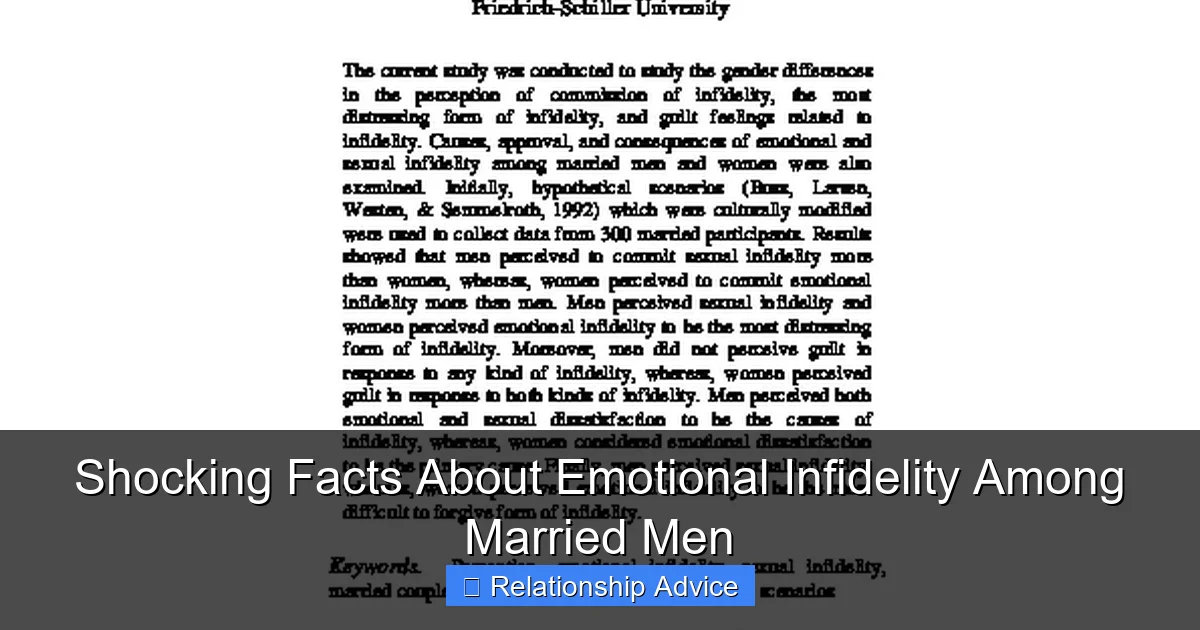
Visual guide about Shocking Facts About Emotional Infidelity Among Married Men
Image source: 0.academia-photos.com
We live in a digital age—and that’s making emotional infidelity easier than ever. Smartphones, social media, and messaging apps have created endless opportunities for married men to connect with others in private, often without their spouse’s knowledge.
A 2023 survey by the American Association for Marriage and Family Therapy found that 70% of emotional affairs begin online. Whether it’s through Facebook messages, Instagram DMs, or dating apps like Tinder or Bumble, technology provides a convenient—and discreet—way to form intimate connections.
The Role of Social Media
Social media is a breeding ground for emotional infidelity. Platforms like Facebook and Instagram allow men to reconnect with old flames, share personal updates, and receive instant validation through likes and comments. It’s easy to fall into the trap of comparing your marriage to the “perfect” lives you see online—and then seeking emotional support from someone who seems more understanding.
For example, a married man might start messaging an old girlfriend from high school. They exchange memories, laugh about the past, and gradually start sharing current struggles. Before long, he’s telling her things he hasn’t told his wife in years.
Messaging Apps and the Illusion of Privacy
Apps like WhatsApp, Telegram, and Signal offer end-to-end encryption, making messages nearly impossible to trace. This gives married men a false sense of security. They think, “No one will ever find out,” and let their guard down.
But here’s the thing: emotional infidelity isn’t just about secrecy. It’s about the emotional energy being redirected. Every text, every late-night call, every shared secret chips away at the foundation of the marriage.
And when the truth comes out—because it often does—the betrayal feels just as deep as if there had been a physical affair.
Shocking Fact #3: Emotional Infidelity Often Starts with “Harmless” Conversations
One of the most shocking things about emotional infidelity is how it begins. It rarely starts with a dramatic confession or a secret meeting. More often, it starts with something as simple as a friendly conversation.
A married man might strike up a chat with a coworker during a coffee break. They talk about work, then life, then personal struggles. Before long, they’re sharing secrets, dreams, and frustrations. The man feels heard, understood, and valued—things he may not be getting at home.
And because there’s no physical contact, he doesn’t see it as cheating. But over time, the emotional intimacy grows. He starts looking forward to these conversations. He lies about where he’s been or who he’s talking to. He begins to prioritize this person’s needs over his wife’s.
The Slippery Slope of Emotional Intimacy
Emotional infidelity is a slippery slope. It starts small—a text here, a phone call there—but quickly escalates. The man begins to rely on this other person for emotional support, validation, and companionship. He shares things he hasn’t shared with his wife in years.
And here’s the danger: once that emotional connection is established, it’s hard to break. The man may not even want to. He might rationalize it by saying, “I’m not hurting anyone,” or “My wife doesn’t understand me anyway.”
But the truth is, he’s hurting his marriage. Every secret conversation, every hidden message, every emotional confession erodes the trust and intimacy that holds a marriage together.
Example: The Office Friendship That Crossed the Line
Consider James, a 38-year-old accountant. He’s been married to his wife, Maria, for 10 years. Lately, he’s been feeling disconnected—like they’re just going through the motions. At work, he starts talking to a new colleague, Emily. They bond over shared interests and similar career goals.
At first, it’s just work talk. But soon, they’re texting after hours. They talk about their marriages, their kids, their dreams. James finds himself opening up to Emily in ways he hasn’t with Maria in years.
He doesn’t think it’s a big deal. After all, they’re just friends. But when Maria finds a text from Emily that says, “I feel like you really get me,” she knows something’s wrong.
James is shocked. He didn’t think he was doing anything wrong. But the emotional intimacy he’s built with Emily has created a rift in his marriage—one that may take years to heal.
Shocking Fact #4: Emotional Infidelity Can Be More Damaging Than Physical Affairs
This might sound extreme, but many relationship experts agree: emotional infidelity can be more damaging than physical affairs. Why? Because it strikes at the heart of what makes a marriage strong—emotional intimacy, trust, and connection.
A physical affair might be a moment of weakness or a one-time mistake. But emotional infidelity is often a slow, deliberate process. It involves repeated conversations, shared vulnerabilities, and growing dependence. It’s not just about attraction—it’s about emotional betrayal.
The Emotional Fallout
When a wife discovers that her husband has been emotionally intimate with someone else, the pain is profound. She may feel betrayed, abandoned, and deeply insecure. She might wonder: “Was I not enough?” “Did he never really love me?” “How long has this been going on?”
And because emotional infidelity often involves secrecy and lies, the trust is shattered. Even if the husband ends the relationship with the other person, the damage may already be done.
Long-Term Consequences
The long-term consequences of emotional infidelity can be severe. Couples may struggle with communication, intimacy, and trust for years. Some marriages never fully recover. In fact, studies show that emotional infidelity is a leading cause of divorce—often more so than physical affairs.
Why? Because it’s harder to forgive an emotional betrayal. It’s not just about a mistake—it’s about a pattern of behavior that suggests the husband was emotionally unavailable or disloyal.
Shocking Fact #5: Many Men Don’t Realize They’re in an Emotional Affair
Perhaps the most shocking fact of all is that many married men don’t even realize they’re in an emotional affair. They don’t see it as cheating. They might say, “We’re just friends,” or “It’s not like we’re sleeping together.”
But emotional infidelity isn’t defined by physical contact. It’s defined by emotional intimacy, secrecy, and a shift in loyalty. And when those elements are present, it’s a form of betrayal—even if there’s no sex involved.
The Myth of “Just Friends”
The idea that men and women can be “just friends” without emotional complications is a myth. In reality, close friendships between married people and someone of the opposite sex often involve emotional intimacy—especially when those friendships are kept secret or involve shared vulnerabilities.
And when a married man starts relying on someone else for emotional support, validation, or companionship, he’s crossing a line—even if he doesn’t realize it.
Why Men Rationalize Emotional Affairs
Many men rationalize emotional affairs by downplaying their significance. They might say:
– “It’s not like I’m cheating.”
– “My wife doesn’t understand me anyway.”
– “I’m not hurting anyone.”
But these justifications ignore the emotional damage being done. Every secret conversation, every hidden message, every emotional confession chips away at the foundation of the marriage.
How to Prevent Emotional Infidelity in Your Marriage
The good news? Emotional infidelity is preventable. With awareness, communication, and effort, couples can protect their marriage from this silent threat.
1. Prioritize Emotional Intimacy at Home
The best defense against emotional infidelity is a strong emotional connection at home. Make time for deep conversations. Share your thoughts, feelings, and dreams with your spouse. Show appreciation and affection regularly.
Set aside time for regular check-ins—just the two of you. Ask questions like:
– “How are you really feeling?”
– “Is there anything on your mind?”
– “What do you need from me right now?”
When both partners feel heard and valued, they’re less likely to seek emotional support elsewhere.
2. Set Clear Boundaries
Establish boundaries around friendships and online interactions. For example:
– Avoid one-on-one private messaging with someone of the opposite sex.
– Limit late-night calls or texts with non-family members.
– Be transparent about your interactions—no secret passwords or hidden apps.
These boundaries aren’t about control—they’re about protecting your marriage.
3. Communicate Openly About Needs
If you’re feeling emotionally disconnected, talk to your spouse—don’t seek comfort elsewhere. Say, “I’ve been feeling a bit distant lately. Can we talk about how we can reconnect?”
Open communication prevents misunderstandings and builds trust.
4. Seek Help When Needed
If you’re struggling with emotional distance or communication issues, consider couples therapy. A trained therapist can help you identify patterns, improve communication, and rebuild intimacy.
Conclusion: Protecting Your Marriage from Emotional Betrayal
Emotional infidelity is a silent but powerful threat to marriages. It’s more common than most people realize, often starts innocently, and can cause deep emotional damage. But with awareness, communication, and commitment, couples can prevent it—and even recover from it if it happens.
The key is to prioritize emotional intimacy at home, set healthy boundaries, and never underestimate the power of a heartfelt conversation. Because at the end of the day, a strong marriage isn’t built on grand gestures—it’s built on daily acts of love, trust, and connection.
Don’t let emotional infidelity sneak into your relationship. Stay alert, stay connected, and keep the lines of communication open. Your marriage is worth it.
Frequently Asked Questions
What is emotional infidelity?
Emotional infidelity occurs when a married person forms a deep, intimate bond with someone outside their marriage, sharing thoughts, feelings, and vulnerabilities they no longer share with their spouse—even without physical contact.
How common is emotional infidelity among married men?
Studies suggest up to 40% of married men admit to having an emotional affair, often without realizing it’s a form of betrayal.
Can emotional infidelity lead to divorce?
Yes. Emotional infidelity erodes trust and intimacy, and is a leading cause of divorce—sometimes more so than physical affairs.
How can I tell if my husband is emotionally cheating?
Signs include increased secrecy, emotional distance, prioritizing someone else’s needs, and sharing intimate details of your relationship with others.
Can a marriage recover from emotional infidelity?
Yes, with honesty, therapy, and commitment, many couples rebuild trust and strengthen their relationship after an emotional affair.
How can I prevent emotional infidelity in my marriage?
Prioritize emotional intimacy, set clear boundaries, communicate openly, and seek help if you’re feeling disconnected.