

Many married men don’t share housework not because they’re lazy, but due to deep-rooted beliefs, childhood modeling, and unspoken relationship dynamics. Understanding these real reasons—like traditional gender roles, lack of clear communication, and emotional disconnection—can help couples build more balanced, respectful partnerships.
Key Takeaways
- Upbringing shapes behavior: Men raised in households where women handled all chores often unconsciously replicate that pattern.
- Traditional gender roles persist: Despite progress, many still view housework as “women’s work,” even if they don’t admit it.
- Lack of clear expectations: Without direct conversations, assumptions lead to frustration and unequal labor distribution.
- Emotional disconnection reduces motivation: When men feel unappreciated or criticized, they may withdraw from contributing at home.
- Different standards of cleanliness: What one partner sees as “clean” may not meet the other’s expectations, causing tension.
- Workload invisibility: Men may not notice chores that need doing if they’re not trained to see them—like laundry piling up or dishes lingering.
- Change is possible with empathy and communication: Small shifts in mindset and daily habits can lead to lasting equality at home.
📑 Table of Contents
- Why Housework Feels Like a Battlefield in Many Marriages
- The Role of Upbringing and Childhood Modeling
- Traditional Gender Roles: The Ghost in the Machine
- The Communication Gap: When Assumptions Replace Conversation
- Emotional Disconnection and the Withdrawal Cycle
- Different Standards and the “Invisible Work” Problem
- How to Create Real Change at Home
- Conclusion: Partnership Over Perfection
Why Housework Feels Like a Battlefield in Many Marriages
Let’s be honest—housework is one of the most common sources of tension in marriages. You’ve probably heard the jokes: “My husband thinks the dishwasher is a suggestion,” or “He can’t find the laundry basket if it’s not glowing in the dark.” But behind the humor lies a real, often painful issue: the unequal distribution of domestic labor.
It’s not just about who loads the dishwasher or takes out the trash. It’s about respect, partnership, and emotional equity. When one person—usually the wife—carries the mental and physical load of running a household, resentment builds. And yet, many married men genuinely don’t understand why their partners are upset. They might say, “I work all day too!” or “I didn’t know you wanted help.”
The truth is, the reasons why some married men don’t share housework go far beyond laziness or lack of effort. They’re rooted in upbringing, societal norms, communication gaps, and emotional dynamics that have been quietly shaping behavior for decades. Understanding these real reasons is the first step toward creating a more balanced, loving home.
The Role of Upbringing and Childhood Modeling

Visual guide about Real Reasons Why Some Married Men Dont Share Housework
Image source: realestlove.com
One of the most powerful influences on how men approach housework is how they were raised. If a man grew up in a home where his mother handled all the cleaning, cooking, and childcare—while his father relaxed after work—he likely internalized that as the “normal” way things should be.
“That’s Just How It Was”
For many men, their first model of marriage is their parents’ relationship. If Dad never folded a towel or washed a dish, why would he think he needs to now? This isn’t an excuse—it’s an explanation. These patterns are so ingrained that they operate on autopilot.
Take Mark, a 42-year-old accountant. He says, “My mom did everything. Dad came home, ate dinner, and watched TV. I never saw him lift a finger. So when I got married, I didn’t think I needed to do much at home.” Mark didn’t realize his wife, Sarah, was doing 90% of the housework until she broke down in tears one evening, exhausted and feeling invisible.
The “Helper” vs. “Partner” Mindset
Another issue is the language we use. Many men see themselves as “helping” their wives with chores, rather than sharing responsibility as equal partners. This subtle shift in wording matters. If you’re “helping,” you’re stepping in to assist someone else’s job. But if you’re a partner, the job is yours too.
This mindset often comes from childhood. Boys are rarely taught that housework is their responsibility. Instead, they’re told to “help Mom” when asked. That conditional, task-based approach carries into adulthood. They wait to be told what to do, rather than taking initiative.
Breaking the Cycle
The good news? Awareness can break this cycle. Men who recognize their upbringing’s influence can consciously choose a different path. It starts with asking: “What kind of partner do I want to be?” and “What kind of home do I want to create?”
Parents today have a unique opportunity to model equality. When dads cook, clean, and care for kids alongside moms, their sons learn that housework isn’t gendered—it’s human.
Traditional Gender Roles: The Ghost in the Machine

Visual guide about Real Reasons Why Some Married Men Dont Share Housework
Image source: realestlove.com
Even in 2024, traditional gender roles linger like a ghost in the machine of modern marriage. Many men—and women—still hold unconscious beliefs about what men “should” and “shouldn’t” do at home.
The “Man of the House” Myth
The idea that a man’s role is to provide financially, while a woman’s is to manage the home, is deeply embedded in many cultures. Even men who consider themselves progressive may fall into this pattern without realizing it.
For example, James, a 38-year-old teacher, says, “I make the money, so I feel like I’ve done my part.” But his wife, Lisa, works full-time too—and still handles all the cooking, cleaning, and school pickups. James doesn’t see the imbalance because, in his mind, he’s fulfilling his “manly” duty by earning an income.
This mindset ignores the emotional and physical labor of domestic work. Running a household is work—real work—that requires planning, energy, and time. When it’s invisible or undervalued, it creates inequality.
The Stigma Around “Women’s Work”
Some men avoid housework because they fear it makes them less masculine. Tasks like folding laundry, scrubbing toilets, or organizing closets are still culturally coded as feminine. Admitting you enjoy or are good at them can feel risky.
This stigma is especially strong in communities where traditional masculinity is highly valued. Men may worry that doing “women’s work” will make them a target for jokes or seen as weak.
But here’s the truth: caring for your home and family is one of the most masculine things a man can do. Strength isn’t about dominance—it’s about responsibility, compassion, and showing up.
Redefining Masculinity
Challenging these norms starts with conversation. Couples can talk openly about what masculinity means to them. Is it providing? Protecting? Or is it also nurturing, listening, and sharing the load?
Men can also seek out positive role models—fathers, friends, or public figures—who embrace domestic equality. Seeing other men cook, clean, and care without shame can be incredibly powerful.
The Communication Gap: When Assumptions Replace Conversation
Visual guide about Real Reasons Why Some Married Men Dont Share Housework
Image source: d25d2506sfb94s.cloudfront.net
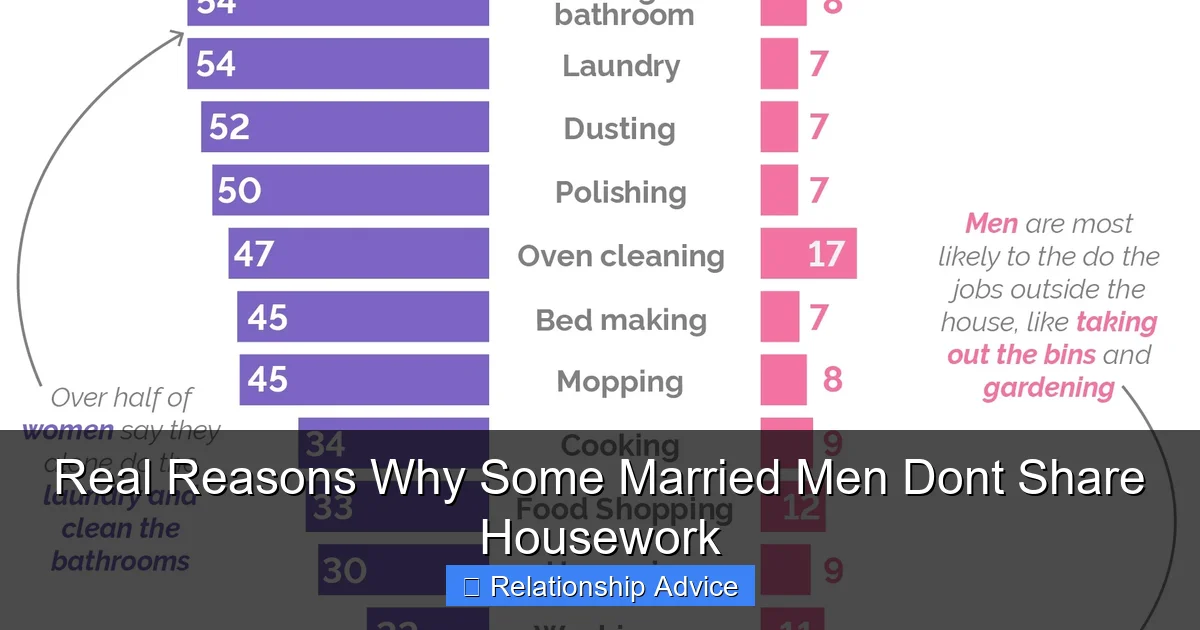
One of the biggest reasons housework becomes a sore spot? Lack of clear communication. Many couples never sit down and discuss who does what, how often, and what “fair” looks like.
The “Mind Reader” Trap
Women often expect their husbands to “just know” what needs to be done. After all, they see the crumbs on the counter, the pile of laundry, and the overflowing trash. But men may not notice these things—or may not realize they’re urgent.
This isn’t because men are oblivious. It’s because they’re not trained to see domestic tasks the same way. Research shows that women are more likely to engage in “anticipatory labor”—thinking ahead about what needs to be done, even when it’s not visible. Men, on the other hand, tend to respond to direct requests or obvious problems.
So when a wife says, “The house is a mess,” her husband might think, “It looks fine to me.” Without specific communication, frustration builds.
The “Why Don’t You Just Ask?” Dilemma
Many women resist asking for help because it feels like one more task—managing their partner’s contributions. They think, “If I have to tell him to do it, is he really helping?”
But here’s the reality: most men won’t initiate housework unless they’re taught to. And that teaching happens through clear, kind communication.
Instead of saying, “You never help around here,” try: “I’d really appreciate it if you could take out the trash tonight.” Or, “Could we split the laundry this weekend? I’m feeling overwhelmed.”
Specific requests reduce ambiguity and increase the chances of follow-through.
Creating a Shared System
Couples who thrive often create systems that work for them. This might include:
- A shared chore chart or app (like Tody or Sweepy)
- Weekly check-ins to discuss household needs
- Rotating responsibilities so no one feels stuck with the same tasks
- Agreeing on standards (e.g., “Clean means counters wiped and floors swept”)
The goal isn’t perfection—it’s partnership. When both people feel heard and valued, housework becomes less of a battle and more of a team effort.
Emotional Disconnection and the Withdrawal Cycle
Sometimes, the reason a man doesn’t share housework isn’t about chores at all—it’s about emotion. When men feel criticized, unappreciated, or disconnected, they may pull away from contributing at home.
The Criticism Trap
Imagine this: You ask your husband to load the dishwasher. He does it—but you come back later and say, “You didn’t rinse the plates first. Now I have to do it over.”
How does that make him feel? Probably defensive, resentful, or like nothing he does is good enough. Over time, he may stop trying altogether.
This is a common pattern. Women often want things done “the right way”—their way. But perfection isn’t the goal. Participation is.
The Appreciation Gap
Men, like women, need to feel valued. When their efforts go unnoticed, they lose motivation. Saying “Thank you for taking out the trash” or “I really appreciate you cooking dinner” can go a long way.
Appreciation doesn’t have to be grand. A simple “I noticed you cleaned the bathroom—that was so helpful” can reinforce positive behavior.
Rebuilding Connection
If emotional disconnection is the issue, housework becomes a symptom, not the cause. Couples may need to focus on rebuilding intimacy, trust, and mutual respect.
This might involve:
- Regular date nights to reconnect
- Active listening exercises (“I hear you’re feeling overwhelmed—how can I support you?”)
- Couples counseling to address deeper issues
When emotional needs are met, men are more likely to step up at home—not out of obligation, but out of love.
Different Standards and the “Invisible Work” Problem
Another hidden reason for unequal housework? Different standards of cleanliness and the invisibility of mental labor.
“It’s Not That Dirty”
What one person sees as a disaster, another sees as “lived-in.” A woman might notice dust on the shelves, while her husband only sees a clean floor.
These differences aren’t about right or wrong—they’re about perception. But they can lead to frustration when one person feels their standards aren’t being met.
The Mental Load: The Silent Burden
Women often carry the “mental load” of the household—remembering birthdays, scheduling appointments, planning meals, and managing school forms. This invisible work is exhausting and rarely acknowledged.
Men may not realize how much thinking goes into running a home. They see the physical tasks but miss the constant mental checklist.
Bridging the Gap
Couples can address this by:
- Discussing what “clean” and “organized” mean to each of them
- Sharing the mental load (e.g., one person handles school stuff, the other handles bills)
- Using shared calendars or apps to track responsibilities
When both people understand the full scope of domestic work, fairness becomes easier to achieve.
How to Create Real Change at Home
Change doesn’t happen overnight. But with patience, empathy, and consistent effort, couples can build a more balanced partnership.
Start with Self-Reflection
Both partners should ask:
- What messages did I receive about housework growing up?
- What do I expect from my partner?
- Am I communicating clearly or making assumptions?
Have the Conversation
Choose a calm moment to talk. Use “I” statements: “I feel overwhelmed when I’m doing most of the housework. I’d love your help.” Avoid blame. Focus on solutions.
Take Small Steps
Start with one chore. Maybe he takes over laundry. Or she stops reminding him about dishes. Small wins build momentum.
Celebrate Progress
Acknowledge efforts, even imperfect ones. Progress, not perfection, is the goal.
Conclusion: Partnership Over Perfection
The real reasons why some married men don’t share housework are complex—but not insurmountable. They stem from upbringing, societal norms, communication gaps, and emotional dynamics. But understanding these factors is the first step toward change.
Marriage isn’t about keeping score. It’s about building a life together—where both people feel seen, supported, and valued. When housework is shared, it’s not just about clean floors or folded laundry. It’s about respect, trust, and love in action.
So if you’re frustrated, start the conversation. If you’re a man who hasn’t been pulling your weight, take a hard look at why. And if you’re both willing to grow, your home can become a place of true partnership—one dish, one load of laundry, one honest talk at a time.
Frequently Asked Questions
Why do some men avoid housework even when they’re not working?
Many men avoid housework due to ingrained beliefs from childhood or societal norms that frame domestic tasks as “women’s work.” Even when they’re not employed, they may not see housework as their responsibility unless it’s explicitly discussed.
How can I get my husband to help without nagging?
Instead of nagging, try clear, specific requests and express appreciation when he helps. Use “I” statements like, “I’d really appreciate it if you could vacuum this weekend,” and thank him afterward to reinforce positive behavior.
Is it fair to expect my husband to do half the housework if he earns more?
Fairness isn’t about income—it’s about partnership. Both spouses contribute to the relationship in different ways. If one earns more, the other might handle more domestic tasks, but the division should be agreed upon, not assumed.
What if my husband says he “doesn’t see” the mess?
This is common. Men often don’t notice domestic tasks the way women do. Try pointing out specific chores (“The trash is full”) or using a shared chore list to make responsibilities visible and concrete.
Can couples counseling help with housework issues?
Yes. Counseling can help uncover deeper emotional or communication issues behind unequal housework and provide tools for creating a more balanced, respectful partnership.
How do I stop feeling resentful about doing most of the housework?
Start by communicating your feelings calmly and specifically. Focus on solutions, not blame. Consider creating a shared system for chores and celebrate small improvements to rebuild trust and cooperation.