
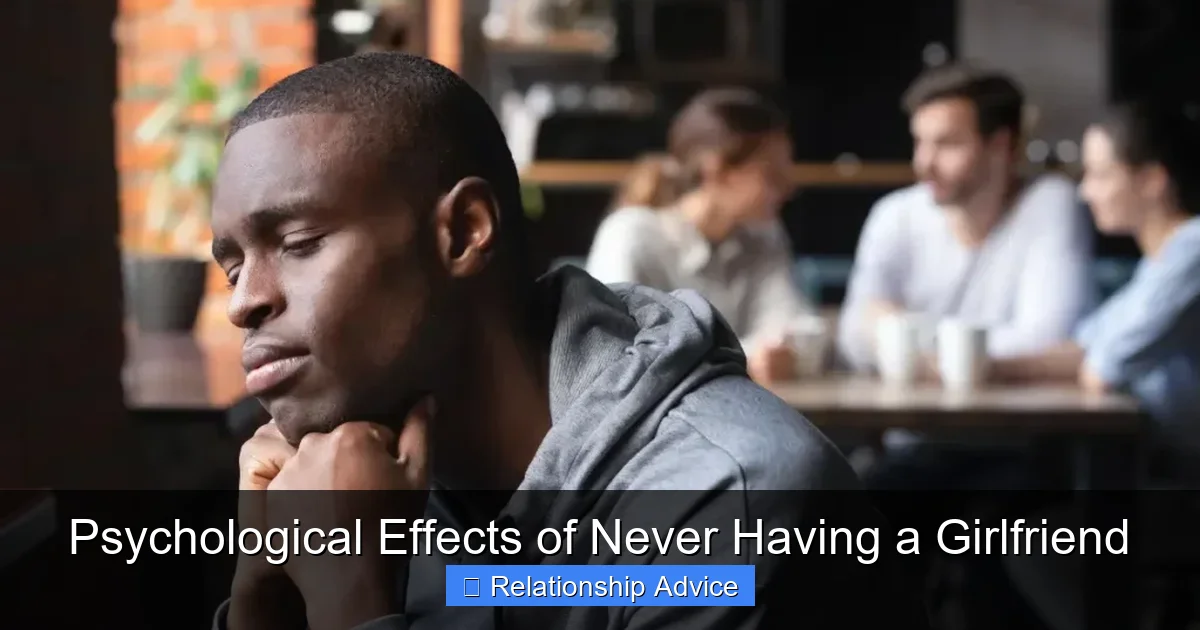
Never having a girlfriend can impact self-worth, social development, and emotional well-being, but it doesn’t define your future. With self-awareness and intentional growth, you can build confidence, improve relationships, and create fulfilling connections.
This is a comprehensive guide about Psychological Effects Of Never Having A Girlfriend.
Key Takeaways
- Self-esteem may be affected: A lack of romantic experience can lead to self-doubt, but self-worth isn’t tied to relationship status.
- Social skills can develop differently: Without practice in romantic dynamics, communication and emotional intelligence may need intentional nurturing.
- Loneliness is common but manageable: Feelings of isolation are natural, but building strong friendships and hobbies can reduce their impact.
- Fear of rejection may grow: Avoiding dating due to past experiences or anxiety can create a cycle, but gradual exposure helps build resilience.
- Personal growth is still possible: Many people thrive emotionally and mentally without romantic relationships, focusing on career, passions, and self-improvement.
- It’s never too late to start: Healthy relationships can begin at any age with the right mindset, patience, and self-compassion.
[FEATURED_IMAGE_PLACEHOLDER]
Psychological Effects of Never Having a Girlfriend
Let’s be honest—relationships play a big role in how we see ourselves and the world. Whether it’s the excitement of a first kiss, the comfort of shared silence, or the joy of celebrating milestones together, romantic connections shape our emotional landscape. But what happens when that part of life hasn’t happened yet? What if you’ve never had a girlfriend?
It’s more common than you might think. People come to romantic relationships at different times. Some meet their partner in high school, others in college, and many don’t find lasting love until their 30s, 40s, or beyond. Yet, in a culture that often equates relationship status with success or maturity, never having been in a romantic relationship can carry emotional weight.
You might wonder: “Am I broken?” “Is there something wrong with me?” “Will I ever find love?” These thoughts are valid—and human. But here’s the truth: not having a girlfriend doesn’t mean you’re flawed. It simply means your journey is different. And while there can be real psychological effects—both emotional and social—understanding them is the first step toward growth, confidence, and connection.
This article explores the psychological effects of never having a girlfriend, not to scare you, but to help you understand your feelings, challenge unhelpful beliefs, and move forward with clarity and hope. Whether you’re in your 20s, 30s, or beyond, this is for anyone who’s ever felt left behind in the dating world.
Understanding the Emotional Impact
One of the most immediate psychological effects of never having a girlfriend is the emotional toll it can take. Feelings of loneliness, self-doubt, and even shame can creep in, especially when surrounded by peers in relationships. You might see friends posting anniversary photos, attending couples’ events, or talking about their partners—and wonder why your life looks different.
Loneliness and Isolation
Loneliness is one of the most common emotions people experience when they’ve never been in a relationship. It’s not just about being alone—it’s about feeling disconnected from a shared human experience. Romantic relationships often provide a sense of belonging, intimacy, and emotional support. Without that, you might feel like you’re on the outside looking in.
For example, imagine being at a party where most people are paired up. You might feel awkward, like you don’t belong. Or during holidays, when couples exchange gifts and celebrate together, you might feel a pang of sadness or envy. These moments can amplify feelings of isolation.
But here’s the thing: loneliness isn’t permanent. It’s a signal—not a sentence. It tells you that you crave connection, which is a healthy and normal desire. The key is to respond to that signal with compassion, not judgment. Instead of thinking, “I’m so lonely because I’m unlovable,” try, “I feel lonely because I value deep connections, and that’s okay.”
Self-Esteem and Self-Worth
Never having a girlfriend can also affect your self-esteem. Society often sends the message that being in a relationship means you’re desirable, worthy, or “normal.” When you don’t fit that mold, it’s easy to internalize the idea that something is wrong with you.
You might start questioning your appearance, personality, or social skills. “Am I not attractive enough?” “Do I come across as boring?” “Why doesn’t anyone like me?” These thoughts can spiral, leading to negative self-talk and low confidence.
But self-worth isn’t determined by relationship status. You are valuable simply because you exist. Your kindness, intelligence, humor, and passions matter—whether or not someone has chosen to date you. Building self-esteem starts with recognizing your strengths and treating yourself with the same kindness you’d offer a friend.
Try this: Make a list of things you like about yourself—your talents, values, and accomplishments. Read it when you’re feeling down. Over time, this practice can help rewire your brain to focus on your worth, not your lack of a partner.
Fear of Rejection and Avoidance
Another psychological effect is the growing fear of rejection. If you’ve never been in a relationship, you might worry that asking someone out will end in embarrassment or humiliation. This fear can lead to avoidance—staying single not by choice, but because the risk feels too high.
For instance, you might see someone you’re attracted to at a coffee shop or event, but talk yourself out of saying hello. “They’re probably not interested.” “I’ll just look stupid.” “What if they laugh at me?” These thoughts keep you safe in the short term but limit your chances of connection in the long run.
The problem is, avoidance reinforces fear. The more you avoid dating, the more intimidating it becomes. But rejection isn’t a reflection of your worth—it’s just part of the process. Everyone faces it. Even the most confident people get turned down. The difference is, they keep trying.
Start small. Practice saying hello to strangers. Compliment someone. Join a group where you can meet new people in a low-pressure setting. Each small step builds confidence and reduces the power of fear.
Social and Developmental Effects
Beyond emotions, never having a girlfriend can influence your social development and interpersonal skills. Romantic relationships are a unique kind of connection—they require vulnerability, communication, compromise, and emotional regulation. Without that experience, certain skills may develop differently.
Delayed Emotional Maturity
Romantic relationships often accelerate emotional growth. When you’re in a partnership, you learn how to manage conflict, express needs, and navigate compromise. You learn to read emotional cues, handle jealousy, and support someone else’s feelings.
If you’ve never been in a relationship, you might miss out on these learning opportunities. That doesn’t mean you’re emotionally immature—it just means you haven’t practiced those skills in a romantic context.
For example, you might struggle with jealousy when a friend starts dating someone new. Or you might have trouble expressing your feelings clearly, leading to misunderstandings. These aren’t flaws—they’re gaps in experience.
The good news? Emotional maturity can be developed at any age. Therapy, self-help books, and mindful reflection can help you build these skills. So can close friendships. Deep, platonic relationships also teach empathy, communication, and emotional support.
Communication and Intimacy Skills
Romantic relationships are one of the primary ways people learn to communicate intimately. You learn how to share your thoughts, listen actively, and navigate disagreements with someone you care about.
Without that practice, you might feel unsure about how to open up, how to flirt, or how to maintain a conversation with someone you’re interested in. You might overthink every text or worry too much about saying the “right” thing.
But communication is a skill—not a talent. And like any skill, it improves with practice. Start by having deeper conversations with friends. Ask thoughtful questions. Share your thoughts and feelings. The more you practice vulnerability in safe settings, the more natural it becomes.
When it comes to dating, remember: it’s not about being perfect. It’s about being authentic. People are drawn to honesty, not perfection. A simple “I really enjoyed talking with you” can go further than a rehearsed pickup line.
Social Confidence and Dating Anxiety
Never having a girlfriend can also affect your confidence in social situations, especially those involving dating. You might feel anxious at parties, avoid dating apps, or feel nervous around people you’re attracted to.
This anxiety often comes from uncertainty. You don’t know what to expect, so your mind fills in the gaps with worst-case scenarios. “What if I say something stupid?” “What if they think I’m weird?” “What if I never get a second date?”
But social confidence grows through exposure. The more you put yourself out there—even in small ways—the more comfortable you become. Think of it like learning to ride a bike. At first, it’s scary. But with practice, it becomes second nature.
Try setting small, achievable goals. For example:
– Say hello to one new person this week.
– Go to a social event without expecting to meet someone.
– Send a friendly message to someone you’d like to know better.
Each success builds momentum. And remember: most people are more focused on themselves than on judging you.
The Role of Comparison and Social Pressure
One of the biggest psychological challenges of never having a girlfriend is the pressure to compare yourself to others. In today’s world, social media makes it easy to see curated highlights of other people’s lives—romantic getaways, anniversary celebrations, sweet couple photos.
It’s natural to wonder, “Why not me?” But here’s the truth: social media shows a highlight reel, not the full picture. Behind every perfect photo is a real relationship with ups and downs, arguments, and insecurities. You’re comparing your behind-the-scenes to someone else’s highlight reel—and that’s not fair to yourself.
The Myth of “On Time”
We live in a culture that loves timelines. “You should be dating by 18.” “Marry by 30.” “Have kids by 35.” These arbitrary deadlines create pressure and anxiety. But life doesn’t follow a script. Everyone’s journey is different.
Some people meet their life partner in high school. Others find love later in life. Some never marry—and live deeply fulfilling lives. There’s no “right” time to have a girlfriend. What matters is that you’re growing, learning, and becoming the person you want to be.
Instead of focusing on timelines, focus on values. What kind of relationship do you want? What qualities matter to you in a partner? What kind of person do you want to become? These questions guide you toward meaningful connections, not just checking a box.
Family and Cultural Expectations
Family and cultural background can also add pressure. In some cultures, marriage and relationships are highly valued. Parents might ask, “When are you going to bring someone home?” or “Why are you still single?” These questions, though often well-meaning, can feel like judgment.
You might feel like you’re disappointing your family or failing to meet expectations. But your worth isn’t tied to their approval. It’s okay to have a different timeline or path. Setting boundaries—like politely saying, “I’m focusing on myself right now”—can help reduce stress.
Remember: your life is yours to live. You don’t owe anyone a relationship. What you owe yourself is honesty, self-respect, and the courage to follow your own path.
Positive Aspects and Opportunities for Growth
While the psychological effects of never having a girlfriend can be challenging, they also come with unique opportunities. Being single allows you to focus on personal growth, build strong friendships, and develop a deep relationship with yourself.
Freedom to Explore Identity
Without the demands of a romantic relationship, you have more time and energy to explore who you are. You can travel, try new hobbies, change careers, or dive into passions without needing to consider someone else’s schedule or preferences.
This period of self-discovery is invaluable. You learn what you enjoy, what you value, and what kind of life you want to build. That clarity makes future relationships stronger because you’re not seeking validation—you’re seeking connection.
For example, someone who’s never been in a relationship might spend their 20s traveling, volunteering, or learning new skills. These experiences build confidence, resilience, and a rich inner life—qualities that make them more attractive and fulfilled partners later on.
Stronger Friendships and Support Networks
People who’ve never been in romantic relationships often have especially strong friendships. Without a partner to rely on, they invest more time in building deep, supportive connections with friends and family.
These relationships provide emotional support, companionship, and a sense of belonging. They also teach important social skills—like loyalty, empathy, and communication—that are essential in any relationship.
In fact, some research suggests that people with strong platonic friendships report higher levels of happiness and life satisfaction than those in romantic relationships but with weak social ties.
Greater Self-Awareness and Emotional Intelligence
Being single allows you to develop self-awareness without the influence of a partner. You learn how you react under stress, what triggers your insecurities, and how to manage your emotions independently.
This self-knowledge is a superpower in relationships. When you understand yourself, you communicate better, set healthier boundaries, and choose partners who align with your values.
Therapy, journaling, and mindfulness practices can deepen this awareness. Over time, you become less reactive and more intentional—qualities that lead to more fulfilling connections.
How to Move Forward with Confidence
If you’ve never had a girlfriend, it’s natural to wonder how to move forward. The good news? It’s never too late to start. With the right mindset and strategies, you can build confidence, improve your social skills, and create meaningful relationships.
Focus on Self-Improvement, Not Perfection
Many people avoid dating because they feel they’re “not ready.” They want to lose weight, get a better job, or fix their personality first. But waiting for perfection is a trap. No one is perfect—and no one expects you to be.
Instead of aiming for perfection, focus on progress. Work on becoming the best version of yourself—not to impress someone, but because you deserve to feel good about who you are.
This might mean:
– Exercising regularly to feel strong and energized.
– Learning a new skill to boost confidence.
– Practicing self-compassion when you make mistakes.
When you feel good about yourself, it shows. And that confidence is attractive.
Put Yourself Out There—Gently
You don’t have to jump into dating headfirst. Start small. Join a club, attend events, or try online dating with low expectations. The goal isn’t to find “the one” right away—it’s to practice being social and open to connection.
Remember: every date, conversation, or interaction is practice. Some will go well. Some won’t. That’s okay. Each experience teaches you something new about yourself and what you want.
Seek Support When Needed
If feelings of loneliness, anxiety, or low self-worth are overwhelming, consider talking to a therapist. Therapy provides a safe space to explore your feelings, challenge negative beliefs, and develop healthier patterns.
You don’t have to go through this alone. Support is available—and asking for help is a sign of strength, not weakness.
Conclusion
Never having a girlfriend doesn’t define your worth or your future. It’s simply one part of your story—not the whole book. The psychological effects—loneliness, self-doubt, fear of rejection—are real, but they’re not permanent. With self-awareness, compassion, and intentional growth, you can build confidence, improve your social skills, and create meaningful connections.
Your journey is unique. There’s no timeline, no checklist, no “right” way to live. What matters is that you’re growing, learning, and becoming the person you want to be. And when the time is right, you’ll be ready—not because you’ve checked off a list, but because you’ve built a life you love.
So be kind to yourself. Celebrate your strengths. Embrace the journey. And remember: love isn’t something you find—it’s something you grow into.
Frequently Asked Questions
Is it normal to never have had a girlfriend?
Yes, it’s completely normal. People enter romantic relationships at different times in life. Your worth isn’t determined by relationship status.
Does never having a girlfriend mean I’m unlovable?
No. Being single doesn’t reflect your lovability. Everyone has unique qualities that make them worthy of love and connection.
Can I still have a fulfilling life without a girlfriend?
Absolutely. Many people live happy, meaningful lives without romantic partners. Strong friendships, passions, and personal growth contribute to fulfillment.
How can I build confidence if I’ve never dated?
Start with small social interactions, practice self-compassion, and focus on personal growth. Confidence builds with experience and self-acceptance.
Is it too late to start dating in my 30s or 40s?
No, it’s never too late. Many people find love later in life. With the right mindset and effort, meaningful relationships can begin at any age.
Should I force myself to date even if I’m not ready?
No. Dating should feel natural, not forced. Focus on building self-confidence and social skills first. When you’re ready, the opportunities will come.