

Writing a letter to your husband about your feelings can be a powerful way to reconnect, express love, and resolve misunderstandings. When done with honesty and care, it opens the door to deeper intimacy and emotional safety in your relationship.
Key Takeaways
- Expressing emotions strengthens bonds: Sharing your feelings honestly fosters trust and emotional intimacy between you and your husband.
- Timing matters: Choose a calm moment when both of you are relaxed and open to conversation—avoid writing during arguments.
- Use “I” statements: Focus on your emotions rather than blaming (“I feel lonely” vs. “You never spend time with me”).
- Be specific and sincere: Vague complaints don’t help—mention real situations and how they made you feel.
- Include appreciation: Balance concerns with gratitude for the positive things he brings to your life.
- Invite dialogue, not defensiveness: End your letter by inviting him to talk, not by demanding change.
- Revise before sending: Read your letter aloud to ensure it sounds kind, clear, and respectful.
📑 Table of Contents
- Why Writing a Letter to Your Husband About Your Feelings Matters
- When to Write a Letter to Your Husband About Your Feelings
- How to Start Your Letter: Setting the Right Tone
- What to Include in Your Letter: Honesty with Kindness
- How to Handle Sensitive Topics with Care
- Examples of a Heartfelt Letter to Your Husband About Your Feelings
- What to Do After You Send the Letter
- Common Mistakes to Avoid
- When to Seek Additional Help
- Final Thoughts: Love Is Worth the Effort
Why Writing a Letter to Your Husband About Your Feelings Matters
Sometimes, the person we love most is also the one we struggle to talk to. You might feel like your words get tangled, your emotions overwhelm you, or your husband doesn’t seem to listen the way you need him to. That’s when a letter—written with care and honesty—can become a lifeline.
A letter to your husband about your feelings isn’t just a note. It’s a bridge. It’s a quiet, thoughtful way to share what’s in your heart when face-to-face conversations feel too intense or too rushed. Maybe you’ve been holding back because you’re afraid of starting an argument, or maybe you just don’t know how to say what you really mean. Writing gives you space to organize your thoughts, choose your words wisely, and express yourself without interruption.
This kind of letter isn’t about blame or criticism. It’s about connection. It’s about saying, “I love you, and I want us to be closer.” When done well, it can soften hearts, open minds, and bring you both back to each other—especially during tough times.
When to Write a Letter to Your Husband About Your Feelings
Not every moment is the right time to pour out your heart. Timing is everything. If you’re in the middle of a fight, stressed about work, or exhausted from parenting, your words might come out sharper than you mean them to. That’s why it’s important to choose the right moment.
Look for Calm, Quiet Moments
The best time to write—and to give—a letter is when both of you are relaxed. Maybe it’s a Sunday morning with coffee, or after the kids are in bed. Avoid writing when you’re angry or hurt. Instead, wait until you’ve cooled down and can speak from a place of love, not frustration.
Avoid High-Stress Periods
If your husband is dealing with a big project at work, a family crisis, or health issues, he might not be emotionally available. In those times, your letter could feel like one more burden. Wait for a quieter season when he can truly hear you.
Use It During Emotional Distance
Sometimes, couples grow apart without even realizing it. You might still live together, share meals, and go through the motions—but something feels missing. That’s a perfect time for a letter. It can gently reopen the door to emotional intimacy without the pressure of a face-to-face talk.
How to Start Your Letter: Setting the Right Tone
The opening of your letter sets the tone for everything that follows. If you start with blame or sarcasm, your husband might shut down before he even finishes reading. But if you begin with love and care, he’s more likely to listen with an open heart.
Begin with Love and Appreciation
Start by reminding him why you love him. Mention something specific—like the way he makes you laugh, how he supports you during tough times, or how he takes care of the family. This isn’t flattery. It’s truth. It shows him that you see him, appreciate him, and are coming from a place of love—not anger.
For example:
“Dear [His Name],
I’ve been thinking a lot about us lately, and I wanted to share something from my heart. First, I want you to know how much I love you. I’m so grateful for the way you work hard to provide for our family, and for the quiet moments when we sit together and just talk.”
Acknowledge Your Intentions
Let him know why you’re writing. Be honest but gentle. Say something like:
“I’m not writing this to upset you or start a fight. I’m writing because I care about us, and I want us to feel close again.”
This helps him understand that your goal isn’t to criticize, but to connect.
What to Include in Your Letter: Honesty with Kindness
Now comes the heart of the letter—sharing your feelings. This is where many people get stuck. How do you say what you need without sounding accusatory? How do you be honest without hurting the one you love?
The key is to focus on your emotions, not his actions. Use “I” statements instead of “you” statements. This small shift makes a big difference.
Use “I” Statements to Express Your Feelings
Instead of saying, “You never listen to me,” try:
“I feel unheard when I try to talk about my day and it seems like you’re distracted.”
Instead of: “You don’t help enough around the house,” say:
“I feel overwhelmed when I’m managing everything alone, and I miss having your support.”
“I” statements keep the focus on your experience, not his faults. They invite empathy instead of defensiveness.
Be Specific About Situations
Vague complaints don’t help. Your husband can’t fix what he doesn’t understand. So be specific.
For example:
“Last Tuesday, I was really stressed about the school meeting, and I asked if you could pick up the kids. When you said you were too busy, I felt disappointed and alone. I know you were swamped, but I wish we could have figured it out together.”
This gives him context. He can see the situation, understand your feelings, and respond with care.
Share Both Pain and Hope
It’s okay to talk about the hard things—loneliness, frustration, sadness. But don’t stop there. Also share your hopes. What do you want for your relationship? What would make you feel more connected?
For example:
“Sometimes I feel like we’re just roommates, not partners. I miss the way we used to laugh together, stay up late talking, or just hold hands while watching TV. I want us to feel like a team again.”
This balance—honesty about pain, plus hope for the future—keeps the letter from feeling heavy or hopeless.
How to Handle Sensitive Topics with Care
Some feelings are harder to talk about than others—like resentment, jealousy, or disappointment. These emotions are valid, but they need to be shared with extra care.
Acknowledge Your Own Role
No relationship is perfect, and no one is blameless. If you’re upset about something, ask yourself: Did I contribute to this? Could I have communicated better?
In your letter, it’s powerful to say:
“I know I haven’t always been the easiest to talk to either. Sometimes I shut down when I’m stressed, and that probably makes it harder for you to open up.”
This shows humility and makes it easier for him to respond with kindness instead of defensiveness.
Avoid Ultimatums and Threats
Never use your letter to threaten divorce, leave, or give an ultimatum—unless you’re truly ready to follow through. Threats shut down communication and create fear, not connection.
Instead, focus on your feelings and your desire to improve things:
“I’ve been feeling distant lately, and it’s making me sad. I don’t want us to drift apart. I want to work on this together.”
Give Him Space to Respond
Your letter isn’t a one-way street. It’s the start of a conversation. So don’t demand an immediate response. Instead, invite him to talk when he’s ready.
You might say:
“I don’t need an answer right away. I just wanted you to know how I’ve been feeling. Whenever you’re ready, I’d love to talk about it—or just sit together and listen.”
This gives him time to process and respond without pressure.
Examples of a Heartfelt Letter to Your Husband About Your Feelings
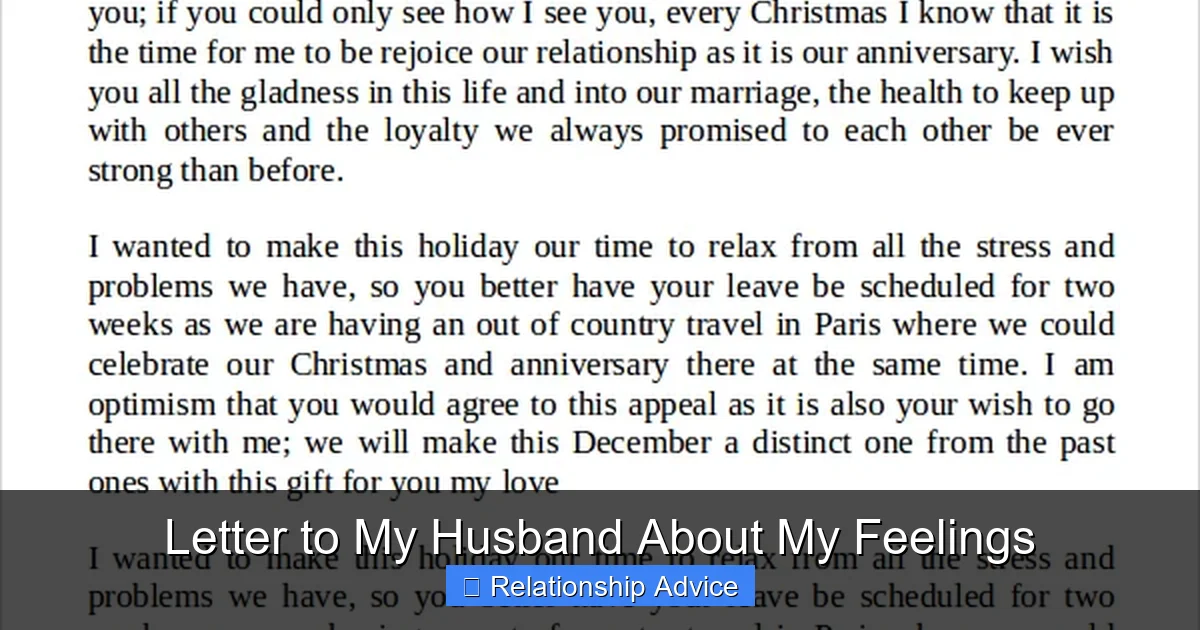
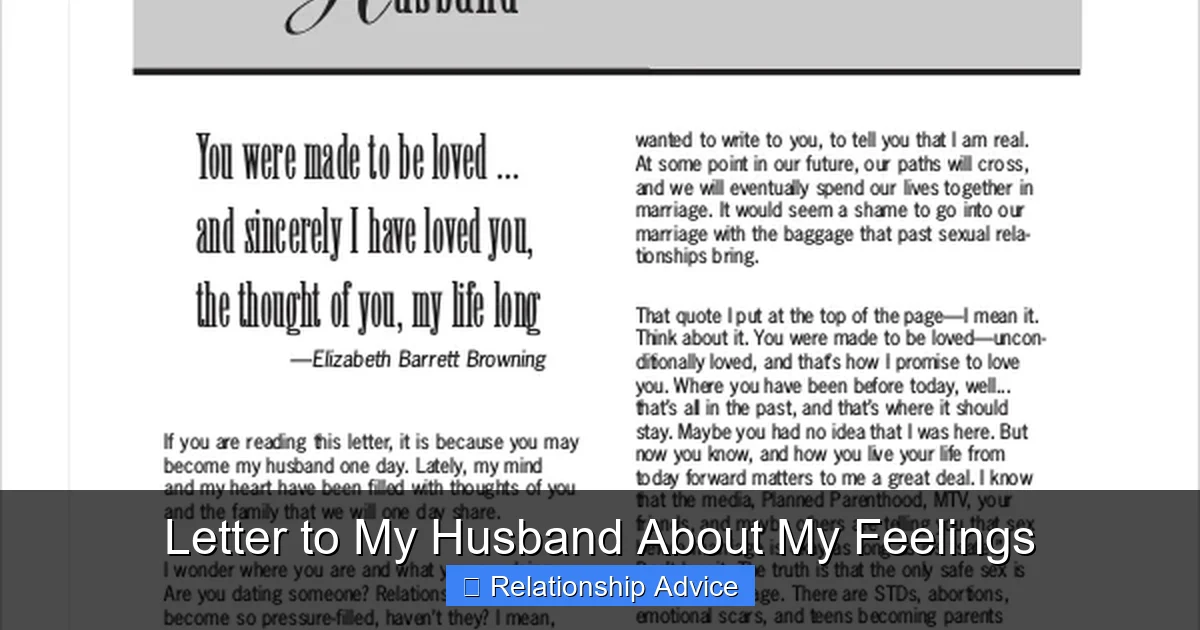
Sometimes, seeing an example helps more than any advice. Here’s a sample letter that includes all the elements we’ve discussed:
Dear [His Name],

Visual guide about Letter to My Husband About My Feelings
Image source: images.template.net
Visual guide about Letter to My Husband About My Feelings
Image source: images.sampletemplates.com
Visual guide about Letter to My Husband About My Feelings
Image source: images.sampletemplates.com
I’ve been thinking a lot about us lately, and I wanted to share something from my heart. First, I want you to know how much I love you. I’m so grateful for the way you work hard to provide for our family, and for the quiet moments when we sit together and just talk. You’ve always been my rock, and I don’t say that enough.
Lately, though, I’ve been feeling a little lonely. It’s not because you’re doing anything wrong—it’s more about how I’ve been feeling inside. I miss the connection we used to have. I miss the way we used to laugh together, stay up late talking, or just hold hands while watching TV. Lately, it feels like we’re both so busy that we’re just going through the motions.
Last week, when I tried to tell you about my day, you were on your phone, and I felt like I didn’t matter. I know you were probably just catching up on work, but in that moment, I felt invisible. I don’t want to sound needy, but I need to feel seen and heard by you.
I also know I haven’t always been the easiest to talk to. When I’m stressed, I tend to shut down, and that probably makes it harder for you to open up. I’m working on that, and I hope you can be patient with me.
What I really want is for us to feel like a team again. I want us to support each other, laugh together, and feel close—even when life gets busy. I don’t need grand gestures. I just need to know that we’re in this together.
I’m not writing this to upset you or start a fight. I’m writing because I care about us, and I want us to feel close again. Whenever you’re ready, I’d love to talk about it—or just sit together and listen.
With all my love,
[Your Name]
This letter is honest, kind, and hopeful. It shares feelings without blame, includes appreciation, and invites dialogue.
What to Do After You Send the Letter
Sending the letter is just the first step. What happens next matters just as much.
Give Him Time to Process
Your husband might need a day or two to think about what you’ve written. He might not respond right away—and that’s okay. Don’t pressure him. Let him come to you when he’s ready.
Be Open to His Response
When he does respond, listen without interrupting. He might be emotional, defensive, or quiet. Whatever his reaction, stay calm and open. This is a conversation, not a debate.
Follow Up with Action
A letter is a great start, but real change comes from action. After you talk, agree on small steps you can both take—like having a weekly check-in, putting phones away during dinner, or planning a date night.
Change doesn’t happen overnight. But with patience and effort, your relationship can grow stronger.
Common Mistakes to Avoid
Even with the best intentions, it’s easy to make mistakes. Here are a few to watch out for:
- Writing when you’re angry: Wait until you’re calm. Anger clouds your words and makes your letter sound harsh.
- Using sarcasm or passive aggression: Phrases like “I guess you’re too busy for me” sound hurtful, even if you don’t mean them that way.
- Making sweeping statements: Avoid phrases like “You always…” or “You never…” They feel like attacks and make defensiveness likely.
- Expecting immediate change: Your husband might not respond the way you hope right away. Be patient.
- Forgetting to thank him: Always include appreciation. It reminds him that you see the good in him, even when you’re upset.
When to Seek Additional Help
Sometimes, a letter isn’t enough. If your husband consistently dismisses your feelings, refuses to communicate, or if there’s emotional or physical abuse, it may be time to seek professional help.
Couples counseling can provide a safe space to work through deeper issues. A therapist can help you both communicate better, rebuild trust, and strengthen your bond.
There’s no shame in asking for help. In fact, it’s one of the bravest things you can do for your marriage.
Final Thoughts: Love Is Worth the Effort
Writing a letter to your husband about your feelings isn’t easy. It takes courage to be vulnerable, to risk being misunderstood, and to hope for a better connection. But love is worth the effort.
Every great relationship has ups and downs. What matters most is how you handle the hard times. When you choose honesty over silence, kindness over blame, and hope over resentment, you’re building something real.
Your letter might be the first step toward a deeper, more loving partnership. It might open doors you didn’t even know were closed. And even if it doesn’t fix everything overnight, it shows your husband that you care—deeply—and that you’re willing to fight for your love.
So take a deep breath. Pick up a pen—or open your laptop. Write from the heart. And remember: the most powerful words aren’t always the loudest. Sometimes, they’re the quietest, the kindest, and the most honest.
You’ve got this.
Frequently Asked Questions
Is it okay to write a letter instead of talking in person?
Yes, absolutely. A letter gives you time to organize your thoughts and express yourself clearly. It can be especially helpful when emotions are high or when you struggle to speak in the moment.
What if my husband doesn’t respond to the letter?
Give him time. He may need space to process. If he still doesn’t respond after a few days, gently ask if he’s had a chance to read it and if he’d like to talk.
Should I handwrite the letter or type it?
Either is fine. A handwritten letter can feel more personal, but a typed one allows you to revise and ensure clarity. Choose what feels most comfortable for you.
Can I include complaints in the letter?
Yes, but frame them as feelings, not accusations. Focus on how situations made you feel, not on blaming him. This keeps the tone constructive.
What if I’m afraid of his reaction?
It’s normal to feel nervous. But remember, you’re coming from a place of love. Most husbands appreciate honesty, especially when it’s shared with care and respect.
How often should I write letters like this?
Only when you have something meaningful to share. Overdoing it can make letters feel routine. Use them for important feelings or moments when you need to reconnect.