
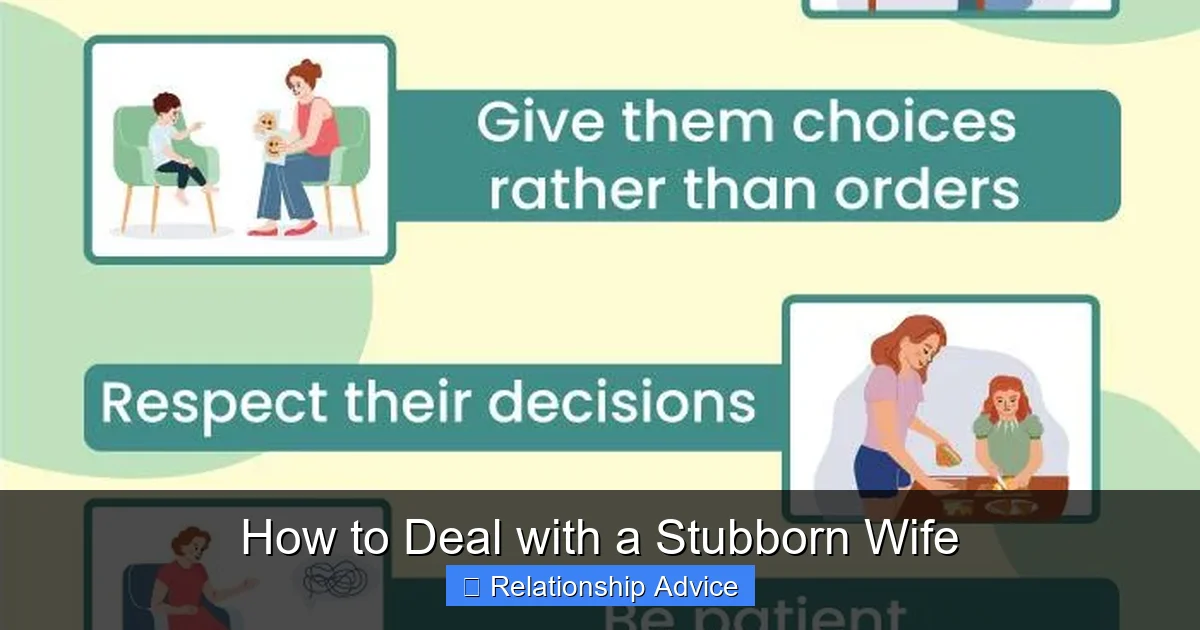
Dealing with a stubborn wife doesn’t mean changing her—it means improving how you connect. By practicing empathy, active listening, and patience, you can turn conflict into cooperation and build a stronger, more loving relationship.
This is a comprehensive guide about How To Deal With A Stubborn Wife.
Key Takeaways
- Practice active listening: Truly hear her perspective without interrupting or judging to foster mutual respect.
- Avoid power struggles: Focus on collaboration, not winning arguments, to reduce tension and build teamwork.
- Validate her feelings: Acknowledge her emotions even if you disagree—this builds trust and emotional safety.
- Choose your battles wisely: Not every disagreement needs a resolution—sometimes letting go preserves peace.
- Use “I” statements: Express your feelings without blame to encourage open, non-defensive dialogue.
- Seek compromise: Find middle ground where both partners feel heard and valued in decision-making.
- Consider professional support: Couples counseling can provide tools to improve communication and resolve deeper issues.
[FEATURED_IMAGE_PLACEHOLDER]
How to Deal with a Stubborn Wife
Marriage is one of life’s greatest adventures—full of love, laughter, and yes, the occasional disagreement. But when your wife seems unwilling to budge on certain issues, it can feel frustrating, isolating, or even exhausting. You might find yourself thinking, “Why won’t she just listen?” or “Why does everything have to be her way?” These thoughts are normal, but they can also lead to resentment if not handled with care.
The truth is, stubbornness in a spouse—whether it’s your wife or husband—is rarely about control. More often, it’s a sign of strong values, deep convictions, or a desire to be heard. A stubborn wife may not be trying to dominate the relationship; she might simply feel misunderstood, unheard, or unappreciated. And when someone feels that way, they often dig in their heels as a form of self-protection.
So how do you deal with a stubborn wife without damaging your bond? The answer isn’t about changing her personality or winning every argument. It’s about shifting your approach—focusing on connection over correction, empathy over ego, and teamwork over tension. This article will guide you through practical, respectful strategies to improve communication, reduce conflict, and build a stronger, more loving marriage—even when your wife seems set in her ways.
Understanding the Roots of Stubbornness
Before you can effectively respond to stubborn behavior, it helps to understand where it comes from. Stubbornness isn’t a flaw—it’s often a coping mechanism shaped by past experiences, personality traits, or emotional needs.
Personality and Temperament
Some people are naturally more decisive or opinionated. They may have a strong sense of self and prefer to make their own choices. This isn’t necessarily a bad thing—many successful leaders and innovators are described as “stubborn” in a positive light. In marriage, this trait can show up as resistance to compromise, especially if your wife values independence or has a strong will.
For example, if your wife grew up in a household where her opinions were dismissed, she may have learned to stand firm to protect her voice. Or, if she’s naturally analytical, she might need time to process decisions before agreeing—something that can be misread as stubbornness.
Emotional Triggers and Past Experiences
Stubbornness can also stem from emotional wounds. If your wife has been hurt in past relationships—whether by being ignored, manipulated, or controlled—she may resist compromise as a way to guard her autonomy. This isn’t defiance; it’s self-preservation.
Imagine a wife who grew up with a parent who made all the decisions. As an adult, she might resist your suggestions not because she dislikes you, but because she’s reclaiming her right to choose. In this case, her “stubbornness” is actually a sign of growth and self-respect.
Fear of Losing Control
Many people equate compromise with loss. If your wife feels that agreeing with you means giving up her identity or values, she may resist—even over small things. This fear can be especially strong if she’s used to being the “decision-maker” in other areas of life, like her career or family.
For instance, a wife who manages a team at work may bring that same assertiveness home. She’s not trying to dominate you; she’s used to taking charge. But in marriage, that can create friction if not balanced with collaboration.
Communication Styles
Sometimes, what looks like stubbornness is actually a mismatch in communication styles. If your wife is more direct and you’re more passive, she might interpret your hesitation as indifference. Conversely, if you’re assertive and she’s reflective, she may need more time to process—leading you to think she’s refusing to engage.
Understanding these roots doesn’t excuse unhealthy behavior, but it helps you respond with compassion instead of frustration. When you see her stubbornness as a signal—not a challenge—you open the door to real connection.
Why Power Struggles Hurt Your Marriage
One of the biggest mistakes couples make when dealing with stubbornness is turning it into a power struggle. You want her to see your point. She wants you to see hers. Before long, you’re both dug in, defending your positions instead of seeking solutions.
But here’s the truth: marriage isn’t a competition. There’s no prize for being right. In fact, focusing on “winning” can do serious damage to your relationship.
The Cost of Winning
When you treat disagreements as battles to be won, you create distance. Your wife may feel attacked, dismissed, or disrespected—even if you don’t mean to. Over time, this erodes trust and intimacy.
For example, imagine you want to take a family vacation to the beach, but your wife insists on a mountain cabin. If you respond with, “We’re going to the beach because I said so,” you might “win” the argument—but you’ve also made her feel unheard. She may comply, but resentment builds. Next time, she’ll dig in even harder.
How Power Struggles Create Resentment
Resentment grows when one partner feels consistently overruled or ignored. Even small, repeated conflicts—like where to eat, how to spend money, or how to discipline the kids—can accumulate into a sense of inequality.
Your wife may start to feel like her opinions don’t matter. She might withdraw emotionally, stop sharing her thoughts, or become more defensive. And when that happens, the relationship suffers—even if you’re still technically “together.”
Shifting from Conflict to Collaboration
The goal isn’t to eliminate disagreements—it’s to change how you handle them. Instead of asking, “How can I get her to agree with me?” try asking, “How can we find a solution that works for both of us?”
This shift in mindset transforms conflict from a threat into an opportunity. It says, “We’re on the same team.” And when you’re on the same team, stubbornness loses its power.
Effective Communication Strategies
Communication is the foundation of any strong relationship—especially when dealing with a stubborn spouse. The way you talk (and listen) can either escalate tension or open the door to understanding.
Use “I” Statements Instead of “You” Accusations
One of the most powerful tools in communication is the “I” statement. Instead of blaming or accusing, express how you feel.
For example:
– ❌ “You never listen to me!”
– ✅ “I feel unheard when I share my thoughts and don’t get a response.”
The first statement puts your wife on the defensive. The second invites empathy. It focuses on your experience, not her behavior, which makes it easier for her to hear without feeling attacked.
Practice Active Listening
Active listening means giving your full attention—not just waiting for your turn to speak. It involves:
– Making eye contact
– Nodding or using verbal cues like “I see” or “That makes sense”
– Paraphrasing what she said to confirm understanding
For example, if your wife says, “I don’t want to go to your parents’ house this weekend because I’m exhausted,” you might respond: “So you’re feeling really drained and need some time to recharge—is that right?”
This shows you’re not just hearing words—you’re trying to understand her feelings. And when she feels understood, she’s more likely to be open to your perspective.
Avoid Interrupting or Finishing Her Sentences
It’s tempting to jump in when you think you know what she’s going to say—but this can make her feel rushed or dismissed. Let her finish. Even if you disagree, give her the space to express herself fully.
Interrupting says, “Your thoughts aren’t important enough to hear completely.” That’s a message no one wants to receive.
Stay Calm During Heated Moments
When emotions run high, it’s easy to say things you don’t mean. If you feel yourself getting angry or frustrated, take a breath. Say, “I need a few minutes to cool down. Can we talk about this in 20 minutes?”
This isn’t avoidance—it’s respect. It shows you value the conversation enough not to ruin it with anger.
Validate Her Feelings—Even If You Disagree
Validation doesn’t mean agreement. It means acknowledging that her feelings are real and understandable.
For example:
– “I can see why you’d feel that way.”
– “That sounds really frustrating.”
– “I get that this matters a lot to you.”
These phrases don’t concede your point—they build emotional safety. And when your wife feels safe, she’s more likely to be flexible.
Building Emotional Connection and Trust
Stubbornness often increases when emotional needs go unmet. If your wife feels lonely, unappreciated, or disconnected, she may use stubbornness as a way to assert control or protect herself.
Strengthening your emotional bond can reduce the need for that defense.
Show Appreciation Regularly
Small gestures matter. Say “thank you” for everyday things—making dinner, handling the kids, paying a bill. Acknowledge her efforts, even if they seem routine.
For example: “I really appreciate how you always make sure the kids are ready for school. It takes a lot of energy, and I notice it.”
Gratitude builds goodwill. When your wife feels valued, she’s less likely to resist cooperation.
Spend Quality Time Together
It’s hard to feel connected when you’re always busy or distracted. Set aside time for just the two of you—no phones, no kids, no chores.
This could be a weekly date night, a walk after dinner, or even 15 minutes of conversation before bed. The key is consistency and presence.
When you prioritize your relationship, your wife feels secure. And security reduces the need to “win” every disagreement.
Be Vulnerable Yourself
Emotional connection works both ways. If you want your wife to open up, you have to be willing to do the same.
Share your fears, dreams, and struggles. Say things like:
– “I’ve been feeling stressed about work lately.”
– “I miss us laughing together like we used to.”
Vulnerability invites reciprocity. When she sees you’re willing to be open, she may feel safer doing the same.
Address Underlying Issues
Sometimes, stubbornness is a symptom of a deeper issue—like unresolved conflict, unmet needs, or past hurts. If arguments keep circling back to the same topics, it may be time to dig deeper.
Ask gentle questions:
– “Is there something about this that feels really important to you?”
– “Have I done something in the past that made you hesitant to agree?”
These questions show you’re not just focused on the surface issue—you care about her inner world.
Practical Tips for Daily Harmony
Beyond big conversations, small daily habits can make a big difference in reducing friction and building cooperation.
Choose Your Battles Wisely
Not every disagreement needs a resolution. Ask yourself: “Is this worth the argument?” If it’s a minor issue—like what to watch on TV or where to eat—consider letting it go.
Sometimes, the best way to deal with a stubborn wife is to pick your moments. Save your energy for the things that truly matter.
Find Creative Compromises
Compromise doesn’t have to mean splitting the difference. Get creative.
For example:
– If she wants to stay home and you want to go out, suggest a cozy dinner at a quiet restaurant.
– If she wants to save money and you want to take a trip, plan a budget-friendly weekend getaway.
The goal is to find solutions that honor both of your needs—not just meet in the middle.
Use Humor to Diffuse Tension
A well-timed joke can break the ice when things get tense. Laughter reduces stress and reminds you both that you’re on the same side.
Just be careful not to use humor to mock or dismiss—keep it light and loving.
Set Shared Goals
When you focus on common goals—like raising happy kids, saving for a house, or improving your health—you shift from “me vs. you” to “us.”
Talk about what you both want for your future. Then work together to make it happen. Shared purpose reduces the need for control.
Apologize When You’re Wrong
No one likes to admit fault—but a sincere apology can heal rifts and rebuild trust.
Say: “I’m sorry I raised my voice. That wasn’t fair to you.” Or: “I realize I didn’t listen earlier. I want to understand your side.”
Apologizing doesn’t make you weak—it makes you strong. It shows you value the relationship more than your pride.
When to Seek Professional Help
Sometimes, despite your best efforts, patterns of stubbornness and conflict persist. That’s okay. It doesn’t mean your marriage is failing—it means you might need extra support.
Signs You Might Need Counseling
Consider couples counseling if:
– Arguments escalate quickly and rarely resolve
– You feel emotionally disconnected or resentful
– One or both of you shut down during conversations
– You’re having the same fights over and over
– You’ve tried communication strategies but nothing changes
Therapy isn’t a last resort—it’s a tool for growth. A skilled counselor can help you both understand underlying patterns, improve communication, and rebuild trust.
How Therapy Can Help
A good therapist won’t take sides. Instead, they’ll help you:
– Identify unhealthy communication patterns
– Learn new ways to express needs and feelings
– Explore past experiences that influence behavior
– Develop conflict-resolution skills
Many couples find that just a few sessions make a big difference. It’s an investment in your future together.
Finding the Right Therapist
Look for a licensed marriage and family therapist (LMFT) with experience in couples counseling. Ask for recommendations from friends, your doctor, or online directories like Psychology Today.
Many therapists offer free consultations—use this time to see if you feel comfortable and heard.
Conclusion
Dealing with a stubborn wife isn’t about changing who she is—it’s about deepening your understanding of her and strengthening your connection. Stubbornness, when viewed through the lens of empathy, often reveals a desire to be seen, heard, and respected.
By practicing active listening, avoiding power struggles, and building emotional trust, you create a foundation where compromise feels safe and cooperation becomes natural. Small daily habits—like showing appreciation, choosing your battles, and using “I” statements—can transform your relationship over time.
Remember, no marriage is perfect. Disagreements are normal. What matters is how you handle them. When you approach your wife not as an opponent but as a partner, you turn conflict into closeness.
And if you ever feel stuck, don’t hesitate to seek help. Love isn’t just a feeling—it’s a choice. And choosing to grow together, even when it’s hard, is one of the most powerful things you can do for your marriage.
Frequently Asked Questions
Is it normal for a wife to be stubborn?
Yes, it’s completely normal. Stubbornness often stems from strong values, past experiences, or a desire to be heard. It’s not a character flaw—it’s a trait that can be managed with empathy and good communication.
How do I get my stubborn wife to listen to me?
Focus on how you communicate. Use “I” statements, avoid blame, and practice active listening. When she feels respected and understood, she’s more likely to be open to your perspective.
Should I just give in to avoid arguments?
Not necessarily. Giving in all the time can lead to resentment. Instead, aim for compromise—find solutions that honor both of your needs. It’s about teamwork, not surrender.
Can stubbornness be a sign of deeper issues?
Yes, sometimes. If stubbornness is paired with withdrawal, anger, or repeated conflicts, it may point to unmet emotional needs or past hurts. Couples counseling can help uncover and address these issues.
How long does it take to see improvement?
Change takes time. With consistent effort—like better communication and emotional connection—you may notice improvements in weeks. Deeper patterns may take months, but progress is possible.
What if my wife refuses to change?
You can’t force someone to change, but you can change how you respond. Focus on your own growth, set healthy boundaries, and seek support if needed. Sometimes, one person’s positive shift can inspire the other.