
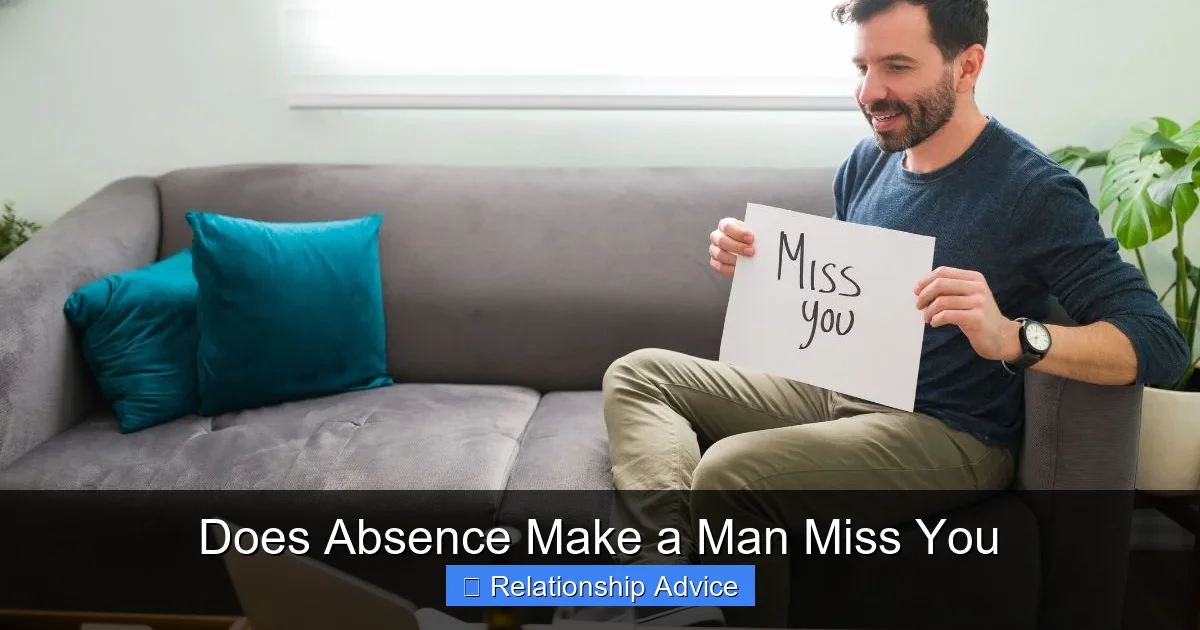
Absence can make a man miss you—but only if the foundation of your relationship is strong, authentic, and emotionally engaging. It’s not about playing games or disappearing completely; it’s about creating space for reflection, appreciation, and personal growth that naturally sparks longing.
This is a comprehensive guide about Does Absence Make A Man Miss You.
Key Takeaways
- Absence triggers reflection: When a man has space, he’s more likely to reflect on what he values in you and the relationship.
- Quality over quantity matters: Frequent, low-effort contact can breed complacency; meaningful interactions create deeper emotional bonds.
- Independence increases attraction: Men are drawn to women who have their own lives, passions, and confidence—absence highlights that strength.
- Silence isn’t always golden: Strategic absence works best when paired with clear communication and mutual respect—not silent treatment or manipulation.
- Emotional connection fuels longing: A man will miss you more if your time together was emotionally rich, not just physically present.
- Timing and context matter: Absence during a stable, loving phase has a different effect than during conflict or uncertainty.
- Self-growth enhances presence: Using time apart to grow personally makes you more magnetic when you reconnect.
[FEATURED_IMAGE_PLACEHOLDER]
Does Absence Make a Man Miss You?
Let’s be real—relationships are complicated. One day everything feels perfect, and the next, you’re wondering if he even notices you’re there. You start asking yourself: *Does absence make a man miss you?* It’s a question that’s crossed the minds of countless women, especially when emotional distance creeps in or when you feel taken for granted.
The short answer? Yes—absence *can* make a man miss you. But here’s the catch: it doesn’t work like magic. You can’t just vanish for a week and expect him to suddenly write you poetry or show up at your door with flowers. Real longing doesn’t come from manipulation or games. It comes from creating the right conditions—conditions where he genuinely reflects on what you mean to him.
Think of it like this: if you’re constantly available, texting back instantly, and always putting his needs first, he might start taking you for granted. But when you step back—just a little—he’s forced to notice your absence. That’s when the quiet moments hit: the coffee he drinks alone, the movie he watches without you, the empty seat at dinner. Those small voids can grow into real feelings of missing you.
But again, it’s not about playing hard to get or using absence as a weapon. It’s about balance. It’s about building a relationship where both people feel valued, independent, and emotionally connected. When that foundation is strong, absence doesn’t create distance—it deepens appreciation.
The Psychology Behind Why Men Miss You When You’re Gone
So why does absence have this effect? It’s not just about missing your smile or your laugh (though those help). It’s rooted in psychology—specifically, how our brains respond to change, loss, and emotional significance.
When someone is constantly present, our brains tend to normalize their presence. You stop noticing the little things: the way he says your name, how he remembers your favorite snack, or how he laughs at your terrible jokes. It becomes routine. And routine, while comfortable, can dull emotional intensity.
But when that person is suddenly absent—even for a short time—your brain kicks into gear. It starts scanning for what’s missing. This is called the “contrast effect.” When you remove something familiar, the absence becomes noticeable. And if that person was emotionally significant, the brain responds with a sense of loss or longing.
For men, this process can be even more pronounced. Society often teaches men to suppress emotions, so they may not express feelings of missing someone right away. But internally? They’re feeling it. They might not text you a heartfelt message, but they’re thinking about you—how you made them feel, what you talked about, how you challenged them.
Another psychological factor is the “scarcity principle.” When something is rare or limited, we tend to value it more. If you’re always around, you’re not scarce. But if you take time for yourself, pursue your passions, or simply don’t respond to every text, you become more intriguing. That doesn’t mean you should ghost him—it means you should protect your energy and your time.
Emotional Significance Triggers Longing
Not all absences are created equal. A man won’t miss you just because you’re not texting him back. He’ll miss you if your presence was emotionally meaningful. Did you listen to him when he was stressed? Did you support his goals? Did you make him feel seen and appreciated?
These emotional connections are what create lasting impressions. When you’re gone, those memories resurface. He remembers how you made him feel—safe, understood, excited—and that’s what he misses. It’s not just your physical presence; it’s the emotional safety you provided.
For example, imagine you’re in a relationship where you’re always there to fix his problems. You listen, you advise, you comfort. But you never share your own struggles. Over time, he might start to see you as a caretaker, not a partner. But if you step back—say, you take a weekend trip with friends and don’t answer his calls—he might realize how much he relied on your emotional support. That’s when he starts to miss *you*, not just your help.
The Role of Memory and Nostalgia
Memory plays a huge role in how men (and people in general) experience absence. When you’re not around, the brain replays positive memories. It’s like a highlight reel of your best moments together: the first date, the inside jokes, the quiet evenings on the couch.
These memories become more vivid in your absence. Why? Because contrast enhances emotion. When you’re together every day, the moments blend. But when you’re apart, each memory stands out. He might suddenly remember how you surprised him with his favorite meal after a long day, or how you danced in the kitchen while cooking breakfast.
Nostalgia is powerful. It softens edges and magnifies the good. And when a man is feeling nostalgic about you, he’s more likely to reach out, plan a date, or express how much he misses you.
But here’s the thing: nostalgia only works if the memories are positive. If your relationship was filled with arguments, criticism, or emotional distance, absence won’t make him miss you—it might make him relieved. So the quality of your time together matters more than the quantity.
How Absence Affects Different Types of Men
Not all men respond to absence the same way. Personality, attachment style, and life experiences all play a role. Understanding these differences can help you navigate your relationship more effectively.
Secure Men: They Miss You, But Stay Grounded
Men with a secure attachment style tend to have healthy relationships. They’re emotionally available, communicate openly, and don’t rely on games or manipulation. When you’re absent, they might miss you—but they won’t panic or overreact.
They’ll likely send a thoughtful text: “Hey, just thinking about you. Hope you’re having a great day.” They respect your space but stay connected. Their absence response is balanced: they feel the longing, but they don’t let it control them.
For example, if you take a weekend trip without him, a secure man might say, “I’ll miss you, but I’m glad you’re doing something fun for yourself.” He values your independence and sees it as a strength, not a threat.
Anxious Men: They Miss You—and Worry
Men with an anxious attachment style crave closeness and reassurance. When you’re absent, they might miss you intensely—but they also worry. They might overanalyze your silence, assume you’re pulling away, or fear you’re losing interest.
Their response might be a flood of texts: “Are you mad at me?” “Did I do something wrong?” “When are you coming back?” This isn’t manipulation—it’s fear. They miss you, but they also feel insecure.
In this case, absence can backfire if not handled carefully. A little space might make them miss you, but too much can trigger anxiety. The key is consistency. Let them know you’re thinking of them, even when you’re apart. A simple “Miss you too” can go a long way.
Avoidant Men: They Miss You—But Hide It
Avoidant men value independence and may pull away when things get too close. They might seem distant, even when they care deeply. When you’re absent, they might actually feel relieved at first—more space, less pressure.
But over time, they may start to miss you. The problem? They won’t show it. They might not text, call, or make plans. But internally, they’re feeling the absence. They might think about you when they’re alone, wonder what you’re doing, or feel a quiet sense of loss.
The challenge with avoidant men is that absence alone won’t make them reach out. You may need to gently re-engage—send a light-hearted message, suggest a low-pressure meetup. But don’t chase. Let them come to you when they’re ready.
Men in Transitional Phases: Absence Can Spark Clarity
Sometimes, a man is going through a life change—new job, moving, family stress—and his focus shifts. During this time, he might seem distant or less engaged. Absence during this phase can actually help.
When you step back, he’s forced to reflect. He might realize how much he relied on you for emotional support, or how your presence brought stability to his chaotic life. That realization can spark genuine longing.
For example, if he’s stressed about work and you’ve been trying to fix everything, stepping back might help him see that you’re not his therapist—you’re his partner. And when he misses that partnership, he may reach out with more intention.
When Absence Works—And When It Doesn’t
Absence isn’t a one-size-fits-all solution. It works best in certain contexts and can backfire in others. Here’s how to know when to use it—and when to avoid it.
When Absence Works
Absence is most effective when:
– The relationship is generally healthy and loving.
– You’re taking space for self-care, not punishment.
– You’re still communicating respectfully.
– You’re using the time to grow personally.
– He has shown interest and care in the past.
For example, if you’ve been together for months, things are going well, and you decide to visit family for a week, that’s a healthy absence. You’re not disappearing—you’re living your life. And during that time, he may miss your daily texts, your laughter, your support.
Another scenario: you’ve been texting constantly, and it’s starting to feel draining. You decide to slow down—respond less frequently, take longer to reply. This creates space. He notices the change, and if he values you, he’ll miss the connection.
When Absence Backfires
Absence can backfire when:
– The relationship is already strained or uncertain.
– You’re using absence as punishment or manipulation.
– You completely ghost without explanation.
– He has shown little interest or effort.
– You’re hoping absence will “fix” deeper issues.
For example, if he’s been ignoring your texts for weeks and you suddenly stop responding, he might not miss you—he might just assume you’ve moved on. Or worse, he might see your silence as confirmation that you’re not worth the effort.
Similarly, if you’re in a toxic relationship and use absence to “teach him a lesson,” it’s unlikely to work. He may not miss you—he may just feel relieved.
Absence should never be used as a tool for control. It’s not about making him jealous or proving your worth. It’s about creating balance and allowing space for natural emotions to arise.
The Danger of the “Silent Treatment”
One common mistake is confusing healthy absence with the silent treatment. The silent treatment is passive-aggressive—it’s about punishing someone by withdrawing affection or communication. It creates resentment, not longing.
Healthy absence, on the other hand, is respectful. You’re not ignoring him; you’re choosing to focus on yourself. You might say, “I’m taking some time to recharge—I’ll be back in touch soon.” That sets a clear boundary without blame.
The silent treatment says, “I’m hurt, and I’m going to make you suffer.” Healthy absence says, “I value myself, and I need space to grow.” The difference is huge.
How to Use Absence Strategically (Without Playing Games)
So how do you create absence in a way that’s healthy, respectful, and effective? It’s not about disappearing—it’s about intentionality.
Step 1: Focus on Your Own Life
The best way to create meaningful absence is to live a full, independent life. Pursue your hobbies, spend time with friends, advance your career, take care of your health. When you’re busy and fulfilled, you naturally have less time to be constantly available.
For example, if you’ve been texting him all day, try shifting your focus. Go to a yoga class, meet a friend for coffee, or start a new project. When you’re engaged in your own world, you’re not just absent—you’re growing. And that growth makes you more attractive.
Step 2: Set Gentle Boundaries
You don’t have to cut off contact completely. Instead, set gentle boundaries. If he texts you 10 times a day, it’s okay to respond less frequently. You might say, “I’m swamped today—I’ll text you tonight.”
This teaches him that your time is valuable. It also gives him space to miss you. He’ll start to appreciate your responses more when they’re not constant.
Step 3: Communicate Your Intentions
If you’re taking a trip or need time alone, let him know. Say, “I’m going to be away for a few days—I’ll miss you, but I’m excited to recharge.” This shows respect and prevents misunderstandings.
Clear communication builds trust. He won’t wonder if you’re angry or pulling away—he’ll know you’re just taking care of yourself.
Step 4: Use the Time to Reflect and Grow
Absence is only powerful if you use it well. Don’t spend the time stalking his social media or wondering what he’s doing. Instead, focus on yourself.
Ask yourself:
– What do I want from this relationship?
– Am I feeling valued and respected?
– What can I do to feel more confident and fulfilled?
When you return, you’ll be stronger, clearer, and more magnetic. And that’s when he’ll really miss you—not just your presence, but your energy.
Step 5: Reconnect with Intention
When you return, don’t rush back into old patterns. Reconnect with intention. Plan a meaningful date. Share what you learned during your time apart. Show him that you’ve grown.
For example, if you took a solo trip, tell him about the new places you visited, the people you met, the things you discovered about yourself. This shows him that you’re not just a partner—you’re a whole person.
Real-Life Examples: When Absence Made a Difference
Let’s look at a few real-life scenarios where absence helped strengthen a relationship.
Example 1: The Overwhelmed Partner
Sarah had been dating Mark for eight months. They texted constantly, saw each other every weekend, and talked about everything. But Sarah started feeling drained. She missed her friends, her hobbies, and her alone time.
She decided to take a step back. She told Mark, “I love spending time with you, but I need a little space this week to focus on some personal projects.” She didn’t ghost him—she set a clear boundary.
At first, Mark was confused. But by the end of the week, he missed her. He realized how much he enjoyed their deep conversations and how her presence calmed him. He texted her: “I missed our talks this week. Can we grab dinner Friday?”
The absence didn’t push him away—it made him appreciate her more.
Example 2: The Avoidant Man Who Came Back
Jenna had been seeing David for a few months. He was sweet but distant—he’d cancel plans last minute and rarely initiated contact. Jenna felt like she was always chasing him.
Instead of pushing harder, she decided to pull back. She stopped texting first, declined a few invitations, and focused on her art classes.
After two weeks, David texted: “Hey, I’ve been thinking about you. Want to grab coffee?” Jenna agreed—but on her terms. They met, and David was more engaged than ever. He admitted he’d been scared of getting too close, but her absence made him realize how much he cared.
Example 3: The Anxious Man Who Needed Reassurance
Lisa’s boyfriend, Tom, had an anxious attachment style. He texted her constantly and got upset when she didn’t reply right away. Lisa loved him but felt smothered.
She decided to slow down her responses—not to punish him, but to create balance. She also reassured him: “I’m not ignoring you. I just need a little space to focus. I’ll always come back to you.”
Over time, Tom learned to trust her. He still missed her when she was busy, but he didn’t panic. The absence helped him grow—and their relationship became stronger.
Conclusion: Absence Can Make a Man Miss You—If Done Right
So, does absence make a man miss you? The answer is yes—but only when it’s rooted in self-respect, emotional health, and mutual care. It’s not about playing games or manipulating emotions. It’s about creating space for reflection, growth, and genuine longing.
When you step back—just a little—you give him the chance to notice what he values in you. You show him that you’re not just a partner, but a person with your own life, passions, and boundaries. And when he misses that—when he misses *you*—it’s real. It’s not forced. It’s earned.
But remember: absence works best in healthy relationships. If there’s already distrust, disrespect, or emotional distance, stepping back won’t fix it. You can’t create longing where there’s no foundation.
So use absence wisely. Focus on your growth. Communicate with kindness. And when you reconnect, do it with intention. That’s how you build a relationship where both people feel seen, valued, and truly missed.
Frequently Asked Questions
Does ignoring a man make him miss you?
Ignoring someone rarely works and can backfire. Healthy absence is about setting boundaries, not punishment. If you ignore him out of anger, he may feel rejected or confused, not missing you.
How long should I be absent to make him miss me?
There’s no set timeline—it depends on your relationship. A few days to a week can be enough if you’re usually very connected. The key is consistency, not duration.
Will he miss me if I stop texting first?
Possibly—if he values you. If you’ve been the one initiating most conversations, stopping can make him notice your absence. But if he’s already disengaged, it may not change anything.
Can absence fix a broken relationship?
Absence alone can’t fix deep issues like betrayal or disrespect. It can create space for reflection, but real repair requires communication, effort, and mutual commitment.
What if he doesn’t reach out when I’m absent?
If he doesn’t reach out, it may mean he’s not as invested as you are. Use the time to reflect on what you want and whether the relationship meets your needs.
Is it selfish to take time away from a relationship?
No—it’s healthy. Taking time for yourself isn’t selfish; it’s necessary for personal growth and a balanced relationship. You can’t pour from an empty cup.