

Looking to strengthen your bond with your partner? Asking deep questions can open doors to emotional intimacy, trust, and understanding. These thoughtful prompts go beyond small talk, helping you explore values, dreams, fears, and love languages in a safe and meaningful way.
Key Takeaways
- Deep questions foster emotional intimacy: They encourage vulnerability and help partners connect on a soul level, building trust and closeness.
- They reveal core values and beliefs: Questions about life purpose, fears, and dreams uncover what truly matters to each person.
- Regular deep conversations prevent stagnation: Couples who talk meaningfully are more likely to grow together and avoid emotional drift.
- Timing and environment matter: Choose calm, distraction-free moments to ask deep questions for maximum impact.
- Listen actively, not just to respond: The goal is understanding, not fixing or judging—practice empathy and patience.
- Start small and build up: Begin with lighter deep questions before diving into heavier topics like trauma or future fears.
- Use questions to navigate conflict: Deep dialogue can help resolve misunderstandings by uncovering underlying emotions and needs.
📑 Table of Contents
Why Deep Questions Matter in a Relationship
Let’s be honest—most of our daily conversations with our partners revolve around logistics: “What’s for dinner?” “Did you pay the bills?” “Can you pick up the kids?” While these exchanges are necessary, they don’t exactly fuel emotional intimacy. Over time, couples can fall into routines that feel functional but emotionally shallow. That’s where deep questions come in.
Deep questions to ask your partner are more than just thought-provoking—they’re relationship game-changers. They invite vulnerability, spark meaningful dialogue, and help you truly see and understand each other. When you ask, “What’s something you’ve never told anyone?” or “What does love mean to you?”, you’re not just gathering information—you’re building a bridge of trust and emotional safety.
Think of your relationship as a garden. Daily tasks like watering and weeding keep it alive, but real growth happens when you plant new seeds—seeds of curiosity, empathy, and shared meaning. Deep questions are those seeds. They encourage you to explore each other’s inner worlds, celebrate differences, and align on core values. And in a world where distractions are constant and attention spans are short, carving out time for these conversations is an act of love in itself.
How to Create a Safe Space for Deep Conversations
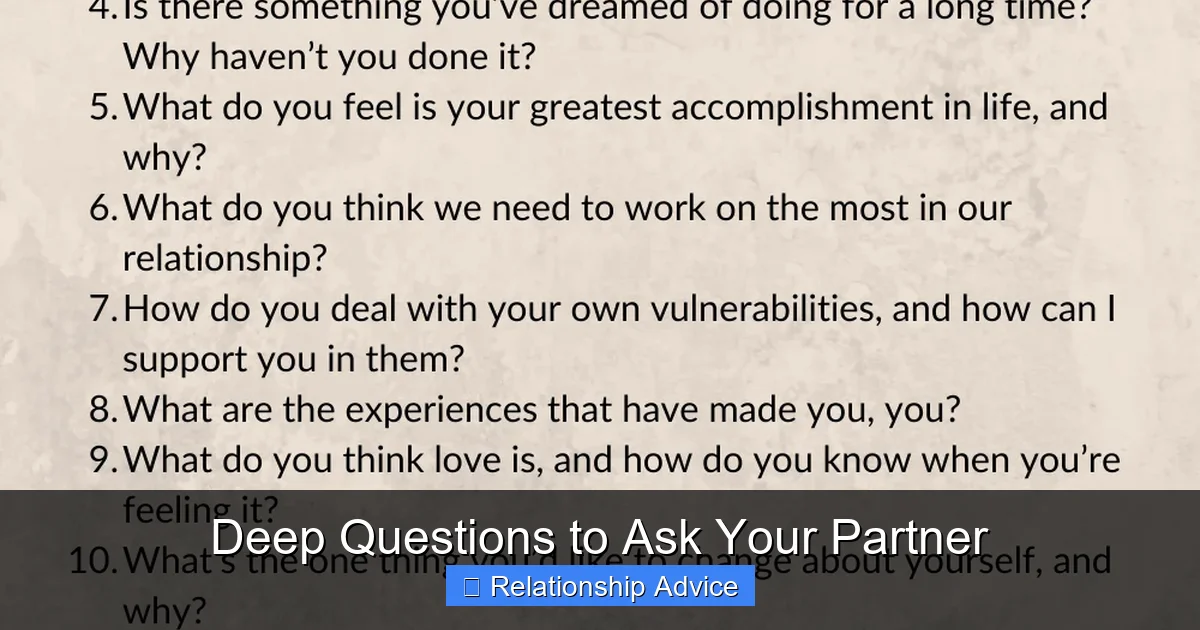
Visual guide about Deep Questions to Ask Your Partner
Image source: i.pinimg.com
Before you dive into the deep end with your partner, it’s essential to set the stage. You can’t expect someone to open up about their deepest fears or childhood memories if they don’t feel safe, respected, and heard. Creating the right environment is the foundation of any meaningful conversation.
Choose the Right Time and Place
Timing is everything. Avoid asking deep questions when either of you is stressed, tired, or distracted. Instead, pick a quiet moment—maybe after dinner, during a weekend walk, or before bed when the house is calm. Turn off the TV, put phones away, and give each other your full attention. This signals that this conversation matters.
For example, instead of asking, “What’s the biggest risk you’ve ever taken?” while rushing out the door, try saying, “Hey, I’d love to talk about something meaningful tonight. Can we sit down after the kids are in bed?” This shows respect for their emotional bandwidth.
Practice Active Listening
Asking deep questions is only half the battle—the other half is listening. Active listening means focusing entirely on your partner’s words, tone, and body language. It means resisting the urge to interrupt, offer advice, or jump in with your own story.
Try using phrases like:
– “That sounds really meaningful to you.”
– “I can see why that was hard.”
– “Tell me more about that feeling.”
These responses validate their experience and encourage them to go deeper. Remember, the goal isn’t to fix their feelings but to understand them.
Be Vulnerable First
You can’t expect your partner to open up if you’re not willing to do the same. Start by sharing something personal yourself. For instance, if you ask, “What’s a dream you’ve given up on?”, consider answering first: “I’ve always wanted to write a novel, but I’ve been too afraid to start.” This models vulnerability and makes it safer for them to respond.
Categories of Deep Questions to Explore

Visual guide about Deep Questions to Ask Your Partner
Image source: choosingtherapy.com
Not all deep questions are created equal. Some focus on the past, others on the future. Some explore emotions, while others dig into values. To get the most out of your conversations, it helps to organize them into categories. Here are six key areas to explore with your partner.
Questions About Values and Beliefs
These questions help you understand what drives your partner—what they stand for, what they believe in, and how they see the world. Shared values are the glue that holds relationships together, especially during tough times.
Examples:
– “What’s a principle you’d never compromise on?”
– “How do you define success in life?”
– “What role does faith or spirituality play in your life?”
– “What’s something you believe that most people disagree with?”
These questions can reveal surprising insights. Maybe your partner values independence more than you realized, or they see success as peace of mind rather than wealth. Understanding these differences—and similarities—can deepen your connection.
Questions About Dreams and Aspirations
Dreams are windows into the soul. They show us what we truly desire, even if we haven’t acted on it yet. Asking about your partner’s dreams—both big and small—can reignite passion and purpose in your relationship.
Examples:
– “If money and time weren’t an issue, what would you do with your life?”
– “What’s a skill you’ve always wanted to learn?”
– “Where do you see us in 10 years?”
– “What legacy do you want to leave behind?”
These questions aren’t just about the future—they’re about hope. They remind you both that life is more than responsibilities and routines. They can also inspire shared goals, like traveling together or starting a side project.
Questions About Emotions and Inner Worlds
Emotional intimacy grows when you feel seen and understood. These questions invite your partner to share their inner landscape—their fears, joys, and hidden feelings.
Examples:
– “What’s something that makes you feel truly alive?”
– “What’s a fear you’ve overcome?”
– “When do you feel most like yourself?”
– “What’s a moment in your life that changed you?”
Be prepared for silence or hesitation. Some emotions are hard to put into words. Give your partner space to think, and avoid pushing too hard. A simple “Take your time” can go a long way.
Questions About Relationships and Love
Love is complex, and everyone experiences it differently. These questions help you understand how your partner gives and receives love, what they need from you, and how they view your relationship.
Examples:
– “What does love mean to you?”
– “How do you feel most loved by me?”
– “What’s something I do that makes you feel appreciated?”
– “What’s a relationship lesson you’ve learned the hard way?”
These questions can uncover love languages, attachment styles, and unmet needs. For instance, your partner might say, “I feel loved when you listen without trying to fix things.” That’s a powerful insight you can act on.
Questions About the Past and Personal History
Our past shapes who we are. Exploring your partner’s history—family, childhood, pivotal moments—can deepen your empathy and understanding.
Examples:
– “What was your childhood like?”
– “Who was your biggest influence growing up?”
– “What’s a memory you often think about?”
– “What’s something you’re proud of from your past?”
Be gentle with these questions. Some memories may be painful. If your partner seems uncomfortable, say, “You don’t have to share if it’s too hard.” Respect their boundaries.
Questions About the Future and Fears
The future can be both exciting and scary. These questions help you align on goals and support each other through uncertainty.
Examples:
– “What’s your biggest fear about the future?”
– “What’s one thing you hope we never lose as a couple?”
– “If we could change one thing about our relationship, what would it be?”
– “What’s a challenge you think we’ll face together?”
These conversations can strengthen your team dynamic. When you know each other’s fears, you can face them together.
When and How to Ask Deep Questions

Visual guide about Deep Questions to Ask Your Partner
Image source: i.pinimg.com
Knowing what to ask is one thing—knowing when and how to ask it is another. Timing, tone, and context all play a role in how your partner receives these questions.
Make It a Ritual, Not an Interrogation
Instead of springing deep questions out of the blue, consider making them a regular part of your routine. You might set aside “deep talk time” once a week—maybe over coffee on Sunday mornings or during a monthly date night.
Try saying, “I’d love to ask you something meaningful tonight. Is now a good time?” This gives your partner control and shows you respect their emotional state.
Use Open-Ended Questions
Avoid yes/no questions. Instead, use open-ended prompts that invite storytelling and reflection. For example:
– Instead of: “Are you happy?”
– Try: “What’s been bringing you joy lately?”
Open-ended questions encourage longer, more thoughtful responses.
Follow Up with Curiosity
After your partner answers, ask follow-up questions. Show genuine interest. For example:
– “That’s fascinating—how did that experience shape you?”
– “I never thought of it that way. Can you tell me more?”
This keeps the conversation flowing and shows you’re truly listening.
Be Patient with Silence
Sometimes, your partner needs time to process. Silence doesn’t mean disinterest—it might mean they’re searching for the right words. Resist the urge to fill the silence. A gentle “I’m here whenever you’re ready” can be more powerful than pressure.
Common Mistakes to Avoid
Even with the best intentions, it’s easy to go wrong when asking deep questions. Here are some common pitfalls and how to avoid them.
Asking Too Many at Once
Don’t overwhelm your partner with a rapid-fire list of deep questions. One or two per conversation is plenty. Let each question breathe. Rushing can make the conversation feel like an interview instead of a dialogue.
Using Questions to Fix or Judge
The goal isn’t to solve your partner’s problems or correct their beliefs. Avoid saying things like, “You shouldn’t feel that way” or “Here’s what you should do.” Instead, focus on understanding: “I hear you. That sounds really tough.”
Ignoring Nonverbal Cues
Pay attention to body language. If your partner looks uncomfortable, changes the subject, or gives short answers, they might not be ready. Respect their boundaries and revisit the topic later.
Forgetting to Share Your Own Thoughts
Deep conversations are a two-way street. If you only ask questions and never share, your partner might feel interrogated. Balance inquiry with vulnerability.
Deep Questions to Strengthen Your Bond
Ready to get started? Here’s a curated list of deep questions to ask your partner, grouped by theme. Use them as conversation starters, journal prompts, or date night activities.
For Building Emotional Intimacy
– “What’s something you’ve never told anyone?”
– “When do you feel most loved by me?”
– “What’s a secret dream you have?”
For Understanding Values
– “What’s a belief you hold that’s changed over time?”
– “What’s something you’d stand up for, no matter what?”
– “How do you want to be remembered?”
For Exploring the Future
– “What’s one thing you hope we accomplish together?”
– “If we could live anywhere, where would it be and why?”
– “What’s a fear you have about growing old together?”
For Reflecting on the Relationship
– “What’s something I do that makes you feel safe?”
– “What’s a moment in our relationship you’ll never forget?”
– “What’s one thing we could do more of together?”
For Personal Growth
– “What’s a mistake that taught you the most?”
– “What’s something you’re working on about yourself?”
– “What’s a book or movie that changed your perspective?”
Conclusion: Deepen Your Connection, One Question at a Time
Relationships thrive on connection, and connection grows through conversation. While daily life pulls us in a thousand directions, taking time to ask deep questions to ask your partner is an investment in your bond. These aren’t just philosophical exercises—they’re tools for building trust, empathy, and intimacy.
You don’t need to have all the answers. You don’t need to fix each other. You just need to be curious, present, and willing to listen. Start small. Ask one question a week. Share your own thoughts. Celebrate the moments when your partner opens up.
Over time, these conversations will become a natural part of your relationship—a space where you both feel seen, heard, and loved. And in a world that often values speed over depth, that’s a rare and beautiful thing.
So the next time you’re sitting across from your partner, instead of asking, “How was your day?” try asking, “What’s something that’s been on your mind lately?” You might be surprised by what you discover.
Frequently Asked Questions
How often should I ask deep questions?
There’s no set rule, but aim for consistency over frequency. One or two deep questions per week is a great start. The key is making them meaningful, not overwhelming.
What if my partner doesn’t want to answer?
Respect their boundaries. Say, “It’s okay if you’re not ready.” You can revisit the topic later. Forcing answers can damage trust.
Can deep questions help during conflicts?
Yes. They can uncover underlying emotions and needs. For example, asking, “What do you need from me right now?” can shift a fight into a conversation.
Are deep questions only for serious relationships?
No. They’re valuable at any stage—whether you’re dating, engaged, or married. They help build emotional intimacy early on.
What if I’m afraid of what I might learn?
It’s natural to feel nervous. But growth often comes from discomfort. Approach the conversation with curiosity, not fear. You’re in this together.
Can I use these questions in writing?
Absolutely. Try writing letters to each other or keeping a shared journal. Written responses can feel safer and allow for deeper reflection.