

Happiness isn’t a distant goal—it’s built through small, consistent daily habits. By focusing on gratitude, connection, movement, mindfulness, and self-care, you can create a life filled with more joy, deeper relationships, and lasting contentment.
Have you ever woken up feeling like something’s missing—even when everything looks fine on paper? Maybe your job is stable, your bills are paid, and your relationships are okay. But still, there’s a quiet ache, a sense that life could feel… better. You’re not alone. In fact, millions of people struggle with this same quiet longing for more joy, more connection, more meaning.
The good news? Happiness isn’t reserved for the lucky few or the genetically blessed. It’s not something you find—it’s something you build. And the most powerful way to build it is through daily habits. Not grand gestures or life-altering changes, but small, repeatable actions that, over time, transform how you feel, think, and relate to others.
Think of happiness like a garden. You can’t just plant a seed once and expect a blooming meadow. It takes daily watering, weeding, and care. The same goes for your emotional well-being. The daily habits of happiness are your tools for tending that inner garden. They’re simple, science-backed practices that anyone can adopt—no matter how busy or stressed you feel. And when practiced consistently, they don’t just make you happier—they strengthen your relationships, improve your health, and help you navigate life’s ups and downs with more resilience.
Key Takeaways
- Gratitude changes your mindset: Writing down three things you’re grateful for each day rewires your brain to notice the good.
- Strong relationships are happiness anchors: Daily check-ins, even brief ones, deepen emotional bonds and reduce loneliness.
- Movement boosts mood naturally: Just 20 minutes of walking or dancing releases endorphins and reduces stress.
- Mindfulness reduces anxiety: Practicing presence—even for five minutes—helps you respond, not react, to life’s challenges.
- Acts of kindness create joy: Helping others, even in small ways, increases your own sense of purpose and happiness.
- Sleep and nutrition fuel emotional health: Prioritizing rest and balanced meals supports stable mood and energy.
- Consistency matters more than intensity: Small daily habits compound over time, creating lasting change.
📑 Table of Contents
Start Your Day with Gratitude
How you begin your morning sets the tone for the entire day. If you wake up rushing, checking emails, or scrolling through news that stresses you out, you’re priming your brain for anxiety. But if you start with gratitude, you shift your focus from what’s wrong to what’s right.
Gratitude is one of the most powerful daily habits of happiness. Research from the University of California, Davis, shows that people who keep a gratitude journal report higher levels of optimism, life satisfaction, and even physical health. Why? Because gratitude rewires your brain to notice the good—even in tough times.
How to Practice Morning Gratitude
Try this simple routine: Before you check your phone or get out of bed, take three deep breaths. Then, think of three things you’re grateful for. They don’t have to be big. Maybe it’s the warmth of your blanket, the sound of birds outside, or the fact that you have coffee waiting. Write them down in a notebook or a notes app.
For example, Sarah, a busy mom of two, started doing this every morning. At first, she struggled to think of three things. But after a week, she noticed she was looking forward to it. “I started appreciating little moments,” she said. “Like how my daughter laughs when she sees the dog, or how my husband makes my coffee just right.”
Why It Works
Gratitude doesn’t ignore problems—it changes your perspective. When you focus on what you have, you reduce the brain’s tendency to fixate on threats and losses. This shift lowers cortisol (the stress hormone) and increases serotonin (the feel-good chemical). Over time, your brain becomes more naturally optimistic.
Tip: Make it social. Share one thing you’re grateful for with a partner or friend each morning. This not only deepens your bond but also reinforces the habit.
Connect Meaningfully Every Day
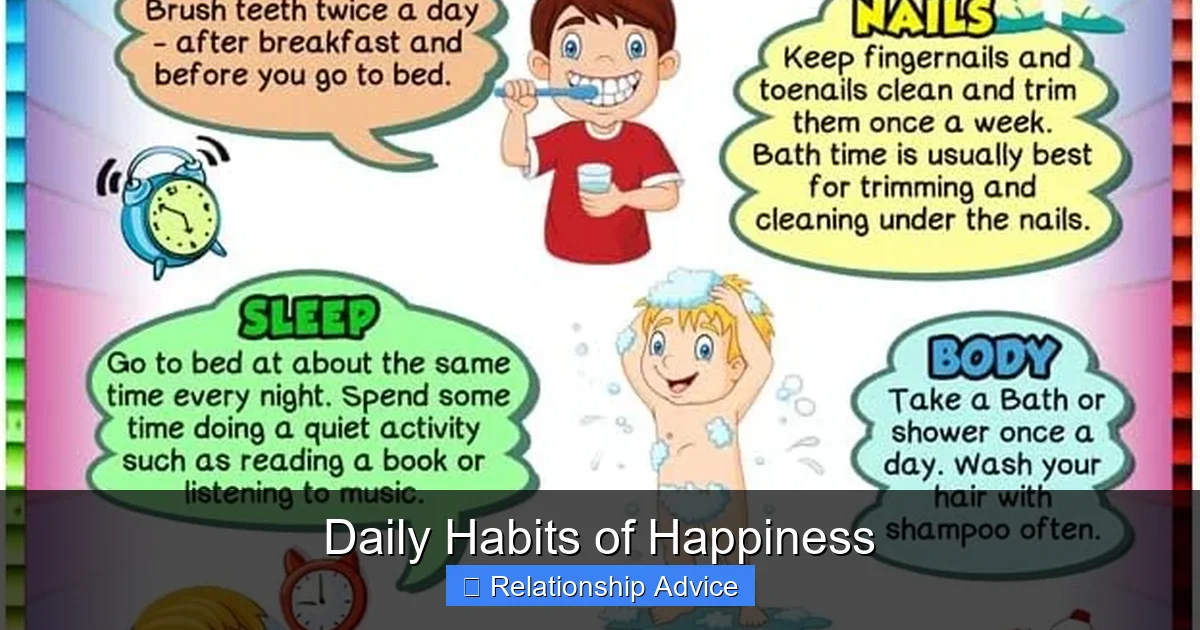
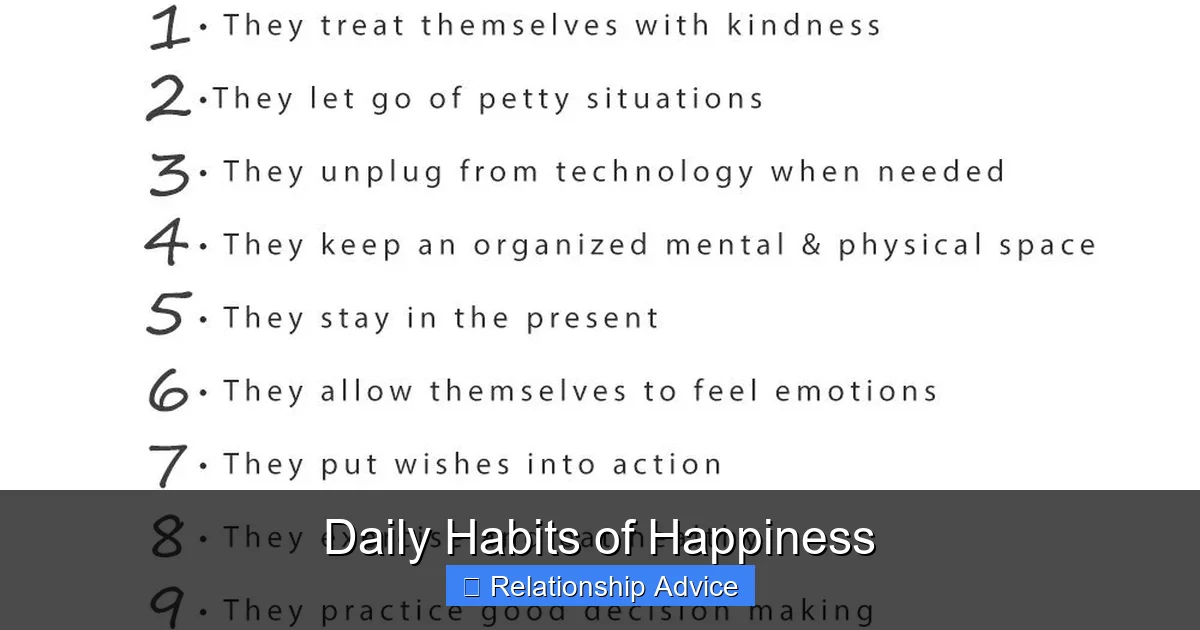
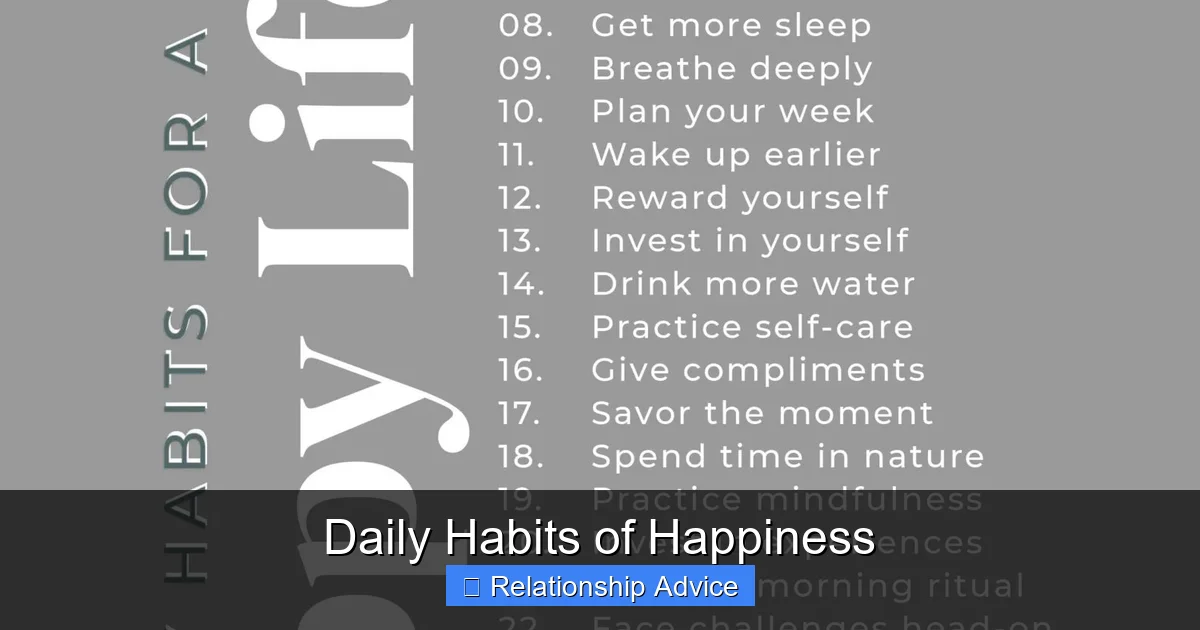
Visual guide about Daily Habits of Happiness
Image source: adogeo.sfo3.digitaloceanspaces.com
Humans are wired for connection. We’re not meant to thrive in isolation. In fact, studies show that strong relationships are one of the strongest predictors of long-term happiness and even longevity. But in our fast-paced world, meaningful connection often gets pushed aside.
The daily habits of happiness include intentional connection—not just scrolling through social media, but real, present interaction. It’s about quality, not quantity.
Small Moments, Big Impact
You don’t need hours to connect. Even five minutes of genuine conversation can make a difference. Try these simple practices:
– **Morning check-in:** Ask your partner, “What’s one thing you’re looking forward to today?” or “How are you really feeling?”
– **Phone-free meals:** Put devices away and talk about your day. Share one high and one low.
– **Weekly appreciation:** Once a week, tell someone why you appreciate them. Be specific: “I loved how you listened to me yesterday when I was stressed.”
For example, Mark and Lisa, a couple married for 12 years, started doing a 10-minute “connection chat” every evening. “We used to just watch TV or go to bed,” Mark said. “Now we actually talk. It’s made us feel closer than we have in years.”
The Power of Active Listening
Connection isn’t just about talking—it’s about listening. When someone feels heard, they feel valued. Practice active listening by putting your phone down, making eye contact, and responding with empathy. Instead of jumping in with advice, try saying, “That sounds really hard. I’m here for you.”
This kind of presence builds trust and deepens emotional intimacy. And it’s a habit you can practice with anyone—your partner, child, friend, or coworker.
Move Your Body Daily
Visual guide about Daily Habits of Happiness
Image source: i.pinimg.com
You’ve probably heard that exercise is good for your body. But did you know it’s just as important for your mind? Physical activity is one of the most effective daily habits of happiness—and you don’t need to run a marathon to benefit.
Movement = Mood Boost
When you move your body, your brain releases endorphins, dopamine, and serotonin—chemicals that naturally elevate mood and reduce stress. Even a 20-minute walk can significantly improve your outlook.
But here’s the key: it doesn’t have to feel like a chore. The best exercise is the one you’ll actually do. Dance in your living room. Take the stairs. Do a quick yoga stretch. Go for a bike ride with your kids. The goal is consistency, not intensity.
Make It Enjoyable
If you hate the gym, don’t go. Find movement you love. Maybe it’s gardening, hiking, swimming, or playing soccer with friends. When exercise feels fun, it becomes a habit—not a punishment.
Try this: Schedule “movement breaks” throughout your day. Set a timer for every two hours and do five minutes of stretching, jumping jacks, or a quick walk. These micro-movements add up and keep your energy steady.
Move with Others
Exercise is even more powerful when shared. Invite a friend for a walk. Join a dance class. Play with your kids at the park. Social movement combines the mood-boosting effects of exercise with the joy of connection.
For example, Jenna started walking with her neighbor every morning. “We chat, laugh, and get our steps in,” she said. “It’s the best part of my day.”
Practice Mindfulness and Presence
Visual guide about Daily Habits of Happiness
Image source: momswhosave.com
In a world of constant distractions, being present is a superpower. Mindfulness—the practice of paying attention to the present moment without judgment—is one of the most transformative daily habits of happiness.
What Is Mindfulness?
Mindfulness isn’t about clearing your mind or achieving zen. It’s about noticing what’s happening right now—your breath, your thoughts, your surroundings—with curiosity and kindness.
You don’t need to sit in silence for hours. Even five minutes a day can make a difference.
Simple Mindfulness Practices
– **Breathing breaks:** Take three deep breaths before answering a text or starting a task. This helps you respond, not react.
– **Mindful eating:** Pay attention to the taste, texture, and smell of your food. Eat slowly. Put your fork down between bites.
– **Body scan:** Before bed, lie down and slowly scan your body from head to toe. Notice any tension and breathe into it.
For example, David, a software developer, started doing a one-minute breathing exercise before meetings. “I used to feel anxious and distracted,” he said. “Now I feel calmer and more focused.”
Mindfulness in Relationships
Mindfulness also improves your relationships. When you’re present with someone, they feel seen and heard. Try putting your phone away during conversations. Notice your partner’s tone of voice, their expressions, their energy. This deepens connection and reduces misunderstandings.
Perform Acts of Kindness
Happiness isn’t just about receiving—it’s about giving. One of the most surprising daily habits of happiness is performing acts of kindness. Whether big or small, helping others boosts your own well-being.
The Science of Kindness
Studies show that people who regularly help others report higher levels of happiness, lower stress, and even better physical health. Why? Because kindness activates the brain’s reward centers and releases oxytocin, the “love hormone.”
Small Acts, Big Impact
You don’t need to donate a million dollars or volunteer for hours. Small gestures matter:
– Hold the door for someone.
– Send a thoughtful text to a friend.
– Compliment a coworker.
– Help a neighbor with groceries.
– Leave a kind note for your partner.
For example, Maria started writing a short, positive note to her husband every morning. “I’d leave it on his pillow,” she said. “It could be ‘Thanks for making coffee’ or ‘I love your laugh.’ He started doing it too. It’s become our thing.”
Kindness Builds Connection
When you do something kind for someone, it strengthens your bond. It shows you care. And when they respond with gratitude, it creates a positive feedback loop of joy.
Tip: Make kindness a family habit. Have your kids draw pictures for grandparents or help pack care packages for the homeless. Teaching kindness early builds empathy and happiness.
Prioritize Sleep and Nutrition
You can’t pour from an empty cup. If you’re sleep-deprived or eating junk food, your mood will suffer—no matter how many gratitude journals you keep. That’s why self-care basics like sleep and nutrition are essential daily habits of happiness.
Sleep: The Foundation of Well-Being
Poor sleep increases anxiety, irritability, and depression. It also weakens your immune system and impairs decision-making. Aim for 7–9 hours of quality sleep each night.
How to Improve Sleep
– **Consistent bedtime:** Go to bed and wake up at the same time every day—even on weekends.
– **Wind-down routine:** Turn off screens an hour before bed. Read, stretch, or listen to calming music.
– **Cool, dark room:** Keep your bedroom cool, quiet, and dark. Use blackout curtains if needed.
– **Limit caffeine:** Avoid caffeine after 2 p.m.
For example, Tom used to stay up late watching TV. After switching to a 10 p.m. bedtime and a 15-minute reading routine, he noticed he felt calmer and more focused during the day.
Nutrition for Mood
What you eat affects how you feel. A diet high in processed foods, sugar, and caffeine can lead to energy crashes and mood swings. Focus on whole foods: fruits, vegetables, whole grains, lean proteins, and healthy fats.
Simple Nutrition Tips
– **Start with breakfast:** Eat a balanced meal with protein and fiber to stabilize blood sugar.
– **Stay hydrated:** Dehydration causes fatigue and irritability. Aim for 6–8 glasses of water daily.
– **Limit sugar:** Reduce sugary snacks and drinks. Opt for fruit or nuts instead.
– **Eat mindfully:** Pay attention to hunger and fullness cues. Avoid eating while distracted.
For example, Lisa noticed she felt anxious and tired after lunch. After cutting back on soda and adding a salad with grilled chicken, her energy and mood improved dramatically.
Create a Daily Happiness Routine
Now that you know the key habits, how do you make them stick? The secret is consistency. You don’t need to do everything perfectly—just start small and build.
Design Your Routine
Think of your day in three parts: morning, midday, and evening. Choose one or two habits for each.
**Morning:**
– Gratitude journal (3 minutes)
– 10-minute walk or stretch
**Midday:**
– Mindful eating
– Quick check-in with a loved one
**Evening:**
– Kindness act (text, note, or gesture)
– Wind-down routine (reading, bath, or meditation)
Start Small
Don’t try to overhaul your life overnight. Pick one habit and practice it for a week. Once it feels natural, add another. For example, start with gratitude. After a week, add a daily walk. Then add a kindness act.
Track Your Progress
Use a journal or app to track your habits. Seeing your progress motivates you to keep going. Celebrate small wins—like seven days in a row of gratitude.
Be Kind to Yourself
Some days will be harder. You’ll forget, get busy, or feel unmotivated. That’s okay. Happiness isn’t about perfection—it’s about progress. When you miss a day, just start again the next morning.
Conclusion
Happiness isn’t a destination. It’s a way of living. And it’s built one small habit at a time. By practicing gratitude, connecting deeply, moving your body, being present, giving kindness, and caring for your body, you create a life filled with more joy, stronger relationships, and lasting contentment.
You don’t need to wait for the “perfect” moment to start. Today is the perfect moment. Choose one habit. Try it for a week. Notice how you feel. Then add another. Over time, these daily habits of happiness will become second nature—and your life will feel richer, fuller, and more meaningful.
Remember: You don’t have to be happy all the time. But you can be happier, more often. And that starts with the choices you make each day.
Frequently Asked Questions
Can daily habits really make me happier?
Yes. Research shows that small, consistent actions—like gratitude, connection, and movement—rewire your brain for greater well-being. Over time, these habits increase positive emotions and reduce stress.
How long does it take to see results?
Many people notice a shift within 2–3 weeks. But the real benefits—like improved relationships and emotional resilience—build over months of consistent practice.
What if I don’t have time for these habits?
Start small. Even 5–10 minutes a day can make a difference. Focus on one habit at a time and integrate it into your existing routine, like journaling while drinking coffee.
Are these habits only for people in relationships?
No. While connection is key, you can practice these habits alone or with friends, family, or coworkers. Kindness, gratitude, and mindfulness benefit everyone.
What if I forget to do them?
That’s normal. Habits take time to form. Use reminders, pair them with existing routines, and be patient with yourself. Progress, not perfection, is the goal.
Can children benefit from these habits?
Absolutely. Teaching kids gratitude, kindness, and mindfulness builds emotional intelligence and resilience. Make it fun with games, drawings, or family challenges.