
Praying for someone to love you is a deeply personal and spiritual act, but it’s important to balance faith with self-worth and emotional health. While prayer can bring peace and clarity, true love grows from mutual respect, shared values, and authentic connection—not manipulation or divine intervention.
Key Takeaways
- Prayer is a tool for inner peace, not control: Praying for love should focus on personal growth and openness, not forcing someone’s feelings.
- Self-love is the foundation of healthy relationships: You can’t attract lasting love if you don’t value and respect yourself first.
- Faith and action go hand in hand: While prayer is powerful, taking real-world steps—like building confidence or meeting new people—is essential.
- Respect free will in love: Forcing someone to love you through prayer contradicts the essence of genuine, consensual affection.
- Spiritual practices can guide, not guarantee: Prayer may help you align with your values and attract the right person, but it doesn’t override human choice.
- Healing past wounds improves your love life: Unresolved pain can block love; prayer combined with therapy or self-reflection helps clear the path.
- Love is a two-way street: Healthy relationships thrive on mutual effort, communication, and emotional availability—not one-sided longing.
📑 Table of Contents
Can You Pray for Someone to Love You?
Have you ever found yourself whispering a quiet plea into the night, “Please, let them love me”? Maybe it’s someone you’ve had a crush on for months, a past flame you can’t let go of, or even a partner who seems emotionally distant. In moments of loneliness or longing, prayer can feel like a lifeline—a way to reach beyond yourself and ask the universe, God, or a higher power for help. It’s natural. It’s human. But here’s the real question: Can you pray for someone to love you—and should you?
Prayer has been a cornerstone of human connection to the divine for centuries. Across cultures and faiths, people turn to prayer when they’re hurting, hoping, or searching for meaning. When it comes to love, prayer often becomes a sanctuary for the heart. But while the intention behind such prayers is pure—yearning for connection, acceptance, and belonging—it’s important to examine what we’re really asking for. Are we seeking genuine love, or are we trying to control someone else’s heart? And more importantly, does prayer actually work in the way we hope?
This article dives deep into the emotional, spiritual, and psychological dimensions of praying for love. We’ll explore whether it’s healthy, effective, or even ethical to ask a higher power to make someone love you. Along the way, we’ll offer practical advice, spiritual insights, and real-life examples to help you navigate your own journey toward love—with faith, self-respect, and clarity.
The Emotional Weight of Longing

Visual guide about Can You Pray for Someone to Love You
Image source: cache.lovethispic.com
Love is one of the most powerful emotions we experience. It can lift us to incredible heights or leave us shattered and searching for answers. When we care deeply about someone who doesn’t seem to feel the same way, the pain can be overwhelming. It’s in these moments that prayer often becomes a refuge.
Imagine this: You’ve been dating someone for a few months. Things seem to be going well—you laugh together, share deep conversations, and feel a spark. But lately, they’ve been pulling away. Texts go unanswered. Plans get canceled. You start to wonder: “Do they even care?” Your heart aches. You lie awake at night, replaying every interaction, trying to figure out what went wrong. And then, in the quiet darkness, you pray. “Please, let them see how much I care. Let them love me back.”
This scenario is more common than you might think. When we’re emotionally invested in someone, our sense of self-worth can become tangled up in their response. We start to believe that if they would just love us, we’d finally feel complete. But this mindset can be dangerous. It places our happiness in someone else’s hands—and that’s a heavy burden for anyone to carry.
The Danger of Conditional Self-Worth
When we pray for someone to love us, we’re often praying for validation. We’re saying, “If you love me, then I matter. If you choose me, then I’m worthy.” But this kind of thinking can erode our self-esteem over time. It teaches us that our value depends on external approval, not on who we are at our core.
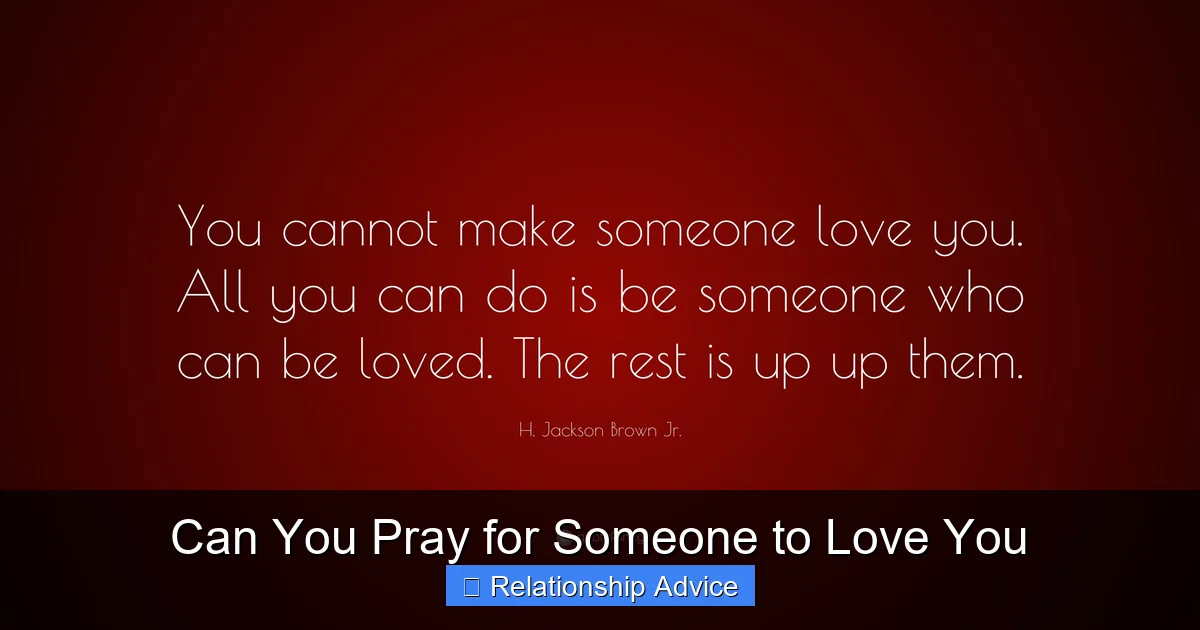
Think about it: If someone only loves you because you’ve prayed for it—or worse, because a higher power intervened—is that really love? Or is it obligation? True love is freely given. It’s not something that can be manufactured, manipulated, or forced. It grows from mutual respect, shared experiences, and emotional honesty.
Prayer, in this context, can become a form of emotional bypassing. Instead of facing our fears, insecurities, or past wounds, we ask the universe to fix things for us. But real healing doesn’t happen that way. It requires courage, self-awareness, and sometimes, professional support.
When Prayer Becomes a Crutch
There’s a difference between using prayer as a source of comfort and using it as a substitute for action. If you’re praying every night for someone to love you but doing nothing to improve your own life—working on your confidence, expanding your social circle, or addressing past relationship patterns—then prayer may be keeping you stuck.
For example, let’s say you’ve had a crush on a coworker for over a year. You pray constantly that they’ll notice you, fall in love with you, and ask you out. But you’ve never actually spoken to them outside of work meetings. You avoid eye contact. You don’t invite them to lunch or join the same team events. Your prayer becomes a way to avoid the discomfort of taking a risk.
In this case, prayer isn’t helping you grow—it’s shielding you from growth. It’s easier to hope for a miracle than to put yourself out there and face the possibility of rejection. But love doesn’t work that way. It requires vulnerability, effort, and sometimes, failure.
The Spiritual Perspective on Prayer and Love

Visual guide about Can You Pray for Someone to Love You
Image source: quotefancy.com
Now, let’s shift gears and look at this from a spiritual standpoint. Many religious and spiritual traditions encourage prayer as a way to connect with the divine, seek guidance, and align with a higher purpose. So, is it wrong to pray for love?
Not necessarily. But the intention behind the prayer matters—a lot.
Prayer as a Path to Alignment
In many faiths, prayer isn’t about demanding outcomes. It’s about surrendering control and trusting in a greater plan. When you pray for someone to love you, you might be asking for something specific—but what if that’s not what’s best for you? What if the person you’re praying for isn’t truly compatible with you? What if they’re emotionally unavailable, in a relationship, or simply not interested?
A more spiritually aligned approach might be to pray for clarity, peace, and the strength to accept whatever happens. Instead of saying, “Please make them love me,” you could say, “Help me understand what this situation is teaching me. Show me how to love myself more deeply. Guide me toward the right person at the right time.”
This kind of prayer shifts the focus from control to surrender. It acknowledges that you can’t force love—but you can prepare yourself to receive it.
The Role of Free Will in Love
One of the core principles in many spiritual traditions is free will. Humans are believed to have the ability to make their own choices. This includes who they love, how they love, and whether they love at all.
If you pray for someone to love you, you’re essentially asking a higher power to override their free will. But is that fair? Is it loving? Imagine if someone prayed for you to love them—even if you didn’t feel that way. Would you want your feelings to be manipulated? Probably not.
True love respects boundaries. It honors the other person’s autonomy. When we pray for love, we should be careful not to cross the line into coercion—even if it’s through spiritual means.
Prayer as a Tool for Inner Transformation
Instead of praying for someone to change their feelings, consider using prayer to change yourself. Ask for the courage to be vulnerable. Pray for the wisdom to recognize healthy love. Request the strength to let go of someone who isn’t right for you.
For instance, if you’re stuck in a cycle of unrequited love, prayer can help you release attachment. You might say, “I release my need for their approval. I trust that I am worthy of love, even if it doesn’t come from them.” This kind of prayer fosters self-love and emotional resilience.
In fact, many spiritual teachers believe that the most powerful prayers are those that focus on inner growth rather than external outcomes. When you transform yourself, you naturally attract healthier relationships.
Practical Steps to Attract Love—Beyond Prayer

Visual guide about Can You Pray for Someone to Love You
Image source: ruhanidua.com
While prayer can be a beautiful and meaningful practice, it’s not a magic wand. Real love requires real effort. If you’re serious about finding a loving, lasting relationship, here are some practical steps you can take—alongside your spiritual practices.
1. Work on Self-Love First
You can’t pour from an empty cup. If you don’t love and respect yourself, you’ll struggle to maintain healthy relationships. Start by practicing self-care. Eat well, exercise, get enough sleep, and do things that bring you joy.
Also, challenge negative self-talk. Replace thoughts like “I’m not good enough” with “I am worthy of love just as I am.” Keep a gratitude journal. Write down three things you appreciate about yourself every day.
When you feel good about yourself, you naturally radiate confidence and warmth—qualities that attract others.
2. Expand Your Social Circle
Love rarely happens in isolation. If you’re only praying for love but not putting yourself out there, you’re limiting your chances. Join clubs, attend events, take classes, or volunteer for causes you care about.
You don’t have to force connections. Just be open to meeting new people. You never know who you might click with.
For example, Sarah had been praying for years for her “soulmate” to appear. But she rarely left her apartment except for work. One day, she decided to join a hiking group. She didn’t find love right away—but she met people who introduced her to others. A year later, she met her now-husband at a friend’s dinner party.
3. Communicate Clearly and Honestly
If you’re interested in someone, don’t wait for a sign from the universe. Speak up. Let them know how you feel—respectfully and without pressure.
For instance, instead of praying for them to notice you, try saying, “I’ve really enjoyed spending time with you. I’d love to get to know you better. Would you like to grab coffee sometime?”
Clear communication builds trust and shows emotional maturity. It also gives the other person the chance to respond honestly.
4. Let Go of the Need to Control
One of the biggest obstacles to love is the need to control outcomes. We want to know exactly when, where, and how love will arrive. But life doesn’t work that way.
Practice surrender. Trust that the right person will come into your life when the time is right. Focus on becoming the best version of yourself—not to attract someone specific, but because you deserve to live a fulfilling life.
5. Seek Support When Needed
If you’re struggling with loneliness, rejection, or past trauma, don’t suffer in silence. Talk to a therapist, counselor, or trusted friend. Healing old wounds makes room for new love.
Therapy can help you understand patterns in your relationships—like why you keep falling for unavailable people or why you struggle to set boundaries. Once you’re aware of these patterns, you can break free from them.
When Prayer and Action Work Together
The most powerful approach to love combines faith with action. Prayer can guide you, inspire you, and keep you grounded. But it shouldn’t replace real-world effort.
Think of prayer as the compass—and action as the journey. The compass helps you stay on course, but you still have to walk the path.
For example, you might pray for the courage to ask someone out. Then, you actually do it. You might pray for clarity after a difficult breakup. Then, you reflect on what you’ve learned and make changes in your life.
This balance is key. It honors both your spiritual beliefs and your personal responsibility.
Real-Life Stories: When Prayer Meets Reality
Let’s look at a few real-life examples to see how prayer and love intersect.
Maria’s Story: From Longing to Letting Go
Maria had been in love with her best friend, James, for five years. They spent every weekend together, shared deep secrets, and supported each other through tough times. But James never saw her as anything more than a friend.
Maria prayed every night for him to fall in love with her. She lit candles, wrote letters to the universe, and even visited a psychic. But nothing changed.
Eventually, Maria realized that her prayers were keeping her stuck. She decided to stop praying for James to love her—and instead, prayed for the strength to move on.
She started dating other people. She focused on her career and hobbies. A year later, she met someone new—someone who loved her back. Looking back, she says, “I was praying for the wrong thing. I should have been praying for my own happiness.”
David’s Story: Prayer as Preparation
David had been single for years after a painful divorce. He felt broken and unlovable. But instead of praying for a specific person to come into his life, he prayed for healing.
He asked for the courage to forgive his ex. He prayed for the wisdom to understand what he wanted in a partner. He requested the patience to wait for the right person.
As he worked on himself—through therapy, journaling, and spiritual practices—he began to feel more whole. He joined a men’s group, started hiking, and reconnected with old friends.
Two years later, he met Elena at a community event. They bonded over shared values and a love of nature. Today, they’re happily married.
David says, “I didn’t pray for love. I prayed to be ready for it. And when it came, I was.”
Conclusion: Pray for Love—But Not the Way You Think
So, can you pray for someone to love you? Yes—but with important caveats.
Prayer is a powerful tool for emotional and spiritual growth. It can bring peace, clarity, and a sense of connection to something greater than yourself. But it should never be used to manipulate, control, or force someone’s feelings.
Instead, pray for the strength to love yourself. Pray for the courage to be vulnerable. Pray for the wisdom to recognize healthy love when it comes. And pray for the grace to let go when it’s time.
True love isn’t something you can summon with a prayer. It’s something you cultivate—through self-awareness, effort, and openness. It grows in the soil of mutual respect, shared values, and emotional honesty.
So go ahead—pray. But pray for the right things. Pray to become the kind of person who deserves and attracts love. Pray to heal your heart. Pray to open your eyes to the possibilities around you.
And then, take action. Step out of your comfort zone. Say the words. Make the move. Because love doesn’t just happen—it’s created, moment by moment, choice by choice.
You are worthy of love. Not because someone prays for it. But because you exist. And that’s enough.
Frequently Asked Questions
Is it selfish to pray for someone to love me?
Not necessarily. Wanting love is a natural human desire. But it becomes selfish if your prayer disregards the other person’s feelings or free will. Focus on praying for mutual understanding and personal growth instead.
Can prayer actually make someone fall in love with me?
No, prayer cannot force someone to love you. Love is a choice, and no spiritual practice can override free will. Prayer may help you align with your values and attract the right person, but it won’t change someone’s heart against their will.
What should I pray for instead of someone loving me?
Pray for self-love, emotional healing, clarity, and the courage to be open to love. You might also pray for the strength to let go of someone who isn’t right for you and trust in a greater plan.
How can I stop obsessing over someone who doesn’t love me back?
Focus on self-improvement, set boundaries, and redirect your energy into hobbies, friendships, and personal goals. Therapy can also help you process unrequited feelings and build emotional resilience.
Is it okay to pray for a specific person to come into my life?
Yes, but frame it as an open invitation rather than a demand. For example, “May I meet someone who shares my values and treats me with respect” is more aligned than “Bring me this exact person.”
Can spiritual practices improve my love life?
Absolutely. Practices like prayer, meditation, and mindfulness can increase self-awareness, reduce anxiety, and help you attract healthier relationships—when combined with real-world action.