

Have you ever felt a sudden wave of sadness or joy without knowing why—only to later discover your soulmate was experiencing the same emotion miles away? This phenomenon, often called emotional telepathy or twin flame empathy, suggests a profound, invisible bond between soulmates that transcends physical distance and logic.
Key Takeaways
- Emotional synchronization is real: Many soulmates report feeling each other’s emotions, even when apart, due to deep emotional and energetic connections.
- It’s not magic—it’s empathy on steroids: The ability to sense a soulmate’s feelings often stems from heightened empathy, intuition, and emotional attunement.
- Signs include unexplained mood shifts: Sudden changes in your mood that align with your soulmate’s experiences may indicate emotional mirroring.
- Distance doesn’t weaken the bond: Soulmates often feel each other’s emotions across cities, countries, or even continents.
- Mindfulness enhances awareness: Practicing meditation and emotional check-ins can help you recognize and interpret these subtle signals.
- It strengthens the relationship: Recognizing and validating these shared emotions builds trust, intimacy, and deeper understanding.
- Not all intense connections are soulmate bonds: Emotional intensity can occur in any deep relationship—context and mutual growth matter most.
📑 Table of Contents
- Can You Really Feel Your Soulmate’s Emotions?
- What Does It Mean to Feel Your Soulmate’s Emotions?
- Signs You’re Feeling Your Soulmate’s Emotions
- Why Does This Happen? The Science and Psychology Behind It
- How to Strengthen Your Emotional Connection with Your Soulmate
- Common Misconceptions About Feeling Your Soulmate’s Emotions
- When to Be Cautious: Emotional Overload and Boundaries
- Conclusion: Embracing the Magic of Emotional Connection
Can You Really Feel Your Soulmate’s Emotions?
Imagine this: You’re going about your day, sipping your morning coffee, when suddenly a deep sense of sadness washes over you. You can’t explain it. Nothing in your life feels wrong. But the feeling lingers—heavy and real. Later that evening, your partner calls, voice trembling, to tell you they just lost a loved one. Coincidence? Or something more?
This isn’t just a romantic movie trope. Countless people in deep, meaningful relationships—especially those who believe they’ve found their soulmate—report experiencing their partner’s emotions as if they were their own. It’s not about reading minds or psychic powers. It’s about a profound emotional resonance that defies logic and distance.
The idea that you can feel your soulmate’s emotions taps into ancient spiritual beliefs, modern psychology, and even emerging neuroscience. Whether you call it emotional telepathy, twin flame empathy, or simply deep connection, the experience is real for many. And while science hasn’t fully explained it, the stories are too consistent to ignore.
In this article, we’ll explore what it means to feel your soulmate’s emotions, why it happens, how to recognize the signs, and how to nurture this unique bond. Whether you’re in a soulmate relationship or searching for one, understanding this phenomenon can deepen your emotional intimacy and help you build a stronger, more conscious partnership.
What Does It Mean to Feel Your Soulmate’s Emotions?

Visual guide about Can You Feel Your Soulmates Emotions
Image source: realestlove.com
At its core, feeling your soulmate’s emotions means experiencing a deep, often involuntary emotional response that mirrors what your partner is feeling—even when you have no direct knowledge of their situation. It’s not just sympathy or empathy in the traditional sense. It’s a visceral, almost physical reaction that feels like your own emotion, but originates from someone else.
This phenomenon is often described as “emotional resonance” or “empathic attunement.” Think of it like two tuning forks vibrating at the same frequency. When one is struck, the other begins to hum in response—even if they’re across the room. In relationships, this resonance happens on an emotional level.
For example, one partner might wake up feeling unusually anxious, only to later learn their soulmate was in a stressful meeting or dealing with a personal crisis. Another might feel a surge of joy during a mundane task, only to find out their partner just received good news. These moments aren’t random. They’re signals—subtle but powerful—of a bond that transcends physical presence.
The Difference Between Empathy and Soulmate Emotional Connection
It’s important to distinguish between regular empathy and the kind of emotional connection soulmates often report. Empathy is the ability to understand and share the feelings of another person. It’s a skill we all have to some degree, and it grows with emotional intelligence.
But soulmate-level emotional connection goes deeper. It’s not just understanding your partner’s sadness—it’s *feeling* it in your chest, your stomach, your bones. It’s an involuntary response, often happening before your brain has time to process what’s going on.
This isn’t about being overly sensitive or codependent. It’s about a unique alignment of emotional frequencies. When two people are deeply connected—spiritually, emotionally, and energetically—their emotional states can begin to sync up, like two hearts beating in unison.
Spiritual and Energetic Perspectives
From a spiritual standpoint, many believe that soulmates are two halves of the same soul, split and sent into different bodies to grow, learn, and eventually reunite. This belief, common in traditions like Hinduism, Buddhism, and New Age spirituality, suggests that soulmates share a deep energetic bond.
In this view, emotions aren’t just psychological experiences—they’re energy. And energy can travel. When your soulmate feels joy, that energy radiates outward, and if you’re attuned to them, you can feel it. It’s like being connected by an invisible thread of light or vibration.
Some spiritual teachers describe this as “twin flame telepathy” or “soul-level communication.” It’s not about words or thoughts, but pure emotional energy. This perspective doesn’t require proof—it’s experienced as truth by those who feel it.
Signs You’re Feeling Your Soulmate’s Emotions
Visual guide about Can You Feel Your Soulmates Emotions
Image source: neurolaunch.com
How do you know if you’re actually feeling your soulmate’s emotions, or if you’re just stressed, anxious, or overly empathetic? The key is in the timing, intensity, and alignment with your partner’s experiences.
Here are some common signs that you might be emotionally connected to your soulmate:
Unexplained Mood Swings That Match Their Experiences
You wake up feeling heavy and drained, even though you slept well and have no reason to be sad. Later, your partner texts to say they had a rough night dealing with family drama. The timing is too close to be a coincidence.
Or maybe you’re laughing at a meme, and suddenly burst into tears—not because it’s sad, but because a wave of grief hits you out of nowhere. Hours later, you learn your soulmate just received devastating news.
These emotional shifts often feel foreign. You might think, “Why am I feeling this way?” because the emotion doesn’t match your current reality—but it matches theirs.
Physical Sensations That Mirror Their State
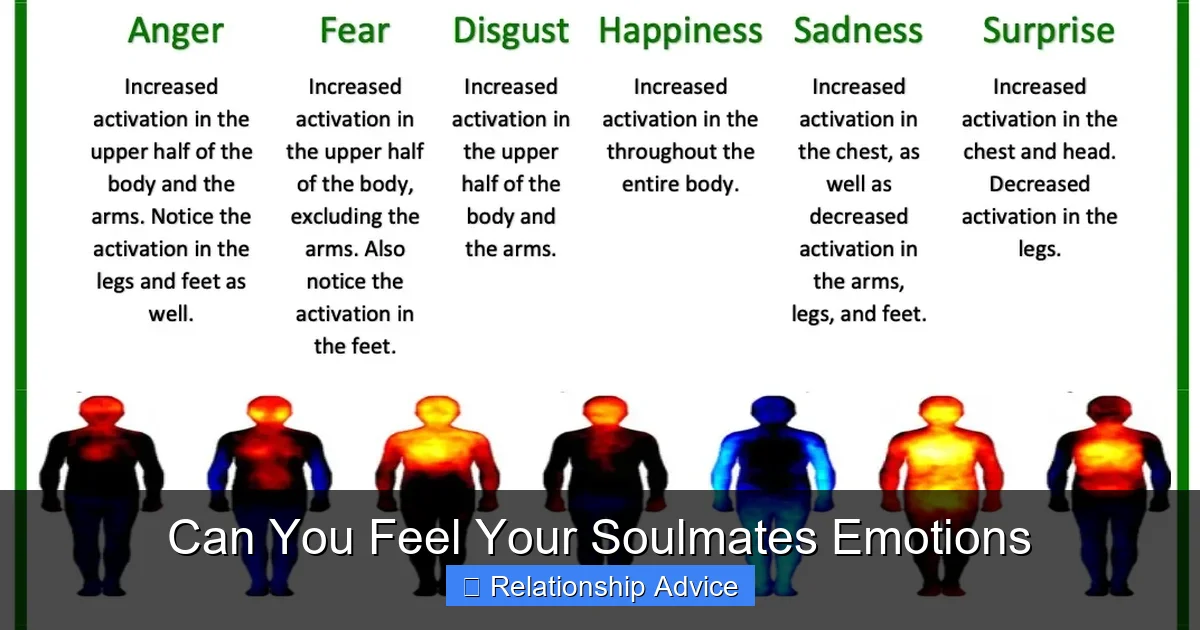
Emotions aren’t just mental—they’re physical. When your soulmate is anxious, you might feel a tightness in your chest or a racing heart. When they’re calm and centered, you might suddenly feel relaxed, even if you were stressed moments before.
Some people report headaches, stomachaches, or fatigue that align with their partner’s stress or illness. It’s as if your body is responding to their emotional or physical state, even from afar.
Dreams and Intuitive Messages
Dreams can be powerful messengers. You might dream of your soulmate crying, only to wake up and find a voicemail from them sharing a personal struggle. Or you might have a sudden, vivid image of them in danger, prompting you to call—only to discover they were in a minor accident.
These aren’t just coincidences. They’re intuitive downloads, ways your subconscious picks up on their emotional frequency and translates it into symbols or feelings.
Sudden Urges to Reach Out—At the Right Moment
Have you ever thought of your soulmate out of the blue and decided to text them, only to find they were just thinking of you too? Or you felt an overwhelming need to check in, and they were going through a tough moment?
These urges often come with a sense of urgency or importance. It’s not just casual curiosity—it’s a deep, inner pull to connect, as if your soul knows they need you.
Emotional Relief When You Connect
After a period of unexplained sadness or anxiety, talking to your soulmate brings instant relief. It’s not just because you’re comforted by their voice—it’s because you’ve finally “synched up” with them emotionally.
This relief can feel almost magical. One moment you’re struggling, the next you’re calm and centered—just from hearing their voice or seeing their face.
Why Does This Happen? The Science and Psychology Behind It
Visual guide about Can You Feel Your Soulmates Emotions
Image source: ik.imagekit.io
While the idea of feeling your soulmate’s emotions may sound mystical, there are scientific and psychological explanations that help make sense of it.
The Role of Mirror Neurons
Neuroscience has identified a type of brain cell called mirror neurons. These neurons fire both when you perform an action and when you see someone else perform that same action. They’re why you flinch when you see someone get hurt, or smile when someone else laughs.
Mirror neurons are also thought to play a role in empathy. When your soulmate expresses emotion—through tone of voice, facial expressions, or body language—your mirror neurons activate, helping you “mirror” their emotional state.
In deeply connected relationships, this mirroring can become so strong that it feels like you’re experiencing the emotion firsthand—even without visual or auditory cues.
Emotional Contagion
Emotional contagion is the phenomenon where emotions spread from one person to another, like a virus. You’ve probably experienced this in a group setting—when one person laughs, everyone starts laughing; when someone is angry, the whole room feels tense.
In close relationships, emotional contagion is amplified. You’re constantly picking up on your partner’s emotional cues—tone, energy, subtle shifts in behavior—and your brain responds accordingly.
Over time, this can create a kind of emotional feedback loop. Your soulmate’s joy lifts you up; your calm helps soothe their anxiety. This mutual influence strengthens the bond and deepens the sense of connection.
The Power of Attachment and Bonding
Psychology tells us that strong emotional bonds—like those between soulmates—create a sense of psychological safety and interdependence. When you’re deeply attached to someone, your brain begins to treat their well-being as essential to your own.
This is why you might feel physical pain when your soulmate is hurt, or anxiety when they’re in danger. Your nervous system is wired to respond to their emotional state as if it were your own.
In fact, studies have shown that when partners are in sync emotionally, their heart rates, breathing patterns, and even brain waves can become synchronized—especially during moments of closeness or conflict.
The Placebo Effect of Belief
Belief plays a powerful role in how we experience the world. If you believe you’re connected to your soulmate on a soul level, you’re more likely to notice and interpret emotional signals as evidence of that bond.
This isn’t to say the experience isn’t real—it absolutely is. But the power of belief can heighten your awareness and make you more attuned to subtle emotional cues.
Think of it like tuning a radio. If you believe a certain station exists, you’ll keep adjusting the dial until you find it. Once you do, you’ll swear it was always there.
How to Strengthen Your Emotional Connection with Your Soulmate
If you’re experiencing this kind of deep emotional bond, you’re not alone—and you can nurture it. Here are practical ways to strengthen your connection and become more aware of your soulmate’s emotions.
Practice Mindfulness and Emotional Check-Ins
Mindfulness helps you tune into your own emotions, which makes it easier to recognize when you’re picking up on someone else’s.
Try this: Set a reminder on your phone to pause three times a day and ask yourself, “How am I really feeling right now?” Notice any physical sensations—tightness, warmth, heaviness. Then ask, “Is this mine, or could it be someone else’s?”
Over time, this practice builds emotional awareness and helps you distinguish between your emotions and those you’re absorbing from your soulmate.
Communicate Openly About Emotional Experiences
When you feel a sudden shift in mood, mention it to your soulmate. Say something like, “I felt really sad this afternoon for no reason. Did anything happen with you?”
This not only validates your experience but also strengthens your bond. It shows you’re attuned to them, and it invites them to share their truth.
You might be surprised how often your feelings align.
Use Meditation to Deepen Your Connection
Meditation can help you quiet your mind and tune into your intuition. Try a guided meditation focused on connection—visualize your soulmate, send them love, and invite their energy into your space.
Some people use “twin flame meditation” or “soul connection” practices to strengthen their bond. Even simple breathing exercises done together (over video call, for example) can create emotional synchronicity.
Keep a Shared Emotional Journal
Start a digital or physical journal where you both log your daily emotions. At the end of the day, compare notes. You might notice patterns—like both feeling anxious on Mondays or joyful after a certain activity.
This practice builds awareness and helps you see how your emotional states influence each other.
Honor the Connection Without Losing Yourself
While feeling your soulmate’s emotions can be beautiful, it’s important to maintain your own emotional boundaries. You’re not responsible for fixing their pain or absorbing their stress.
Practice self-care. When you feel overwhelmed, take a break. Breathe. Ground yourself. Remember: you can love deeply without losing yourself.
Healthy emotional connection means both partners feel seen and supported—without one becoming a sponge for the other’s emotions.
Common Misconceptions About Feeling Your Soulmate’s Emotions
Despite how magical it feels, there are some myths and misunderstandings about this phenomenon that are worth clearing up.
It’s Not a Sign of Codependency
Feeling your soulmate’s emotions doesn’t mean you’re codependent. Codependency involves unhealthy reliance, control, or sacrifice of self. Emotional connection, on the other hand, is about mutual understanding and support.
The key difference? In a healthy bond, both partners maintain their individuality while staying emotionally attuned. You feel their pain—but you don’t take it on as your own burden.
It Doesn’t Mean You’re Psychic
While it may feel like mind reading, emotional connection isn’t about predicting the future or knowing exact thoughts. It’s about sensing emotional energy—vibes, not visions.
You might feel their sadness, but you won’t know why until they tell you. That’s normal. The connection is real, but it’s not omniscient.
Not All Intense Relationships Are Soulmate Bonds
Just because you feel deeply connected to someone doesn’t automatically mean they’re your soulmate. Intense emotions can happen in any passionate relationship—especially in the early stages of love.
What sets soulmate connections apart is the sense of recognition, growth, and mutual evolution. It’s not just about feeling their emotions—it’s about growing together through them.
When to Be Cautious: Emotional Overload and Boundaries
While emotional connection is beautiful, it can become overwhelming if not managed well.
If you constantly feel drained, anxious, or emotionally unstable—especially when your soulmate is stressed—it may be a sign that you’re absorbing too much of their energy.
This is common in highly empathetic people or those with porous emotional boundaries.
To protect yourself:
– Practice grounding techniques (like walking barefoot or deep breathing)
– Set emotional boundaries (“I care about you, but I can’t carry this for you”)
– Seek support from a therapist or counselor if needed
Remember: love doesn’t require sacrifice. True connection includes space for individual healing and growth.
Conclusion: Embracing the Magic of Emotional Connection
Can you feel your soulmate’s emotions? For many, the answer is a resounding yes. Whether explained by science, psychology, or spirituality, this phenomenon speaks to the profound depth of human connection.
It’s not about losing yourself in another person. It’s about recognizing that love can transcend distance, logic, and even individual experience. When you feel your soulmate’s joy as your own, or sense their pain before they speak, you’re witnessing the invisible threads that bind two souls.
This connection isn’t reserved for a lucky few. With awareness, communication, and care, anyone in a deep, loving relationship can cultivate this kind of emotional attunement.
So the next time you feel a sudden wave of emotion with no clear source, pause. Breathe. Ask yourself: Could this be them? And if so, how can I honor this bond—without losing myself?
Because in the end, feeling your soulmate’s emotions isn’t just about magic. It’s about love, empathy, and the beautiful, mysterious ways we’re wired to care for one another.
Frequently Asked Questions
Can you really feel your soulmate’s emotions from far away?
Yes, many people report feeling their soulmate’s emotions even when they’re miles apart. This is often due to deep emotional attunement, empathy, and energetic connection, not supernatural abilities.
Is feeling your soulmate’s emotions a sign of a healthy relationship?
It can be, as long as both partners maintain healthy boundaries. Emotional connection strengthens intimacy, but it shouldn’t lead to emotional overload or loss of self.
How do I know if I’m feeling my soulmate’s emotions or just my own?
Pay attention to timing and context. If your mood shifts suddenly and later aligns with your partner’s experience, it may be emotional mirroring. Mindfulness helps you distinguish between the two.
Can this happen in non-romantic relationships?
Yes. Deep emotional connections can occur between close friends, family members, or even pets. The bond doesn’t have to be romantic to be powerful.
What if I feel my soulmate’s negative emotions too strongly?
This can be overwhelming. Practice grounding techniques, set emotional boundaries, and communicate openly. It’s okay to care without carrying their burden.
Does science support the idea of feeling someone else’s emotions?
While not fully proven, concepts like mirror neurons, emotional contagion, and brainwave synchronization offer scientific explanations for how we can emotionally resonate with others.