
Why is it so hard to speak up for myself? Many people struggle with self-advocacy because of deep-rooted fears, low self-worth, or learned behaviors from childhood. This article explores the emotional roots of silence, offers actionable strategies, and helps you reclaim your voice in dating and relationships. You deserve to be heard—and speaking up is your first step toward healthier connections.
Key Takeaways
- Fear of rejection or conflict: The anxiety around saying “no” or expressing disagreement can stem from a desire to avoid disappointing others or starting arguments.
- Low self-worth: If you don’t believe your opinions matter, you’re less likely to voice them—especially in romantic or intimate settings.
- Past trauma or criticism: Childhood experiences where speaking up led to punishment or mockery can create lasting hesitation.
- People-pleasing habits: Wanting to be liked often overrides personal boundaries, making it difficult to say no or ask for what you need.
- Lack of practice: Speaking up is a skill—like any other—that improves with consistent effort and supportive environments.
- Unclear communication style: Not knowing how to express feelings calmly and clearly can make even simple requests feel overwhelming.
- Internalized shame: Feeling guilty for having needs or desires can silence you before you even open your mouth.
📑 Table of Contents
- Why Is It So Hard To Speak Up For Myself?
- The Roots of Silence: What Makes Us Shut Down?
- How Not Speaking Up Affects Relationships
- Practical Tips to Start Speaking Up
- Overcoming Internal Barriers: From Shame to Strength
- Building Confidence Through Self-Awareness
- When to Seek Professional Help
- Final Thoughts: Your Voice Deserves to Be Heard
Why Is It So Hard To Speak Up For Myself?
We’ve all been there: standing in silence while someone takes credit for your idea, accepting plans you don’t enjoy, or staying quiet when you’re hurt because voicing it feels too risky. Maybe you’ve asked yourself, “Why is it so hard to speak up for myself?” The truth is, this struggle isn’t just about being shy or passive—it runs deeper. It’s rooted in psychology, emotion, and often, years of conditioning.
Speaking up requires courage. But if you’ve ever stayed silent when you should have spoken, you know how frustrating it can be. You might wonder: “Why do I let others walk over me? Why can’t I just say what I really think?” The answer often lies in a mix of fear, self-doubt, and ingrained patterns from your past.
In dating and relationships, not speaking up can lead to resentment, confusion, and even self-sabotage. When you suppress your needs, you send subtle (or not-so-subtle) messages that you’re not important enough to be heard. Over time, this erodes your sense of worth—both in your eyes and in the eyes of those around you.
But here’s the good news: you’re not stuck. Understanding why it’s so hard to speak up for yourself is the first step toward change. And once you do, you’ll find that asserting your voice doesn’t have to mean becoming aggressive—it means becoming clear, confident, and connected to your authentic self.
Let’s explore what’s really going on behind that silence and how you can break free.
The Roots of Silence: What Makes Us Shut Down?
Visual guide about Why Is It So Hard to Speak Up for Myself
Image source: powerofmisfits.com
1. Fear of Rejection or Conflict
One of the most common reasons people struggle to speak up is the fear of rocking the boat. You might worry that saying “no” will push someone away, or that expressing your opinion will start an argument. In dating, this fear can be especially powerful—you may stay quiet during a date night plan you hate, or tolerate disrespectful behavior because you’re afraid of being “too much.”
This fear isn’t always rational. Sometimes, it’s based on past experiences where speaking up led to rejection or ridicule. Maybe you were teased as a child for raising your hand in class, or punished at home for disagreeing with an adult. These early messages get buried deep but still influence how you act now.
When you’re in a relationship, the stakes feel higher. You want to be loved, accepted, and valued—so you shrink yourself to fit the mold. But staying small only invites more of the same treatment. Eventually, the person you’re with learns they don’t need to listen because you won’t speak up.
Breaking this cycle starts with recognizing that your voice matters. Yes, conflict can happen—but avoiding it entirely leads to bigger problems down the road. Learning to communicate calmly and directly doesn’t mean you’re difficult; it means you’re honest.
2. Low Self-Worth and Self-Doubt
Have you ever felt like your opinion doesn’t count? Like you’re not smart or important enough to share your thoughts? That’s low self-worth in action—and it makes it nearly impossible to speak up, especially in romantic situations.
If you grew up in an environment where your feelings were dismissed or minimized, you may have internalized the message: “You don’t matter.” As an adult, you carry that belief into every interaction. You hesitate to correct someone, apologize unnecessarily, or even ask for something basic like dessert after dinner.
In dating, this shows up as second-guessing yourself constantly. “Is this okay?” “Should I bring it up?” “Maybe I’m overreacting.” These thoughts keep you trapped in silence. Meanwhile, your partner may assume everything is fine—because you never said otherwise.
The irony? People who struggle with self-worth often attract partners who reinforce that belief. They may say things like, “You’re too sensitive,” or “Just let it go,” which further isolates you from your own needs.
Healing begins with challenging those old beliefs. Ask yourself: “Who told me I wasn’t worthy of being heard?” Then, gently remind yourself: “I am worthy of respect—even if someone else chooses not to give it.”
3. Past Trauma or Emotional Neglect
For many, not speaking up isn’t a choice—it’s survival. If you experienced emotional neglect, bullying, or abuse growing up, your body learned to stay quiet to stay safe. Speaking up could mean facing consequences, losing support, or triggering old wounds.
Even if the situation isn’t dangerous now, your nervous system still remembers. A raised voice, a firm “no,” or even eye contact can trigger a fight-or-flight response. Your mind says, “Be careful—this might hurt you again.”
In dating, this can look like freezing up when your partner gets angry, agreeing to things you don’t want to please them, or avoiding tough conversations altogether. You’re protecting yourself, but at the cost of your happiness and autonomy.
Therapy can help rewire these responses. Techniques like grounding, breathwork, and cognitive restructuring teach you to recognize triggers and respond instead of react. You’re not weak for needing help—you’re brave for seeking it.
How Not Speaking Up Affects Relationships
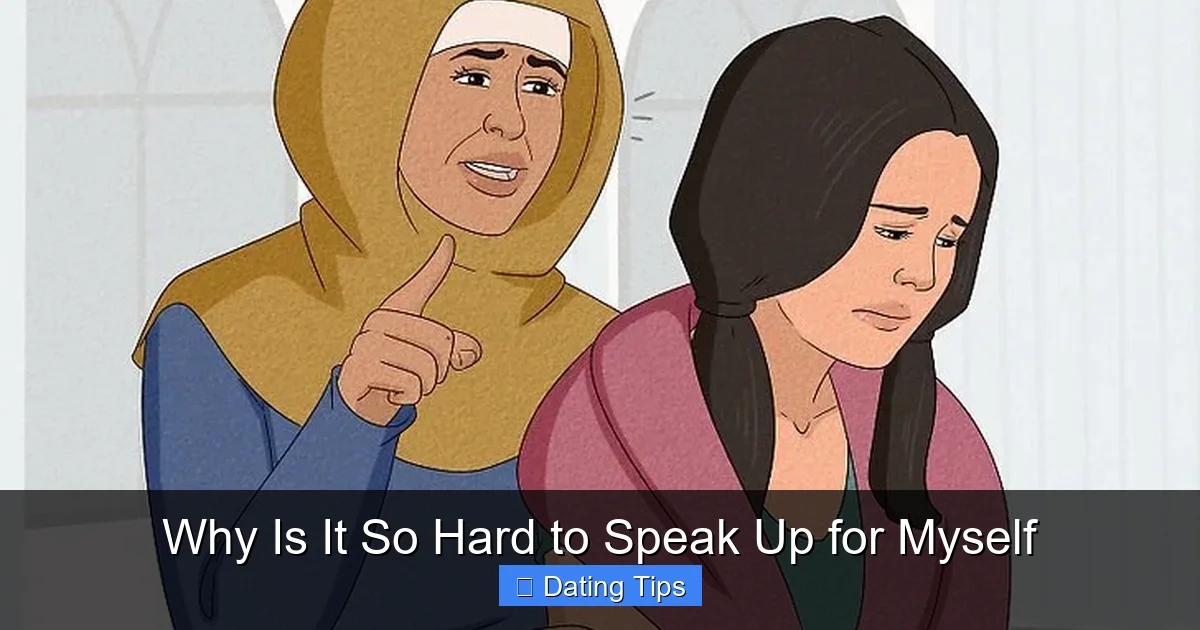
Visual guide about Why Is It So Hard to Speak Up for Myself
Image source: wikihow.com
When you consistently stay silent, your relationships suffer—not because others are bad, but because real connection requires honesty. Here’s what happens when you don’t speak up for yourself:
– **Resentment builds**: You start feeling bitter toward your partner, friend, or family member without understanding why.
– **Miscommunication increases**: Your silence sends mixed signals. Are you okay? Are you not? No one knows unless you say it.
– **Your needs go unmet**: How can someone meet your needs if they don’t know what they are?
– **You lose trust in yourself**: Over time, you begin to doubt your instincts and second-guess every decision.
In dating, this dynamic can be particularly damaging. Imagine going on dates where you pretend to be interested in activities you hate, or tolerate disrespect because you’re scared of being alone. You end up choosing partners who don’t value you—because you never showed them you were capable of valuing yourself.
On the flip side, when you start speaking up—even small things like “I’d rather watch a movie tonight” or “Can we talk about how you spoke to me earlier?”—you set a new standard. You teach others how to treat you. And eventually, you attract people who appreciate your honesty.
Practical Tips to Start Speaking Up
Visual guide about Why Is It So Hard to Speak Up for Myself
Image source: static.vecteezy.com
Change doesn’t happen overnight. But with consistent effort, you can build confidence in expressing yourself—especially in romantic contexts. Try these steps:
1. Practice Small Assertions
Start with low-stakes situations. Next time your roommate eats your food without asking, say, “Hey, I noticed my yogurt disappeared. Can I get some next time before you take it?” Notice how it feels. Was it harder than you expected?
Gradually work your way up. Ask your date what they’re comfortable doing instead of assuming. Say “no” to invitations that don’t excite you. Each time you speak up, you retrain your brain that your voice is safe.
2. Use “I” Statements
Instead of blaming or accusing, focus on your feelings. For example:
– Instead of: “You never listen to me!”
– Try: “I feel unheard when I’m interrupted during conversations.”
This reduces defensiveness and opens the door for dialogue. Plus, it keeps the conversation centered on your experience—not a battle.
3. Prepare What You Want to Say
Silence often comes from uncertainty. If you know you want to bring up a boundary or need, write it down beforehand. Keep it simple: “I need us to split the bills evenly,” or “I’d love to spend quality time together without screens.”
Rehearsing helps reduce anxiety and ensures you say exactly what you mean—without getting flustered.
4. Seek Supportive Environments
Surround yourself with people who encourage openness. Join groups where sharing is valued, or talk to friends who model healthy communication. If dating apps or social events feel intimidating, try online communities or therapy groups focused on assertiveness.
Having allies makes it easier to practice speaking up without fear of judgment.
5. Celebrate Every Attempt
Every time you raise your hand, say “no,” or share a boundary, celebrate it—even if it was awkward. You’re building muscle memory for confidence. Over time, these moments become easier, then natural.
Remember: perfection isn’t the goal. Progress is.
Overcoming Internal Barriers: From Shame to Strength
At the heart of not speaking up is often a deep-seated belief: “My needs aren’t important.” Or worse: “If I show my true self, I’ll be rejected.” These thoughts fuel shame, guilt, and paralysis.
To break free, you must reconnect with your intrinsic worth. Ask yourself daily:
– “What do I truly want?”
– “Am I honoring that?”
– “Would I judge someone else for having these needs? Why not myself?”
Journaling can help. Write letters to your younger self—the one who feared speaking up. Tell her she’s brave. That her voice matters. That she deserves respect.
Also consider exploring topics like *why women choose to stay in unhappy marriages* or *signs your partner isn’t right for you*. Understanding relationship patterns can clarify whether your silence is serving you—or holding you back.
And if you’re wondering *can you pray for someone to love you*, or *why guys pretend to ignore you*, remember: external validation isn’t the answer. Real change starts from within.
Building Confidence Through Self-Awareness
Confidence isn’t something you’re born with—it’s built through experience and reflection. The more aware you become of your emotions, triggers, and values, the easier it becomes to speak up authentically.
Try mindfulness practices like meditation or body scans to tune into your inner world. Notice when you feel shut down. What happened right before? Who was involved? What did you wish you’d said?
Self-awareness also means setting clear boundaries. Know your limits ahead of time. For example: “I’m not comfortable discussing religion on first dates,” or “I need at least two days’ notice to attend events.” Communicating these upfront reduces pressure later.
And don’t forget to reward yourself. After a brave moment—whether it’s asking for a favor or ending a toxic friendship—do something kind for yourself. Treatments like a warm bath, favorite tea, or a walk in nature reinforce positive self-image.
When to Seek Professional Help
If you’ve tried everything and still feel paralyzed by fear, consider working with a therapist. Issues like anxiety, PTSD, or chronic people-pleasing often require professional guidance.
Cognitive Behavioral Therapy (CBT), Dialectical Behavior Therapy (DBT), and trauma-informed approaches can help you unpack deep-seated beliefs and develop healthier coping mechanisms.
You don’t have to figure it all out alone. Asking for help isn’t weakness—it’s wisdom.
Final Thoughts: Your Voice Deserves to Be Heard
So, why is it so hard to speak up for yourself? Because it’s scary. Because it challenges long-held beliefs. Because silence has protected you—even when it hurt.
But protection isn’t the same as safety. Staying small may keep you from immediate harm, but it guarantees long-term unhappiness. True safety comes from showing up fully—flaws, fears, and all.
In dating and life, your voice is your power. When you speak up, you honor your truth. You invite others to see you clearly. And you create space for relationships built on mutual respect—not manipulation or guilt.
Start small. Be gentle with yourself. And remember: every time you say what you mean, you’re not just speaking up—you’re voting for a better version of yourself.
You are worthy of being heard. Now, go ahead—say it.
Frequently Asked Questions
Why am I so afraid to speak up in relationships?
Fear of rejection, conflict, or abandonment often underlies this hesitation. Past experiences where speaking up led to negative outcomes can create deep-seated anxiety. Recognizing these patterns is the first step toward overcoming them.
How can I build confidence in expressing my needs?
Start practicing assertive communication in low-risk situations. Use “I” statements, prepare what you want to say, and celebrate every attempt—no matter how small. Consistency builds confidence over time.
Is it selfish to speak up for myself?
Absolutely not. Healthy self-expression is essential for balanced relationships. When you honor your needs, you model respect for others’ needs too. True connection thrives on mutual authenticity.
What if people get mad when I finally speak up?
Some may react poorly, especially if they’re used to your silence. But their reaction reflects their maturity—not your worth. Protect your peace by choosing supportive people who value your voice.
Can therapy help me stop staying silent?
Yes, absolutely. Therapists can help uncover root causes like trauma, low self-worth, or anxiety. Techniques like CBT and DBT provide tools to reprogram fearful thinking and build assertiveness skills.
How do I know if I’m being taken advantage of because I don’t speak up?
If you frequently feel drained, disrespected, or ignored despite caring deeply about others, it may be a sign. Pay attention to recurring themes—like always doing favors or accepting unreasonable demands—and trust your gut.
