
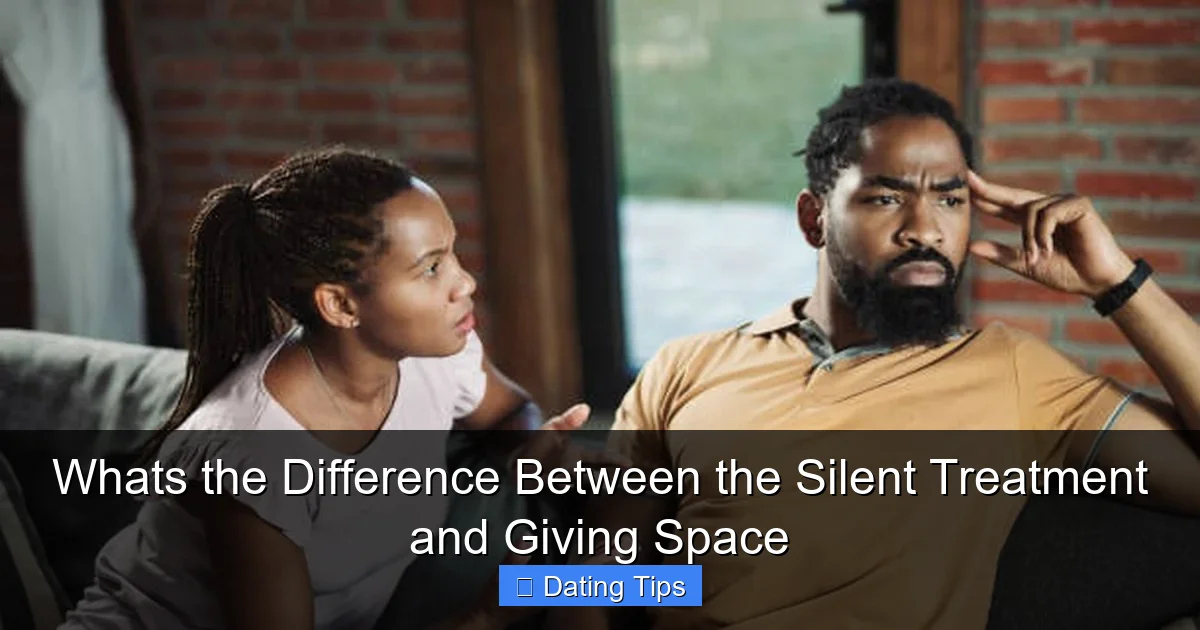
The silent treatment is a passive-aggressive tactic that creates emotional distance and often stems from unresolved conflict, while giving someone space is a healthy, intentional act meant to allow both individuals time to reflect and recharge. One shuts down communication; the other respects it. One breeds resentment; the other builds trust. Understanding this difference can transform your relationships—whether romantic, platonic, or familial—by replacing cold silence with compassionate distance.
Key Takeaways
- Purpose matters: The silent treatment seeks control or punishment, whereas giving space promotes emotional clarity and personal growth.
- Communication style differs: Silent treatment avoids dialogue entirely; giving space includes clear, kind communication about boundaries and intentions.
- Emotional impact varies: The silent treatment often causes anxiety, confusion, and insecurity, while giving space can reduce tension and increase mutual respect.
- Timing is crucial: Space should be temporary and agreed upon—not indefinite isolation—while the silent treatment tends to last longer and feel more permanent.
- Intent defines outcome: When done with care, giving space strengthens bonds; when used manipulatively, the silent treatment damages them.
- Self-awareness helps: Recognizing your motives behind withdrawal prevents mistaking avoidance for self-care.
- Reconnection matters: Healthy space includes plans to reconnect, while the silent treatment rarely allows for future repair.
📑 Table of Contents
- Understanding Emotional Withdrawal: Two Sides of the Same Coin?
- What Is the Silent Treatment—And Why Do People Use It?
- What Does Giving Space Truly Mean?
- Red Flags: How to Spot the Difference in Action
- When Space Goes Too Far—And When Silence Hurts Most
- Practical Tips for Navigating Distance Without Losing Connection
- Healing After the Silent Treatment
- Conclusion: Choose Connection Over Control
Understanding Emotional Withdrawal: Two Sides of the Same Coin?
Have you ever pulled away from someone only to realize later that what felt like peace was actually loneliness? Or maybe you’ve been on the receiving end of sudden radio silence and wondered, “Did I do something wrong?” These moments reveal a common dilemma in modern relationships: how to navigate distance without losing connection. At first glance, both the silent treatment and giving space might look like the same thing—people not talking, spending less time together, feeling distant. But scratch beneath the surface, and you’ll find they operate on entirely different emotional engines.
The silent treatment isn’t just quiet—it’s weaponized quiet. It’s when one person deliberately stops responding, avoids eye contact, or completely withdraws after an argument or perceived slight. On the flip side, giving space is rooted in respect. It’s when two people agree—or at least understand—that some time apart can help them process emotions, reset their energy, and return to each other with greater clarity. Think of it like stepping outside for fresh air versus locking yourself in a dark room.
In this article, we’ll break down exactly what separates these two behaviors, why it matters in dating and long-term relationships, and how recognizing the difference can save you from unnecessary hurt—and even deepen intimacy when applied correctly.
What Is the Silent Treatment—And Why Do People Use It?
Visual guide about Whats the Difference Between the Silent Treatment and Giving Space
Image source: cdn2.momjunction.com
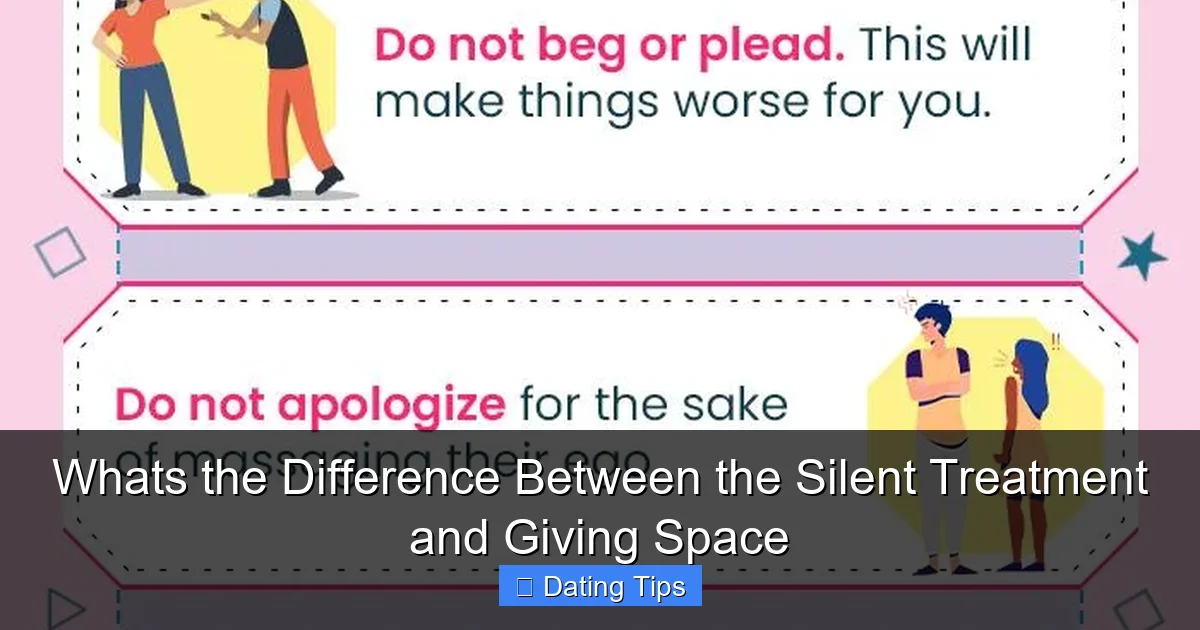
The silent treatment has been around as long as humans have fought over chores, opinions, and who left the cap off the toothpaste. But what exactly constitutes it? According to psychologists, it’s a form of nonverbal aggression where someone deliberately withholds communication, affection, or engagement as retaliation or punishment. Unlike simply being upset (which usually involves expressing feelings), the silent treatment operates in secrecy—no explanation, no resolution, just cold distance.
The Roots of Passive Aggression
Many who use the silent treatment aren’t trying to win arguments—they’re trying to avoid them altogether. They may fear confrontation, lack emotional vocabulary, or worry that saying the wrong thing will escalate things. So instead of talking it out, they shut down. This creates a cycle: conflict → withdrawal → more conflict because the issue never gets resolved.
For example, imagine Sarah and Mark get into a heated debate about finances. Instead of saying, “I’m worried we’re overspending,” Mark stays quiet for three days. No texts, no hugs, no shared meals. When Sarah finally asks if everything’s okay, he shrugs and says, “Fine.” That “fine” isn’t fine at all—it’s code for “I’m still mad and you don’t matter right now.”
Why It Feels So Damaging
Receiving the silent treatment triggers our brain’s threat response. Studies show that social rejection activates the same neural pathways as physical pain. So when your partner goes quiet after a disagreement, your body reacts as if you’ve been slapped—even if no words were spoken. Over time, this erodes trust, fuels insecurity, and teaches others to walk on eggshells around you.
Plus, the silent treatment rarely solves problems. Without feedback, neither party knows what needs fixing. You can’t apologize for something you didn’t realize hurt someone else. And without apology, resentment builds until—boom—the relationship hits a wall.
What Does Giving Space Truly Mean?
Visual guide about Whats the Difference Between the Silent Treatment and Giving Space
Image source: sayingimages.com
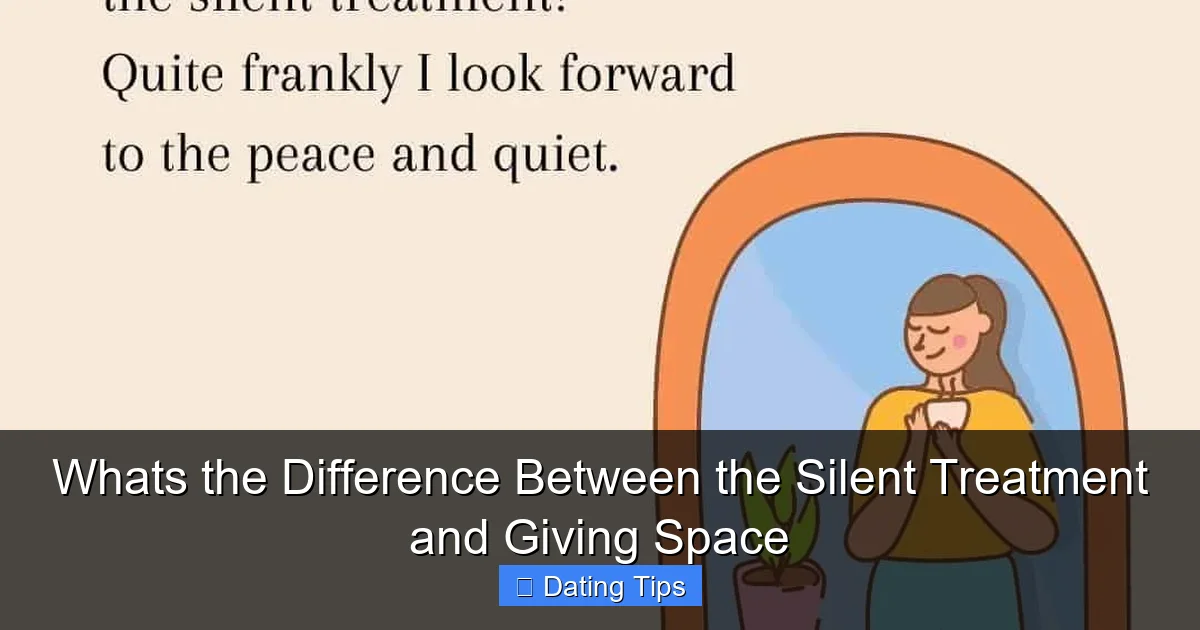
Now let’s talk about the healthier alternative: giving space. This isn’t about punishing your partner or avoiding difficult conversations. It’s about honoring your own needs—and theirs—without cutting off the line of communication entirely.
Space as Self-Care, Not Avoidance
When couples give space intentionally, they’re practicing emotional regulation. Maybe one partner feels overwhelmed by constant texting after work. Instead of snapping, “Stop bothering me!”, they might say, “Hey, I need a few hours to decompress before we talk tonight. Can we check in around 8?” That small window shows care while setting a boundary.
Giving space works best when it’s:
– Brief (a day or two, not weeks)
– Communicated kindly
– Reversible (with mutual agreement to reconnect)
Think of it like pausing a movie. You’re not abandoning the story—you’re just taking a breather before continuing.
How Space Strengthens Relationships
Research from the Journal of Social and Personal Relationships shows that moderate levels of interdependence—meaning both partners maintain individuality *and* closeness—lead to higher satisfaction. In fact, studies consistently link excessive clinginess with lower relationship quality. Space allows partners to rediscover themselves, reducing codependency and fostering independence within the bond.
For instance, Alex noticed his girlfriend seemed stressed about job interviews. Rather than hovering or asking daily updates (which added pressure), he suggested, “Want me to give you total space this week? No calls unless it’s an emergency.” Her relief was palpable—and her confidence grew knowing he trusted her enough to back off.
Red Flags: How to Spot the Difference in Action
Visual guide about Whats the Difference Between the Silent Treatment and Giving Space
Image source: choosingtherapy.com
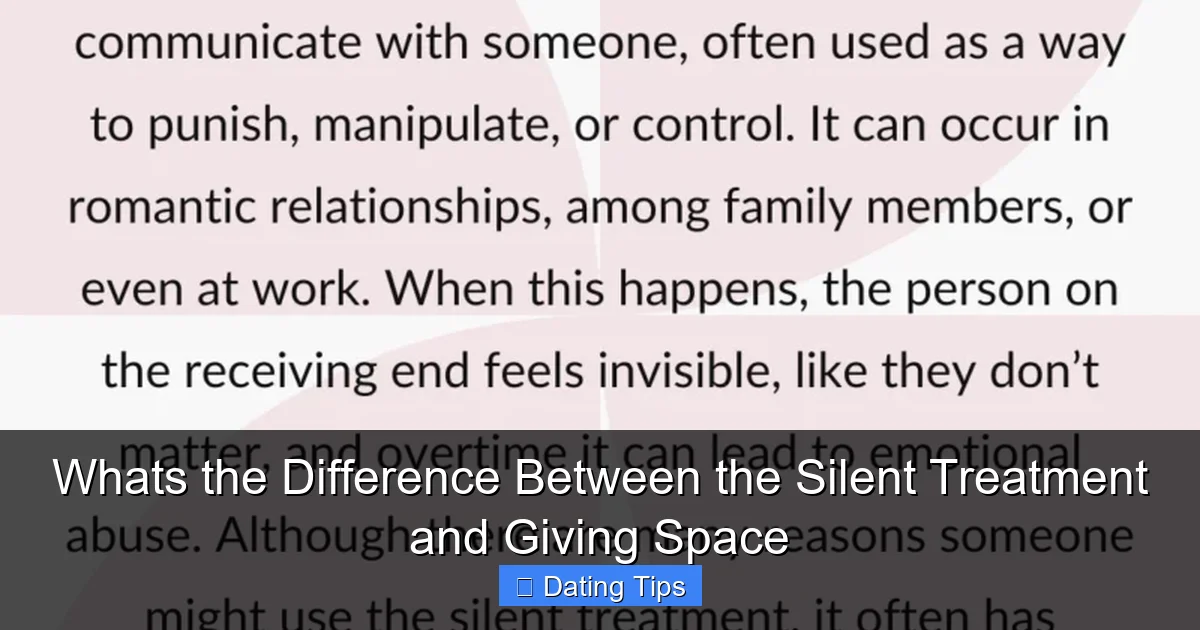
Not every period of quiet means you’re being punished. Here’s how to tell whether your partner is giving space or giving you the silent treatment:
Signs of Genuine Space
- They initiate the conversation: “I think we both need some time to cool down. Let’s talk tomorrow.”
- It’s temporary: Days, not months. If it drags on, ask gently, “Is there something specific you want to discuss?”
- They express care: “I love you, but I need to focus on myself right now.”
- You can reach out: A simple “Thinking of you” message won’t trigger defensiveness.
Warning Signs of the Silent Treatment
- Complete cutoff: No responses to texts, calls, or questions—even basic ones like “Good morning.”
- Guilt-tripping: “If you really cared, you’d know what I’m upset about.”
- Mixed signals: They hug you one minute and ignore you the next without explanation.
- Blame-shifting: “You made me do this.”
If you notice several of these signs, consider having an honest chat. Try saying, “I’ve noticed things feel distant lately. Can we figure out how to connect again?”
When Space Goes Too Far—And When Silence Hurts Most
Even well-intentioned space can backfire. For example, if one partner uses “needing space” as an excuse to emotionally check out during a crisis, it becomes harmful. Or if both partners interpret solitude as rejection, they miss chances to rebuild.
On the flip side, the silent treatment rarely helps—but it’s especially toxic during high-stress times. During financial trouble, health scares, or family emergencies, cold shoulders only amplify anxiety. Instead, offer empathy: “This must be overwhelming. I’m here if you want to talk.”
Balancing Independence and Intimacy
Healthy relationships thrive on what experts call “differentiation of self”—the ability to be close yet independent. Couples who master this don’t fear alone time; they cherish it as part of the whole picture. As Dr. Sue Johnson, creator of Emotionally Focused Therapy, notes, “Secure attachment grows when partners feel safe exploring themselves *and* returning home.”
So how do you achieve that balance?
Start by naming your needs clearly. Instead of assuming your partner should intuit your desire for space, say:
“I’m feeling a bit drained today. Could we hang out tomorrow instead of tonight?”
Then listen actively to theirs. Ask open-ended questions like:
“What would make you feel supported right now?”
Practical Tips for Navigating Distance Without Losing Connection
Whether you’re the one pulling away or the one being withdrawn from, here are actionable steps to keep relationships strong:
For Those Giving Space
- Set a timer: Agree on a timeframe upfront. “Let’s take Tuesday off and reconvene Wednesday.”
- Send a check-in: A quick “Hope you’re doing okay” shows you haven’t forgotten them.
- Plan reentry: Suggest a low-pressure activity afterward—like walking or coffee—to ease back in.
For Those Receiving Space
- Avoid over-texting: Flooding their phone increases pressure. Wait for them to initiate.
- Reflect internally: Use the time to journal your feelings. Are you projecting? Misreading cues?
- Express curiosity, not demands: “I miss us. Want to grab dinner this weekend?” beats “Why aren’t you talking to me?”
Remember: giving space isn’t a test—it’s an invitation to grow together.
Healing After the Silent Treatment
If you’ve experienced prolonged silence, healing takes courage. Start by acknowledging your worth: you deserve kindness, even during disagreements. Then consider these steps:
1. **Address it directly**: Say, “I noticed we stopped talking after our fight. I value our connection and want to understand what happened.”
2. **Seek mutual understanding**: Ask, “What do we both need to move forward?”
3. **Commit to change**: Agree on healthier conflict-resolution strategies—like using “I feel…” statements instead of blame.
If patterns persist, couples therapy can help uncover deeper issues like fear of vulnerability or unmet attachment needs.
Conclusion: Choose Connection Over Control
At the heart of this distinction lies a simple truth: relationships flourish when built on trust, not tactics. The silent treatment trades warmth for power; giving space trades noise for peace. One leaves scars; the other plants seeds.
Next time you feel the urge to withdraw—or sense your partner is doing the same—pause. Ask yourself: Am I protecting our bond… or hiding from it? True closeness isn’t about never needing distance. It’s about knowing how to come back to each other, again and again.
And if you’re struggling to give space without guilt (or fear losing someone), remember this: healthy love doesn’t suffocate—it expands.
—
Frequently Asked Questions
Is giving space the same as ignoring someone?
No. Giving space is intentional, respectful, and temporary. Ignoring someone—especially after a disagreement—often feels punitive and avoids resolution. Space includes kindness; ignoring breeds resentment.
How long should I give my partner space?
Usually 24–48 hours max. Longer periods risk making the other person feel abandoned. Always clarify: “I need a day to think—can we talk tomorrow?”
Can the silent treatment be justified?
Not really. Even in anger, complete withdrawal harms trust. Better alternatives include saying, “I’m upset and need time to calm down,” then scheduling a real conversation later.
What if my partner won’t talk after an argument?
Gently remind them you’re open: “I’m ready to talk when you are. I don’t want this to fester.” If silence continues, address it directly: “Silence makes me feel scared. Can we find a way to reconnect?”
Does giving space mean I don’t love them?
Not at all. Love respects boundaries. Sometimes, loving someone means trusting they’ll return—and giving them room to breathe does just that.
How do I know if someone is using the silent treatment vs. needing space?
Look for communication. Genuine space includes explanations and reassurance. Silent treatment offers none. Also, note duration—space is brief; silence lingers.
