

If your husband never defends you, it can feel like you’re standing alone in a storm. This silence often stems from deeper issues like insecurity, emotional distance, or unmet needs. Understanding why he doesn’t stand up for you is the first step toward healing your relationship. With patience, honest conversation, and mutual effort, you can restore balance and create a stronger partnership where both of you feel supported.
Key Takeaways
- Understanding the root cause: Your husband may not defend you due to fear of conflict, low self-esteem, emotional disconnection, or unresolved personal issues.
- Communication is key: Open, non-accusatory conversations about how his silence makes you feel can spark meaningful change.
- Observe his behavior beyond defense: Notice whether he supports you in private but avoids public confrontation—this might indicate social anxiety or cultural norms.
- Evaluate your relationship dynamics: Consider if there’s an imbalance in power, respect, or emotional availability that discourages him from speaking up.
- Seek professional help if needed: Couples counseling or individual therapy can uncover hidden patterns and provide tools for healthier interactions.
- Rebuild trust gradually: Focus on small moments of support and consistency rather than expecting immediate transformation.
- Prioritize your own well-being: You deserve to feel safe and valued—don’t let one behavior define your entire happiness.
📑 Table of Contents
- Why Does My Husband Never Defends Me?
- The Emotional Toll of Being Unprotected
- Common Reasons Why Husbands Don’t Defend Their Wives
- How to Address the Issue Directly
- Practical Steps to Encourage Supportive Behavior
- When Professional Help Is Needed
- Rebuilding Trust Through Mutual Effort
- Knowing When to Walk Away
- Final Thoughts: You Deserve a Partner Who Stands With You
Why Does My Husband Never Defends Me?
If you’re reading this, chances are you’ve already noticed something unsettling: your husband rarely—if ever—comes to your defense. Maybe a coworker made a backhanded comment during a family dinner. Perhaps a relative criticized your parenting style at Thanksgiving. Or maybe even worse: someone insulted you in front of him, and he said nothing. In those quiet seconds after the hurtful words landed, all you could hear was your heart pounding louder than any apology could ever be.
This isn’t just about defending you in public. It’s about feeling seen, protected, and valued by the person you chose to spend your life with. When your husband stays silent when others attack you, it sends a subtle but powerful message: “I don’t see you as my priority.” Over time, that silence erodes trust, stokes resentment, and leaves you feeling emotionally abandoned. You start wondering, “Does he even care?” The truth is complex—but understanding it starts with empathy, not blame.
The Emotional Toll of Being Unprotected
Feeling Invisible in Your Own Marriage
When your partner doesn’t defend you, you begin to feel invisible—not just to outsiders, but to him too. Imagine being in a room where everyone else is speaking your language, but your spouse remains silent. That’s what it feels like every time someone disrespects you. You learn to brace yourself, to anticipate criticism, to become hyper-vigilant. Eventually, you stop sharing your true thoughts because you know they’ll be dismissed or mocked.
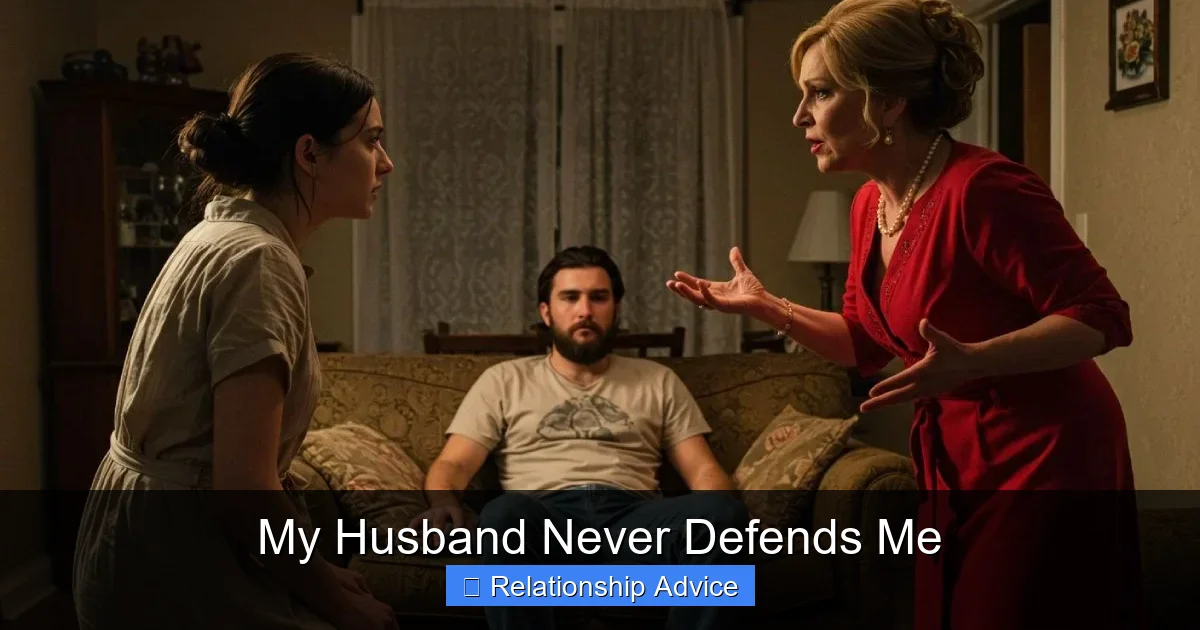
Visual guide about My Husband Never Defends Me
Image source: lovethentic.com
This emotional withdrawal creates a cycle. The more you withdraw, the more disconnected he becomes. And the more disconnected he is, the less likely he is to notice when you’re hurt. It’s a tragic spiral—one that many couples live without realizing how deep the damage runs.
Erosion of Self-Worth
Constantly hearing others belittle you while your husband watches in silence chips away at your confidence. You might start questioning your judgment, your choices, even your right to exist in certain social spaces. “Maybe I am the problem,” you think. “Maybe he’s right to stay out of it.” But here’s the truth: no one deserves to be treated poorly—and no partner should expect their significant other to endure it silently.
In healthy relationships, partners act as each other’s allies. They don’t always agree, but they stand together against external negativity. When that alliance is missing, the foundation of the relationship weakens. You begin to wonder: “If he won’t fight for me, who will?”
Common Reasons Why Husbands Don’t Defend Their Wives
Before assuming your husband is cold-hearted or uncaring, consider these possible explanations. Human behavior is rarely simple, especially in long-term relationships where old habits run deep.
1. Fear of Conflict
Some men grew up in environments where arguing meant danger—either physical or emotional. As a result, they avoid confrontation at all costs. If your husband sees defending you as “rocking the boat,” he might choose peace over principle. He may believe (mistakenly) that staying quiet preserves harmony, even if it hurts you.
Example: At a party, Aunt Carol says, “You’re letting her spend too much money on clothes.” Instead of saying, “Actually, we budget carefully,” he shrugs and changes the subject. To him, it’s easier to avoid drama; to you, it feels like betrayal.
2. Low Self-Esteem or Insecurity
A man who doubts his own worth may also doubt his ability to protect others. If he feels unworthy of respect himself, he might assume he shouldn’t demand respect for anyone else—including you. He might think, “If I can’t handle myself, how can I handle this?”
This mindset often stems from childhood experiences where he was belittled or ignored. Now, defending you triggers old wounds instead of empowering him.
3. Cultural or Gender Norms
In some households, men are taught to be stoic, unemotional, and detached from “drama.” They’re expected to solve problems alone, not engage in interpersonal disputes. These beliefs can override instinctual protective urges. He may genuinely want to defend you but feels culturally forbidden from doing so.
4. Emotional Disconnect
If your relationship lacks intimacy or emotional closeness, he may not recognize when you’re being mistreated—or worse, he may not care enough to intervene. Without strong emotional bonds, defending you doesn’t feel personally relevant. It’s easier to look the other way.
This connects closely to emotional neglect, another red flag in marriages.
5. Past Trauma or PTSD
Unresolved trauma can cause people to freeze under pressure. If your husband has experienced abuse, bullying, or public humiliation, defending you might trigger a panic response. His silence isn’t malice—it’s survival mode kicking in.
6. Misguided Loyalty
Sometimes, men believe that defending their wife publicly undermines family loyalty. They fear offending relatives or damaging extended-family ties. While well-intentioned, this logic often backfires—leaving you feeling isolated within your own family.
How to Address the Issue Directly
Avoiding the topic only makes things worse. The longer you stay silent, the harder it becomes to talk. But approaching him calmly and clearly gives both of you a chance to heal.
Choose the Right Time and Place
Don’t bring this up during an argument or when either of you is stressed. Pick a relaxed moment—like walking the dog or making coffee together—when you’re both calm and present.
Use “I” Statements
Instead of accusing—“You never stick up for me!”—try framing it around your feelings:
“I felt really hurt last week when Mom made fun of my cooking and you didn’t say anything. It made me feel like I wasn’t important to you.”
This focuses on your experience, not his guilt. It opens the door for dialogue instead of defensiveness.
Avoid Generalizations
Phrases like “You always…” or “You never…” shut down communication instantly. Keep it specific: “That one time at dinner…” or “When Aunt Sue said…”
Listen Without Interrupting
After sharing your feelings, give him space to respond. He might have reasons you hadn’t considered. Was he embarrassed? Worried about escalating tension? Did he feel helpless?
Ask Open-Ended Questions
Curiosity replaces accusation:
“What would you need to feel comfortable speaking up in situations like that?”
“How can I support you better when someone disrespects us?”
This shows you’re committed to growth—not just pointing fingers.
Practical Steps to Encourage Supportive Behavior
Changing deeply ingrained behaviors takes time, but small shifts add up. Here’s how to gently nudge your husband toward becoming your defender.
Model Assertive Communication
When someone criticizes you, practice responding firmly—but kindly. For example:
“Thank you for your opinion, but I prefer to make my own decisions about our finances.”
Seeing you handle it confidently might inspire him to do the same. Plus, it builds your joint front!
Celebrate Small Wins
If he finally says something supportive in a low-stakes situation—“Hey, that comment was rude”—acknowledge it! Say, “I really appreciated you backing me up earlier. Thank you.”
Positive reinforcement encourages repetition.
Create Safe Opportunities
Gently invite him into scenarios where defense feels natural. For instance:
“Remember how uncomfortable you were when your boss talked down to you? Let’s make sure that never happens to either of us.”
Tie defending you to his own values—respect, fairness, integrity.
Discuss Boundaries Together
Talk about what kinds of comments cross the line. Make a shared list: insults, stereotypes, unfair assumptions. Review it periodically so you’re both aligned.
When Professional Help Is Needed
If conversations keep hitting walls—or if his silence masks deeper issues like addiction, narcissism, or untreated mental health struggles—it’s wise to seek outside guidance.
Couples Therapy
A trained therapist helps you both express needs safely. They’ll explore underlying causes (like his fear of conflict) and co-create strategies. Many insurance plans cover sessions, and telehealth options make access easier.
Individual Counseling for Him
If he resists couples work, suggest he talk to someone privately. Men often open up more easily with therapists than partners. You can say:
“I love you, but I’m struggling. Could you consider talking to a counselor? I’m here too.”
Red Flags Requiring Immediate Attention
Beware if his refusal to defend you coincides with:
- Controlling behavior
- Emotional manipulation
- Public humiliation
- Isolation from friends/family
These may signal abuse—not just miscommunication.
Rebuilding Trust Through Mutual Effort
Healing isn’t linear. There will be setbacks. Days when he forgets to speak up. Moments when old habits resurface. But consistent effort from both sides rebuilds trust brick by brick.
Patience Is Essential
Change doesn’t happen overnight. Give him grace as he learns new ways to show up. Celebrate progress, no matter how tiny.
Express Appreciation Regularly
Mention specific times he supported you—even indirectly.
“Last night, when Dad questioned my career choice, you reminded me I’m capable. That meant everything.”
Work on Connection Daily
Nurture your bond through quality time, shared interests, and vulnerability. Stronger emotional intimacy makes defending you feel more automatic.
Knowing When to Walk Away
Not every silence is fixable. If your husband consistently dismisses your pain, refuses help, or actively harms your well-being, prioritize yourself. Staying in a relationship where you’re routinely unprotected can lead to chronic anxiety, depression, or low self-esteem.
Ask honestly:
“Do I feel respected, safe, and valued when I’m with him?”
If the answer is no—even after trying everything—it’s okay to reconsider the future. You deserve a partnership built on mutual protection, not passive acceptance of harm.
Final Thoughts: You Deserve a Partner Who Stands With You
Being married doesn’t mean you’re alone in the world. It means you have someone whose job it is to walk beside you, shield you, and amplify your voice—not diminish it. When your husband never defends you, it’s not just about that single moment of silence. It’s about the message that silence sends: “Your worth isn’t my responsibility.”
But you have agency. You can start conversations that matter. You can set boundaries that honor your dignity. And if he’s unwilling to meet you halfway, you can choose a path forward that honors your needs. Healing begins with recognizing that your feelings are valid—and that you’re not broken for wanting to be defended.
Relationships thrive on courage. Sometimes, the bravest thing you can do is say, “This hurts me, and I need it to change.” Whether he rises to the challenge or not, you’ll know you tried. And sometimes, that’s enough to reclaim your peace.
Frequently Asked Questions
Why does my husband never defend me even when I’m being attacked?
There could be several reasons—fear of conflict, low self-esteem, emotional disconnection, or cultural beliefs that discourage confrontation. It’s important to understand his perspective without minimizing your pain.
Can talking about this improve the situation?
Yes, if done respectfully. Using “I” statements and choosing calm moments helps avoid defensiveness. Open dialogue often reveals root causes and opens doors to change.
What if he gets angry when I bring it up?
Anger usually signals discomfort, not rejection. Stay calm, reiterate that you’re seeking connection, not attacking him. If he shuts down repeatedly, consider couples counseling.
Should I accept that he’ll never defend me?
Not necessarily. Some men need coaching or therapy to develop assertiveness. But if he refuses help and continues to disregard your feelings, prioritize your well-being above staying in a harmful dynamic.
How can I encourage him to stand up for me?
Model confident responses yourself, praise him when he does speak up, and discuss boundaries as a team. Tie defending you to shared values like respect and kindness.
Is this a sign of abuse?
Not always—but frequent silence combined with control, isolation, or public humiliation could indicate emotional or psychological abuse. If you feel unsafe or disrespected often, seek professional assessment.
