
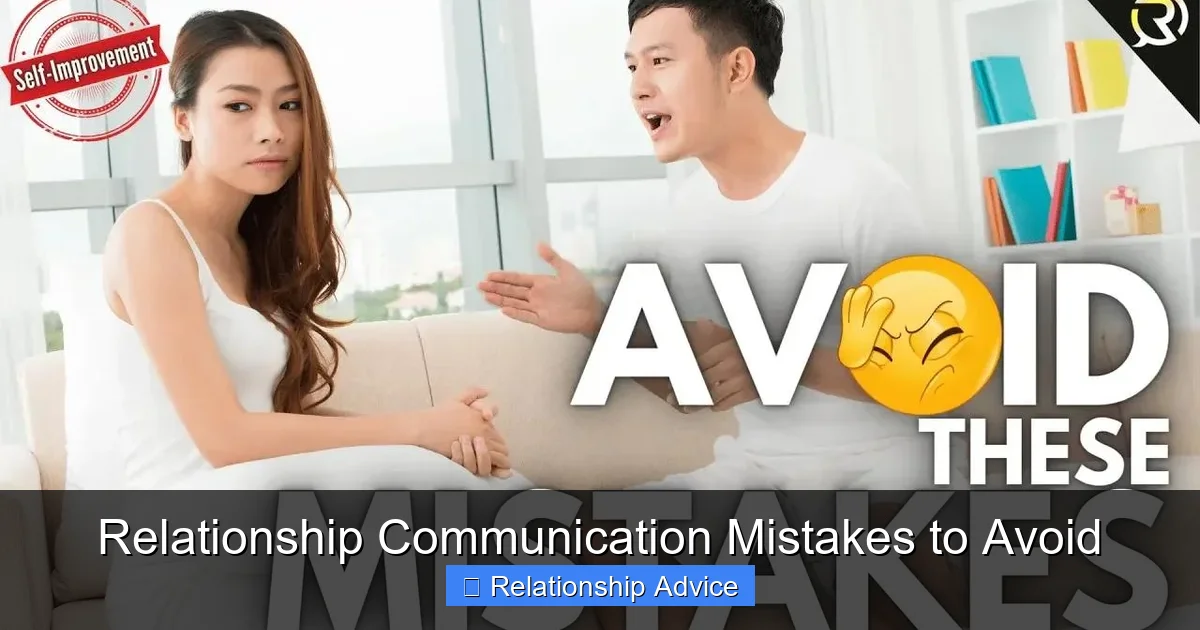
Relationship communication mistakes can silently erode trust, create distance, and lead to misunderstandings that feel impossible to repair. From blaming language to avoiding difficult conversations, these patterns prevent intimacy and emotional safety. By recognizing and changing these behaviors, couples can build deeper understanding, stronger bonds, and lasting love.
Every relationship thrives on open, honest communication. But even the most loving couples stumble when they fall into common communication traps. These mistakes don’t just cause arguments—they quietly chip away at trust, emotional safety, and intimacy over time. If left unchecked, they can turn what was once a strong connection into something fragile and distant.
Think about it: how many times have you walked away from a conversation feeling misunderstood? Or felt like your partner wasn’t really hearing you? That’s often because one or both of you fell into a communication pattern that shuts down connection instead of building it. The good news? Most of these mistakes are easy to spot—and even easier to fix with awareness and practice.
In this article, we’ll walk through the most damaging relationship communication mistakes to avoid, why they hurt, and how to replace them with healthier habits. Whether you’re navigating a new romance or trying to save a long-term partnership, understanding these pitfalls is the first step toward stronger, more fulfilling communication.
Key Takeaways
- Avoid blame and criticism: Using “you” statements instead of “I” statements escalates conflict and makes your partner defensive.
- Don’t stonewall or shut down: Walking away during an argument stops communication cold and teaches your partner they aren’t worth listening to.
- Refrain from name-calling: Calling someone names like “selfish” or “lazy” damages self-worth and turns conversations into personal attacks.
- Stop interrupting: Interrupting shows disrespect and prevents empathy, making it impossible to truly understand each other.
- Avoid passive-aggression: Sarcasm, eye rolls, or backhanded compliments communicate resentment without clarity, breeding mistrust.
- Skip defensiveness: Taking everything as a personal attack closes the door to growth and keeps you stuck in reactive patterns.
- Never bring up the past: Bringing old arguments into new ones derails current issues and traps you in cycles of unresolved pain.
📑 Table of Contents
- Why Communication Matters in Relationships
- 1. Using Blame and Criticism Instead of “I” Statements
- 2. Stonewalling and Emotional Withdrawal
- 3. Name-Calling and Personal Attacks
- 4. Interrupting and Not Listening
- 5. Passive-Aggressive Behavior
- 6. Being Defensive Instead of Open
- 7. Bringing Up Old Arguments Repeatedly
- How to Improve Communication: Practical Tips
- When to Seek Professional Help
- Conclusion: Choose Connection Over Conflict
Why Communication Matters in Relationships
At its core, a relationship is built on connection. And connection lives in the space between two people: the words we say, the emotions we express, and how safely we allow ourselves to be seen. When communication breaks down, that space narrows—sometimes until there’s nothing left.
Healthy communication isn’t about never disagreeing. It’s about creating an environment where disagreements can happen without fear, judgment, or shutdown. It means listening not just to reply, but to understand. It involves expressing your needs clearly while respecting your partner’s feelings. This kind of dialogue fosters intimacy, builds trust, and helps couples navigate life’s ups and downs together.
On the flip side, poor communication creates emotional distance. It turns simple misunderstandings into full-blown fights. It makes your partner feel unheard, unimportant, or unsafe. Over time, those small hurts add up—leading to resentment, withdrawal, or even complete disconnection.
That’s why learning to avoid common communication mistakes isn’t just helpful—it’s essential. It’s not about being perfect. It’s about choosing kindness, honesty, and respect every day, even when things get hard.
1. Using Blame and Criticism Instead of “I” Statements
Visual guide about Relationship Communication Mistakes to Avoid
Image source: realestlove.com
One of the biggest relationship communication mistakes is using accusatory language that starts with “You always…” or “You never…”. This kind of criticism puts your partner on the defensive immediately. Instead of opening a dialogue, it triggers fight-or-flight responses. Your partner hears judgment, not a request for change.
For example, saying “You never help around the house” feels like an attack. But saying “I feel overwhelmed when I come home to a messy kitchen” shares your experience without blaming. The second version invites empathy and problem-solving. It says, “This matters to me, and I’d like us to work on it together.”
Tip: Before speaking, pause and ask yourself: Is this about my feelings, or am I trying to make my partner feel guilty? If it’s the latter, reframe it using “I” language.
Another version of this mistake is generalizing. Saying “You’re so lazy” implies character flaws rather than specific behavior. A better approach: “I notice the dishes pile up for days. Can we set a routine to tackle them together?” This focuses on actions, not identity.
When you use “I” statements, you take ownership of your emotions while still addressing the issue. It reduces defensiveness and keeps the focus on solutions, not blame.
2. Stonewalling and Emotional Withdrawal
Have you ever been in the middle of a disagreement, only to have your partner suddenly go quiet? Maybe they stop responding, leave the room, or give you the silent treatment? That’s called stonewalling—and it’s one of the worst communication mistakes couples make.
Stonewalling isn’t just about taking a break. It’s about shutting down completely. During heated moments, our brains go into survival mode. The amygdala (the emotional center) takes over, and rational thinking shuts off. In those moments, walking away might seem like the only way to protect yourself from saying something you’ll regret.
But here’s the catch: if this happens regularly, it teaches your partner that they aren’t safe to talk to. They learn that when they share their feelings, they get ignored or shut out. Over time, this erodes trust and intimacy.
Instead of stonewalling, try the “time-out” technique recommended by Dr. John Gottman, a leading relationship researcher. Agree on a signal (like holding up a hand) when things get too intense. Then both partners step away for 20 minutes to cool down. Use that time to breathe, journal, or meditate—not to stew in anger.
When you return, start again with calm voices. Say something like, “I need a moment to collect my thoughts. Can we revisit this after 20 minutes?” This shows respect while protecting your emotional well-being.
Remember: avoiding communication isn’t healthy communication. True connection requires vulnerability—but only when both partners feel safe.
3. Name-Calling and Personal Attacks
There’s a fine line between expressing frustration and attacking your partner’s character. Unfortunately, many couples cross that line without realizing it. Phrases like “You’re such a mess,” “You never think about anyone else,” or “You’re emotionally unavailable” aren’t just harsh—they’re destructive.
These kinds of labels stick. Once someone hears “You’re selfish” repeatedly, they may begin to believe it. Self-esteem plummets. Trust evaporates. And soon, the person who said it becomes the villain in their own story.
Name-calling also shifts the conversation from problems to personalities. You’re no longer discussing whether chores should be shared—you’re debating whether your partner is fundamentally flawed. That makes resolution nearly impossible.
Instead, describe behaviors neutrally. For instance, instead of saying “You’re lazy,” say “I’ve noticed we haven’t done the laundry in over a week. How can we fix that?” Focus on what happened, not who you think caused it.
If you catch yourself about to call someone a name, pause. Ask: Would I say this to my best friend? If not, rephrase it. Use facts, not feelings laced with judgment. Healthy relationships thrive on honesty—but honesty doesn’t require cruelty.
4. Interrupting and Not Listening
Imagine this: you’re sharing a vulnerable thought with your partner, and halfway through, they jump in. Not to respond—just to insert their opinion or story. Again and again. Eventually, you stop talking. Why bother? They weren’t listening anyway.
Interrupting kills intimacy. It sends the message: “Your thoughts aren’t as important as mine.” Even worse, it trains your brain to tune out your partner’s voice. Soon, you’re only waiting for your turn to speak—not connecting.
Listening isn’t just about staying quiet. It’s about engaging fully. That means making eye contact, nodding occasionally, and resisting the urge to plan your rebuttal while they’re still talking. When you interrupt, you miss key details, misinterpret intentions, and make your partner feel dismissed.
One powerful trick is the “mirror technique”: repeat back what you heard. “So what I’m hearing is that you felt hurt when I didn’t text you back. Is that right?” This confirms understanding and shows you’re truly present.
Also, practice patience. Some topics take time to unpack. Let your partner finish before replying. Silence isn’t awkward—it’s sacred. Use it wisely.
5. Passive-Aggressive Behavior
Passive-aggressiveness sneaks up quietly. It looks like sarcasm, eye-rolling, sighing loudly, or giving backhanded compliments like “Wow, you actually cleaned the bathroom today.” On the surface, these seem minor. But consistently doing them teaches your partner that they shouldn’t expect directness from you. Resentment builds beneath the surface, and conversations become layered with hidden meanings.
Unlike clear communication (“I’m upset you didn’t do the dishes”), passive-aggressive messages force your partner to guess your real feelings. Are you angry? Annoyed? Disappointed? Without clarity, they can’t fix the issue—because they don’t know what it is.
To replace passive-aggression, try this: When you feel frustrated, say so. Use neutral language. “I felt frustrated earlier when the bills weren’t paid. Can we talk about how to handle that going forward?” This removes ambiguity and invites collaboration.
Another tip: Notice your tone. If you find yourself rolling your eyes or sighing during an argument, pause. Ask: Am I trying to win this conversation, or am I trying to connect?
Directness isn’t rudeness. It’s respect. And respect builds stronger bonds.
6. Being Defensive Instead of Open
Defensiveness is another major roadblock to healthy communication. When your partner points out a flaw, instead of listening, you deflect. You deny responsibility, justify your actions, or accuse them in return. “Well, you’re not perfect either!” or “You started it!” These responses protect your ego—but at the cost of truth and growth.
Being defensive tells your partner: “Your feedback isn’t welcome.” It shuts down learning and keeps both of you stuck in old patterns. Over time, your partner stops sharing honest thoughts because they know you’ll react badly.
The secret? Accept that feedback—even uncomfortable feedback—is a gift. Your partner is inviting you to grow. Respond with curiosity, not defense. Say, “Tell me more about why that bothered you.” Or, “How can I do better next time?”
It’s okay to admit you made a mistake. In fact, owning up to it models humility and strengthens trust. Defensiveness may feel safer in the moment, but honesty pays off in deeper connection long term.
7. Bringing Up Old Arguments Repeatedly
We all carry unresolved wounds from past conflicts. But bringing up old fights during new disagreements? That’s a recipe for disaster. It derails the current issue and traps you in cycles of resentment. For example, if your partner forgot your anniversary last year, bringing it up every time they’re late now won’t solve the lateness—it will just reopen old pain.
This mistake confuses correlation with causation. Just because two events happened doesn’t mean one caused the other. Yet emotionally, your brain links them. Every small annoyance becomes proof of a larger betrayal.
Instead, address new issues as they arise. If your partner is late again, talk about this incident alone: “I noticed you were late tonight. I felt anxious waiting. Can we talk about how to avoid that?” Save historical grievances for dedicated reconciliation sessions—not heated debates.
If old wounds keep surfacing, consider couples counseling. A therapist can help you process past hurts without letting them hijack present conversations.
How to Improve Communication: Practical Tips
Avoiding these communication mistakes is only half the battle. The other half is actively building better habits. Here are actionable steps to strengthen your dialogue:
Practice active listening: Focus entirely on your partner. Put your phone down, maintain eye contact, and summarize what they said before responding.
Schedule regular check-ins: Set aside 15–20 minutes weekly to talk about how things are going. Use prompts like, “What’s one thing that went well?” or “Is there anything bothering you I should know about?”
Use “I” statements daily: Replace blame with expression of feelings. Instead of “You never listen,” try “I feel unheard when I’m interrupted.”
Apologize sincerely: When you’re wrong, say so without excuses. “I was unfair earlier. I apologize.” This rebuilds trust instantly.
Seek to understand before being understood: Ask questions like, “Can you help me see this from your perspective?” This opens doors to empathy.
Take responsibility: Own your part in conflicts. Avoid the “yes, but…” response. Instead, say, “Yes, and I realize I could have handled that differently.”
Consider couples therapy: If communication feels stuck, a professional can guide you through patterns neither of you can break alone.
Remember: improving communication is a journey, not a destination. Be patient with yourself and your partner. Celebrate small wins, like staying calm during a tough talk or asking a thoughtful question.
When to Seek Professional Help
Even with the best intentions, some communication barriers run deep. If you and your partner constantly cycle through the same arguments, feel disconnected most of the time, or struggle to resolve conflicts peacefully, it may be time to seek outside help.
Couples therapy offers a safe space to explore patterns without blame. Therapists teach tools like emotion-focused therapy (EFT), which helps partners reconnect emotionally after ruptures. They also provide neutral ground for discussing sensitive topics like intimacy, boundaries, or family dynamics.
Don’t wait until the relationship feels broken. Early intervention prevents small problems from becoming insurmountable. Asking for help isn’t a sign of weakness—it’s a commitment to growth.
Conclusion: Choose Connection Over Conflict
Relationship communication mistakes are human. We all slip up—using harsh words, shutting down, or getting sidetracked by old hurts. But awareness is the first step toward change. By recognizing these pitfalls and choosing different paths, you create space for deeper understanding, trust, and love.
Healthy communication isn’t about winning arguments or having perfect conversations every time. It’s about showing up for each other—really showing up. It’s choosing to hear your partner’s heart, even when it’s hard. And it’s committing to repair, not retreat, when things go wrong.
So the next time tension rises, pause. Breathe. Ask: Am I communicating to connect—or to control? If the answer isn’t clear, choose kindness. Speak softly. Listen deeply. Apologize freely. And remember: every effort counts. Every moment you prioritize connection over conflict brings you closer to the relationship you both deserve.
Frequently Asked Questions
What are the most common communication mistakes in relationships?
The most common communication mistakes include using blame language (“You always…”), stonewalling during arguments, name-calling, interrupting, passive-aggression, defensiveness, and bringing up old arguments repeatedly. These patterns damage trust and prevent resolution.
How can I stop blaming my partner during conflicts?
Replace “you” statements with “I” statements. Instead of saying “You never listen,” say “I feel unheard when I’m interrupted.” Focus on your feelings and experiences, not their character. This reduces defensiveness and invites collaboration.
Is it okay to take a break during an argument?
Yes, but only if both partners agree. Use a timed “time-out” instead of silent treatment. Step away for 20 minutes to cool down, then return to continue calmly. This respects both people’s need for space without shutting down communication permanently.
Why does my partner get defensive when I give feedback?
Defensiveness often stems from feeling attacked or judged. Try framing feedback as a shared concern: “I care about us—can we talk about how to improve?” Also, ensure your tone is supportive, not accusatory. Defensiveness blocks growth, so both partners benefit from practicing openness.
Should I bring up past mistakes during current conflicts?
No. Bringing up old arguments derails current issues and keeps you stuck in unresolved pain. Address new concerns separately. Save historical grievances for dedicated reconciliation sessions or therapy. Focus on solving today’s problem, not reliving yesterday’s.
How do I know if my relationship needs couples counseling?
If you’re stuck in repeating fights, feel emotionally disconnected, or struggle to resolve conflicts peacefully, counseling can help. A therapist provides tools and neutral ground to improve communication. Don’t wait until the relationship feels broken—early intervention builds stronger foundations.
