
Husbands may ignore their wives 2 due to emotional distance, unmet needs, or unresolved conflicts. This behavior often signals deeper issues like communication breakdowns or emotional disconnection that can be addressed with understanding and effort from both partners.
Understanding the root causes is the first step toward healing your relationship and restoring trust and closeness in your marriage.
Why Do Husbands Ignore Their Wives 2? Understanding the Hidden Causes and How to Fix Them
Have you ever felt like your husband has become a stranger in your home? Maybe he walks past you without saying hello, leaves his phone on the counter every night, or seems more interested in TV than conversation. If so, you’re not alone. Many wives experience what feels like sudden emotional distance or outright ignoring from their spouses. And when it happens again—like “Why Do Husbands Ignore Their Wives 2” suggests—it can feel even more confusing and painful.
This article dives deep into the reasons behind why husbands ignore their wives 2, exploring both emotional and behavioral patterns. We’ll look at real-life scenarios, psychological insights, and most importantly, actionable steps you can take to reconnect. Because ignoring isn’t always about lack of love—it’s often a cry for help, a defense mechanism, or simply a symptom of deeper marital challenges.
Let’s break down what’s really going on and how you can start healing your relationship.
Key Takeaways
- Emotional Disconnection: Many husbands stop engaging because they feel emotionally distant from their wives. This isn’t always about love fading—it’s often about feeling unseen or unappreciated.
- Poor Communication Patterns: Avoidance of serious conversations leads to bottled-up feelings. When couples stop talking openly, misunderstandings grow, and resentment builds silently.
- Unresolved Conflicts: Unaddressed arguments create a cycle of silence. A husband may withdraw as a way to avoid further conflict, even if it means emotional neglect.
- Changing Priorities: Work stress, parenting demands, or personal interests can shift a man’s focus away from his wife. He might not mean to ignore her—he just feels overwhelmed.
- Fear of Vulnerability: Some men shut down because they fear being judged or rejected. They hide their true emotions to protect themselves, which pushes their wives further away.
- Lack of Intimacy: Physical and emotional intimacy often go hand-in-hand. When sex becomes routine or stressful, it can erode connection, leading to emotional withdrawal.
- Need for Reassurance: Constant reassurance isn’t nagging—it’s a sign of love. Husbands need to know they’re still valued and wanted, just as wives do.
📑 Table of Contents
Why Husbands Withdraw: The Psychology Behind Emotional Distance
When a husband starts to ignore his wife 2, it rarely happens overnight. It usually begins with subtle changes—less eye contact, shorter answers, or avoiding shared activities. Over time, these small behaviors add up, creating emotional walls between partners.
Psychologists refer to this as “emotional withdrawal.” It’s a survival tactic. Just like when kids pull away from parents during adolescence, adults also retreat when they feel overwhelmed, misunderstood, or unsafe in a relationship.
For example, imagine Sarah and Mark. For years, they had a strong bond—they laughed together, supported each other’s goals, and made time for date nights. But after Mark got promoted at work, his schedule became packed. He started coming home late, exhausted, and checked out emotionally. Sarah noticed he stopped asking about her day or showing interest in her hobbies. She tried bringing it up gently: “I miss us talking before bed.” But Mark would sigh and say, “Not now, I’m tired.” Eventually, she stopped asking altogether. That silence became the new normal.
Mark wasn’t trying to hurt her. He was stressed, overworked, and didn’t know how to express what he needed. So he withdrew—a common response when people feel unable to cope.
The Role of Stress and Overwhelm
Work pressure, financial worries, parenting responsibilities—these are major triggers for emotional withdrawal. When a husband feels like he’s failing at one or all of these areas, he may unconsciously push his wife away. Why? Because staying close feels too vulnerable. If he shows up as “the struggling husband,” he risks being pitied or criticized. So he hides his stress behind a wall of silence.
This is especially true in traditional gender roles where men are expected to be strong providers. The pressure to perform can make emotional openness seem like weakness. As a result, he avoids deep conversations, even about things that matter most.
If your husband ignores you 2 because of work stress, try not to take it personally. Instead, create space for him to open up—but don’t force it. Say something like, “I know things have been tough lately. If you ever want to talk about it, I’m here. No judgment.”
Fear of Conflict and Avoidance Tactics
Another reason husbands ignore their wives 2 is fear of confrontation. Some men grew up in households where arguing meant shouting, punishment, or tears. So when a disagreement arises, their instinct is to shut down—not to resolve the issue, but to escape it.
They might say, “I’m not mad,” while actually avoiding her completely. Or they’ll agree to fix things later, only to forget until the next fight. This pattern reinforces the belief that communication leads nowhere.
Take David, who married Lisa after a childhood filled with parental yelling. Even when Lisa expressed hurt over a missed anniversary, David responded by saying, “You’re overreacting. Let’s just drop it.” Over time, Lisa stopped sharing her feelings altogether. Now, even simple requests get ignored because David fears triggering another argument.
In such cases, therapy can help both partners understand their roots of avoidance. But in the meantime, consider writing down your concerns instead of saying them aloud. Sometimes, putting thoughts on paper reduces tension and makes it easier to discuss calmly later.
Communication Breakdown: When Words Stop Flowing

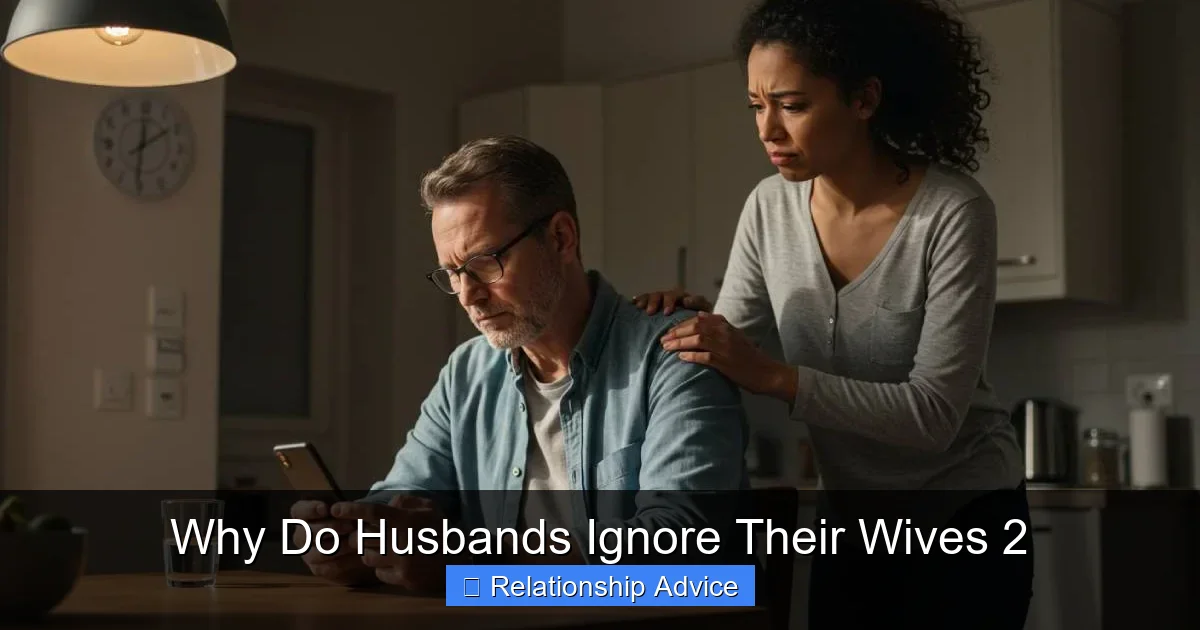
Visual guide about Why Do Husbands Ignore Their Wives 2
Image source: realestlove.com
One of the biggest signs of a drifting marriage is poor communication. You used to text each other goodnight. Now, one of you goes to bed first. You used to share dreams; now, you share silence.
When husbands stop listening—or worse, stop responding—it sends a clear message: “Your voice doesn’t matter.” And when that happens repeatedly, wives naturally withdraw too. It’s a self-fulfilling prophecy: he ignores her, so she stops reaching out. Then he wonders why she’s distant.
But here’s the truth: ignoring is almost always a two-way street. One person isn’t suddenly evil; both are contributing to the problem through silence, assumptions, or miscommunication.
Silent Treatment as Punishment
Some husbands use the silent treatment as a form of control. It’s passive-aggressive power play—“If you won’t listen to me, then I won’t speak to you.” While it may feel satisfying in the moment, it damages trust long-term.
Emily found this out the hard way. After a minor argument about chores, her husband Tom stopped speaking to her for three days. No explanation. No attempt to reconcile. Emily felt humiliated and confused. When he finally broke the silence, he said, “I was just giving you space.” But space shouldn’t feel like abandonment.
The silent treatment teaches children (and adults) that silence equals punishment. It creates anxiety and insecurity. And it teaches your husband that avoiding problems works better than facing them.
Instead of using silence as leverage, try saying, “I’m upset right now, but I want to work this out. Can we take a short break and come back to it?” This sets healthy boundaries without escalating tension.
Assumptions vs. Clarification
Another communication barrier is making assumptions. Maybe your husband seems distracted during dinner, and you assume he’s bored with you. Or maybe he doesn’t call when he says he will, and you think he doesn’t care anymore.
But guess what? Those assumptions aren’t facts. They’re guesses based on limited information. And they can lead to unnecessary hurt.
Instead of assuming, ask open-ended questions:
– “How was your day?”
– “What’s on your mind?”
– “Is there something bothering you?”
Even if he responds with “Fine,” keep going. Say, “Okay, but tell me more when you’re ready.” This keeps the door open without pressure.
Remember: communication isn’t just about talking—it’s about listening with empathy. Put your phone down. Make eye contact. Nod. Show you’re present.
Emotional Needs Not Being Met
At the core of most marital struggles is unmet emotional need. Every person craves validation, appreciation, affection, and connection—even if they don’t realize it.
When a husband ignores his wife 2, it’s often because her emotional needs aren’t being acknowledged. Maybe she wants more hugs. More compliments. More quality time. But instead of expressing those needs directly, she criticizes, complains, or gives the silent treatment herself.
This backfires. Her husband feels attacked, so he pulls away. Then she feels abandoned. The cycle repeats.
Think about Rachel. She loved cooking elaborate meals for her husband, Ben. But when he came home late one night and barely touched his food, she snapped, “Well, if you’re not hungry, I guess I’m wasting my time.” Ben felt criticized, so he ate in silence. Rachel felt unappreciated, so she stopped cooking. Now, their dinners are quiet, cold, and unsatisfying.
Rachel’s actions were driven by hurt—but they pushed Ben further away. To fix this, she needed to say, “I put a lot of love into this meal. I’d really appreciate it if you could eat with me.” Instead, she communicated disappointment indirectly, which confused and angered him.
The Power of Appreciation
Small gestures of gratitude go a long way. A simple “Thank you for taking out the trash” or “I love how you fixed the sink” reminds your husband that his efforts are seen and valued.
Research shows that couples who regularly express appreciation report higher satisfaction in their marriages. Why? Because it builds goodwill and encourages reciprocity.
Try starting a daily gratitude ritual. Each evening, share one thing you appreciated about your partner that day. Even if it’s “You smiled at me this morning.” These tiny moments rekindle positive emotions and remind both of you why you fell in love.
Reconnecting Through Shared Experiences
Sometimes, emotional distance grows because couples stop doing things together. Life gets busy—kids, jobs, errands—and before you know it, you’re living parallel lives under the same roof.
To combat this, plan regular “us time.” It doesn’t have to be romantic dates every week. Could be a walk after dinner, binge-watching a show together, or playing board games on weekends.
The goal isn’t perfection—it’s consistency. When your husband sees that you value spending time together, he’s more likely to prioritize it too.
And when you’re together, focus on presence, not productivity. Put the dishes away later. Enjoy the moment. Laugh. Touch. Remind yourselves you’re a team.
Intimacy Issues: Beyond Physical Connection
Many people equate intimacy with sex. But true intimacy includes emotional closeness, vulnerability, and mutual understanding. When one or both partners feel disconnected emotionally, physical intimacy often suffers too.
If your husband ignores you 2, it might start with less hugging, kissing, or even holding hands. Then conversations shorten. Then meals are eaten apart. Then bedroom doors close early.
But here’s the irony: lack of sex often stems from lack of emotional intimacy, not the other way around.
Imagine Mike and Anna. They used to cuddle every night, talk about their fears, and laugh together. But after having their second child, Mike became preoccupied with sleep deprivation and stress. He stopped initiating affection. Anna felt rejected, so she pulled back too. Now, they haven’t slept together in months.
Mike didn’t stop loving Anna—he just didn’t know how to express it amid exhaustion and overwhelm. Anna didn’t stop wanting him—she just felt invisible.
To rebuild intimacy, start small. Hold hands while watching TV. Send sweet texts throughout the day. Plan a weekend getaway—even if it’s just a local hotel. Physical touch releases oxytocin, the “bonding hormone,” which strengthens emotional connection.
And remember: intimacy isn’t performance-based. Don’t worry about pleasing him sexually unless you enjoy it. Focus first on reestablishing closeness. When emotional safety returns, physical desire follows naturally.
Addressing Sexual Concerns Gently
If sex has become infrequent or awkward, talk about it—but choose the right moment. Not during an argument. Not when either of you is angry or tired.
Say something like:
“I’ve been thinking about us… and I miss being close with you. Is everything okay? Do you feel the same way?”
Listen without interrupting. Validate his feelings. If he admits stress or fatigue, respond with compassion, not frustration.
You might also explore ways to reduce pressure. Try scheduling intimacy like appointments—not obligations. Or focus on foreplay and cuddling without expecting intercourse.
Sex should feel like an expression of love, not a chore.
When to Seek Professional Help
While many marital issues can be resolved through patience and effort, some require outside support. If your husband ignores you 2 and refuses to engage despite your attempts to connect, it may be time to involve a therapist.
Couples counseling provides a safe space to explore underlying issues—whether they’re communication styles, trauma responses, or attachment patterns. A trained professional can guide both of you in breaking negative cycles and building healthier habits.
Signs you might benefit from therapy include:
– Persistent emotional distance lasting over six months
– Refusal to discuss problems
– Active hostility or contempt
– Infidelity or secrecy
Don’t wait until resentment boils over. Early intervention prevents further damage.
Also consider individual therapy. Sometimes, healing begins with understanding your own needs, triggers, and patterns. When you feel more secure within yourself, you’re better equipped to nurture your marriage.
Choosing the Right Therapist
Look for someone experienced in marriage counseling. Ask about their approach—some favor emotion-focused therapy, others use cognitive-behavioral techniques. Find someone whose style resonates with you both.
Many therapists offer virtual sessions, which can be convenient. And some specialize in men’s issues or midlife transitions, which may apply depending on your situation.
Remember: seeking help isn’t failure—it’s courage. It shows you care enough to fix what’s broken.
Rebuilding Trust and Reconnecting Step by Step
Healing a marriage takes time, humility, and consistent effort from both sides. There’s no magic pill, but there are proven steps that work:
1. **Acknowledge the Problem**
Admit that ignoring hurts. Own your part in the dynamic, even if it’s small. Avoid blaming—focus on solutions.
2. **Initiate Gentle Contact**
Start with low-pressure interactions: a hug, a shared meal, a walk. Let him see that you’re willing to meet halfway.
3. **Practice Active Listening**
When he speaks, truly hear him. Repeat back what you understood: “So you felt left out when I went out with friends?” This shows empathy.
4. **Set Boundaries Around Silence**
Agree that the silent treatment won’t be used as punishment. If either feels overwhelmed, suggest a 15-minute break instead of total withdrawal.
5. **Celebrate Small Wins**
Notice progress—even tiny ones. Did he ask how your day was? That’s a win! Thank him for it.
6. **Be Patient**
Change doesn’t happen overnight. Some days will be harder than others. Stay committed even when motivation wanes.
7. **Invest in Your Relationship Regularly**
Schedule monthly check-ins: “How are we doing as a couple? What could improve?” This keeps communication alive proactively.
And above all, keep choosing each other. Every day, decide to stay connected, even when it’s hard.
Because at the end of the day, love isn’t just a feeling—it’s a decision. And sometimes, that decision requires showing up, even when your husband ignores you 2.
Frequently Asked Questions
Why does my husband ignore me even though he says he loves me?
Love and action don’t always align. Your husband may genuinely care but struggle with emotional expression due to stress, upbringing, or fear of vulnerability. Ignoring often reflects internal conflict, not lack of love.
Can a husband stop loving his wife gradually?
Yes—sometimes love fades slowly due to repeated disappointments, emotional distance, or unmet needs. However, most cases involve temporary disconnection rather than complete loss of affection.
How long should I wait before confronting my husband about ignoring me?
Wait until you’ve noticed a consistent pattern over weeks or months. Sudden withdrawal after a single event is normal; ongoing avoidance warrants discussion.
Should I give my husband space if he’s ignoring me?
Short breaks can help de-escalate tension, but prolonged silence damages trust. Agree on limits—e.g., “Let’s pause for 20 minutes, then reconvene.”
Will couples therapy fix everything?
No therapy guarantees instant results, but it provides tools and accountability. Success depends on both partners’ willingness to change and participate honestly.
Is it normal for husbands to ignore their wives occasionally?
Everyone needs solitude, but habitual ignoring crosses into unhealthy territory. Occasional distance is fine; consistent withdrawal signals deeper issues needing attention.
