
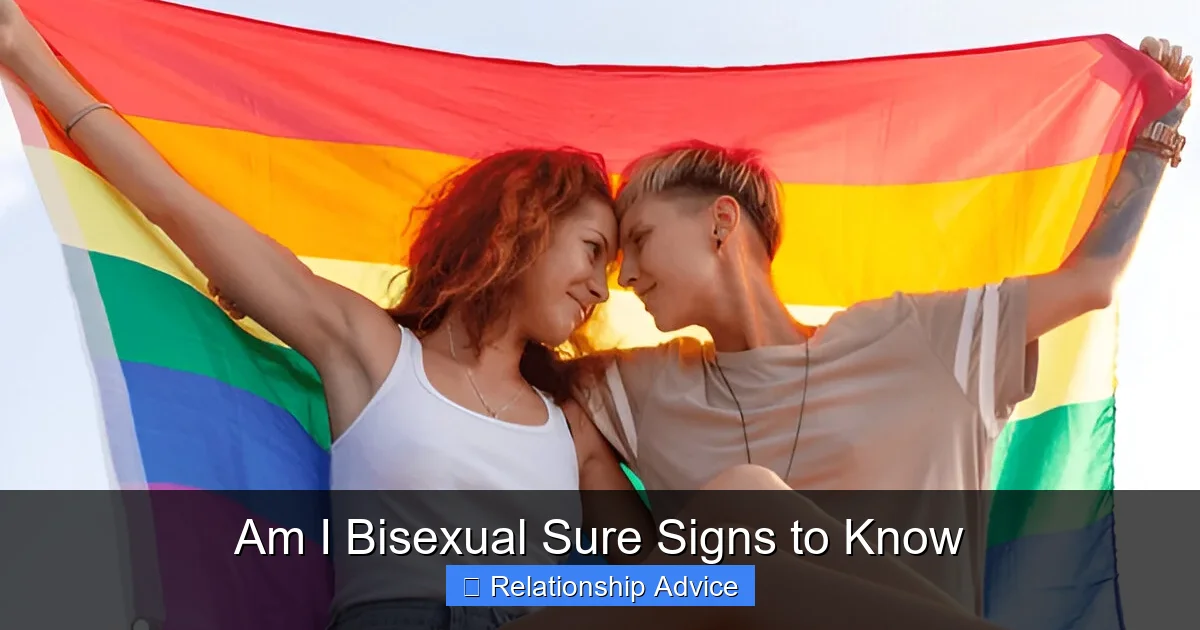
Wondering if you might be bisexual? Many people experience same-sex attraction at some point in their lives, and recognizing these feelings is a normal part of understanding yourself. This article walks you through clear signs—like emotional connection, physical attraction, and curiosity about relationships—that may indicate bisexuality. You’ll find tools to explore your feelings without judgment, along with advice on how to talk to others and embrace your identity.
Have you ever felt a spark with someone who didn’t fit the usual “boy meets girl” mold? Maybe you’ve caught yourself daydreaming about both a guy and a girl, or felt butterflies when two people of the same gender flirted in front of you. These moments aren’t unusual—they’re human. But when attraction starts to show up beyond just one gender, confusion can creep in: Am I bisexual?
Figuring out your sexuality isn’t about rushing to label yourself. It’s about listening to your heart, mind, and body. And honestly? There’s no single test or checklist that guarantees an answer. But there are patterns, signs, and questions that can help you get clearer. This article isn’t here to diagnose—it’s here to walk alongside you gently, offering clarity without pressure.
Whether you’re questioning your whole life or just noticing new feelings lately, this guide will help you recognize the quiet signals that something deeper is unfolding inside you. Because knowing yourself isn’t selfish—it’s essential.
Key Takeaways
- Emotional and physical attraction to more than one gender: Bisexuality often involves feeling drawn to people regardless of their gender, not just romantic or sexual interest in men or women.
- Curiosity about relationships across genders: If you’ve wondered what it would be like to date someone of the same gender, that’s a common sign worth exploring.
- Fluidity in attraction over time: Unlike rigid labels, many bisexual people find their attractions shift depending on who they meet, not because they’re changing—but because attraction isn’t always static.
- Resistance to binary thinking: A key trait is questioning “only straight” or “only gay” ideas—realizing that love can exist outside those boxes.
- Desire for inclusive representation: Feeling frustrated when LGBTQ+ media or dating pools feel limited to only gay or straight characters or communities can signal broader orientation.
- Comfort discussing attraction openly: If you find yourself comfortable sharing thoughts about crushes on multiple genders—even casually—it reflects genuine openness.
- Self-acceptance matters more than timing: There’s no “right age” to identify as bisexual; trust your experiences and give yourself permission to evolve emotionally.
📑 Table of Contents
Understanding Bisexuality: What It Really Means
Before jumping into signs, let’s clear up a common misunderstanding: bisexuality isn’t about being equally attracted to everyone all the time. That’s not realistic—or fair to yourself. Attraction is complex, shaped by personality, chemistry, context, and even mood. So when we say “bisexual,” we mean someone who feels capable of forming meaningful romantic or sexual connections with more than one gender.
It’s also important to know that bisexuality exists on a spectrum. Some people feel strong attraction to both men and women consistently. Others notice shifts over time—maybe they’re mostly into women now but remember a crush on another woman years ago. And some describe their orientation as fluid, changing based on who they meet or where they are emotionally.
What ties all these experiences together? The ability to connect deeply with people across gender lines. Not every bisexual person has dated both men and women—and that’s okay. Identity isn’t defined by action alone; it’s rooted in inner truth.
Many folks grow up hearing only two options: straight or gay. That black-and-white view can trap people in doubt. But real attraction doesn’t always follow rules set by society. Sometimes you realize you’re not straight—not because you’ve changed, but because you were always more than one thing.
If you’ve ever questioned why certain people catch your eye while others don’t—even if those people share your biological sex—you’re not alone. Those little sparks matter.
The Difference Between Crush, Curiosity, and Consistency
Not every fleeting thought means you’re bisexual. Crushes happen to everyone—even people who identify as straight. So how do you tell the difference?
Ask yourself: How consistent is this feeling? Did you briefly think someone was cute once… or have ongoing feelings that last weeks, months, or longer? Real attraction usually lingers—it shows up in dreams, conversations, and memories. If you keep finding yourself imagining dates, holding hands, or kissing people of different genders repeatedly, that’s worth paying attention to.
Also consider curiosity vs. certainty. Wanting to learn more about dating someone of the same sex? That’s natural! Everyone explores at some point. But if that curiosity turns into real emotional investment—if you start picturing a future with them—then you’re likely experiencing genuine attraction.
And remember: intensity varies. One bisexual person might feel equally drawn to men and women; another might lean toward one gender but still feel open to others. There’s no “right way” to be bi.
Common Signs You Might Be Bisexual
Visual guide about Am I Bisexual Sure Signs to Know
Image source: realestlovelife.com
So what actually points toward bisexuality? Here are the most telling indicators—based on real experiences from people who’ve walked this path before.
You Feel Drawn to Multiple Genders Romantically
One of the clearest signs is repeated romantic attraction across genders. Maybe you’ve had crushes on coworkers, friends, classmates—people who didn’t match the traditional opposite-gender expectation. Or perhaps you’ve found yourself swooning over celebrities or fictional characters regardless of their gender presentation.
Romantic attraction includes things like:
– Wishing you could hold hands with them
– Imagining shared vacations or quiet evenings together
– Feeling protective or affectionate beyond friendship
– Wanting to introduce them to your family someday
If these feelings appear with people of more than one gender—and especially if they’re strong enough to make you pause or question your previous assumptions—that’s a solid clue.
For example, Sarah told herself she was straight until college. Then she met Maya, a woman who made her laugh like no guy ever had. She didn’t plan it, but suddenly, Sarah wanted to kiss Maya. Not as a dare. Not as an experiment. As a real desire. That shift wasn’t scary to her—it felt right.
Physical Attraction Shows Up Beyond One Gender
Physical attraction is powerful. When you see someone and think, Wow, I’d want to kiss/hug/cuddle them, and that happens with multiple genders, it speaks volumes.
This doesn’t mean you’re obsessed or objectifying anyone. It means your body responds authentically—and that response isn’t confined to just one type.
Maybe you notice how someone’s voice sounds comforting, or how their laugh makes your chest warm—regardless of whether they’re male, female, nonbinary, or trans. That kind of visceral reaction matters.
Important note: Physical attraction alone isn’t proof. Everyone finds some people hot! But when combined with emotional connection—when the attraction lasts and feels intentional—it becomes significant.
You’ve Wondered About Same-Gender Relationships
Ever asked yourself, What would it be like to date a girl/girl or guy/guy couple? If yes, you’re not weird—you’re curious. And curiosity often stems from real interest.
People who are exclusively straight rarely spend time imagining intimate same-gender pairings unless it’s theoretical (like in movies). But if you find yourself daydreaming about being with two girls, or two guys, or even one person who doesn’t fit a binary—and those thoughts bring joy or longing—that’s telling.
Try writing down your thoughts anonymously. Do they include scenarios where you’re the one involved? Not just watching? That distinction matters.
Your Interests Reflect Broader Lenses
Bisexual people often gravitate toward media, art, and communities that celebrate diverse relationships. You might:
– Love LGBTQ+ romance novels or TV shows featuring queer couples
– Follow influencers who talk openly about attraction beyond binaries
– Feel disappointed when dating apps only offer male/female filters
– Notice how stories about “just friends” with same-gender leads feel incomplete
These preferences aren’t coincidences. They reflect a worldview where love looks different than what you saw growing up.
When mainstream culture keeps showing only heterosexual or homosexual narratives, it reinforces narrow ideas. But if you naturally seek out fuller, more inclusive representations, your brain is already aligning with a broader reality.
You Question Traditional Labels
Straight, gay, lesbian—these words used to seem absolute. Now, many people realize they’re oversimplified. If you’ve started doubting whether “straight” fits you anymore, or if you feel frustrated when others assume your orientation based on past relationships… that’s progress.
Ask yourself: Do I feel limited by the idea that I must choose between ‘gay’ and ‘straight’? If yes, you’re probably operating outside the box—whether you label it yet or not.
Remember: Labels come later. First comes awareness.
How to Explore Your Feelings Without Pressure
Discovering your sexuality should feel empowering, not overwhelming. You don’t need to announce anything to anyone (except maybe a therapist or trusted friend) until you’re ready. In fact, rushing can lead to regret or shame.
Instead, try this gentle approach:
1. **Journal freely**: Write down who you’ve been attracted to, when, and how it felt. Don’t edit. Just observe.
2. **Talk to safe people**: Share with someone whose opinion you respect—a sibling, mentor, or counselor. Hearing your story aloud can clarify things.
3. **Avoid comparison shopping**: Don’t ask friends to guess your orientation for you. Only you can decide.
4. **Give yourself time**: Sexuality evolves. One week you might feel sure; the next, less so. That’s normal.
Also, resist online quizzes or viral “are you bi?” tests. They oversimplify human emotion. Real answers live inside you—not in clickable surveys.
If you’re struggling, consider talking to a gender-affirming therapist. They won’t push labels—they’ll help you build self-trust.
Practical Tips for Self-Discovery
– **Watch queer coming-of-age films**: Titles like *Moonlight* or *Portrait of a Lady on Fire* show deep same-gender connections without reducing them to trauma or tragedy.
– **Join online communities**: Reddit’s r/bisexual or Discord servers offer anonymous spaces to ask questions.
– **Read memoirs**: Authors like Rachel Kabsch (*Bisexual*) or Julie Sondra Decker (*The Bisexual’s Guide to Sex*) write candidly about navigating identity.
– **Reflect on childhood**: Were there kids you admired romantically who didn’t match societal norms? Old memories hold clues.
Most importantly: Be patient with yourself. There’s no deadline to figure this out.
Addressing Common Myths About Bisexuality
Even today, myths cloud the conversation. Let’s bust a few:
– **Myth**: “Bi people are just confused or going through phases.”
Reality: Stable bisexual attraction exists. People may explore early in life and settle into a consistent pattern—or remain fluid.
– **Myth**: “If you’re really bisexual, you’d be equally attracted to everyone.”
Reality: Attraction is selective. Chemistry, personality, and compatibility all play roles. Being bi doesn’t mean you’re “open” to anyone.
– **Myth**: “You have to act on every attraction to prove you’re bi.”
Reality: Identity isn’t proven by hookups or relationships. It’s about internal truth.
– **Myth**: “Bisexuality is a trend.”
Reality: It’s documented in psychology for decades. Visibility increases, but the orientation itself isn’t new.
Understanding these myths helps reduce shame. Your feelings are valid—no matter how they look.
Why Labeling Matters (But Isn’t Everything)
Some people never label their sexuality and live happily. Others find labels freeing. Both paths work. Labels help:
– Communicate needs to partners
– Find supportive communities
– Understand historical marginalization
But labels can also feel restrictive if imposed too early. Ask: Does this word feel true right now? If yes, great. If not, that’s okay too.
Remember: You can be bisexual without telling anyone. You can be questioning without needing an answer today.
Navigating Social Reactions When You Come Out
Coming out—whether to yourself or others—can be nerve-wracking. Not everyone reacts well, and that’s not your fault. Prepare by:
– Choosing safe spaces first (trusted friends, therapists)
– Having responses ready for hurtful comments (“I’m not explaining myself to you” works wonders)
– Remembering: Their discomfort says more about them than you
If family rejects you, reach out to LGBTQ+ support groups. You deserve love—even if some relatives can’t give it.
For those still unsure, take it slow. You don’t owe anyone your entire journey.
When to Seek Professional Support
Therapists specializing in gender/sexuality can help unpack confusing feelings. Look for providers experienced with LGBTQ+ issues. Online directories like Psychology Today let you filter by expertise.
Counseling isn’t just for crisis—it’s for growth. Even if you’re not “broken,” talking through your doubts can bring peace.
Embracing Fluidity and Growth
Sexuality isn’t carved in stone. Many bisexual people report changes over decades—sometimes due to personal growth, sometimes because relationships evolve. That’s healthy!
Don’t panic if your feelings shift. Instead, welcome them as part of your story.
Think of your orientation like a tree: roots deepen, branches reach wider, leaves change with seasons. All parts belong.
And if you realize you’re not bisexual after all? That’s evolution too. Knowing yourself means being honest—even when truths surprise you.
Celebrating Your Unique Journey
Every person’s path is different. Some discover bisexuality young; others late in life. Some live openly; others privately. None is better than the rest.
What matters most? Living authentically. Eating food you love. Dressing how feels good. Falling in love with whoever stirs your soul—regardless of gender.
When you stop chasing external validation and start trusting your inner compass, everything clicks.
Final Thoughts: You’re Not Alone
Feeling unsure about your sexuality is human. Millions have walked this road before you, and millions more will follow. You’re part of a vibrant, resilient community—even if you haven’t met anyone yet.
If you’re reading this, you’ve already taken the hardest step: admitting you care enough to wonder. That courage deserves celebration.
So go easy on yourself. Journal. Talk. Observe. Learn. And above all—be kind. Your heart knows what it needs, even if your mind hasn’t caught up yet.
And when you’re ready, share your truth. Whether it’s with one person or a hundred, your voice adds color to the world.
—
Frequently Asked Questions
Can you tell if you’re bisexual just by looking at your past relationships?
Not always. Past partners can hint at patterns, but attraction isn’t fully revealed through history alone. Some people only realize their bisexuality after years of dating the “opposite” gender. Focus on current feelings rather than forcing old experiences to fit a label.
Is it normal to feel confused about being bisexual?
Absolutely. Confusion means you’re thinking deeply—which is healthy. Many bisexual people wrestle with societal expectations, fear of rejection, or uncertainty about how to express themselves. Give yourself grace; clarity comes with time.
Do I have to date both genders to be bisexual?
No. Dating experiences don’t define your orientation. You can be bisexual without ever having acted on same-gender attraction. Identity is about potential and inner truth, not actions alone.
What if my family doesn’t accept me if I come out as bisexual?
That pain is real, and you shouldn’t rush into coming out until you feel safe. Build a support network first—friends, therapists, or LGBTQ+ groups can offer unconditional love. Family acceptance isn’t guaranteed, but your worth isn’t conditional either.
How long does it take to figure out your sexuality?
There’s no timeline. Some people know early; others take years. Even lifelong members of the LGBTQ+ community continue questioning. Trust your process—don’t compare your journey to anyone else’s.
Are bisexual people more promiscuous?
No. That myth is harmful and false. Bisexual people enjoy relationships of all kinds—casual, serious, monogamous, or polyamorous—just like anyone else. Orientation doesn’t dictate behavior.
