
You keep hoping love will fix everything—even when it’s hurting you. In a hopeless romantic relationship, you sacrifice your dreams for peace, ignore warning signs, and believe your partner’s empty promises. But love shouldn’t leave you feeling invisible or unworthy. Recognizing these patterns is the first step toward healing and choosing yourself again.
Key Takeaways
- Emotional manipulation is common: Your partner uses guilt, gaslighting, or silent treatment to control your feelings and decisions.
- You lose yourself in the process: You stop pursuing hobbies, friendships, or goals because they feel like distractions from “being together.”
- Love feels conditional: You only feel worthy when you’re giving—not receiving—and your needs are consistently ignored.
- Conflict avoidance rules the day: You stay quiet during arguments to keep the peace, even when core values clash.
- Hope overrides reality: You justify bad behavior by saying “they’ll change” or “this is just a phase.”
- Physical or verbal abuse may be present: Even subtle aggression or disrespect can signal deeper toxicity.
- You compare your life to idealized romance: You romanticize pain while ignoring red flags others see clearly.
📑 Table of Contents
- Introduction: Why We Stay When Love Feels Like Loss
- 1. You Constantly Make Excuses for Their Behavior
- 2. You Feel Drained After Interactions—Not Energized
- 3. Your Needs Are Ignored—Consistently
- 4. You Compare Your Relationship to Idealized Media Portrayals
- 5. You Can’t Imagine Your Life Without Them
- 6. You Ignore Clear Warning Signs Until It’s Too Late
- Conclusion: Choose Yourself Before It’s Too Late
Introduction: Why We Stay When Love Feels Like Loss
Have you ever stayed up late scrolling through old texts, wondering if that spark is still there? Or maybe you catch yourself defending your partner’s flaws—again—because you’re convinced deep down that love will eventually win. If so, you might be caught in what therapists call a hopeless romantic relationship.
This isn’t about grand gestures or dramatic breakups. It’s quieter than that. It’s waking up each morning with a knot in your stomach, pretending everything’s fine at breakfast, and spending hours replaying every interaction trying to find meaning. Hopeless romantics often believe that enduring suffering builds character, that patience proves devotion, and that true love requires total surrender. But here’s the truth: love should make you feel seen, not erased.
When you’re in a relationship where hope keeps you tethered to someone who doesn’t honor your worth, something important stops happening: self-respect begins to fade. And without it, no amount of affection can fill the void. This article unpacks the subtle yet devastating signs of hopeless romance—so you can finally ask: Am I loving this person… or am I loving the idea of being loved?
1. You Constantly Make Excuses for Their Behavior
Defending Red Flags Is Not Love—It’s Denial
One of the clearest signs you’re in a hopeless romantic relationship is when you start rationalizing your partner’s unacceptable actions. Maybe they show up late repeatedly, cancel plans last minute, or dismiss your concerns with sarcasm. Instead of addressing the pattern, you tell yourself, “They’re stressed,” or “They didn’t mean it that way.”
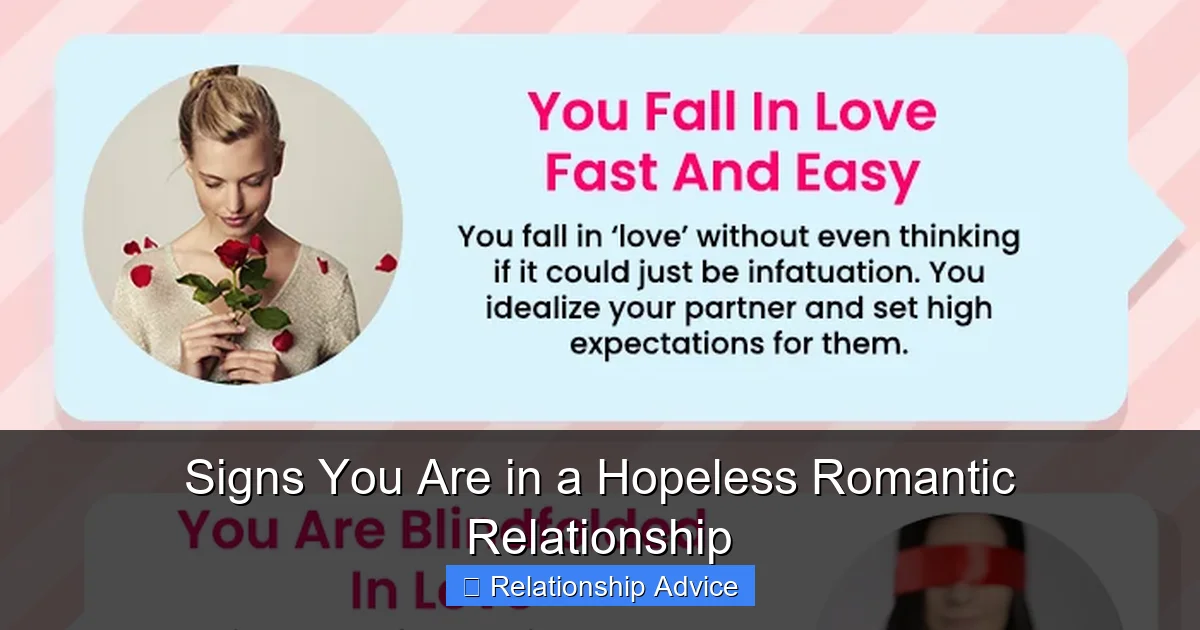
Visual guide about Signs You Are in a Hopeless Romantic Relationship
Image source: cdn2.stylecraze.com
This isn’t empathy—it’s emotional protection. You’re afraid that calling out their behavior means admitting you deserve better, or worse, that the relationship itself is broken. So you rewrite reality: “He forgets our anniversary because he’s overwhelmed with work,” instead of recognizing it as neglect. Over time, this becomes a habit. You begin measuring your own boundaries against their convenience, always choosing their comfort over yours.
Practical Example:
Imagine your partner says, “I don’t care if you’re upset—I need space right now.” Instead of feeling hurt or disrespected, you think, “Maybe I overreacted. He’s going through a hard time.” That’s not compassion; that’s enabling. True respect means both partners can express discomfort without fear of withdrawal or hostility.
If you notice yourself doing this regularly, ask: Would I defend my best friend’s actions if they treated me this way? Chances are, the answer would be no. The moment you stop defending your own worth is the moment you reclaim power.
2. You Feel Drained After Interactions—Not Energized
The Emotional Tax of Hopeless Romance
In healthy relationships, intimacy leaves you feeling lighter. In hopeless ones, it leaves you emotionally bankrupt. You walk away from conversations feeling exhausted, anxious, or guilty—even when nothing “wrong” was said. This happens because your partner drains your energy through criticism, defensiveness, or emotional withdrawal.
For instance, after a simple disagreement, you might spiral into thoughts like, “What if I said too much? What if I messed up again?” That’s not reflection—that’s anxiety born from insecurity. Healthy partners encourage growth; toxic ones trigger shame. If every interaction requires emotional labor from you alone, something’s off.
Spot the Difference:
- Healthy: “I disagree, but I trust your judgment.”
- Toxic: “You’re wrong. I knew this would happen. You never listen.”
Notice who apologizes? Who takes responsibility? In hopeless romances, accountability vanishes. Instead, blame shifts back to you—“If you hadn’t been so sensitive…”—which reinforces your belief that you’re the problem.
3. Your Needs Are Ignored—Consistently
Love Isn’t Just Giving—It’s Receiving Too
A hallmark of hopeless romance is one-sided effort. You initiate dates, plan surprises, and remember anniversaries. Your partner? They show up occasionally, maybe once every few months, and expect gratitude. Meanwhile, your deepest desires—like wanting to travel, pursue a passion project, or simply have quality time together—are met with indifference or outright dismissal.
Worse? You internalize this as normalcy. You tell yourself, “He’s just busy,” or “Maybe next year,” even though years pass and nothing changes. This imbalance isn’t romance—it’s servitude disguised as devotion. Real love involves mutual investment. When only one person shows up emotionally, physically, or mentally, the foundation cracks.
Ask Yourself:
- Do I feel like my partner knows what makes me happy?
- Have I voiced my needs more than once without seeing action?
- Am I keeping score—waiting for them to “earn” my attention?
If answers lean negative, it’s time to reevaluate. You deserve reciprocity, not reverence.
4. You Compare Your Relationship to Idealized Media Portrayals
Romeo & Juliet Syndrome Meets Modern Dating
Hopeless romantics often confuse drama with depth. They believe intense fights equal passion, and constant bickering means “we’re alive.” But real connection thrives on calm moments too—quiet walks, shared silence, easy laughter. When you’re stuck in a cycle of highs and lows, you start romanticizing the chaos.
This leads to comparing your relationship to movies, songs, or social media posts that glorify obsession over stability. You say things like, “We fight like they do in Casablanca,” or “Our love story is epic.” But epic doesn’t mean unhealthy. True romance includes compromise, forgiveness, and joy outside the relationship.
Red Flag Check:
If you find yourself thinking, “This isn’t fairytale romance,” but refuse to leave because “real love hurts,” you’re trapped in fantasy. Ask: Is this pain necessary… or just familiar?
5. You Can’t Imagine Your Life Without Them
The Illusion of Inseparability
In hopeless romance, separation feels impossible. You imagine your future mapped around them: career moves, family plans, even retirement destinations. While shared visions are healthy, losing your sense of self entirely is dangerous. You become dependent not on companionship, but on validation.
Example: When friends suggest you try a new hobby, you panic. What if they think less of you? What if they notice you’re growing apart? This fear stems from believing your identity exists only within the relationship. But you’re not a project or a possession—you’re a whole person with interests, flaws, and dreams outside this dynamic.
Break the Cycle:
- Schedule weekly solo time—no partner required.
- Reconnect with old passions or start new ones.
- Journal: “Who am I when we’re not together?”
6. You Ignore Clear Warning Signs Until It’s Too Late
Why Hope Overrides Reality
Everyone deserves grace—but not at the cost of your well-being. Hopeless romantics often skip over obvious red flags because they’d rather believe in miracles than face loneliness. They’ll overlook cheating, lying, or disrespect because “he promised he’d change.”
This mindset creates a dangerous trap: “If I stay strong enough, love will save us.” Newsflash: No amount of endurance fixes fundamental incompatibility. Healthy partners acknowledge mistakes and grow. Toxic ones repeat cycles until trust erodes completely.
Signs to Watch For:
- They lie frequently (even about small things).
- They belittle your ambitions or friendships.
- They isolate you from support systems.
If multiple apply, consider whether this relationship serves your highest good—or just your deepest longing to be wanted.
Conclusion: Choose Yourself Before It’s Too Late
Being hopelessly romantic isn’t inherently wrong—it’s human to want deep connection. But when that desire morphs into self-erasure, you’ve crossed a line. Love shouldn’t require you to shrink yourself, beg for attention, or justify mistreatment. True romance honors your light—not dims it.
Recognizing these signs is courage, not defeat. It means you’re ready to ask harder questions: Am I staying because I love this person… or because I’m terrified of being alone? Am I choosing peace over progress? Healing starts when we admit: Maybe this relationship isn’t meant to last.
And that’s okay. Because sometimes, the bravest act of love is letting go—for your sake, and theirs.
Frequently Asked Questions
How do I know if I’m in a hopeless romantic relationship or just deeply in love?
Deep love respects your autonomy and grows with you; hopeless romance consumes your identity. Ask: Do I feel drained or uplifted after time together? Are my needs met as often as mine are? If one side bears all the emotional weight, it’s not mutual love—it’s codependency dressed as romance.
Can a hopeless romantic relationship ever become healthy?
Possibly, if both partners recognize the pattern and commit to change. But often, the dynamic becomes ingrained. One person’s hope sustains the other’s avoidance. For lasting health, both must want it—and seek counseling to rebuild trust and boundaries.
What should I do if I suspect I’m in a hopeless romantic relationship?
Start by journaling honestly: How do I feel most of the time? What do I avoid discussing? Then talk to a trusted friend or therapist. Consider couples therapy only if your partner is open to self-reflection—not if they deny any issues exist.
Is it selfish to leave a hopeless romantic relationship?
No. Selfishness means prioritizing your comfort while harming others. Choosing yourself—by leaving an abusive or draining dynamic—is the opposite. You can’t pour from an empty cup; healing starts when you honor your own needs.
How long does it take to recover from a hopeless romantic relationship?
Recovery varies. Some heal within weeks by rediscovering themselves; others take months or years. Be patient. Allow grief, anger, and confusion. Rebuild through small acts: reconnecting with friends, setting boundaries, and celebrating non-negotiable joys.
Are hopeless romantic relationships more common among women?
Research suggests women are often socialized to prioritize relational harmony over assertiveness, making them more vulnerable to manipulative dynamics. However, anyone can fall into this pattern regardless of gender—especially if they value approval above authenticity.
