
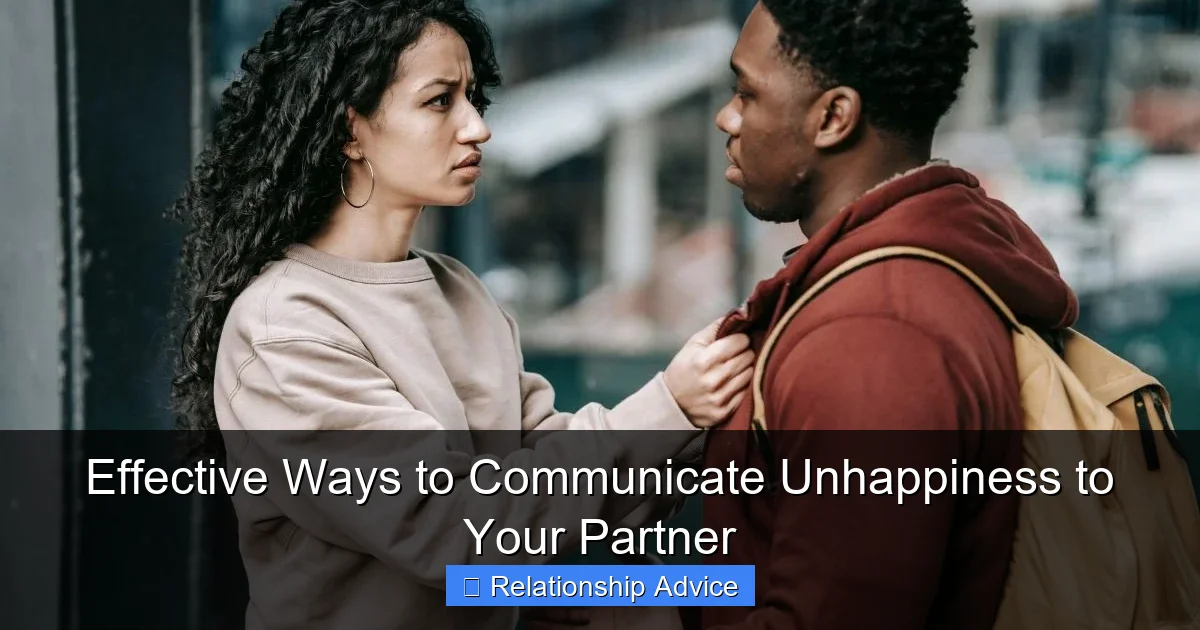
Communicating unhappiness in a relationship doesn’t have to lead to conflict. When done with empathy and clarity, expressing your feelings can deepen trust and connection. The key is choosing the right time, using “I” statements, and focusing on solutions—not accusations. This guide offers practical strategies to help you speak up safely and effectively, turning emotional distance into closer intimacy.
Let’s face it—everyone gets unhappy in relationships sometimes. Maybe your partner forgot an important date. Or perhaps they’ve been distant lately. You might feel unappreciated, lonely, or even resentful. But here’s the thing: staying silent doesn’t make the problem go away. In fact, bottling up emotions often leads to bigger fights down the road—or worse, emotional withdrawal.
The good news? You don’t need to live with constant frustration. Learning how to express unhappiness constructively is one of the most powerful things you can do for your relationship. It’s not about winning an argument or proving who’s right. It’s about creating a safe space where both partners feel heard, valued, and willing to grow together. And that starts with choosing your words carefully, timing your conversation wisely, and approaching the discussion with empathy—not accusation.
In this article, we’ll walk through proven, step-by-step methods to help you share your feelings honestly while keeping the door open for understanding. Whether you’re dealing with recurring conflicts, emotional disconnection, or just need more appreciation in your daily life, these strategies will guide you toward stronger communication and a happier partnership.
Key Takeaways
- Use “I” statements: Say “I feel hurt when…” instead of “You always…” to avoid blame and keep the conversation constructive.
- Pick the right moment: Avoid discussing sensitive topics during arguments or stress; choose calm, private settings for deeper talks.
- Be specific about behaviors: Vague complaints like “you never listen” are hard to fix. Instead, describe what happened and how it made you feel.
- Listen actively: Give your partner space to respond without interrupting. Understanding their perspective builds mutual respect.
- Focus on solutions: End the talk by discussing actionable steps both of you can take to improve the situation.
- Practice self-awareness: Reflect on whether your unhappiness stems from unmet needs or unrealistic expectations before bringing it up.
- Seek professional help if needed: Couples counseling can provide neutral ground and tools for healthier communication patterns.
📑 Table of Contents
- Why Honest Communication Matters
- The Pitfalls of Blame-Based Conversations
- How to Start the Conversation Safely
- Mastering “I” Statements
- Listening Is Just As Important
- Focusing on Solutions, Not Victories
- When Professional Help Makes Sense
- Maintaining Open Channels Long-Term
- Conclusion: Unhappiness as a Catalyst for Growth
Why Honest Communication Matters
Many people avoid talking about their unhappiness because they fear it might hurt their partner or start a fight. While those concerns are valid, silence rarely solves anything. Over time, unresolved issues can fester, leading to resentment, misunderstandings, and even emotional distance. According to relationship experts, couples who communicate openly about difficult topics tend to have longer-lasting, more satisfying relationships.
When you express your feelings clearly and respectfully, you’re not attacking your partner—you’re inviting them into your world. You’re saying, “This matters to me, and I want us to figure it out together.” That kind of vulnerability fosters trust and intimacy. On the flip side, avoiding tough conversations often results in passive-aggressive behavior, silent treatments, or explosive confrontations later on.
Think of it like cleaning a wound: ignoring it won’t heal it, but applying the right treatment speeds up recovery. Similarly, addressing unhappiness early prevents small problems from becoming big ones. And remember, your partner likely wants to understand your needs too—they just may not know how to respond when faced with raw emotion.
The Pitfalls of Blame-Based Conversations
Visual guide about Effective Ways to Communicate Unhappiness to Your Partner
Image source: realestlove.com
Before diving into effective techniques, let’s quickly cover what *doesn’t* work. Using accusatory language—like “You never help around the house!” or “You always ignore me!”—puts your partner on the defensive. They’ll either get angry, shut down, or try to counter-attack. These reactions shut down dialogue and make it harder to find common ground.
Blame-based conversations also focus on the past, which limits your ability to move forward. Instead of solving problems, you end up rehashing old grievances. Plus, phrases starting with “you” often sound like criticism rather than concern. For example, saying “You left dishes in the sink again” sounds judgmental. But saying “I get overwhelmed when the kitchen isn’t clean” centers your own experience and invites collaboration.
Another mistake is generalizing. Saying “You always…” or “You never…” assumes a pattern without evidence. Life is messy, and people aren’t perfect. Focusing on specific incidents keeps things realistic and fair.
Lastly, avoid sarcasm or passive aggression. Rolling your eyes, making snide comments, or giving the silent treatment all communicate dissatisfaction—but in ways that damage trust. They leave your partner guessing what’s wrong and whether they did something truly awful.
How to Start the Conversation Safely
Timing and tone matter more than the exact words you use. If your partner is stressed about work, rushing into a heart-to-heart about household responsibilities won’t end well. Choose a quiet moment—maybe after dinner, when you’re both relaxed and undistracted. Make sure phones are put away and distractions minimized.
Start by setting a positive intention. Remind yourself (and gently remind your partner) that this conversation is about strengthening your bond, not tearing each other down. You might say something like, “Hey, there’s something I’ve been wanting to share because I care about us. Can we chat for a few minutes?”
It’s okay to admit you’re nervous. Vulnerability is brave, not weak. Your partner should appreciate your honesty—even if they’re surprised at first. Remember, you’re not demanding change; you’re asking for their support in making your relationship better.
If your partner seems resistant, stay calm. Say, “I hear you’re busy right now—how about we revisit this tomorrow?” Pressuring someone during a heated moment rarely works. Patience shows maturity and respect.
Choosing the Right Environment
The setting sets the mood. A cozy living room with soft lighting beats a noisy kitchen during cleanup time. Privacy helps prevent eavesdropping or interruptions. If you live with roommates or family members, consider scheduling a time when others aren’t home.
Avoid public places for serious talks unless absolutely necessary. Feeling watched or judged can heighten anxiety and derail the conversation. At home, sit facing each other—eye contact shows engagement, but don’t stare intensely. Keep your body language open: uncrossed arms, relaxed posture.
Also, pick a time when neither of you has major deadlines or appointments looming. Mental bandwidth is limited, so save deep discussions for moments when you’re both mentally present.
Setting the Tone with Empathy
Even though you’re upset, aim to speak kindly. Use warm, gentle tones. Start with appreciation: “I really value our time together, and I hope we can keep growing closer.” This frames the conversation positively and reduces defensiveness.
Then, transition smoothly into your concern. Try framing it as a shared challenge: “Lately, I’ve noticed I’m feeling a bit disconnected, and I’d love to understand your side too.” This positions the issue as solvable—not insurmountable.
Remember, your goal isn’t to vent—it’s to connect. So pause frequently to check in: “Does this make sense?” “Am I being clear?” These small gestures show you respect their thoughts.
Mastering “I” Statements
One of the most powerful tools in your communication toolkit is the “I” statement. Phrases beginning with “I feel…” or “I need…” focus on your internal experience instead of blaming external factors. Here’s why they work:
– They reduce defensiveness because they don’t accuse.
– They invite empathy by sharing vulnerability.
– They encourage problem-solving since the focus stays on solutions.
For example:
❌ Bad: “You never plan dates anymore!”
✅ Good: “I miss spending quality time together, and I’d love it if we could plan something fun soon.”
Notice how the second version expresses longing without judgment. It opens the door for compromise—maybe your partner suggests a low-key movie night instead of a fancy dinner.
Another tip: Be precise about emotions. Instead of “I’m mad,” try “I feel frustrated when bills aren’t discussed beforehand.” Specificity makes your request easier to address.
Also, pair your “I” statement with a concrete ask. Saying “I’d appreciate it if…” gives direction without sounding entitled. For instance: “I’d love to hear more about your day when I get home—even if it’s just five minutes. Would that be possible?”
Practicing “I” Statements
Try rewriting common complaints using this framework:
1. **Identify the emotion:** Jealousy, loneliness, disappointment?
2. **Describe the behavior:** What exactly triggered the feeling?
3. **State your need:** How would your ideal outcome look?
Example transformation:
Original complaint: “You’re always on your phone!”
Reframed: “I feel lonely when I come home and you’re scrolling instead of talking to me. I’d love it if we could set aside screen-free time together after dinner.”
See the difference? One sounds like an attack; the other feels like a heartfelt request.
Listening Is Just As Important
Great communication isn’t one-sided. After sharing your feelings, give your partner space to respond. Active listening means hearing not just words, but emotions behind them. Nod occasionally, maintain eye contact, and avoid planning your rebuttal while they speak.
If they seem upset or confused, ask clarifying questions: “Can you tell me more about what you meant by that?” or “How did that situation make you feel?” This shows genuine interest and helps uncover root causes.
Sometimes, your partner may not realize how their actions affected you. Other times, they might have valid reasons for their behavior—work stress, personal struggles, etc. Either way, staying curious rather than defensive keeps the door open.
And if they apologize sincerely? Accept it gracefully. Saying “Thank you for listening” reinforces positive behavior and encourages future openness.
Handling Pushback Gracefully
What if your partner dismisses your concerns? Stay calm and repeat your point using “I” language: “I understand you didn’t mean to upset me, but when X happens, I feel Y.” Don’t escalate—just restate your position gently.
If they become hostile, acknowledge their reaction without agreeing with it: “I see you’re uncomfortable discussing this. Maybe we should revisit it another time?” Walking away temporarily prevents harm.
Remember, you can’t force someone to care—but you can consistently model respectful dialogue. Over time, they may mirror your approach.
Focusing on Solutions, Not Victories
The ultimate goal isn’t to prove you’re right—it’s to improve your relationship. So steer the conversation toward actionable steps. Brainstorm together! Ask, “What could we do differently next time?” or “How can we balance this so both of us feel respected?”
Collaborative problem-solving builds teamwork. It turns “us vs. them” into “we vs. the problem.” For instance, if you’re arguing about chores, suggest dividing tasks by preference rather than insisting on equal split.
Set small, achievable goals first. Big changes take time. Celebrate progress, no matter how minor. Even acknowledging effort strengthens motivation.
Also, agree on follow-up check-ins. Schedule a weekly 10-minute chat to discuss how things are going. Consistency prevents old habits from resurfacing.
Creating a Shared Action Plan
Here’s a simple template:
1. **Problem:** Describe the issue neutrally.
2. **Impact:** Share how it affects you emotionally.
3. **Suggestion:** Propose one concrete change.
4. **Compromise:** Offer flexibility—“Would Tuesday nights work for you?”
Example:
– Problem: “We haven’t gone out together in weeks.”
– Impact: “I miss feeling like a couple and worry we’re drifting apart.”
– Suggestion: “Could we aim for one date per month?”
– Compromise: “Maybe start with a picnic this weekend?”
This structure keeps discussions productive and focused.
When Professional Help Makes Sense
Not every issue resolves through self-guided efforts. If you find yourselves stuck in cycles of blame, avoidance, or escalating anger, consider couples therapy. A trained mediator can help you navigate complex emotions and teach healthier interaction patterns.
Therapy isn’t a sign of failure—it’s a commitment to growth. Many successful couples credit counseling with saving their relationships. Plus, therapists offer neutral perspectives and evidence-based techniques like Emotionally Focused Therapy (EFT) or Gottman Method.
You can also attend individual sessions if certain triggers are hard to discuss directly. Self-reflection often reveals blind spots and prepares you for tougher conversations.
Don’t wait until things feel hopeless. Early intervention prevents deterioration. And if your partner resists therapy? Express your desire for improvement without pressure: “I’d feel more hopeful if we tried something new together.”
Maintaining Open Channels Long-Term
Expressing unhappiness once isn’t enough. Healthy relationships require ongoing communication. Make it a habit to share highs and lows regularly—not just during crises.
Schedule regular “relationship check-ins.” Once a week, ask: “What’s working well?” and “Is there anything bothering you?” Keep it light: “Did I forget your coffee order again?” Humor disarms tension and keeps lines open.
Also, practice gratitude daily. Thank your partner for small acts—“Thanks for walking the dog today”—to reinforce positivity. Positivity bias (remembering good moments more than bad) protects against resentment.
Finally, keep learning. Read books like *Nonviolent Communication* by Marshall Rosenberg or watch TED Talks on empathy. The more skills you build, the easier honest conversations become.
Building Trust Through Consistency
Trust grows when actions match words. If you say you’ll change, follow through. If you promise to listen, actually listen. Small reliability compounds over time into deep security.
And if you slip up? Own it. Apologize sincerely: “I messed up by snapping earlier. I’m working on managing my stress better.” Accountability strengthens bonds.
Conclusion: Unhappiness as a Catalyst for Growth
Feeling unhappy in your relationship doesn’t mean it’s doomed. In fact, recognizing pain is the first step toward healing. By communicating with kindness, clarity, and courage, you transform potential conflict into connection.
Remember, no one is perfect. Relationships thrive when both partners commit to understanding, patience, and mutual respect. You don’t have to have all the answers—just willingness to try.
Start small. Pick one area where you feel unheard or undervalued. Practice your “I” statement. Choose a calm moment. And most importantly, believe that your voice matters. Your happiness isn’t selfish—it’s essential to a thriving partnership.
If you’d like personalized guidance, explore resources like How To Talk To Your Partner Without Starting A Fight or How To Reconnect After A Fight With Your Partner. And for deeper emotional exploration, consider reading Deep Questions To Ask Your Partner to strengthen intimacy beyond surface-level talks.
You’ve got this. And so does your relationship.
Frequently Asked Questions
How do I bring up my unhappiness without starting an argument?
Choose a calm, private moment and frame the conversation around shared goals. Use “I” statements to express your feelings without blaming, and focus on solutions rather than past mistakes. For example, say, “I’ve been feeling overlooked lately—can we talk about ways to reconnect?”
What if my partner gets defensive when I share my feelings?
Stay calm and reiterate your intent: “I’m not accusing you—I want us to understand each other better.” If they remain hostile, suggest pausing and revisiting the topic later. Defensiveness usually stems from feeling attacked, so gentleness helps de-escalate tension.
Should I wait until I’m extremely upset to talk?
No. Waiting for extreme emotions often leads to explosive outbursts. Address concerns when you’re still relatively calm—ideally before frustration builds. Regular check-ins prevent small issues from snowballing.
Can couples therapy help with communication issues?
Absolutely. Therapists provide neutral guidance, teach active listening skills, and help couples break negative cycles. Many report lasting improvements after even a few sessions. It’s a proactive investment in your relationship.
How often should we discuss relationship concerns?
Aim for weekly 10–15 minute chats to celebrate wins and address niggles early. Consistency builds trust and prevents surprises. Think of it like dental check-ups—preventive care avoids bigger problems.
What if my partner refuses to listen or change?
You can only control your own actions. Continue modeling respectful communication, but recognize that lasting change requires mutual effort. If patterns persist despite your best efforts, evaluate whether the relationship meets your emotional needs long-term—and consider seeking support through signs you and your ex are meant to be or signs your partner is not right for you.
