
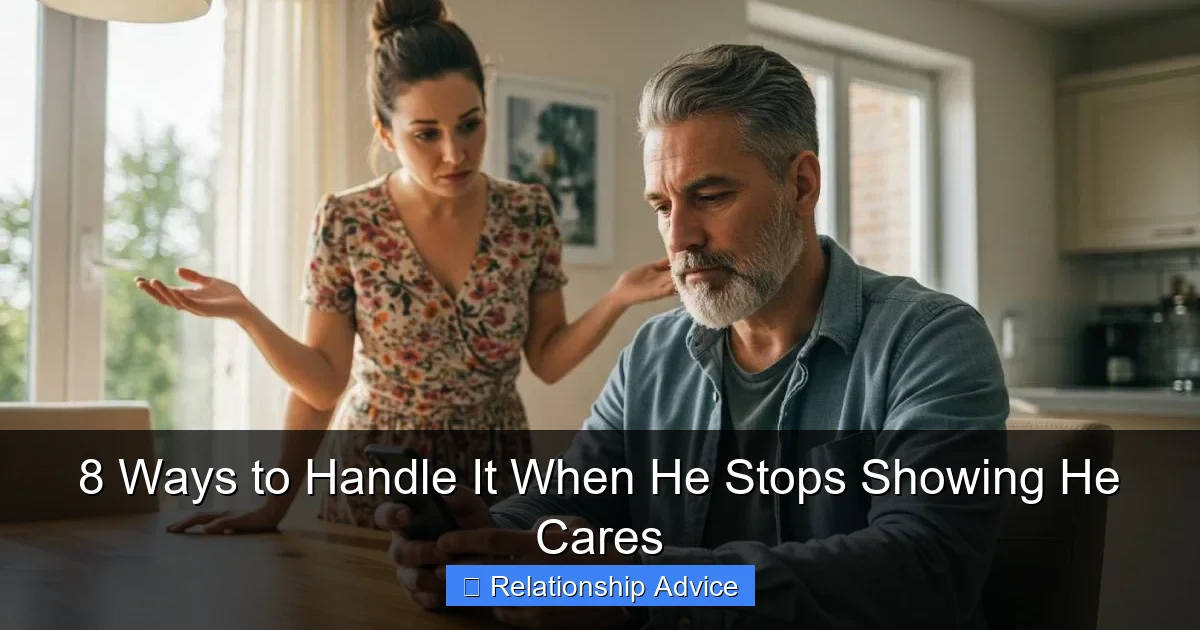
When your partner stops showing affection, it’s not just about missing hugs—it’s a sign of deeper disconnection. You deserve love that feels consistent and real. This article walks you through 8 practical steps to protect your heart while deciding whether to fight for the relationship or walk away.
When you first started dating someone new, everything felt electric. He remembered your coffee order, surprised you with small gifts, called just to say hello, and made time even when busy. But now? It’s different. Maybe he stopped texting back within minutes. Or maybe he’s emotionally distant during dates. You keep asking yourself: *Why does he still stay around if he doesn’t care anymore?*
It’s painful to admit, but sometimes people stop showing they care—not because you’ve done anything wrong, but because their feelings have changed. Whether it’s fading attraction, unresolved stress, or simply growing apart, recognizing the shift early gives you power. The good news? There are healthy ways to respond instead of spiraling into insecurity or desperation. In this article, we’ll explore eight realistic, respectful approaches to handling it when he stops showing he cares—so you can move forward with clarity and confidence.
Key Takeaways
- Avoid begging or pleading: Begging often pushes people further away. Instead, focus on expressing your needs calmly and clearly.
One-off coldness isn’t the same as a sustained pattern. Look for consistency in his behavior over time. Use “I” statements like “I feel unimportant when…” rather than accusatory language. Investing in someone who doesn’t care drains you. Redirect attention toward self-growth and supportive friendships. If he ignores your texts or cancels plans repeatedly, define what acceptable behavior looks like moving forward. Your gut knows when something feels off. Don’t ignore red flags simply because you hope things will change. Staying in a loveless dynamic rarely leads to happiness. Sometimes, the bravest thing you can do is let go.
📑 Table of Contents
- 1. Stop Assuming the Worst (And Start Asking Questions)
- 2. Communicate Your Needs Clearly—But Not Demandingly
- 3. Pay Attention to His Actions, Not Just Words
- 4. Stop Begging and Start Taking Back Control
- 5. Evaluate Whether This Relationship Still Fits You
- 6. Seek Support From Trusted Friends or a Therapist
- 7. Focus on Self-Care Like It’s Non-Negotiable
- 8. Know When It’s Time to Walk Away Gracefully
- Conclusion: Your Worth Isn’t Defined by His Effort
1. Stop Assuming the Worst (And Start Asking Questions)
Before jumping to conclusions like “he never loved me” or “he’s cheating,” pause and reflect. Is this a recent change—or has there been a gradual cooling off? Stress at work, family issues, or personal struggles can make anyone withdraw temporarily. Ask yourself: *What’s different now versus three months ago?*
If you notice a sudden drop in effort—like he used to call every night but hasn’t since Monday—that’s worth addressing. But don’t assume malice right away. Instead, try gentle inquiry. Text him: *Hey, I’ve noticed we haven’t talked much lately. Everything okay?* This opens the door without sounding accusatory. Remember, curiosity beats fear every time. And if he shuts down completely, that might actually tell you more than any dramatic accusation would.
Give Him Space to Respond (Without Chasing)
Sometimes, people need space—even if they claim otherwise. If he replies vaguely or seems distracted, resist the urge to flood his inbox with follow-up messages. That sends mixed signals: on one hand, you’re eager; on the other, you’re insecure. Instead, give him room. Use that time to reconnect with friends, pick up a hobby, or journal your thoughts. When you’re grounded, conversations flow naturally. Plus, showing emotional independence makes you far more attractive than someone who begs for validation.
Use the “Observation + Feeling” Technique
Instead of saying, “You don’t care about me,” try framing it as:
*“I’ve noticed we haven’t hung out in two weeks, and I’m starting to feel disconnected. Can we talk about how we’re both feeling?”*
This approach reduces defensiveness while inviting honesty. Studies show that using “I” statements increases the likelihood of productive dialogue compared to blame-laden phrases like “you always…” or “you never…”
2. Communicate Your Needs Clearly—But Not Demandingly
Visual guide about 8 Ways to Handle It When He Stops Showing He Cares
Image source: attractiondiary.com
Love languages matter. Some men express care through quality time; others through acts of service or words of affirmation. If your primary love language is physical touch but he’s become physically distant, that explains part of the gap. Have an honest conversation about what you need—and listen equally to his perspective.
For example, instead of complaining, say:
*“I really miss our cuddling sessions. It made me feel close to you. Is there a way we could make that happen again?”*
This focuses on your emotional experience rather than placing pressure on him. And if he genuinely can’t meet those needs right now due to circumstances, at least you’ve established mutual understanding. If he dismisses them entirely? That’s a red flag worth noting.
Practice Assertive (Not Aggressive) Communication
Assertiveness = respect + honesty. Aggression = hostility + control. When you communicate assertively, you state facts without attacking. Try structuring your message like this:
1. **State the behavior**: “I’ve noticed you haven’t initiated plans in over a week.”
2. **Share your impact**: “I’d love more connection, so I feel a bit lonely.”
3. **Invite solutions**: “Would you be open to planning one date this weekend?”
This keeps the tone collaborative, not confrontational. And if he responds poorly? At least you tried.
3. Pay Attention to His Actions, Not Just Words
People lie with words all the time—but rarely fake consistent action. If he says “I love you” but forgets anniversaries, avoids eye contact, or cancels plans last minute, trust your instincts. Actions speak louder than declarations. Consider these signs he might be pulling away:
– Sudden increase in phone secrecy
– Forgetting important dates
– Canceling future plans repeatedly
– Becoming emotionally guarded
These aren’t proof he’s cheating—but they do suggest disinterest. Compare his current behavior to how he acted when you first met. Has the spark disappeared? If yes, that’s worth exploring further.
The Difference Between Busy and Disinterested
Everyone gets busy—but disinterest shows up differently. A busy person will still:
– Reply to texts within reason
– Remember small details about you
– Make time when genuinely available
Meanwhile, someone who’s disengaged may:
– Ghost you after sending one-word replies
– Ignore calls unless reminded constantly
– Talk about you in passing but never initiate contact
Ask yourself: *Does he treat me differently than others?* If he’s attentive with coworkers/friends but distant with you, that’s telling.
4. Stop Begging and Start Taking Back Control
Begging—whether verbal or emotional—undermines your worth. Phrases like “Please just text me back” or “If you leave, I’ll die” scream desperation, not love. Men (and partners in general) often pull away when they sense low self-esteem. When you beg, you signal that your happiness depends solely on their approval. That’s unsustainable.
Instead, reclaim your power. Do something that makes you smile—paint your nails, watch a comedy, take a long bath. Show him (and yourself) that your life isn’t empty without his constant attention. This isn’t about punishment; it’s about redefining your identity beyond the relationship.
As psychologist Harriet Braiker notes, “The most powerful form of revenge is living well.” So channel your energy into growth, not grief.
Replace Begging With Boundary-Setting
Boundaries aren’t walls—they’re guidelines that protect your peace. If he consistently ignores your calls, say:
*“I value our time together, but I need responses within 24 hours. If that’s not possible, let’s discuss alternatives.”*
If he can’t respect that? Then he wasn’t meeting your needs anyway. And that’s okay. Healthy relationships require mutual effort.
5. Evaluate Whether This Relationship Still Fits You
At some point, you must ask: *Do I want to keep trying?* If he’s shown zero willingness to improve despite your efforts, staying prolongs pain. Relationships thrive when both people invest. If only one side is working, it’s not fair—to you or him.
Consider these questions:
– Did he apologize sincerely after realizing he hurt me?
– Has he taken steps to change?
– Am I happy most days, or am I constantly anxious?
– Would I recommend this relationship to a friend?
If answers lean negative, it’s brave to accept reality. As poet Maya Angelou said, “There is no greater agony than bearing an untold story inside you.” Letting go honors your truth.
Accept That Some People Grow Apart
Chemistry fades. Interests shift. Life priorities evolve. Just because you wanted forever doesn’t mean he did. And that’s not a reflection of your worth—it’s simply human nature. Many successful marriages started with intense passion but matured into deep companionship. Others ended because paths diverged. Either outcome is valid.
6. Seek Support From Trusted Friends or a Therapist
Silos isolate us. Talking to friends who’ve been through similar situations offers perspective you might miss alone. They’ll validate your feelings without judgment and offer fresh ideas. And if emotions run high? A therapist provides neutral ground to process attachment styles, communication blocks, or trauma responses.
Don’t suffer silently. As Brené Brown teaches, “Connection is why we’re here.” Lean on your tribe.
Journaling as Emotional First Aid
Writing down your thoughts clarifies confusion. Try prompts like:
– “What specifically makes me feel unloved?”
– “What do I need from him to feel secure?”
– “What would my ideal response look like?”
Seeing patterns emerge helps you decide next steps objectively.
7. Focus on Self-Care Like It’s Non-Negotiable
When someone stops caring, we often neglect ourselves—skipping workouts, skipping meals, losing sleep. Reverse that. Prioritize routines that nourish mind, body, and soul. Exercise boosts endorphins; meditation calms anxiety; cooking healthy meals fuels energy. These aren’t luxuries—they’re essentials.
And yes, date yourself. Plan solo adventures. Reconnect with old passions. The goal isn’t replacement—it’s rediscovery. You’re not “waiting” for him; you’re becoming whole regardless.
Rebuild Confidence Through Small Wins
Start tiny:
– Finish that book you’ve ignored
– Learn a new recipe
– Call a childhood friend
Each accomplishment rebuilds self-worth. Confidence attracts partners—not desperation.
8. Know When It’s Time to Walk Away Gracefully
Walking away isn’t failure—it’s wisdom. If he refuses accountability, gaslights your feelings, or treats you as an option, stay. You deserve someone who sees you as priority #1. And if he changes? Great. But don’t beg for crumbs of attention.
Endings hurt, but they clear space for better beginnings. As author Anne Lamott says, “Leaving a toxic situation is not giving up—it’s giving yourself permission to live.”
Crafting a Kind Goodbye
If you choose to exit, do it respectfully:
*“I care about you, but I need more effort than I’m getting. I think it’s best if we part ways. Wishing you happiness.”*
No drama. No blame. Just closure.
Conclusion: Your Worth Isn’t Defined by His Effort
Stopping care isn’t your fault. It doesn’t mean you’re unlovable or flawed. Sometimes, people simply stop seeing your value. But that changes nothing about who you are. You are worthy of consistent affection, respect, and joy—even if that person isn’t him.
Use these strategies to navigate the pain with grace. Communicate, set boundaries, prioritize yourself, and trust your journey. Because healing starts not when he returns, but when you remember: *You were enough yesterday, you’re enough today, and you’ll be more than enough tomorrow.*
If you’re struggling to move on, check out our guide on ways to rekindle your love life. And if you suspect he’s pretending to love you, read these red flags. Most importantly, never settle for less than you deserve.
Frequently Asked Questions
How do I know if he really doesn’t care anymore?
If he consistently ignores your messages, avoids physical intimacy, and shows little interest in your life—despite your efforts—it’s likely he’s emotionally checked out. Compare his current behavior to how he acted when you first met. Sustained indifference (not just temporary busyness) is a strong indicator.
Should I confront him immediately when I notice changes?
Not necessarily. Give yourself time to observe patterns first. If it’s a one-time lapse, address it gently later. But if multiple signs align—like canceling plans repeatedly or being emotionally distant—confrontation becomes necessary. Use calm, non-accusatory language like “I’ve felt disconnected lately—can we talk?”
Is it normal to feel guilty for wanting more effort?
Absolutely. Wanting mutual care is healthy, not selfish. All relationships require give-and-take. If only you’re investing, that imbalance creates resentment. Guilt usually stems from societal myths that women should endure neglect silently. Speak up—your needs matter.
What if he promises to change but doesn’t follow through?
Repeated broken promises reveal character, not commitment. Ask: *Has he ever kept a promise to you before?* If he claims he’ll try but repeats the same behaviors, believe the action, not the words. Change requires visible effort over time.
Can therapy help save the relationship?
Yes—if both partners are willing. Couples counseling addresses communication gaps, emotional distance, and underlying issues. However, if only one person engages, progress stalls. Commitment from both sides is essential.
How long should I wait before deciding to leave?
There’s no fixed timeline. If you’ve communicated openly, given reasonable chances, and seen no effort—trust your gut. Waiting longer often prolongs pain unnecessarily. Decide based on his actions, not hope.
