

Fights are normal in relationships, but what matters most is how you recover. This guide walks you through practical, heartfelt steps to reconnect with your partner after conflict—restoring trust, deepening understanding, and strengthening your bond for the long term.
No relationship is immune to conflict. Even the most loving couples argue—sometimes loudly, sometimes quietly, but always with emotion. The real test of a strong partnership isn’t whether you fight, but how you come back together afterward. Reconnecting after a fight isn’t about sweeping issues under the rug or pretending everything’s fine. It’s about choosing each other, again and again, even when it’s hard.
Think of your relationship as a garden. Arguments are like storms—they can be intense, even damaging, but they don’t have to destroy the soil. With care, attention, and the right tools, you can nurture the roots back to life. Reconnection is that nurturing process. It’s about rebuilding trust, restoring safety, and reminding each other that you’re on the same team.
But how do you actually do it? How do you move from anger and hurt to understanding and closeness? The good news is that reconnecting is a skill—one you can learn, practice, and improve over time. This guide will walk you through the essential steps to heal after a fight, repair emotional wounds, and strengthen your bond. Whether your last argument was about chores, money, or something deeper, these strategies will help you find your way back to each other.
Key Takeaways
- Take time to cool down: Emotions run high during arguments. Giving yourself space prevents escalation and allows for clearer thinking.
- Use “I” statements: Express your feelings without blaming. Saying “I felt hurt when…” opens dialogue instead of defensiveness.
- Listen to understand, not to reply: Truly hear your partner’s perspective. Ask questions and reflect back what you hear to show empathy.
- Acknowledge your part: Even small ownership—like “I could’ve handled that better”—goes a long way in rebuilding connection.
- Reconnect physically and emotionally: A hug, a kind note, or shared laughter can reignite closeness after tension.
- Create a repair ritual: Develop a personal signal or phrase (like “Can we reset?”) to pause fights and return to calm.
- Seek patterns, not just problems: Reflect on recurring triggers. Addressing root causes prevents future blowups.
📑 Table of Contents
- Why Reconnection Matters More Than “Winning” the Fight
- Step 1: Take a Break to Cool Down
- Step 2: Return with Curiosity, Not Blame
- Step 3: Practice Active Listening
- Step 4: Take Responsibility—Even for Small Things
- Step 5: Reconnect Through Small Gestures
- Step 6: Create a Repair Ritual
- Step 7: Reflect and Prevent Future Fights
- When to Seek Help
- Final Thoughts: Reconnection Is an Act of Love
Why Reconnection Matters More Than “Winning” the Fight
Let’s be honest: most of us go into an argument wanting to be right. We want our partner to see our point, admit fault, or apologize first. But when the goal becomes “winning,” the real victim is the relationship. Reconnection shifts the focus from blame to healing. It’s not about who was wrong—it’s about how you can move forward together.
When couples prioritize reconnection, they build what psychologists call “emotional safety.” This is the feeling that you can be vulnerable, make mistakes, and still be loved. Without it, arguments leave scars. With it, even big fights can become opportunities for growth.
Consider this: a couple argues about one partner working late again. One feels neglected; the other feels unappreciated. If they both dig in, the fight escalates. But if one says, “I miss you when you’re gone,” and the other responds, “I miss you too—I didn’t realize how much this was affecting you,” the dynamic changes. Suddenly, it’s not “you vs. me”—it’s “us vs. the problem.”
Reconnection also prevents resentment. Unresolved fights pile up like unpaid bills. Over time, they create distance, coldness, or passive-aggressive behavior. But when you address conflict and repair it, you clear the air. You show your partner that their feelings matter—and that you’re committed to the relationship, not just your ego.
The Hidden Cost of Avoiding Reconnection
Some couples avoid reconnecting because it feels vulnerable. They might think, “If I apologize first, I’m admitting I was wrong,” or “If I reach out, they’ll think I’m weak.” But avoiding reconnection has a cost.
Without repair, small misunderstandings grow into big rifts. You might stop sharing your thoughts, avoid certain topics, or feel emotionally distant. Over time, this erodes intimacy. You start to feel like roommates instead of partners.
Worse, unresolved conflict can lead to the “Four Horsemen” of relationship breakdown—criticism, contempt, defensiveness, and stonewalling—identified by renowned researcher Dr. John Gottman. These behaviors predict divorce more accurately than any other factor. But the antidote? Repair attempts—those small, intentional efforts to reconnect.
Step 1: Take a Break to Cool Down
Visual guide about How to Reconnect After a Fight with Your Partner
Image source: realestlove.com
The first step to reconnecting is often the hardest: stepping away. When emotions are high, your brain’s fight-or-flight response kicks in. You’re not thinking clearly—you’re reacting. Trying to resolve things in this state is like trying to fix a leaky pipe during a hurricane.
Taking a break isn’t running away. It’s giving yourself and your partner space to breathe, reflect, and return with a calmer mindset. The key is to do it respectfully.
How to Take a Healthy Break
Start by naming it: “I’m feeling really upset right now. I need 20 minutes to cool down so I can talk about this without saying something I’ll regret.” This shows you’re not abandoning the conversation—you’re protecting it.
Agree on a time to come back. Say, “Can we talk again at 7?” or “Let’s revisit this after dinner.” This creates accountability and prevents the break from turning into avoidance.
Use the time wisely. Go for a walk, listen to music, journal, or do a calming activity. Avoid ruminating or rehearsing what you’ll say. The goal isn’t to win the argument—it’s to regain emotional balance.
One couple I worked with used a “pause button” signal—a hand gesture—to stop arguments before they spiraled. It became a playful way to say, “We’re getting too heated. Let’s reset.” Over time, it helped them avoid many blowups.
What Not to Do During a Break
Don’t use the time to plan your rebuttal. Don’t text your best friend to vent (unless it’s just to release emotion, not to gossip). And definitely don’t drink alcohol or engage in other numbing behaviors to escape the discomfort.
Also, avoid the silent treatment. A break is temporary and agreed upon. The silent treatment is passive, prolonged, and often used to punish. It erodes trust and makes reconnection harder.
Step 2: Return with Curiosity, Not Blame

Visual guide about How to Reconnect After a Fight with Your Partner
Image source: realestlove.com
Once you’ve cooled down, it’s time to come back together. But how you return sets the tone. If you walk in ready to prove your point, you’ll trigger defensiveness. Instead, approach with curiosity.
Ask yourself: “What was my partner really feeling? What were they trying to say, even if they said it poorly?” This mindset shift—from judgment to understanding—opens the door to real connection.
Use “I” Statements to Express Your Feelings
Blame sounds like: “You never listen to me!” or “You always make me feel ignored.” These statements put your partner on the defensive. They feel attacked, not heard.
Instead, use “I” statements: “I felt lonely when you were on your phone during dinner,” or “I got frustrated because I felt like my opinion didn’t matter.” This focuses on your experience, not their character.
“I” statements don’t mean you’re taking all the blame. They mean you’re taking responsibility for your feelings—which is actually more empowering. You’re saying, “This is how I experienced it,” not “You made me feel this way.”
Ask Open-Ended Questions
Instead of demanding answers, invite dialogue. Try:
– “Can you help me understand what you were feeling in that moment?”
– “What did you need from me that you didn’t get?”
– “How can I support you better next time?”
These questions show you care about your partner’s inner world. They invite collaboration, not confrontation.
One couple used a “feelings check-in” after every argument. They’d each share one emotion they felt during the fight and one thing they wished had gone differently. It became a ritual of empathy, not blame.
Step 3: Practice Active Listening
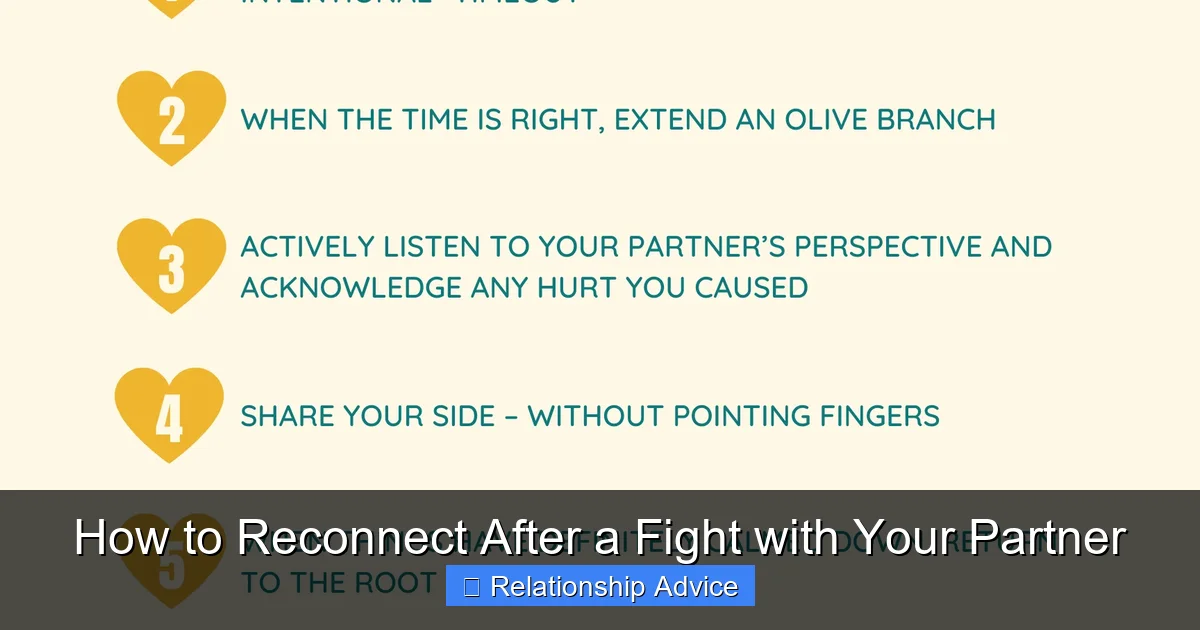
Visual guide about How to Reconnect After a Fight with Your Partner
Image source: zencare.s3.us-east-2.amazonaws.com
You’ve expressed your side. Now it’s time to truly listen. Active listening means more than just staying quiet while your partner talks. It means being fully present, engaged, and responsive.
What Active Listening Looks Like
– Put your phone away.
– Make eye contact.
– Nod or use small verbal cues like “I see” or “That makes sense.”
– Reflect back what you hear: “So when I interrupted you, you felt dismissed?”
– Ask clarifying questions: “Did I get that right?”
This isn’t about agreeing—it’s about understanding. When your partner feels heard, they’re more likely to listen to you in return.
Avoid These Listening Traps
Don’t interrupt to correct or defend. Don’t start planning your response while they’re speaking. And don’t minimize their feelings with phrases like “You’re overreacting” or “It’s not a big deal.”
Even if you disagree, validate their emotion: “I can see why that would feel hurtful,” or “I understand you were stressed.” Validation doesn’t mean agreement—it means respect.
A husband once told me, “I used to think listening meant waiting for my turn to talk. Now I know it means really trying to get where she’s coming from. It changed everything.”
Step 4: Take Responsibility—Even for Small Things
Reconnection isn’t about who’s right. It’s about who’s willing to grow. That means owning your part—even if it’s small.
You don’t have to say, “I was completely wrong.” But you can say, “I realize I raised my voice, and that made things worse,” or “I could’ve been more patient when you were explaining.”
These acknowledgments show humility and care. They say, “I value you more than my pride.”
How to Apologize Effectively
A good apology has three parts:
1. **Acknowledge** what happened: “I know I snapped at you when you asked about the bills.”
2. **Take responsibility**: “That wasn’t fair, and I shouldn’t have taken my stress out on you.”
3. **Express care**: “I care about you and our relationship, and I want to do better.”
Avoid “but” in apologies: “I’m sorry I yelled, but you started it.” The “but” cancels the apology. Own your actions without excuses.
What If You Don’t Think You Were Wrong?
You can still take responsibility for your role in the dynamic. For example: “I didn’t mean to hurt you, but I see how my words came across that way. I’ll be more thoughtful next time.”
This shows emotional maturity. It says, “I may not agree with your interpretation, but I respect your feelings and want to improve.”
Step 5: Reconnect Through Small Gestures
Words matter, but so do actions. After a fight, small, intentional gestures can rebuild closeness faster than grand declarations.
Physical Reconnection
Touch is a powerful healer. A hug, holding hands, or sitting close can release oxytocin—the “bonding hormone”—and reduce stress. Even a gentle touch on the arm can signal safety and care.
One couple made a rule: no going to bed angry. If they had a fight, they’d at least hug goodnight—even if they weren’t fully resolved. It reminded them they were still connected.
Emotional Reconnection
Send a sweet text: “Thinking of you. Hope your day’s going okay.”
Leave a note: “I’m glad we’re working through this. I love you.”
Do something kind: make their favorite coffee, take over a chore, or plan a low-pressure date night.
These acts say, “I’m still here. I still care.”
Shared Laughter
Humor is a bridge. Watch a funny show together. Share a silly memory. Laughter releases tension and reminds you why you’re together.
A wife once told me, “After our biggest fight, my husband brought me ice cream and said, ‘We’re going to be okay.’ We laughed, and suddenly it didn’t feel so heavy.”
Step 6: Create a Repair Ritual
Couples who thrive have repair rituals—personalized ways to pause, reset, and reconnect during conflict.
These can be verbal, physical, or symbolic. The key is that both partners agree on them and use them consistently.
Examples of Repair Rituals
– **The “Reset” Phrase**: “Can we reset?” signals a desire to pause and return calmly.
– **The Hug Pact**: No matter how mad you are, you must hug before bed.
– **The Apology Token**: One partner gives the other a small object (a stone, a keychain) as a symbol of apology.
– **The 5-Minute Rule**: If voices rise, both agree to stop and take five deep breaths.
These rituals create predictability and safety. They say, “Even when we fight, we have a way back.”
How to Create Your Own
Talk with your partner when you’re calm. Ask: “What would help us reconnect faster after a fight?” Brainstorm ideas together. Choose one or two to try for a month, then adjust.
The best rituals are simple, meaningful, and used before things escalate.
Step 7: Reflect and Prevent Future Fights
Reconnection isn’t just about fixing the past—it’s about building a stronger future. After you’ve repaired, take time to reflect.
Ask These Questions Together
– What triggered this fight?
– What need wasn’t being met?
– How can we handle this differently next time?
– What did we learn about each other?
This isn’t blame-shifting. It’s problem-solving as a team.
Identify Patterns
Do you fight about the same things? Money? Time? Family? These patterns point to deeper needs—security, respect, connection.
Once you see the pattern, you can address the root cause. For example, if you fight about chores, maybe the real issue is feeling unappreciated. A chore chart might help, but so might regular appreciation.
Schedule Regular Check-Ins
Set aside 15 minutes weekly to talk about your relationship. Ask:
– “How are we doing?”
– “Is there anything bothering you?”
– “What’s one thing I did this week that made you feel loved?”
These conversations prevent small issues from becoming big fights.
When to Seek Help
Most couples can reconnect on their own with patience and practice. But sometimes, outside support is needed.
If you notice:
– Fights escalate quickly or become abusive
– You can’t seem to resolve the same issues
– One or both partners feel emotionally unsafe
– You’ve stopped trying to reconnect
It may be time to see a couples therapist. Therapy isn’t a sign of failure—it’s a tool for growth. A good therapist can help you communicate better, understand each other’s needs, and rebuild trust.
Many couples say therapy saved their relationship. It gave them new skills, deeper insight, and a safe space to heal.
Final Thoughts: Reconnection Is an Act of Love
Reconnecting after a fight isn’t about perfection. It’s about presence. It’s choosing to show up, even when it’s hard. It’s saying, “You matter more than my anger.”
Every time you repair, you strengthen your bond. You build a relationship that can weather storms—not because you avoid conflict, but because you know how to come back together.
So the next time you fight, don’t panic. Remember: this is part of love. And with the right tools, you can turn conflict into connection.
Take a breath. Reach out. Say, “I’m here.” And keep choosing each other—one conversation, one hug, one apology at a time.
Frequently Asked Questions
How long should I wait before reconnecting after a fight?
It depends on the intensity of the argument and your emotions. Most experts recommend waiting until you’re calm—usually 20 minutes to a few hours. The key is to return when you can talk respectfully, not immediately after cooling down.
What if my partner doesn’t want to talk after a fight?
Give them space, but gently express your intention to reconnect. Say, “I understand you need time. I’m here when you’re ready to talk.” Avoid pressuring them, but don’t disappear completely—small gestures like a text can keep the door open.
Is it okay to apologize even if I don’t think I was wrong?
Yes. You can apologize for how your actions affected your partner, even if you don’t agree with their interpretation. For example, “I’m sorry my words hurt you” focuses on their feelings, not your intent.
How do I reconnect if we’re not living together?
Use technology to stay connected—send a voice note, schedule a video call, or share a funny meme. Physical distance makes emotional gestures even more important. Plan a future date to look forward to.
What if we keep having the same fight over and over?
This usually means there’s an unmet need or deeper issue. Try identifying the pattern and discussing it calmly. If you can’t resolve it, consider couples counseling to explore the root cause together.
Can reconnecting after a fight actually strengthen a relationship?
Absolutely. When couples repair effectively, they build trust, empathy, and resilience. Fights become opportunities for growth, not threats to the relationship. Many couples report feeling closer after working through conflict.
