
If you constantly feel drained, disrespected, or unheard in your relationship, it’s time to pause and reflect. You deserve love that uplifts, supports, and honors your worth—not one that leaves you questioning your value.
Key Takeaways
- You feel emotionally exhausted more often than not: Healthy relationships recharge you, not drain you. Constant stress or anxiety around your partner is a major red flag.
- Your needs are consistently ignored or dismissed: A loving partner listens, validates, and makes effort to meet your emotional and physical needs—not just their own.
- You’ve stopped being yourself: If you’re hiding your opinions, interests, or personality to avoid conflict, you’re not in a safe or supportive space.
- There’s little to no effort from your partner: Love requires action. If you’re always the one initiating plans, conversations, or intimacy, it’s unbalanced.
- You feel lonely even when you’re together: Emotional disconnection is a powerful sign that the relationship isn’t meeting your core needs.
- You’re making excuses for their behavior: Saying “they’re just stressed” or “they didn’t mean it” repeatedly means you’re minimizing harm—and that’s not okay.
- You dream of a different life: If you frequently imagine being with someone else or living a different kind of relationship, your heart may already know the truth.
📑 Table of Contents
- Introduction: Why Knowing Your Worth Matters
- You Feel Emotionally Drained After Interacting With Your Partner
- Your Needs Are Consistently Ignored or Dismissed
- You’ve Stopped Being Yourself
- There’s Little to No Effort From Your Partner
- You’re Making Excuses for Their Behavior
- Conclusion: Trust Your Gut—You Deserve Better
Introduction: Why Knowing Your Worth Matters
Let’s be real—love isn’t always easy. But it should never make you feel small, anxious, or constantly second-guessing yourself. If you’ve ever caught yourself thinking, “Is this really all there is?” or “Why do I feel so alone in this relationship?”—you’re not overreacting. You’re paying attention. And that’s the first step toward something better.
Too many people stay in relationships that don’t serve them because they’re afraid of being alone, worried about what others will think, or convinced that “it could get better.” But here’s the truth: you don’t have to wait for a dramatic breakup or a grand betrayal to realize you deserve more. Sometimes, the signs are quiet—like a slow leak in a tire. You don’t notice it at first, but over time, you’re left stranded.
This article is for anyone who’s been feeling off in their relationship but isn’t sure why. Maybe you love your partner, but something feels missing. Maybe you’re tired of giving more than you receive. Or maybe you’re just starting to wonder if the way you’re being treated is actually normal. Whatever your situation, know this: you deserve a relationship that feels safe, respectful, and full of mutual care. And recognizing the signs that you deserve better isn’t about being selfish—it’s about honoring your own well-being.
You Feel Emotionally Drained After Interacting With Your Partner
Visual guide about Signs You Deserve Better
Image source: realestlove.com
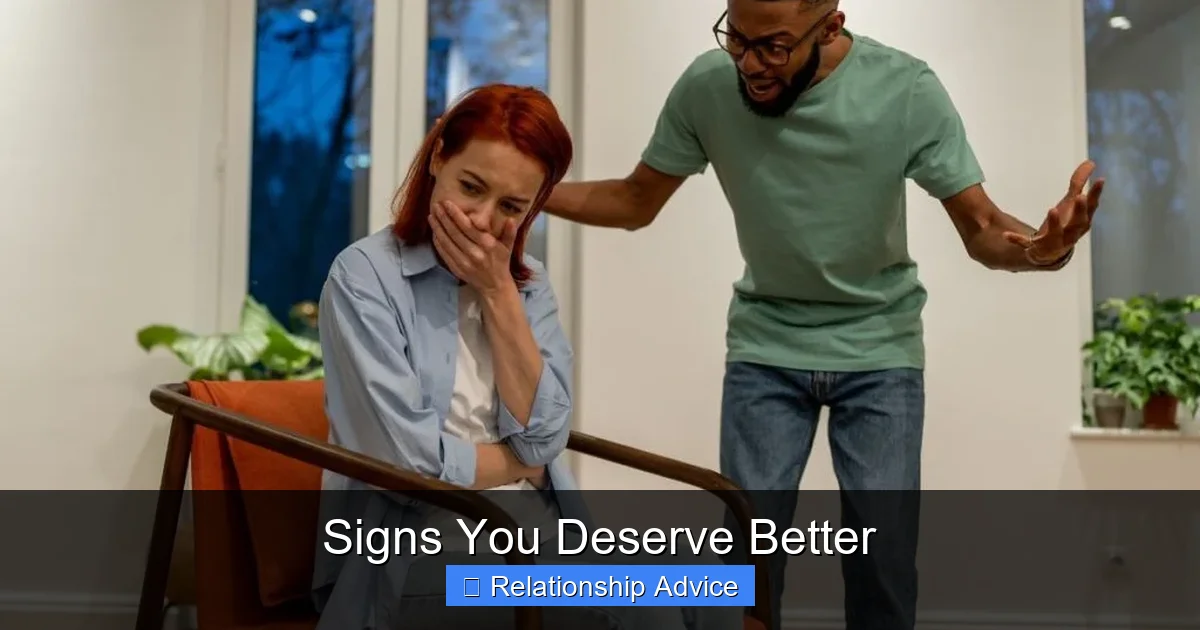
One of the clearest signs you deserve better is when spending time with your partner leaves you feeling emotionally wiped out. Now, every relationship has its ups and downs—nobody’s perfect. But if you consistently feel anxious, sad, or mentally exhausted after talking to or being around your partner, that’s a red flag.
Think about it: after a date night, do you feel lighter and happier? Or do you spend the next day replaying conversations, wondering if you said the wrong thing, or feeling guilty for expressing your needs? If it’s the latter, your relationship might be taking more from you than it’s giving.
What Emotional Drain Looks Like in Real Life
Let’s say you and your partner had a disagreement about weekend plans. Instead of calmly discussing it, they shut down, give you the silent treatment, or turn it into a personal attack. You end up apologizing—even when you didn’t do anything wrong—just to restore peace. Sound familiar?
Or maybe your partner constantly vents about their problems—work stress, family drama, health issues—but never asks how *you’re* doing. You become their emotional crutch, but when you need support, they’re too “busy” or “not in the mood.” Over time, you start to feel like a therapist, not a partner.
These patterns create emotional exhaustion. You’re constantly on edge, walking on eggshells, or feeling responsible for your partner’s mood. And that’s not love—that’s emotional labor without reciprocity.
How to Recognize the Pattern
Ask yourself these questions:
– Do I feel more stressed than relaxed after spending time with my partner?
– Do I often feel guilty for setting boundaries or saying no?
– Do I find myself over-explaining my feelings to avoid conflict?
– Do I feel like I’m always the one trying to fix things?
If you answered “yes” to most of these, it’s time to take a step back. A healthy relationship should leave you feeling energized, not depleted. You shouldn’t have to earn peace or affection through constant compromise.
What You Can Do
Start by acknowledging how you feel. Journaling can help—write down how you feel before, during, and after interactions with your partner. Look for patterns. Then, consider having an honest conversation. Use “I” statements: “I feel drained when we argue and it turns into a personal attack. I need us to communicate more respectfully.”
If your partner is open to change, great. If not, it may be a sign that this relationship isn’t meeting your emotional needs. And that’s okay. You deserve someone who values your peace as much as their own.
Your Needs Are Consistently Ignored or Dismissed
Visual guide about Signs You Deserve Better
Image source: realestlove.com
We all have needs—emotional, physical, and mental. In a healthy relationship, both partners make an effort to understand and meet each other’s needs. But if your needs are repeatedly brushed aside, mocked, or treated as unimportant, that’s a major sign you deserve better.
Needs aren’t demands. They’re the things that help you feel seen, safe, and valued. Maybe you need quality time together. Maybe you need words of affirmation. Maybe you need physical affection or help with daily responsibilities. Whatever it is, it’s valid.
Examples of Dismissed Needs
Imagine you’ve had a rough week at work. You’re exhausted and just want to cuddle and talk. You say, “I’ve had such a hard week. I really need some comfort tonight.” Your partner responds with, “Yeah, well, I’ve been busy too. Can’t you just relax on your own?”
Or maybe you’ve expressed that you’d like more date nights or romantic gestures. Your partner says, “We don’t need to do all that. We’re past that stage.” But you’re not asking for grand gestures—you’re asking for connection.
Another common example: you’ve asked your partner to help more with household chores. They promise to do better, but nothing changes. You end up doing most of the work while they relax. When you bring it up again, they say, “You’re too sensitive” or “I’ll do it when I have time.”
These aren’t small issues. They’re signs of imbalance. When one person’s needs are prioritized over the other’s, the relationship becomes one-sided.
Why This Happens
Sometimes, partners don’t realize they’re dismissing your needs. They might be self-focused, stressed, or just bad at communication. Other times, it’s a pattern of control or indifference. Either way, it’s not fair to you.
And here’s the hard truth: if your partner isn’t willing to listen or make changes after you’ve clearly expressed your needs, they may not be capable of giving you what you deserve.
How to Address It
Start by clearly identifying your needs. Write them down. Then, have a calm, honest conversation. Say something like, “I’ve been feeling disconnected lately. I need us to spend more quality time together. It’s important to me.”
Pay attention to their response. Do they listen? Do they ask questions? Do they make a plan to change? Or do they minimize your feelings, get defensive, or ignore you?
If it’s the latter, it’s a sign that your needs aren’t a priority. And that’s not love—that’s neglect.
Remember: you don’t have to beg for basic respect and care. You deserve a partner who sees your needs as important—not as an inconvenience.
You’ve Stopped Being Yourself
Visual guide about Signs You Deserve Better
Image source: realestlove.com
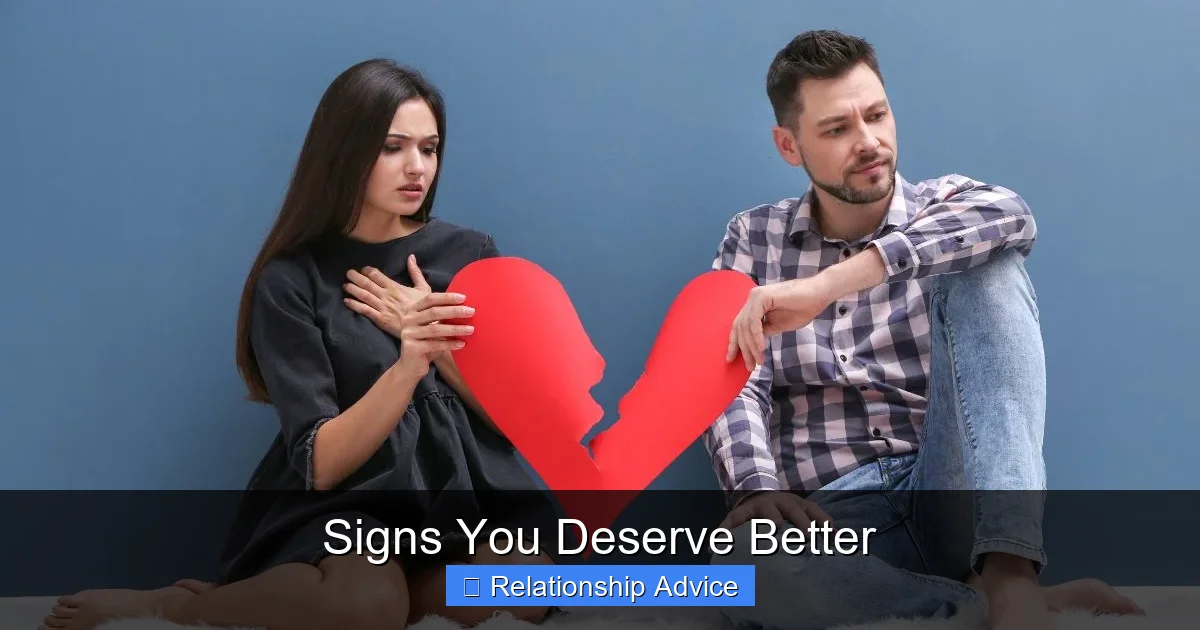
One of the most subtle yet powerful signs you deserve better is when you no longer feel like yourself in your relationship. You’ve changed your opinions, hidden your passions, or suppressed your personality to avoid conflict or gain approval.
This often starts small. Maybe you used to love going out with friends, but your partner gets jealous, so you stop. Or you used to speak your mind, but now you stay quiet because you’re afraid of starting an argument. Over time, you become a version of yourself that feels fake—like you’re playing a role instead of living your truth.
The Cost of Losing Yourself
When you stop being authentic, you lose a part of your identity. You might start to feel confused, disconnected, or even depressed. You wonder, “Who am I anymore?” because you’ve spent so much time trying to please someone else.
For example, let’s say you’re naturally outgoing and love trying new things. But your partner prefers staying home and gets annoyed when you suggest adventures. So you stop suggesting. You stop going out. You even start to believe you don’t really like those things anymore.
Or maybe you’re passionate about your career, but your partner makes passive-aggressive comments about you working too much. So you start downplaying your ambitions, avoiding promotions, or feeling guilty for pursuing your goals.
These changes might seem small, but they add up. You’re not just compromising—you’re erasing parts of yourself.
How to Spot This Pattern
Ask yourself:
– Do I feel like I have to “perform” to be loved?
– Have I given up hobbies, friends, or interests because of my partner?
– Do I avoid saying what I really think to keep the peace?
– Do I feel more like a caregiver or employee than a partner?
If you’re nodding along, it’s time to reflect. A healthy relationship should encourage you to grow, not shrink.
Reclaiming Your Authentic Self
Start by reconnecting with who you are outside the relationship. Spend time alone. Reconnect with old friends. Try a new hobby. Journal about the things that make you happy.
Then, consider having a conversation with your partner about authenticity. Say, “I’ve realized I’ve been holding back parts of myself to avoid conflict. I need to be able to be fully myself in this relationship.”
If your partner responds with support and curiosity, that’s a good sign. If they get defensive or dismissive, it may be a sign that they’re not ready—or willing—to accept the real you.
And that’s okay. You deserve someone who loves you for who you are, not who they want you to be.
There’s Little to No Effort From Your Partner
Love isn’t just a feeling—it’s action. It’s showing up, making time, and putting in effort. If you’re always the one initiating plans, starting conversations, or expressing affection, it’s a sign that the relationship is unbalanced.
Effort looks different for everyone. For some, it’s planning dates. For others, it’s remembering small details or offering support during tough times. But the key is consistency and reciprocity.
What Lack of Effort Looks Like
You’re always the one texting first. You’re the one suggesting weekend plans. You’re the one remembering anniversaries or asking how their day was. Meanwhile, your partner rarely initiates. When you point it out, they say, “I’m just not good at that stuff” or “You know I love you.”
But love without effort is just a statement. It’s not enough.
Another example: you’ve been feeling down, and you reach out for support. Your partner says, “I’m here for you,” but they don’t check in, don’t offer help, and don’t follow up. Their words don’t match their actions.
Or maybe you’ve asked for more intimacy—emotional or physical. Your partner says they’ll work on it, but nothing changes. You’re left feeling unwanted and unimportant.
Why Effort Matters
Effort shows that you matter. It shows that your partner is invested in the relationship. When one person is doing all the work, it creates resentment, loneliness, and emotional distance.
And here’s the thing: if your partner truly cared, they’d want to make you happy. They’d want to put in the effort—not because you’re nagging them, but because they value you.
How to Address the Imbalance
Start by observing the patterns. Keep a mental or written note of who initiates what. Then, have a conversation. Say, “I’ve noticed that I’m usually the one planning our time together. I’d love it if you took the lead sometimes.”
Give them a chance to respond. Do they acknowledge it? Do they make an effort to change? Or do they make excuses?
If there’s no improvement, it may be a sign that your partner isn’t as invested as you are. And that’s a tough truth—but an important one.
You deserve a partner who wants to show up for you—not one who only does so when reminded.
You Feel Lonely Even When You’re Together
This might sound contradictory, but it’s one of the most heartbreaking signs you deserve better: feeling lonely in the presence of your partner.
You’re sitting on the couch together, but you’re both on your phones. You’re having dinner, but the conversation is surface-level. You’re lying in bed, but there’s no intimacy—emotional or physical. You’re together, but you’ve never felt more alone.
The Emotional Disconnect
Loneliness in a relationship often stems from emotional disconnection. You’re not being seen, heard, or understood. Your partner might be physically present, but they’re not emotionally available.
For example, you try to share something meaningful—a dream, a fear, a memory—and your partner responds with a distracted “uh-huh” or changes the subject. Or they give you advice when you just wanted to be listened to.
Over time, you stop sharing. You stop being vulnerable. Because you’ve learned that your feelings don’t matter—or that they’ll be dismissed.
How to Recognize Emotional Loneliness
Ask yourself:
– Do I feel like I can’t be open with my partner?
– Do I often feel misunderstood or invalidated?
– Do I crave deeper conversations but avoid them because they don’t go well?
– Do I feel more connected to friends or family than to my partner?
If you’re answering “yes,” you’re not alone. Many people stay in relationships that feel empty because they’re afraid of being truly alone.
But here’s the thing: being alone is better than being lonely with someone else. At least when you’re single, you’re free to heal, grow, and find someone who truly sees you.
Rebuilding Connection—Or Letting Go
If you want to try to fix the disconnect, start small. Suggest a “no phones” rule during meals. Ask open-ended questions like, “What’s something you’ve been thinking about lately?” or “What made you happy this week?”
Pay attention to their response. Are they engaged? Do they ask you questions in return? Or do they stay closed off?
If there’s no effort to connect, it may be time to accept that this relationship isn’t meeting your emotional needs. And that’s not a failure—it’s a sign of self-awareness.
You deserve a partner who makes you feel less alone, not more.
You’re Making Excuses for Their Behavior
We’ve all done it—justified a partner’s hurtful behavior because we care about them. “They’re just stressed.” “They didn’t mean it.” “They’re going through a lot.”
But when you find yourself constantly making excuses, it’s a sign that you’re minimizing harm. And that’s not healthy.
When Excuses Become a Pattern
Let’s say your partner forgot your birthday. You’re hurt, but you say, “It’s okay, they’ve been busy with work.” Then they cancel plans last minute. You say, “They’re just overwhelmed.” Then they snap at you for no reason. You say, “They’re having a bad day.”
Each time, you’re excusing behavior that would be unacceptable from anyone else. You’re protecting them—but at the cost of your own well-being.
The Danger of Minimizing Harm
Making excuses keeps you stuck. It prevents you from seeing the relationship clearly. And it sends the message that you’ll tolerate disrespect—because you’ll always find a reason to forgive it.
But here’s the truth: love doesn’t require you to tolerate mistreatment. You don’t have to earn kindness. You don’t have to accept less than you deserve.
How to Break the Cycle
Start by noticing when you’re making excuses. Write them down. Then ask yourself: “Would I accept this behavior from a friend? From a family member?”
If the answer is no, it’s time to stop justifying it. Hold your partner accountable. Say, “I understand you’re stressed, but it’s not okay to speak to me that way. I need respect, even when you’re upset.”
If they’re willing to change, great. If not, it may be a sign that this relationship isn’t safe for you.
You deserve better than to constantly defend someone who hurts you.
Conclusion: Trust Your Gut—You Deserve Better
Recognizing the signs you deserve better isn’t about being picky or unrealistic. It’s about honoring your worth. It’s about refusing to settle for less than you’re meant to have.
Love should feel like a safe harbor, not a storm you’re constantly navigating. It should bring out the best in you, not force you to shrink. It should be a partnership—not a one-person show.
If any of these signs resonate with you, don’t ignore them. They’re not coincidences. They’re messages from your heart and mind telling you that something needs to change.
You don’t have to have it all figured out right now. You don’t have to leave tomorrow. But you do have to start listening—to yourself.
Because you deserve a relationship that feels like home. One where you’re seen, valued, and loved—not just tolerated. And the first step to getting that is believing you’re worth it.
So take a deep breath. Honor your feelings. And remember: wanting better isn’t selfish. It’s necessary.
You deserve better. And you’re not alone in wanting it.
Frequently Asked Questions
How do I know if I’m overreacting or if I really deserve better?
It’s normal to doubt yourself, but pay attention to patterns—not just one-off incidents. If you consistently feel hurt, ignored, or drained, it’s not overreacting. Your feelings are valid, and they’re pointing to a real issue.
What if my partner says they’ll change but never does?
Intentions matter, but actions matter more. If your partner keeps making promises without follow-through, it’s a sign they may not be ready or willing to meet your needs. Change requires consistent effort—not just words.
Can a relationship recover after these signs appear?
Yes, but only if both partners are committed to growth, communication, and change. It takes honesty, therapy, and mutual effort. If only one person is trying, the imbalance will likely continue.
Is it selfish to want a better relationship?
Not at all. Wanting to be treated with respect, kindness, and love is not selfish—it’s human. You can’t pour from an empty cup. Taking care of your emotional well-being benefits everyone, including future relationships.
What if I’m afraid of being alone?
It’s okay to feel scared. But being alone is better than being in a relationship that makes you feel lonely. Use this time to heal, grow, and rediscover yourself. You’ll be stronger and more ready for a healthy partnership when the time comes.
How do I start the conversation about these issues?
Choose a calm moment and use “I” statements to express your feelings without blame. For example: “I feel disconnected when we don’t talk about our days. I’d love it if we could share more.” Focus on your needs, not their faults.
