

Men lie for many reasons—fear, protection, insecurity, or habit—but understanding the root causes can help rebuild trust. This article dives into the psychology behind male dishonesty, offers real-life examples, and provides practical advice for fostering honesty in relationships.
Key Takeaways
- Fear of conflict: Many men lie to avoid arguments or disappointing their partner, especially when they fear emotional reactions.
- Desire to protect: Some men lie to shield their partner from pain, believing they’re being kind—even if it backfires.
- Low self-esteem: Insecurity about appearance, performance, or worth can drive men to exaggerate or hide truths.
- Social conditioning: Traditional gender roles often teach men to appear strong and in control, making vulnerability feel risky.
- Habitual behavior: Small, repeated lies can become a pattern, especially if they go unchallenged over time.
- Testing boundaries: Some men lie to see how much they can get away with, especially early in relationships.
- Building trust is possible: Open communication, empathy, and setting healthy boundaries can reduce dishonesty and strengthen intimacy.
📑 Table of Contents
- Why Do Men Lie? Understanding the Hidden Reasons Behind Dishonesty
- The Psychology Behind Male Dishonesty
- Common Reasons Men Lie in Relationships
- Social and Cultural Influences on Male Honesty
- How to Encourage Honesty in Your Relationship
- When Lies Become a Pattern: Recognizing Red Flags
- Conclusion: Building a Relationship on Truth
Why Do Men Lie? Understanding the Hidden Reasons Behind Dishonesty
Let’s be real—nobody likes being lied to. Whether it’s a small white lie about how your day went or a bigger deception about where they were last night, dishonesty cuts deep. And when it comes to men, the question “Why do men lie?” comes up again and again in relationships. It’s not that men are inherently more dishonest than women. But societal expectations, emotional patterns, and personal insecurities can make lying more common—or at least more noticeable—in male behavior.
The truth is, lying isn’t always about betrayal. Sometimes, it’s about fear. Other times, it’s about protection—or even habit. But understanding *why* men lie is the first step toward healing, rebuilding trust, and creating a healthier dynamic. This isn’t about blaming or shaming. It’s about empathy, awareness, and growth—both individually and as a couple.
In this article, we’ll explore the psychological, emotional, and social reasons behind male dishonesty. We’ll look at real-life examples, unpack common patterns, and offer practical strategies to encourage honesty. Because at the end of the day, every relationship thrives on trust—and trust starts with truth.
The Psychology Behind Male Dishonesty

Visual guide about Why Do Men Lie
Image source: m.media-amazon.com
To understand why men lie, we need to look beneath the surface. Lying isn’t just a moral failing—it’s often a coping mechanism. And for many men, the reasons are deeply rooted in psychology and upbringing.
Fear of Emotional Reactions
One of the most common reasons men lie is fear—specifically, fear of how their partner will react. Imagine this: a man forgets to pick up groceries, and instead of admitting it, he says, “The store was closed.” Why? Because he’s afraid of being yelled at, criticized, or made to feel like a failure.
This fear isn’t always rational, but it’s real. Many men grow up hearing messages like “Don’t cry,” “Be strong,” or “Don’t be a burden.” These messages teach them to suppress emotions and avoid conflict. So when faced with a mistake, their first instinct isn’t to be honest—it’s to deflect, minimize, or lie.
It’s not that they don’t care. It’s that they’re trying to protect themselves from perceived emotional harm. And unfortunately, that often leads to more harm in the long run.
The Need to Appear in Control
Men are often socialized to be the “strong one” in a relationship—the problem-solver, the provider, the one who has it all together. This pressure can be overwhelming. When a man feels like he’s failing in any area—work, finances, intimacy—he may lie to maintain the image of control.
For example, a man might exaggerate his salary, downplay a job loss, or pretend he’s more confident in bed than he really is. These lies aren’t about manipulation—they’re about survival. Admitting vulnerability feels like admitting weakness, and for some men, that’s terrifying.
But here’s the thing: true strength isn’t about perfection. It’s about honesty. And when a man feels safe enough to say, “I’m struggling,” that’s when real connection begins.
Avoiding Shame and Guilt
Shame is a powerful emotion—and it’s one that many men aren’t taught to process. When a man does something he regrets—like flirting with someone else, lying about his whereabouts, or making a financial mistake—he may lie to avoid the shame that comes with admitting it.
This isn’t an excuse. But it is an explanation. Shame tells us, “I’m a bad person,” while guilt says, “I did a bad thing.” Healthy people feel guilt and make amends. But when shame takes over, the instinct is to hide, deny, or deflect.
The good news? Shame loses power when it’s brought into the light. When a man feels safe enough to say, “I messed up,” without fear of being torn apart, he’s more likely to be honest in the future.
Common Reasons Men Lie in Relationships
Visual guide about Why Do Men Lie
Image source: lovearoundme.com
Now that we’ve explored the psychology, let’s look at the most common scenarios where men lie—and why.
“I’m Fine” – The Lie of Emotional Suppression
You’ve heard it a thousand times: “I’m fine.” But when you ask a man how he’s really doing, and he says he’s fine—when clearly he’s not—that’s a lie. And it’s one of the most common.
Why? Because many men aren’t taught to identify or express their emotions. They’re told to “tough it out” or “man up.” So when they’re sad, anxious, or overwhelmed, they don’t know how to say it. Instead, they shut down or pretend everything’s okay.
This isn’t just about emotional intimacy—it’s about safety. If a man believes that showing vulnerability will lead to ridicule, dismissal, or conflict, he’ll keep his feelings hidden. And that creates distance in the relationship.
The fix? Create a safe space for emotional expression. Instead of asking, “Are you okay?” try, “You seem quiet—want to talk about it?” Or share your own feelings first: “I’ve been feeling a bit stressed lately. How about you?”
“I Was Working Late” – The Lie of Avoidance
This one’s classic. A man says he’s working late—but he’s really out with friends, running errands, or just avoiding going home. Why?
Sometimes, it’s about needing space. Men, like women, need time to decompress. But instead of saying, “I need an hour to myself,” they might lie about their whereabouts. It’s easier than explaining, “I love you, but I need to be alone right now.”
Other times, it’s about avoiding conflict. Maybe there’s tension at home, or he’s dreading a conversation. So he stays out longer—and lies about why.
The key here is communication. Instead of assuming the worst, ask calmly: “I noticed you’ve been working late a lot. Is everything okay?” This opens the door for honesty without accusation.
“I Don’t Remember” – The Lie of Denial
“I don’t remember” is a tricky one. Sometimes, it’s true—people forget things. But other times, it’s a way to avoid accountability.
For example, a man might say he doesn’t remember promising to help with chores, or that he didn’t know about a family event. But deep down, he does remember—he just doesn’t want to deal with the consequences.
This kind of lie often stems from avoidance. Facing a mistake, a broken promise, or a difficult conversation feels overwhelming. So instead of owning up, he pretends it didn’t happen.
The solution? Set clear expectations and follow up gently. “Hey, we talked about you picking up the kids on Tuesday. Did you forget?” This gives him a chance to admit it without feeling attacked.
“It Didn’t Mean Anything” – The Lie of Minimization
When a man is caught in a lie—or worse, in an emotional or physical affair—he might say, “It didn’t mean anything.” And while that might be true in some cases, it can feel dismissive to the partner who’s hurting.
This lie often comes from guilt. The man knows he crossed a line, but he doesn’t want to face the full weight of his actions. So he minimizes it: “It was just a text,” “We were just talking,” “It didn’t go anywhere.”
But here’s the thing: intent doesn’t erase impact. Even if it “didn’t mean anything” to him, it means everything to you. And that deserves acknowledgment.
The path forward? Honest conversations about boundaries, trust, and emotional needs. And if the behavior continues, it may be time to seek counseling—or reevaluate the relationship.
Social and Cultural Influences on Male Honesty
Visual guide about Why Do Men Lie
Image source: i.dailymail.co.uk
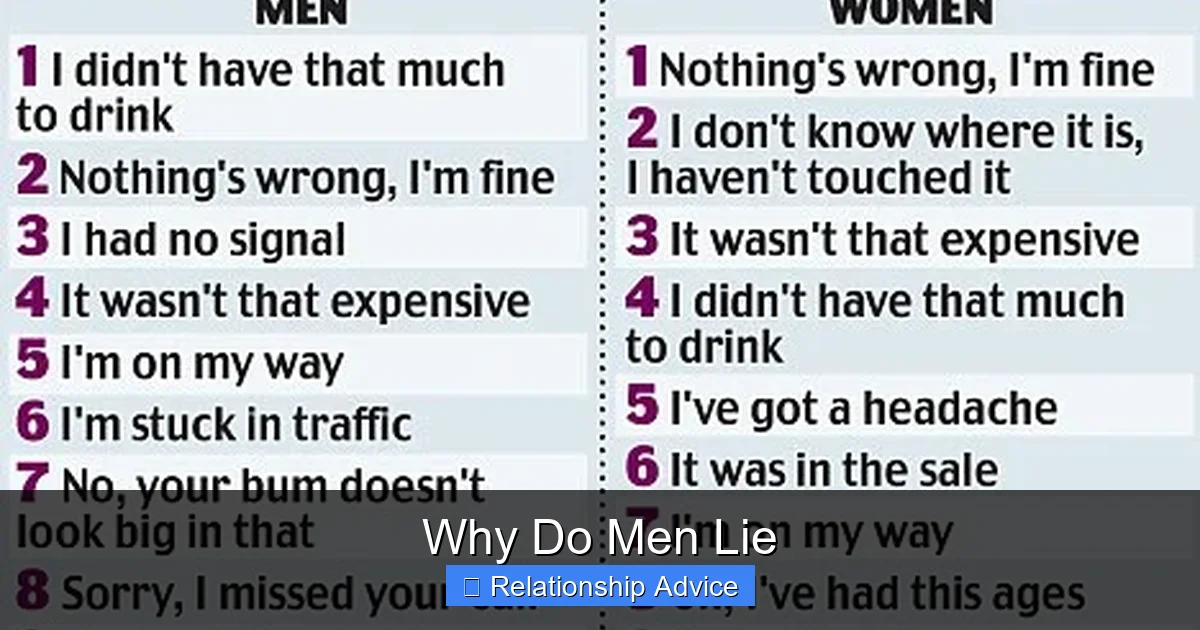
We can’t talk about why men lie without looking at the bigger picture—the messages they’ve absorbed from society.
The “Strong, Silent Type” Myth
From a young age, boys are often praised for being tough, independent, and stoic. Think of the classic movie hero—the lone wolf who doesn’t need anyone, doesn’t show fear, and definitely doesn’t cry.
This ideal is deeply ingrained. And while there’s nothing wrong with strength, the problem is that it often comes at the cost of emotional honesty. Men learn that showing vulnerability = weakness. And in relationships, that can be deadly.
The result? Men lie to maintain the image of strength. They lie about being hurt, about being scared, about needing help. And over time, that creates a wall between them and their partner.
The shift? Celebrate vulnerability as courage. When a man says, “I’m scared,” or “I don’t know what to do,” that’s not weakness—that’s bravery. And it’s the foundation of real intimacy.
Fear of Being “Neutered” in Relationships
Some men lie because they fear losing their identity in a relationship. They worry that if they’re too open, too emotional, or too dependent, they’ll be seen as “less of a man.”
This fear can lead to lies about independence, about not needing affection, or about being “fine” when they’re not. It’s a defense mechanism—a way to hold onto a sense of self.
But here’s the truth: a healthy relationship doesn’t erase identity—it enhances it. You don’t have to choose between being a man and being vulnerable. You can be both.
The Pressure to Provide
Many men feel immense pressure to be the provider—financially, emotionally, or both. And when they fall short, they may lie to cover it up.
For example, a man might lie about a job loss, hide debt, or pretend he’s more successful than he is. It’s not about greed—it’s about shame. He feels like he’s failing in his role, and that’s hard to admit.
But relationships aren’t about perfection. They’re about partnership. And when both people share the load—emotionally and practically—there’s less need to lie.
How to Encourage Honesty in Your Relationship
Understanding why men lie is one thing. But how do you actually foster honesty? Here are some practical, compassionate strategies.
Create a Safe Space for Truth
Honesty thrives in safety. If your man fears punishment, ridicule, or abandonment when he tells the truth, he’ll keep lying.
So how do you create safety? Start with your reactions. When he admits a mistake, respond with curiosity, not anger. Say, “Thank you for telling me. I appreciate your honesty.”
Also, be honest yourself. Share your fears, your struggles, your imperfections. When you model vulnerability, he’s more likely to follow.
Ask Open-Ended Questions
Instead of accusing (“Were you really at the office?”), try asking open-ended questions (“How was your day?”). This invites conversation instead of defensiveness.
And listen—really listen. Don’t interrupt, don’t judge. Just let him speak. Often, the truth comes out when people feel heard.
Set Clear Boundaries—With Love
Boundaries aren’t about control—they’re about respect. Let him know what you need: “I need to know where you are if you’re going to be late,” or “I need honesty about your feelings, even when it’s hard.”
But frame it as a shared goal: “I want us to be able to trust each other completely. How can we make that happen?”
Address Lies Calmly—Not Punishingly
When you discover a lie, it’s natural to feel hurt, angry, or betrayed. But reacting with rage or punishment will only make him lie more in the future.
Instead, take a breath. Say, “I noticed you said X, but I found out Y. Can we talk about what happened?” Focus on understanding, not blaming.
And if the lies are part of a pattern, consider couples counseling. A neutral third party can help you both communicate more effectively.
Celebrate Honesty—Even the Hard Truths
When he tells the truth—especially a difficult one—acknowledge it. Say, “I know that was hard to say. I’m glad you told me.”
Positive reinforcement works. The more he’s rewarded for honesty, the more likely he is to be honest again.
When Lies Become a Pattern: Recognizing Red Flags
Not all lies are equal. Some are small, situational, and forgivable. Others are part of a larger pattern that can erode trust and safety.
Frequent, Unnecessary Lies
If he lies about small things—what he ate for lunch, who he talked to, how much he spent—it may signal deeper issues. This could be a habit, a lack of accountability, or even a sign of a personality disorder.
Lying to Cover Up Bigger Issues
Lies about affairs, finances, or substance use are serious red flags. These aren’t just about avoidance—they’re about betrayal. And they require serious conversation, boundaries, and possibly professional help.
Gaslighting
If he not only lies but also denies it, blames you, or makes you question your memory (“You’re imagining things”), that’s gaslighting. This is emotional abuse and should not be tolerated.
In these cases, your safety and well-being come first. Consider talking to a therapist or trusted friend. You deserve honesty—and respect.
Conclusion: Building a Relationship on Truth
So, why do men lie? The answer isn’t simple. It’s a mix of fear, shame, social conditioning, and emotional habits. But understanding the reasons doesn’t mean excusing the behavior. It means approaching it with empathy—and a commitment to growth.
Honesty isn’t just about truth-telling. It’s about creating a relationship where both people feel safe, seen, and valued. It’s about replacing fear with trust, secrecy with openness, and lies with real connection.
If you’re in a relationship where lies are a problem, know this: change is possible. But it takes work—from both sides. It takes patience, communication, and a willingness to be vulnerable.
And if you’re a man reading this? Thank you for being here. Thank you for wanting to understand. Your honesty—even when it’s hard—is a gift. And it’s the foundation of every strong, lasting relationship.
Because in the end, love isn’t about perfection. It’s about truth. And truth, no matter how messy, is always worth it.
Frequently Asked Questions
Why do men lie about small things?
Men may lie about small things to avoid conflict, save face, or because it’s become a habit. These “white lies” often stem from a desire to keep the peace or avoid uncomfortable conversations.
Is it normal for men to lie in relationships?
While dishonesty isn’t healthy, it’s not uncommon. Many men lie due to fear, insecurity, or social conditioning. The key is whether the lying is occasional or part of a harmful pattern.
How can I get my partner to stop lying?
Focus on creating a safe, non-judgmental environment. Encourage open communication, set clear boundaries, and respond to honesty with appreciation—not punishment.
Are men more likely to lie than women?
Not necessarily. Both genders lie, but for different reasons. Men may lie more to avoid emotional exposure, while women may lie more to protect others’ feelings.
What should I do if my partner lies repeatedly?
Address the pattern calmly and consider couples counseling. Repeated lying can erode trust and may indicate deeper issues that need professional support.
Can a relationship survive after lying?
Yes—if both partners are committed to honesty, accountability, and rebuilding trust. It takes time, effort, and often outside help, but healing is possible.
