
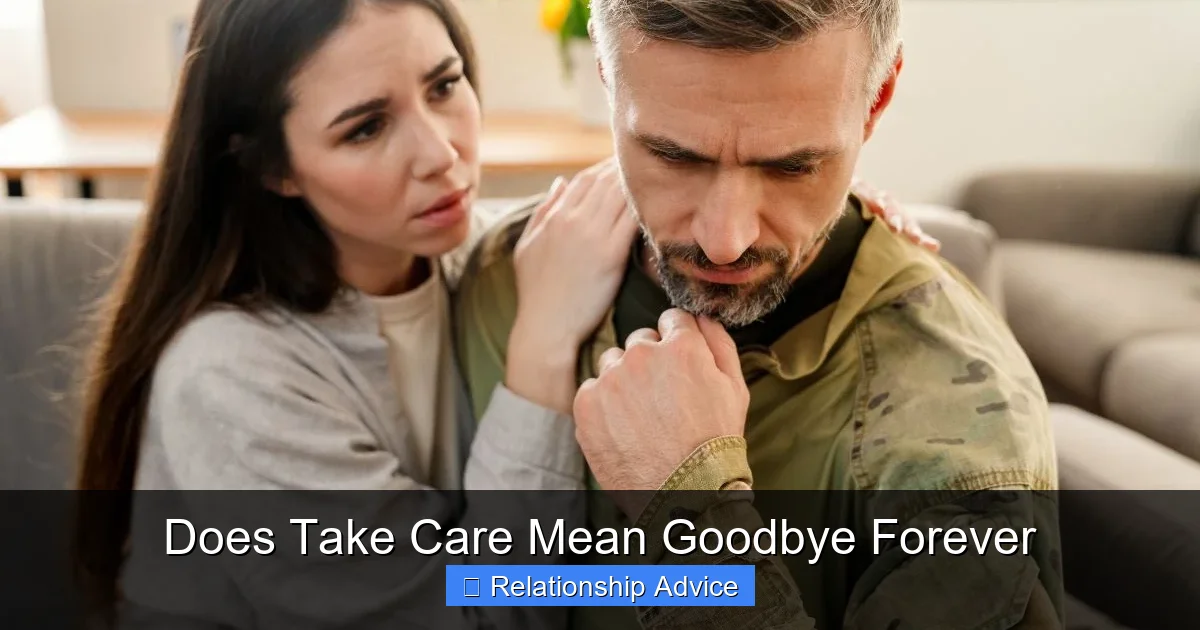
“Take care” is often used as a polite farewell, but it doesn’t always mean the end of a relationship. Whether it’s a romantic partner, friend, or family member, this phrase can carry hidden emotions—hope, hesitation, or even unresolved feelings. Understanding its true meaning depends on context, tone, and the history between people.
We’ve all been there—hanging up the phone, stepping out of a coffee shop, or ending a text thread with those two simple words: “Take care.” It feels polite, kind, even thoughtful. But then the silence sets in. The days pass. No call. No message. And suddenly, you’re left wondering: Did that mean goodbye forever?
It’s a question that echoes in the quiet moments after a relationship shift—whether it’s a breakup, a friendship fading, or a family member pulling away. “Take care” is one of those phrases that seems innocent on the surface but can carry deep emotional weight. It’s not dramatic like “I never want to see you again,” nor is it hopeful like “Talk soon.” It sits in the middle—ambiguous, gentle, and often confusing.
So what does it really mean? Is it a soft exit? A polite brush-off? Or could it be a sign that someone still cares, even if they’re not ready to stay? The truth is, “take care” rarely means one thing across all situations. Its meaning shifts depending on who says it, why they say it, and what’s happening beneath the surface. In this article, we’ll explore the many layers of this common phrase, unpack its emotional implications, and help you understand whether “take care” truly means goodbye forever—or just for now.
Key Takeaways
- “Take care” is not inherently final: It’s a common, gentle way to end conversations and doesn’t automatically signal permanent separation.
- Context matters more than the words: The relationship history, tone of voice, and body language reveal whether it’s a soft goodbye or a hopeful pause.
- It can mask unresolved emotions: People often say “take care” to avoid confrontation or to protect themselves from saying something more vulnerable.
- It may signal a need for space: Sometimes, “take care” is a way to step back without burning bridges, leaving room for future reconnection.
- Reaching out is okay: If you’re unsure about the meaning, a thoughtful message can clarify intentions and open the door to healing or closure.
- Cultural and generational differences play a role: Younger generations may use “take care” more casually, while older individuals might see it as more meaningful.
- Self-reflection is key: Understanding your own feelings about the phrase helps you respond with clarity and emotional maturity.
📑 Table of Contents
- What Does “Take Care” Really Mean?
- When “Take Care” Signals a Soft Goodbye
- When “Take Care” Leaves the Door Open
- The Role of Tone, Body Language, and Context
- Cultural and Generational Differences in Meaning
- How to Respond When Someone Says “Take Care”
- When to Let Go—and When to Hold On
- The Power of Closure—Even Without “Take Care”
- Conclusion
What Does “Take Care” Really Mean?
At its core, “take care” is a well-wishing phrase. It’s a way of saying, “I hope you’re okay,” or “I hope you stay safe and healthy.” It’s rooted in concern, even if that concern is distant or fading. But in the context of relationships—especially ones that are ending or changing—it takes on a different tone.
Unlike more definitive farewells like “Goodbye” or “See you never,” “take care” doesn’t close the door completely. It leaves it slightly ajar. It suggests that the person saying it still holds some level of care, even if they’re choosing to step back. This is why it’s so emotionally tricky. It’s not cold, but it’s not warm either. It’s neutral with a hint of kindness.
For example, imagine a couple going through a breakup. One person says, “I think we need to take a break,” and the other replies, “Okay… take care.” That “take care” isn’t a declaration of finality. It’s a recognition that the relationship is shifting, but the emotional connection hasn’t vanished. It’s a way of saying, “I still care about you, even if we’re not together right now.”
But here’s the catch: that care doesn’t guarantee a reunion. It just means the door isn’t slammed shut. And that ambiguity is what makes “take care” so powerful—and so painful.
The Emotional Weight of Ambiguity
Ambiguity in relationships is like emotional quicksand. You know you’re sinking, but you can’t see the bottom. “Take care” feeds into this because it doesn’t give clear answers. It doesn’t say “I’ll call you next week” or “This is over.” It just floats there, leaving you to interpret its meaning.
This uncertainty can trigger anxiety, especially if you’re someone who values closure. You might replay the conversation in your head, analyzing tone, timing, and word choice. Was that pause before “take care” a sign of hesitation? Did they say it softly, like they meant it, or quickly, like they wanted to end the conversation?
Psychologists call this “ambiguous loss”—a type of grief that occurs when there’s no clear resolution. You’re not sure if the relationship is over or on pause, so you can’t fully mourn it or move on. “Take care” often creates this kind of limbo, where hope and resignation coexist.
When “Take Care” Signals a Soft Goodbye
Visual guide about Does Take Care Mean Goodbye Forever
Image source: realestlove.com
While “take care” doesn’t always mean forever, there are times when it’s used as a gentle way to end things. This is especially true in situations where people want to avoid conflict or protect the other person’s feelings.
For instance, someone might say “take care” after a difficult conversation about drifting apart. They’re not angry or resentful—they just realize the relationship isn’t working anymore. Saying “take care” allows them to exit with grace, without adding guilt or blame.
In these cases, “take care” is less about future connection and more about emotional decency. It’s a way of saying, “I don’t want to hurt you, but I need to move on.” It’s respectful, but it’s still a goodbye—just a softer one.
Signs It Might Be a Final Farewell
So how can you tell if “take care” is a soft goodbye? Look for these clues:
– The conversation ends abruptly after the phrase is said.
– There’s no mention of future plans or check-ins.
– The tone is flat or distant, not warm or hopeful.
– The person avoids eye contact or physical touch.
– They don’t initiate contact afterward.
For example, if a friend says, “I’ve been thinking a lot, and I think we need some space. Take care,” and then disappears from your life, it’s likely a gentle way of saying the friendship has run its course. The “take care” isn’t a promise—it’s a courtesy.
Why People Choose “Take Care” Over Harsher Words
People often choose “take care” because it feels kinder than saying “I’m done” or “We’re over.” It allows them to maintain their self-image as a good person, even while ending a relationship. It also minimizes guilt—both for themselves and the other person.
This is especially common in cultures or families where direct confrontation is avoided. Saying “take care” lets someone exit without causing a scene or reopening old wounds. It’s a socially acceptable way to disengage.
But while it may protect feelings in the short term, it can cause confusion and pain in the long run. The person on the receiving end might hold onto hope, waiting for a message that never comes.
When “Take Care” Leaves the Door Open
Visual guide about Does Take Care Mean Goodbye Forever
Image source: i.pinimg.com
On the flip side, “take care” can also be a way of saying, “I’m not ready to let go, but I need space.” This is common in relationships that are strained but not broken—couples going through rough patches, friends dealing with misunderstandings, or family members navigating conflict.
In these cases, “take care” is less about goodbye and more about pause. It’s a way of saying, “I care about you, but I can’t be close right now.” It acknowledges the relationship’s value while recognizing that something needs to change.
For example, imagine a couple arguing about trust issues. One partner says, “I need some time to think. Take care.” That “take care” isn’t a breakup—it’s a request for space to process emotions. It leaves room for reconciliation, even if it doesn’t guarantee it.
How to Recognize When Reconnection Is Possible
If “take care” is meant to leave the door open, there are usually subtle signals:
– The tone is warm or hesitant, not cold.
– There’s a pause before saying it, as if they’re holding back more.
– They maintain light contact afterward (e.g., liking a social media post).
– They’ve used similar phrases in the past during temporary breaks.
For instance, if a friend says, “I’ve been overwhelmed lately. I need to focus on myself. Take care,” and then texts you a week later to check in, it’s a sign they’re not done with the friendship—they’re just regrouping.
The Role of Timing and Circumstances
Sometimes, “take care” reflects external pressures rather than emotional detachment. A person might be dealing with a job loss, a family crisis, or mental health struggles. Saying “take care” lets them step back without having to explain everything.
In these cases, the phrase isn’t about the relationship—it’s about survival. They’re not rejecting you; they’re protecting their own well-being. And once they’re in a better place, they may reach out again.
The Role of Tone, Body Language, and Context
Visual guide about Does Take Care Mean Goodbye Forever
Image source: kindergartenworks.com
Words alone rarely tell the full story. To understand what “take care” really means, you have to look beyond the phrase itself. Tone, body language, and context are crucial clues.
Tone of Voice: Warmth vs. Distance
How someone says “take care” can reveal their true feelings. A soft, sincere tone—maybe with a slight sigh or a smile—suggests genuine care. A quick, flat delivery might indicate disinterest or discomfort.
For example, if someone says “take care” while looking at you with sad eyes, it likely means they’re hurting but still care. If they say it while scrolling on their phone, it might be a polite brush-off.
Body Language: The Unspoken Signals
Nonverbal cues often speak louder than words. A hug, a hand on the shoulder, or a lingering gaze can turn “take care” into a heartfelt farewell. On the other hand, crossed arms, avoiding eye contact, or turning away can make it feel cold.
Imagine a breakup scene: one person says “take care” while reaching out for a hug. That physical gesture transforms the phrase from a polite exit into a moment of shared sadness and respect.
Context: What Happened Before and After
The events leading up to “take care” matter just as much as the phrase itself. Was it said after a fight? A heartfelt conversation? A routine goodbye?
If it follows a major conflict, it might signal emotional withdrawal. If it comes after a calm discussion about needing space, it could be a healthy boundary. And if it’s used in a casual setting—like ending a text chain—it’s probably just a polite sign-off, not a relationship milestone.
Cultural and Generational Differences in Meaning
The meaning of “take care” can vary widely depending on culture, age, and personal communication style.
Generational Perspectives
Older generations often view “take care” as a meaningful, heartfelt phrase. It’s something you say to someone you genuinely care about, even if you’re parting ways. For them, it carries emotional weight.
Younger generations, especially those raised on texting and social media, may use “take care” more casually. It’s become a standard sign-off, like “bye” or “talk later.” It doesn’t always reflect deep emotion—it’s just part of the conversational rhythm.
This difference can lead to misunderstandings. A Gen Z person might text “take care” after a casual hangout, not realizing their Boomer friend interpreted it as a deeper sentiment.
Cultural Nuances
In some cultures, indirect communication is valued over blunt honesty. Saying “take care” allows people to express care without confrontation. In others, directness is preferred, and “take care” might seem evasive or insincere.
For example, in many East Asian cultures, preserving harmony is key. Ending a relationship with “take care” lets both parties save face. In contrast, in more individualistic cultures, people might expect clearer communication about the relationship’s status.
How to Respond When Someone Says “Take Care”
If someone says “take care” and you’re unsure what it means, your response can shape what happens next. Here’s how to navigate it with emotional intelligence.
Acknowledge the Phrase Without Overanalyzing
You don’t have to decode their intentions on the spot. A simple “You too” or “Thanks, I appreciate that” keeps the interaction respectful without forcing clarity.
For example:
Them: “I think we need some space. Take care.”
You: “I understand. Take care of yourself too.”
This response acknowledges their need without demanding answers.
Give Space, But Leave the Door Open
If you suspect the relationship isn’t over, avoid chasing or pressuring them. Instead, give them time and space. You can send a gentle message later:
“Hey, just wanted to check in. No pressure to reply—just hope you’re doing okay.”
This shows you care without overwhelming them.
Reflect on Your Own Feelings
Ask yourself: What do I need from this relationship? Am I holding on out of hope, or because I truly believe it can heal? Understanding your own emotions helps you respond from a place of strength, not desperation.
When to Let Go—and When to Hold On
Deciding whether “take care” means forever depends on more than just the phrase. It’s about patterns, effort, and mutual respect.
Signs It’s Time to Let Go
– The person consistently avoids contact after saying “take care.”
– There’s a pattern of hot-and-cold behavior.
– You feel more anxious than hopeful when thinking about them.
– They’ve shown no interest in repairing the relationship.
In these cases, “take care” may indeed be a soft goodbye. Holding on can prolong pain.
Signs There’s Still Hope
– They initiate contact after a period of silence.
– They express regret or miss you in future conversations.
– You both show willingness to work on issues.
– The relationship has a strong foundation outside the current conflict.
If these signs are present, “take care” might just be a pause—not an end.
The Power of Closure—Even Without “Take Care”
Sometimes, the healthiest response to “take care” is to create your own closure, even if the other person doesn’t provide it.
This might mean writing a letter you never send, journaling your feelings, or talking to a therapist. Closure doesn’t always come from the other person—it can come from within.
Remember: “Take care” is their words, but your healing is your responsibility. You can honor their choice while still moving forward.
Conclusion
So, does “take care” mean goodbye forever? The short answer is: not necessarily. It’s a phrase layered with emotion, context, and intention. It can be a gentle exit, a hopeful pause, or simply a polite sign-off. What matters most is how you interpret it—and how you choose to respond.
Rather than obsessing over the meaning of two words, focus on the bigger picture: the relationship’s history, the patterns of behavior, and your own emotional needs. If “take care” leaves you wondering, give yourself permission to feel the uncertainty—but don’t let it define your future.
Relationships are complex, and endings are rarely clean. But whether “take care” is a final farewell or a temporary goodbye, it doesn’t have to leave you stuck. With self-awareness, compassion, and time, you can find peace—no matter what the words say.
Frequently Asked Questions
Does “take care” always mean the relationship is over?
No, “take care” doesn’t always signal the end of a relationship. It’s often used as a polite or gentle way to part, but it can also leave room for future connection depending on context and tone.
How can I tell if “take care” is a soft goodbye or a pause?
Look at the tone, body language, and what happens afterward. A warm tone, lingering eye contact, or future check-ins suggest a pause. A flat tone, no follow-up, and avoidance may indicate a soft goodbye.
Is it okay to reach out after someone says “take care”?
Yes, as long as you do so respectfully. A simple, low-pressure message like “Hope you’re doing okay” can open dialogue without overwhelming the other person.
Why do people use “take care” instead of saying “goodbye”?
“Take care” feels kinder and less final than “goodbye.” It allows people to exit gracefully, especially when they want to avoid conflict or protect the other person’s feelings.
Can “take care” be used casually, like “bye”?
Yes, especially among younger generations. In casual conversations, it’s often just a polite sign-off, not a deep emotional statement.
What should I do if “take care” leaves me feeling confused?
Give yourself time to process. Reflect on the relationship, talk to a trusted friend, or journal your feelings. Closure often comes from within, not from the other person’s words.
