

Dating a narcissist can leave you emotionally drained, confused, and doubting your own reality. This guide helps you identify the subtle and overt signs—from love-bombing to gaslighting—so you can protect your well-being and make informed choices about your relationship.
Key Takeaways
- Love-bombing is a red flag: Excessive affection, gifts, and attention early on may be a tactic to gain control, not genuine love.
- Narcissists lack empathy: They struggle to understand or care about your feelings, often dismissing or minimizing your emotions.
- Gaslighting distorts reality: They may deny events, twist facts, or make you question your memory to maintain power.
- They thrive on admiration: Constant need for praise and validation is a hallmark of narcissistic behavior.
- Relationships feel one-sided: Your needs are ignored while theirs dominate every conversation and decision.
- Boundaries are repeatedly crossed: Healthy limits are seen as challenges, not respect for your autonomy.
- Leaving is hard but necessary: Recovery begins when you prioritize your mental health and seek support.
📑 Table of Contents
- Introduction: When Love Feels Like a Game
- What Is Narcissism, Really?
- Sign #1: Love-Bombing Followed by Devaluation
- Sign #2: Lack of Empathy and Emotional Neglect
- Sign #3: Gaslighting and Manipulation
- Sign #4: Need for Constant Admiration and Validation
- Sign #5: Disregard for Boundaries and Your Autonomy
- Sign #6: The Relationship Feels One-Sided
- How to Protect Yourself and Move Forward
- Conclusion: You Deserve Better
Introduction: When Love Feels Like a Game
You met someone who seemed perfect—charming, confident, and completely captivated by you. In the beginning, everything felt magical. They showered you with attention, remembered small details, and made you feel like the most important person in the world. But over time, something shifted. The compliments became backhanded, the affection felt conditional, and you started walking on eggshells, afraid of setting them off.
Sound familiar? If you’re wondering, “Am I dating a narcissist?” you’re not alone. Many people fall into relationships with narcissistic partners because the early stages can be incredibly intoxicating. The problem? That intense charm often masks a deeper pattern of manipulation, emotional neglect, and self-centered behavior. Recognizing the signs you are dating a narcissist isn’t about labeling someone as “evil”—it’s about protecting your emotional well-being and understanding whether the relationship is truly healthy.
What Is Narcissism, Really?

Visual guide about Signs You Are Dating a Narcissist
Image source: i.pinimg.com
Before diving into the signs, it’s important to understand what narcissism actually means. Narcissistic Personality Disorder (NPD) is a mental health condition listed in the DSM-5, characterized by a long-term pattern of exaggerated self-importance, a deep need for excessive attention and admiration, and a lack of empathy for others. However, not everyone who displays narcissistic traits has NPD—some may exhibit narcissistic behaviors without meeting the full clinical criteria.
That said, even subclinical narcissism can be damaging in a relationship. These traits often show up as a consistent pattern of behavior, not just occasional selfishness. The key difference between a self-centered person and a narcissist is the degree and persistence of the behavior. Narcissists don’t just prioritize themselves—they manipulate, control, and devalue others to maintain their sense of superiority.
It’s also worth noting that narcissism exists on a spectrum. Some people are more overt—loud, arrogant, and demanding. Others are covert—quietly manipulative, passive-aggressive, and emotionally withdrawn. Both types can be harmful, and both can leave you feeling confused, unimportant, or even crazy.
Sign #1: Love-Bombing Followed by Devaluation
Visual guide about Signs You Are Dating a Narcissist
Image source: themindsjournal.com
One of the most telling signs you are dating a narcissist is the cycle of love-bombing followed by devaluation. In the beginning, they pour on the affection—texting constantly, planning elaborate dates, calling you “soulmates,” and making grand promises about the future. This intense phase can feel like falling in love at lightning speed. You might think, “This is it. I’ve found my person.”
But here’s the catch: love-bombing isn’t about genuine connection. It’s a strategy to hook you emotionally and establish control. Once they feel secure in the relationship, the affection begins to fade. The texts slow down. The compliments become rare. You might notice they’re suddenly “too busy” or “stressed” to spend time with you. When you express concern, they may accuse you of being “needy” or “clingy.”
This shift from idealization to devaluation is a classic narcissistic pattern. They build you up so high that when they pull back, you’re left feeling lost and desperate to regain their approval. You might start changing your behavior—apologizing more, trying harder, or ignoring your own needs—just to win back their affection.
Real-Life Example
Sarah met Mark at a friend’s party. Within days, he was texting her good morning and good night, sending flowers to her office, and talking about moving in together. After two months, he started canceling plans last minute and criticized her for “being too emotional” when she asked what was wrong. When she confronted him, he said, “I just need space. You’re suffocating me.” Sarah felt guilty, even though she hadn’t done anything wrong.
What You Can Do
If you recognize this pattern, take a step back. Ask yourself: “Would a healthy partner treat me this way?” Remember, real love is consistent, not conditional. If someone’s affection disappears as quickly as it appeared, it’s a red flag—not a reason to try harder.
Sign #2: Lack of Empathy and Emotional Neglect
Visual guide about Signs You Are Dating a Narcissist
Image source: choosingtherapy.com
Empathy is the ability to understand and share the feelings of another person. It’s the foundation of any healthy relationship. But one of the clearest signs you are dating a narcissist is their consistent lack of empathy. They may listen to your problems, but only to redirect the conversation back to themselves. Or they might offer solutions without acknowledging your pain.
For example, if you’re going through a tough time at work, a narcissistic partner might say, “That sounds rough. I had a bad day too—my boss criticized my presentation.” Instead of validating your feelings, they make it about them. Over time, you start to feel like your emotions don’t matter. You stop sharing because you know you won’t be heard.
This emotional neglect can be subtle. They might not yell or scream, but they dismiss your feelings with phrases like “You’re overreacting,” “It’s not a big deal,” or “Why are you always so sensitive?” These comments chip away at your self-worth and make you doubt your own experiences.
How It Shows Up in Daily Life
- They interrupt you when you’re talking about your day.
- They change the subject when you bring up something important to you.
- They offer unsolicited advice instead of emotional support.
- They seem bored or impatient when you express vulnerability.
Why This Is Harmful
When your emotional needs are consistently ignored, you start to feel invisible. You might begin to suppress your feelings to avoid conflict or rejection. This can lead to anxiety, depression, and a loss of self-identity. Over time, you may even start to believe that your feelings are invalid—because that’s what your partner has been telling you, directly or indirectly.
What You Can Do
Pay attention to how you feel after talking to your partner. Do you feel lighter and understood? Or drained and dismissed? If it’s the latter, it’s a sign that your emotional needs aren’t being met. Consider setting boundaries—like saying, “I need you to listen without interrupting”—or seek support from friends, family, or a therapist.
Sign #3: Gaslighting and Manipulation
Gaslighting is a form of psychological manipulation where someone makes you question your own reality. It’s one of the most insidious signs you are dating a narcissist. They might deny things they said or did, twist your words, or insist that you’re “imagining things.” The goal? To maintain control and avoid accountability.
For example, you might remember a heated argument where they called you names. When you bring it up later, they say, “I never said that. You’re making it up.” Or they might claim, “You’re too sensitive. I was just joking.” Over time, you start to doubt your memory, your perception, and even your sanity.
Gaslighting often starts small. They might deny forgetting plans, then escalate to rewriting entire conversations. They may even use your love against you: “If you really loved me, you’d believe me.” This creates a cycle of confusion and self-doubt, making it harder for you to trust your own judgment.
Common Gaslighting Tactics
- Denial: “That never happened.”
- Minimizing: “You’re blowing this out of proportion.”
- Blaming: “You made me say that.”
- Twisting: “You’re the one who’s always angry.”
- Projection: Accusing you of their own behaviors.
Real-Life Example
Jenna noticed her partner, David, had been texting someone late at night. When she asked about it, he said, “You’re paranoid. I was just talking to my sister.” But Jenna had seen the messages—flirty and frequent. When she showed him, he laughed and said, “You’re imagining things. You need to relax.” Jenna started to wonder if she was overreacting, even though she knew what she saw.
What You Can Do
Trust your instincts. If something feels off, it probably is. Keep a journal of events, conversations, and how you felt. This can help you stay grounded when your partner tries to distort reality. And remember: you are not crazy. You are being manipulated.
Sign #4: Need for Constant Admiration and Validation
Narcissists have an insatiable need for attention and praise. They crave admiration like oxygen. This isn’t just about wanting compliments—it’s about needing to feel superior, special, and admired at all times. One of the most obvious signs you are dating a narcissist is their constant demand for validation.
They might fish for compliments: “Do you think I’m a good partner?” or “You don’t appreciate me enough.” They may brag about their accomplishments, even small ones, and expect you to celebrate them. If you don’t respond with enthusiasm, they might sulk, get angry, or accuse you of being ungrateful.
This need for admiration often extends beyond the relationship. They may post constantly on social media, seek attention from others, or become jealous when you receive praise. They want to be the center of your world—and everyone else’s.
How It Affects the Relationship
- You feel pressured to constantly praise them.
- Your achievements are ignored or downplayed.
- They become upset if you’re praised by others.
- They compare themselves to you and feel threatened.
Why This Is a Problem
A healthy relationship is built on mutual support and celebration. But with a narcissist, it’s all about them. Your successes are seen as competition, not something to be proud of. Over time, you may stop pursuing your goals because you know your partner won’t celebrate them—or worse, will resent them.
What You Can Do
Notice how often you’re giving praise versus receiving it. If the balance is heavily skewed, it’s a red flag. Practice setting boundaries: “I’m happy to support you, but I also need you to celebrate my wins.” If they react with anger or guilt-tripping, it’s a sign they’re not capable of true reciprocity.
Sign #5: Disregard for Boundaries and Your Autonomy
Healthy relationships thrive on mutual respect—especially when it comes to boundaries. But one of the most damaging signs you are dating a narcissist is their consistent disregard for your personal limits. They may invade your privacy, make decisions without you, or pressure you into things you’re not comfortable with.
For example, they might read your texts “because they’re worried,” insist on knowing your passwords, or show up unannounced at your workplace. They may dismiss your need for alone time, saying, “We’re a team. We should always be together.” Or they might guilt-trip you for spending time with friends: “You care more about them than me.”
Boundaries are not suggestions to a narcissist—they’re challenges to their control. When you set a limit, they may respond with anger, manipulation, or silent treatment. They’ll test your resolve, hoping you’ll give in.
Common Boundary Violations
- Ignoring your “no.”
- Making decisions for you without asking.
- Pressuring you into physical or emotional intimacy.
- Using guilt or threats to get their way.
- Disrespecting your time, space, or privacy.
Why This Is Dangerous
When your boundaries are repeatedly crossed, you lose a sense of safety and autonomy. You may start to feel like you don’t have control over your own life. This can lead to anxiety, resentment, and a loss of self-respect.
What You Can Do
Be clear and firm about your boundaries. Use “I” statements: “I need space on weekends to recharge.” If they push back, don’t justify or explain—just restate your boundary. And if they continue to disrespect it, consider whether this relationship is worth your peace of mind.
Sign #6: The Relationship Feels One-Sided
At the heart of every narcissistic relationship is imbalance. One person gives, the other takes. One person sacrifices, the other demands. If you constantly feel like you’re putting in all the effort—planning dates, initiating conversations, apologizing, compromising—it’s a major sign you are dating a narcissist.
They may expect you to drop everything for them, but when you need support, they’re “too busy” or “not in the mood.” They might take your kindness for granted and rarely reciprocate. Over time, you start to feel like a caretaker, not a partner.
This one-sided dynamic is exhausting. You may find yourself constantly questioning: “Am I asking too much?” or “Why don’t they care as much as I do?” But the truth is, they’re not capable of the same level of emotional investment—not because they’re lazy, but because their focus is always on themselves.
Signs of a One-Sided Relationship
- You’re always the one initiating contact.
- Your needs are rarely met without a fight.
- They cancel plans but expect you to be available.
- You feel drained after spending time with them.
- They take, but rarely give.
What You Can Do
Take a step back and assess the relationship objectively. Ask yourself: “Do I feel loved, supported, and valued?” If the answer is no, it’s time to reevaluate. You deserve a partnership where both people give and receive equally.
How to Protect Yourself and Move Forward
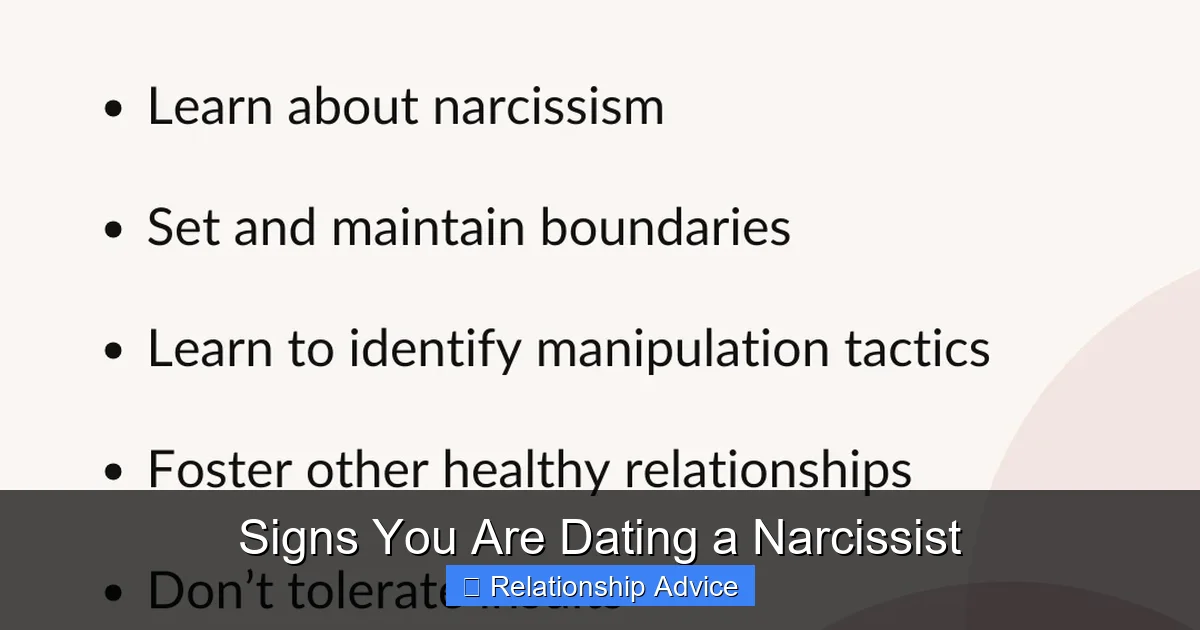
Recognizing the signs you are dating a narcissist is the first step—but what comes next? Healing and moving on can be difficult, especially if you’ve been emotionally manipulated. Here are some practical steps to protect your well-being:
1. Trust Your Gut
If something feels off, it probably is. Don’t dismiss your feelings because your partner says you’re “too sensitive” or “overreacting.” Your emotions are valid.
2. Seek Support
Talk to trusted friends, family, or a therapist. Narcissists often isolate their partners, so reconnecting with your support system is crucial.
3. Set and Enforce Boundaries
Be clear about what you will and won’t tolerate. If your partner disrespects your boundaries, consider whether the relationship is healthy.
4. Avoid Engaging in Arguments
Narcissists thrive on conflict and drama. The less you engage, the less power they have over you.
5. Focus on Self-Care
Reconnect with activities that bring you joy. Rebuild your self-esteem by celebrating your strengths and accomplishments.
6. Consider Ending the Relationship
If the relationship is consistently harmful, it may be time to leave. This is never easy, but your mental health is worth it.
Conclusion: You Deserve Better
Dating a narcissist can leave deep emotional scars. The constant manipulation, lack of empathy, and erosion of self-worth can make it hard to trust yourself—or others—again. But recognizing the signs you are dating a narcissist is a powerful first step toward healing.
Remember: you are not to blame. Narcissistic behavior is about them, not you. You didn’t cause it, and you can’t fix it. What you can do is choose yourself. Choose peace over chaos. Choose respect over manipulation. Choose a love that lifts you up, not one that tears you down.
If you’re in a relationship with a narcissist, know that you’re not alone—and you’re not stuck. With support, self-awareness, and courage, you can break free and build a life filled with genuine connection and mutual respect. You deserve nothing less.
Frequently Asked Questions
Can a narcissist change?
While it’s possible for someone with narcissistic traits to change, it requires deep self-awareness, willingness to seek therapy, and consistent effort. Most narcissists don’t see their behavior as problematic, so change is rare without professional help.
How do I know if I’m dating a narcissist or just a selfish person?
The key difference is consistency and intent. A selfish person may occasionally prioritize themselves, but a narcissist does so systematically, often with manipulation, lack of empathy, and a need for control.
Is gaslighting always intentional?
Not always, but in the context of narcissism, it’s often a deliberate tactic to maintain power. Even if unintentional, the effect is still harmful and erodes your sense of reality.
Can I stay in the relationship if I love them?
Love alone isn’t enough to sustain a healthy relationship. If your partner consistently disrespects your boundaries, dismisses your feelings, and manipulates you, staying may harm your mental health.
How do I leave a narcissistic partner safely?
Plan ahead—secure your finances, gather support, and consider involving a therapist or counselor. If there’s a risk of abuse, contact a domestic violence hotline for guidance.
Will I ever trust again after dating a narcissist?
Yes. Healing takes time, but with therapy and self-reflection, you can rebuild trust—in yourself and in future relationships. Many people go on to have healthy, loving partnerships after leaving a narcissistic relationship.
