
Being a clingy girlfriend can strain even the strongest relationships. This guide offers actionable steps to build confidence, foster independence, and create a balanced, loving partnership.
Key Takeaways
- Understand the root of clinginess: Often stems from insecurity, fear of abandonment, or past relationship trauma.
- Build self-confidence: Focus on personal growth, hobbies, and self-care to reduce emotional dependency.
- Communicate openly: Share your feelings without overwhelming your partner—honest dialogue builds trust.
- Respect personal space: Give your partner room to breathe; healthy relationships thrive on mutual independence.
- Develop a strong support system: Lean on friends and family so you’re not solely reliant on your partner for emotional fulfillment.
- Practice patience and self-reflection: Change takes time—be kind to yourself as you grow.
- Seek professional help if needed: A therapist can help uncover deeper issues and provide coping strategies.
📑 Table of Contents
- Introduction: Recognizing Clinginess in Your Relationship
- Understanding Why You’re Clingy
- Building Self-Confidence and Independence
- Improving Communication Without Overwhelming Your Partner
- Respecting Boundaries and Personal Space
- Building a Support System Beyond Your Partner
- Conclusion: Embracing a Healthier, More Balanced Relationship
Introduction: Recognizing Clinginess in Your Relationship
Let’s be real—no one sets out to be “that girlfriend.” You don’t wake up one morning and think, “Today, I’m going to text my partner 27 times and panic when they don’t reply within five minutes.” But sometimes, without even realizing it, we slip into patterns that make us come across as overly attached, needy, or emotionally dependent. And while it comes from a place of love and care, being a clingy girlfriend can unintentionally push your partner away.
Clinginess often disguises itself as affection. You might think constant check-ins show how much you care, or that needing reassurance means you’re deeply invested in the relationship. But when these behaviors become excessive, they can create tension, erode trust, and make your partner feel smothered. The good news? You’re already taking a huge step by recognizing the issue and wanting to change. That self-awareness is the foundation of growth.
This guide isn’t about blaming yourself or making you feel guilty for having big emotions. It’s about empowering you to build a healthier, more balanced relationship—one where both you and your partner feel loved, respected, and free. Whether you’re in a new romance or a long-term partnership, these strategies will help you break free from clingy habits and cultivate a stronger sense of self.
Understanding Why You’re Clingy
Visual guide about How to Stop Being a Clingy Girlfriend
Image source: realestlove.com
Before you can change a behavior, you need to understand where it’s coming from. Clinginess rarely appears out of nowhere. It’s usually a symptom of deeper emotional needs or unresolved fears. Let’s explore some of the most common reasons women become clingy in relationships.
Fear of Abandonment
One of the biggest drivers of clingy behavior is the fear of being left alone. This fear can stem from childhood experiences—like a parent who was emotionally unavailable or a previous relationship that ended abruptly. When you’ve been hurt before, your brain goes into protection mode. You start clinging because you’re terrified of history repeating itself.
For example, if your last partner cheated and left you, you might now feel the need to constantly check in, monitor their social media, or demand reassurance. It’s not that you don’t trust them—it’s that your past trauma is whispering, “What if it happens again?” Recognizing this pattern is the first step toward healing.
Low Self-Esteem
When you don’t feel good enough on your own, you might rely on your partner to validate your worth. You might think, “If he loves me, then I must be okay.” But this creates a dangerous cycle: the more you seek external validation, the less confident you become in your own value.
Imagine you’re scrolling through Instagram and see your partner liking another girl’s photo. Instead of thinking, “That’s harmless,” you spiral: “Does he like her more than me? Am I boring? Should I post something sexier to get his attention?” This kind of thinking feeds clinginess and erodes your self-esteem even further.
Anxious Attachment Style
Attachment theory explains how our early relationships with caregivers shape how we connect with romantic partners later in life. If you have an anxious attachment style, you tend to crave closeness but worry that your partner doesn’t feel the same way. You might interpret normal behavior—like them going out with friends or working late—as signs they’re pulling away.
People with anxious attachment often seek constant reassurance. They might say things like, “Do you still love me?” or “Are you mad at me?” even when there’s no reason to think so. This isn’t manipulation—it’s a genuine attempt to feel secure. But over time, it can become exhausting for your partner.
Over-Identification with the Relationship
Some women become so wrapped up in their relationship that they lose sight of their individual identity. Your entire world starts revolving around your partner—your mood depends on theirs, your plans revolve around theirs, and your happiness is tied to their approval.
This over-identification can lead to clinginess because you’re not just dating someone—you’re merging your lives completely. But healthy relationships require two whole people, not two halves trying to become one. When you lose yourself, you start clinging to your partner as a way to feel complete.
Building Self-Confidence and Independence
Visual guide about How to Stop Being a Clingy Girlfriend
Image source: usercontent.one
The antidote to clinginess isn’t pushing your partner away—it’s building a stronger sense of self. When you feel confident and fulfilled on your own, you won’t need constant validation from your relationship. Here’s how to start.
Rediscover Your Interests
Think back to the things you loved doing before you were in a relationship. Did you used to paint? Play guitar? Go hiking? Dance in your room like no one was watching? Reconnecting with hobbies reminds you that you’re more than just a girlfriend—you’re a unique person with passions and talents.
Start small. Maybe you commit to painting for 30 minutes every Sunday. Or you sign up for a weekly dance class. These activities don’t just fill your time—they rebuild your identity. And when you’re excited about your own life, you’ll naturally have less time and energy to obsess over your partner’s every move.
Set Personal Goals
Goals give you direction and purpose. They could be career-related (“I want to get promoted this year”), health-focused (“I’m going to run a 5K”), or personal (“I’m going to read 12 books this year”). When you’re working toward something meaningful, you feel a sense of accomplishment that doesn’t depend on your partner.
For example, let’s say you’ve always wanted to learn a new language. Enroll in a class or use an app like Duolingo. Every time you master a new phrase, you’ll feel proud—not because your boyfriend praised you, but because you did it for yourself. That kind of self-motivation is powerful.
Practice Self-Care
Self-care isn’t just face masks and bubble baths (though those are great too). It’s about treating yourself with the same kindness and respect you’d show a close friend. That means getting enough sleep, eating well, exercising, and saying no to things that drain your energy.
When you take care of your body and mind, you’re less likely to spiral into anxiety or insecurity. You’ll feel more grounded and in control. And when you feel good about yourself, you won’t need your partner to constantly reassure you that you’re worthy.
Celebrate Your Wins
We often downplay our achievements, especially when we’re used to seeking external validation. But acknowledging your progress—no matter how small—builds confidence. Did you speak up in a meeting today? That’s a win. Did you resist the urge to text your partner 10 times while they were at work? Huge win.
Keep a journal where you write down three things you’re proud of each day. Over time, you’ll start to see a pattern: you’re capable, resilient, and worthy—all on your own.
Improving Communication Without Overwhelming Your Partner
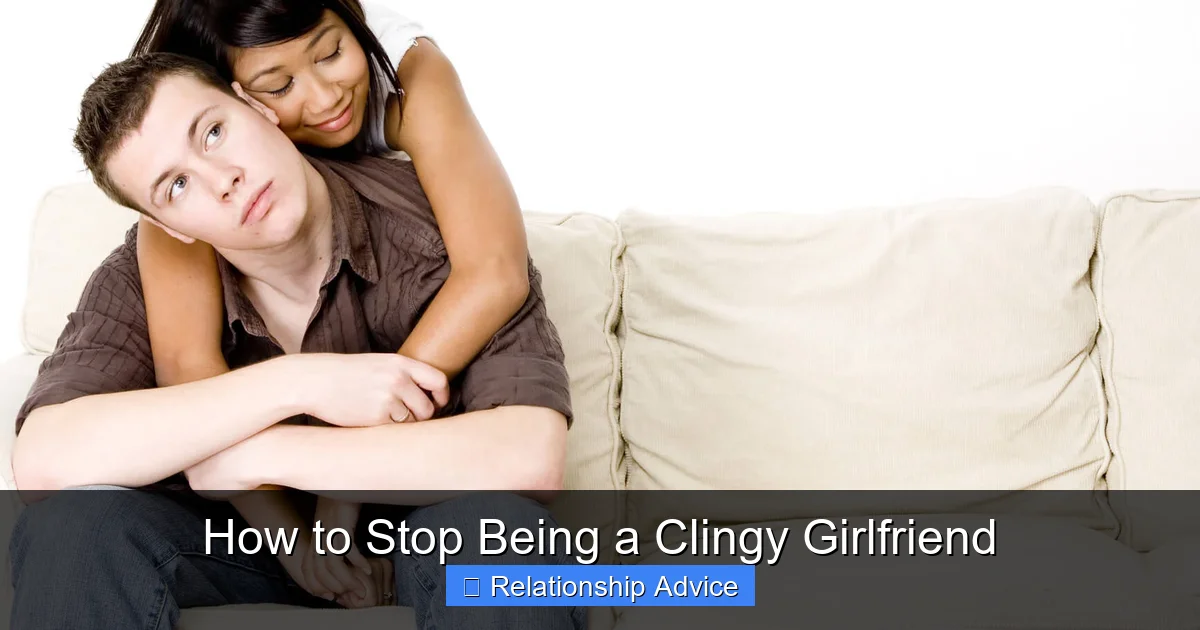
Visual guide about How to Stop Being a Clingy Girlfriend
Image source: artsonet.com
Good communication is the backbone of any healthy relationship. But when you’re clingy, your communication style can unintentionally become overwhelming. You might bombard your partner with texts, demand constant updates, or interpret silence as rejection. Here’s how to communicate in a way that’s honest, respectful, and balanced.
Use “I” Statements
Instead of saying, “You never text me back,” try, “I feel anxious when I don’t hear from you for a while.” This shifts the focus from blame to your own emotions. Your partner is more likely to respond with empathy when they don’t feel attacked.
For example, if you’re worried about your partner going out with friends, you might say, “I get a little nervous when you’re out without me, but I trust you. Can we check in once tonight?” This expresses your feelings without making them responsible for your anxiety.
Schedule Quality Time
Instead of texting all day long, agree on specific times to connect. Maybe you talk on the phone every evening after dinner, or you have a weekly date night. This gives you something to look forward to and reduces the urge to constantly check in.
Quality matters more than quantity. A 20-minute phone call where you really listen to each other is more meaningful than 50 scattered texts throughout the day.
Ask Open-Ended Questions
Clingy behavior often comes from a fear of disconnection. But instead of asking, “Are you still there?” or “Do you love me?”, try asking open-ended questions that invite conversation: “What was the best part of your day?” or “What’s something you’re excited about this week?”
This shows interest without being needy. It also gives your partner space to share on their own terms, which builds trust.
Give Them Space to Respond
It’s okay to send a text or make a call—but don’t panic if they don’t reply right away. People get busy. They might be in a meeting, driving, or just need a break. Give them time. If you don’t hear back after a few hours, it’s probably nothing personal.
Try this: when you feel the urge to send a follow-up text, pause. Take three deep breaths. Ask yourself, “Is this necessary, or am I reacting out of fear?” Often, the answer is the latter.
Respecting Boundaries and Personal Space
One of the biggest signs of a clingy girlfriend is the inability to respect boundaries. You might feel entitled to your partner’s time, attention, or even their phone. But healthy relationships require space—both physical and emotional.
Understand That Space Isn’t Rejection
When your partner wants to hang out with friends, work late, or just have a quiet night at home, it doesn’t mean they don’t love you. It means they’re human. Everyone needs time to recharge, pursue their interests, and maintain their own identity.
Think of it like this: if you went on a solo trip, would your partner panic and assume you were leaving them? Probably not. So give them the same grace you’d want for yourself.
Create Your Own Routine
Instead of structuring your entire day around your partner’s schedule, build your own routine. Maybe you wake up early to journal, go to the gym after work, or have dinner with friends on Wednesdays. When you have a life outside the relationship, you’ll naturally be less dependent on your partner for entertainment or emotional support.
For example, if your partner has a guys’ night every Thursday, use that time to do something you enjoy—watch a movie, take a bath, or call a friend. You’ll look forward to your own time instead of dreading theirs.
Respect Privacy
It’s natural to be curious about your partner’s life, but snooping through their phone, emails, or social media is a major red flag. It shows a lack of trust and can damage your relationship.
If you’re worried about something, talk about it directly. Say, “I noticed you’ve been texting someone a lot lately. Can we talk about it?” That’s honest and respectful. Going behind their back only breeds resentment.
Building a Support System Beyond Your Partner
When your partner is your only source of emotional support, the pressure on the relationship becomes enormous. You start relying on them for everything—validation, comfort, entertainment, even your sense of self-worth. But no one person can fulfill all those needs.
Reconnect with Friends and Family
Make time for the people who’ve been there for you through thick and thin. Call your best friend, plan a girls’ night, or visit your parents. These relationships remind you that you’re loved and supported—even when your partner is busy or distant.
For example, if you’re feeling insecure about your relationship, talk to a trusted friend instead of immediately texting your partner. They can offer perspective and help you process your feelings without adding stress to your relationship.
Join a Community or Group
Whether it’s a book club, a fitness class, or a volunteer organization, being part of a community gives you a sense of belonging. You’ll meet new people, learn new things, and feel connected to something bigger than yourself.
This doesn’t mean you’re replacing your partner—it means you’re expanding your world. And when you’re fulfilled in multiple areas of life, you won’t cling to your relationship as your only source of happiness.
Consider Therapy or Counseling
If clinginess is rooted in deep-seated anxiety, trauma, or low self-worth, talking to a therapist can be incredibly helpful. A professional can help you uncover the root causes of your behavior and develop healthier coping strategies.
Therapy isn’t a sign of weakness—it’s an act of self-love. It shows that you’re committed to growing and becoming the best version of yourself.
Conclusion: Embracing a Healthier, More Balanced Relationship
Stopping being a clingy girlfriend isn’t about becoming cold or distant. It’s about finding balance—between love and independence, connection and space, giving and receiving. It’s about building a relationship where both partners feel secure, respected, and free to be themselves.
Change won’t happen overnight. There will be days when you slip back into old habits, when anxiety creeps in, or when you feel the urge to text your partner for the tenth time that hour. And that’s okay. Growth is messy. What matters is that you keep trying.
Remember: your worth isn’t determined by how much attention your partner gives you. You are enough—just as you are. When you start believing that, you’ll naturally become less clingy. You’ll communicate with confidence, respect boundaries, and build a relationship that’s strong because it’s built on mutual trust, not fear.
So take a deep breath. Be kind to yourself. And know that every step you take toward independence is a step toward a happier, healthier you—and a stronger, more loving relationship.
Frequently Asked Questions
Is it normal to feel insecure in a relationship?
Yes, it’s completely normal to have moments of insecurity. Everyone feels doubt or worry at times. The key is learning to manage those feelings without letting them control your behavior or damage your relationship.
How do I stop overthinking my partner’s actions?
Try grounding techniques like deep breathing or journaling. Ask yourself, “Is there evidence for this thought, or am I assuming the worst?” Focus on facts, not fears, and give your partner the benefit of the doubt.
What if my partner likes my clinginess?
Even if your partner seems to enjoy the attention now, clinginess can lead to resentment over time. It’s healthier to build a relationship based on mutual independence and respect, not dependency.
Can clinginess be a sign of love?
While it may come from a place of care, clinginess often stems from fear, not love. True love includes trust, space, and confidence—not constant need for reassurance.
How long does it take to stop being clingy?
It varies for everyone, but with consistent effort, you can see improvement in a few weeks to a few months. Be patient and celebrate small victories along the way.
Should I tell my partner I’m working on being less clingy?
Yes, open communication is key. Let them know you’re working on building confidence and independence. They’ll likely appreciate your honesty and may even support your growth.
