
Marrying someone you don’t love is a deeply personal decision with long-term consequences. While some relationships grow into love over time, others face emotional distance, resentment, or unmet needs. Understanding your motivations and being honest with yourself—and your partner—is crucial before saying “I do.”
Key Takeaways
- Love is not the only foundation for marriage: Compatibility, shared values, and mutual respect can support a strong partnership—even without initial romantic love.
- Marriage without love can work—but it’s risky: Some couples develop deep affection over time, while others struggle with loneliness or emotional disconnection.
- Cultural and familial pressures often influence the decision: In many societies, marriage is seen as a duty or milestone, not just a romantic union.
- Emotional honesty is essential: Pretending to love someone or hiding your true feelings can damage trust and intimacy.
- Therapy and open communication can help: Couples considering marriage without love should seek counseling to explore their expectations and boundaries.
- Self-love matters just as much: Marrying for the wrong reasons can lead to personal dissatisfaction, even if the relationship appears stable.
- There’s no one-size-fits-all answer: Every relationship is unique—what works for one couple may not work for another.
📑 Table of Contents
Can You Marry Someone You Don’t Love?
Imagine standing at the altar, heart pounding, eyes locked with your partner’s. The officiant asks, “Do you take this person to be your lawfully wedded spouse?” You say “I do”—but deep down, you’re not sure you’re in love. Is that okay? Can you really build a life, a family, a future with someone you care about but don’t truly love?
It’s a question more people are asking than you might think. In a world where romantic love is often portrayed as the ultimate goal—fueled by movies, social media, and fairy-tale endings—the idea of marrying without love can feel taboo. Yet, real life is rarely so black and white. People marry for many reasons: companionship, stability, family expectations, financial security, or even convenience. And sometimes, love grows later. But is that enough?
This article explores the complex reality of marrying someone you don’t love. We’ll look at why people make this choice, the emotional and psychological impacts, cultural influences, and whether such marriages can truly succeed. Whether you’re considering this path or just curious about the dynamics behind it, we’ll help you understand the risks, rewards, and realities—so you can make the most informed decision for your heart and your future.
Why Do People Marry Without Love?
Visual guide about Can You Marry Someone You Dont Love
Image source: realestlove.com
Social and Cultural Expectations
In many cultures, marriage is less about romance and more about duty, tradition, or social status. In some communities, arranged marriages are still common—where families play a significant role in selecting a partner. In these cases, love is not expected to be present at the start. Instead, the focus is on compatibility, family background, education, and shared values.
For example, in parts of India, Japan, and the Middle East, arranged marriages are a long-standing tradition. Couples may meet only a few times before the wedding, and romantic love is seen as something that develops over time. Research shows that many arranged marriages report high levels of satisfaction and stability, often rivaling or exceeding those of love marriages.
Even in Western societies, cultural pressures can push people toward marriage. Think about the “marriage clock”—the invisible timeline that tells us we should be married by 30, have kids by 35, and settle down before it’s “too late.” For some, the fear of being alone or missing out on family life outweighs the absence of romantic love.
Fear of Being Alone
Loneliness is a powerful motivator. Many people marry not because they’re deeply in love, but because they’re afraid of spending their lives alone. This fear can be especially strong during major life transitions—like turning 30, losing a parent, or seeing friends start families.
Take Sarah, a 32-year-old teacher from Chicago. She had been in a few relationships but never found “the one.” When her long-term boyfriend proposed, she said yes—even though she wasn’t head-over-heels in love. “I was scared I’d never find someone else,” she admits. “I liked him. He was kind, stable, and wanted the same things I did. I thought love would come later.”
But fear-based decisions rarely lead to lasting happiness. While Sarah and her husband have a peaceful life, she often feels a quiet emptiness—like something important is missing. “I don’t regret marrying him,” she says, “but I wonder what it would feel like to be truly in love.”
Practical and Financial Reasons
Sometimes, marriage makes practical sense—even if love isn’t the driving force. Combining incomes, sharing housing costs, or gaining legal benefits (like health insurance or immigration status) can be strong incentives.
Consider Mark and Lisa, who married after dating for two years. They weren’t deeply in love, but they liked each other, had similar lifestyles, and wanted to buy a house together. “We weren’t fireworks and roses,” Mark says, “but we were comfortable. We trusted each other. And financially, it just made sense.”
For them, marriage was a partnership—a team effort to build a stable life. And over time, their bond deepened. “We didn’t start with passion,” Lisa adds, “but we built something real. Now, I’d say we’re in love—just in a different way.”
Still, practical marriages require clear communication and mutual respect. Without emotional connection, even the most logical partnership can feel hollow.
Misinterpreting Familiarity for Love
Sometimes, people confuse comfort with love. After years of dating the same person, it’s easy to assume that familiarity equals deep affection. But liking someone—enjoying their company, appreciating their habits, feeling safe with them—is not the same as being in love.
Love involves vulnerability, passion, and a deep emotional bond. It’s not just about getting along; it’s about wanting to share your innermost self with someone. If you’re marrying someone because they’re “safe” or “easy,” but you don’t feel that spark, you might be settling.
And settling—even with good intentions—can lead to regret. Studies show that people who marry without strong romantic feelings are more likely to experience dissatisfaction, infidelity, or divorce down the line.
The Emotional and Psychological Impact
Visual guide about Can You Marry Someone You Dont Love
Image source: purelovequotes.com
Loneliness in a Committed Relationship
One of the most painful realities of marrying without love is the feeling of loneliness—even when you’re not alone. You share a home, a bed, maybe even children—but emotionally, you’re distant. You might go through the motions of marriage—date nights, holidays, family events—but inside, you feel disconnected.
This kind of emotional isolation can be more damaging than being single. At least when you’re alone, you know what to expect. But in a marriage, the expectation is intimacy, support, and shared joy. When those are missing, the gap between expectation and reality can cause deep pain.
Therapists often see clients who describe their marriages as “roommate relationships.” They coexist peacefully but rarely connect on a deeper level. One partner might crave affection, while the other is emotionally unavailable. Over time, resentment builds. Small disagreements become big arguments. And the marriage, once a symbol of commitment, starts to feel like a prison.
Risk of Resentment and Regret
When you marry someone you don’t love, you’re making a choice that affects both your lives. And if that choice is based on fear, pressure, or convenience, it’s easy to start blaming your partner for your unhappiness.
“I married him because I thought it was the right thing to do,” says James, 41, who divorced after eight years. “But I started resenting him for not being the person I wanted. I blamed him for my loneliness, even though it was my decision to marry him.”
Resentment is toxic. It erodes trust, kills intimacy, and makes it hard to communicate. And when it builds over years, it can destroy a marriage—even if both people are trying their best.
Regret is another common emotion. Many people who marry without love later wonder, “What if I had waited? What if I had held out for real love?” These thoughts can haunt you, especially during milestones like anniversaries or birthdays.
Impact on Mental Health
Living in a marriage without love can take a toll on your mental health. Chronic stress, anxiety, and depression are more common in relationships where emotional needs aren’t met. You might feel trapped, hopeless, or emotionally numb.
And if you stay in the marriage out of guilt or obligation, the pressure can be overwhelming. You might put on a happy face for friends and family, but inside, you’re struggling. This dissonance—between how you appear and how you feel—can lead to burnout, low self-esteem, and even physical health problems.
Therapy can help, but it’s not a magic fix. If the foundation of your marriage is missing love, no amount of counseling can create it overnight. That’s why it’s so important to be honest with yourself before you say “I do.”
Can Love Develop After Marriage?
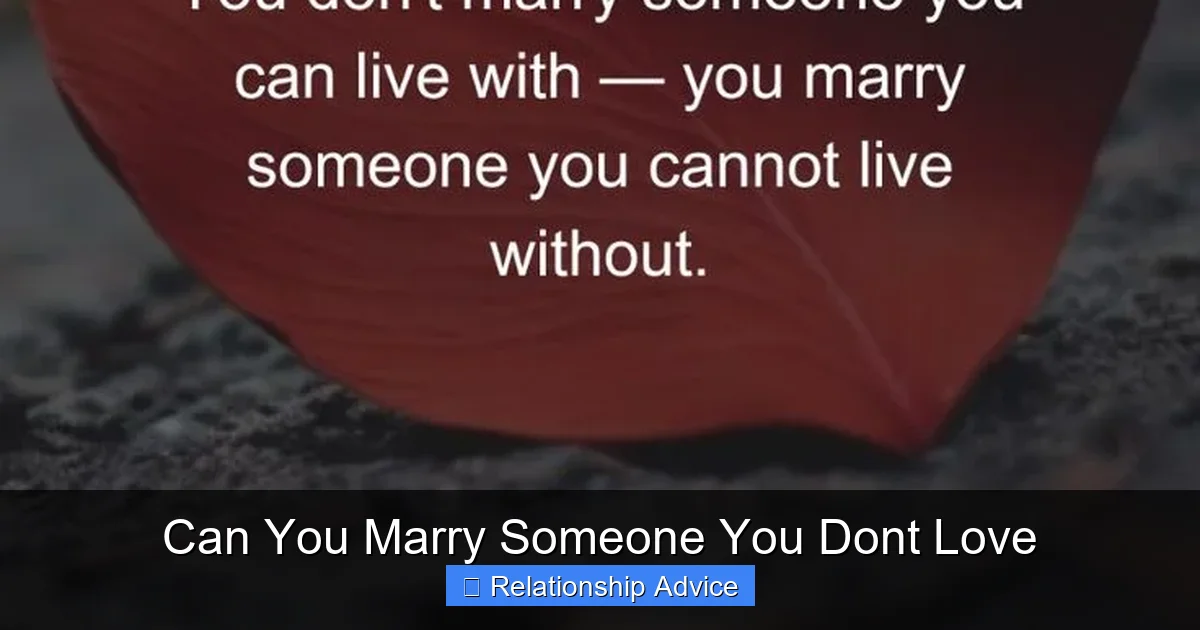
Visual guide about Can You Marry Someone You Dont Love
Image source: i.pinimg.com
Stories of Love That Grew Over Time
The idea that love can grow after marriage isn’t just a fairy tale—it happens in real life. Many couples start with friendship, respect, or shared goals and gradually develop deep romantic feelings.
Take Priya and Raj, an Indian couple in an arranged marriage. They met twice before the wedding and barely knew each other. “I was nervous,” Priya recalls. “I didn’t know if I could love him.” But over time, as they built a life together—raising children, supporting each other through challenges, celebrating small joys—their bond deepened. “Now,” she says, “I can’t imagine my life without him. I love him more than I thought possible.”
Similarly, some Western couples report that their love intensified after marriage. Without the pressure of dating or the uncertainty of “will they, won’t they,” they were able to focus on building a real connection. Shared responsibilities, daily routines, and mutual support created a foundation for love to grow.
What Makes It Possible?
For love to develop after marriage, certain conditions must be in place:
– Mutual respect: You need to value each other as people, even if you’re not romantically attracted.
– Open communication: You must be able to talk honestly about your feelings, fears, and needs.
– Shared values and goals: A common vision for the future helps couples grow together.
– Emotional availability: Both partners must be willing to be vulnerable and open to intimacy.
– Patience: Love doesn’t happen overnight. It takes time, effort, and consistency.
Without these elements, even the best intentions can fall flat. You can’t force love—but you can create the conditions where it might flourish.
When It Doesn’t Work
Of course, not all marriages without initial love succeed. Sometimes, no matter how hard you try, the spark never comes. One partner might crave romance while the other is content with companionship. Or past traumas, attachment issues, or personality differences can block emotional connection.
In these cases, staying together out of obligation can be more harmful than separating. It’s not fair to either person to live a life of quiet desperation. And it’s not fair to children to grow up in a home where parents are emotionally distant.
The key is self-awareness. Ask yourself: Am I willing to wait for love? Can I be happy without it? Am I marrying this person for the right reasons?
Cultural and Religious Perspectives
Arranged Marriages and Tradition
In many cultures, marriage is a family affair—not just a personal one. In countries like India, Pakistan, and Nigeria, arranged marriages are still the norm. Families consider factors like caste, religion, education, and financial stability when choosing a partner.
But that doesn’t mean love is absent. In fact, many arranged marriages evolve into deep, loving relationships. A 2019 study by the Indian Journal of Psychological Medicine found that 85% of arranged marriage couples reported being “very satisfied” with their relationships—often more so than those in love marriages.
Why? Because arranged marriages often prioritize compatibility over passion. Couples start with realistic expectations and focus on building a life together. Over time, love grows from shared experiences, mutual support, and daily intimacy.
Religious Views on Marriage
Different religions have different views on love and marriage. In Christianity, marriage is often seen as a sacred covenant—a partnership blessed by God. While love is important, it’s not the only requirement. Commitment, faithfulness, and mutual support are equally valued.
In Islam, marriage is a contract based on mutual consent, respect, and kindness. The Prophet Muhammad emphasized treating your spouse well, even if romantic feelings aren’t strong. Love is encouraged, but it’s not the sole foundation.
In Buddhism, marriage is viewed as a secular institution—a way to build a harmonious life. The focus is on compassion, understanding, and reducing suffering—both for yourself and your partner.
These perspectives remind us that marriage is more than romance. It’s about partnership, responsibility, and shared humanity.
How to Decide What’s Right for You
Ask Yourself the Hard Questions
Before you marry someone you don’t love, take time to reflect. Ask yourself:
– Why am I considering this marriage?
– Am I doing this out of love, fear, or pressure?
– Do I respect and value this person?
– Can I imagine spending the rest of my life with them—even on hard days?
– Am I willing to work on building love over time?
Be honest. There’s no shame in admitting you’re not in love. But there is risk in pretending you are.
Talk Openly with Your Partner
If you’re unsure about your feelings, talk to your partner. You don’t have to say, “I don’t love you.” But you can say, “I care about you deeply, and I want us to be honest about what we’re building together.”
A healthy relationship is built on trust and communication. If your partner is also unsure, you can explore your feelings together—maybe even with the help of a counselor.
Consider Pre-Marital Counseling
Pre-marital counseling isn’t just for couples in crisis. It’s a proactive way to explore your relationship, set expectations, and build a strong foundation.
A therapist can help you discuss topics like finances, family planning, conflict resolution, and emotional needs. They can also help you assess whether your relationship has the potential for long-term happiness—even if love isn’t the starting point.
Trust Your Gut
Finally, listen to your intuition. If something feels off—if you’re saying “yes” out of obligation or fear—pay attention. Your gut knows when you’re compromising your truth.
Marriage is a big decision. It deserves your full honesty, your deepest reflection, and your truest self.
Conclusion
So, can you marry someone you don’t love? The short answer is yes—but it’s complicated.
Marriage without love is possible. Some couples build beautiful, lasting relationships based on respect, shared values, and growing affection. Others find that love develops over time, transforming a practical partnership into a deep emotional bond.
But it’s not a decision to take lightly. Marrying without love carries real risks: loneliness, resentment, regret, and emotional disconnection. And if your choice is driven by fear, pressure, or convenience, the consequences can last a lifetime.
The most important thing is self-awareness. Understand your motivations. Be honest with yourself and your partner. And if you’re not ready—don’t rush.
Because marriage isn’t just a ceremony. It’s a daily commitment. It’s waking up next to someone, sharing your joys and struggles, and building a life together. And while love isn’t the only foundation, it’s a powerful one.
If you’re not in love yet, ask yourself: Can this relationship grow? Am I willing to nurture it? And most importantly—am I doing this for the right reasons?
There’s no universal answer. But there is one truth: Your happiness matters. And so does your partner’s. Choose wisely.
Frequently Asked Questions
Is it wrong to marry someone you don’t love?
It’s not inherently wrong, but it’s a decision that requires deep self-reflection. Marrying without love can work if both partners are honest, respectful, and open to building emotional intimacy over time. However, doing so out of fear or pressure can lead to long-term unhappiness.
Can love grow after marriage?
Yes, love can develop after marriage, especially in arranged or practical unions. Shared experiences, mutual support, and daily connection can foster deep affection. But it’s not guaranteed—both partners must be emotionally available and willing to nurture the relationship.
What are the risks of marrying without love?
Risks include emotional loneliness, resentment, regret, and higher chances of divorce. Without a strong emotional foundation, couples may struggle with intimacy, communication, and long-term satisfaction.
How do I know if I’m settling in a relationship?
If you’re with someone because they’re “safe,” “convenient,” or “what’s expected,” but you don’t feel excited or deeply connected, you might be settling. Ask yourself if you’re choosing them for who they are—or for what they represent.
Should I tell my partner I don’t love them before marriage?
Honesty is crucial. You don’t need to say “I don’t love you,” but you should discuss your feelings openly. A healthy relationship is built on trust. If you’re unsure, consider counseling to explore your emotions together.
Are arranged marriages successful without initial love?
Many arranged marriages are successful and even report higher satisfaction than love marriages. Success depends on mutual respect, communication, and shared values—not just initial romantic feelings. Love often grows over time through daily life and partnership.
