
Ever wondered why your husband never says sorry, even when he’s clearly in the wrong? It’s not just about pride—there are deeper emotional, psychological, and cultural factors at play. Understanding these hidden reasons can help you rebuild empathy, improve communication, and create a stronger, more connected relationship.
Key Takeaways
- Upbringing shapes apology behavior: Men raised in environments where apologies were seen as weakness often struggle to say “I’m sorry” as adults.
- Fear of vulnerability blocks emotional expression: Many men avoid apologies because they equate them with admitting failure or losing control.
- Pride and ego play a major role: Saying sorry can feel like surrendering power, especially in relationships where dominance is subtly valued.
- Misunderstanding what an apology means: Some men believe apologizing means taking full blame, even when the issue is complex or shared.
- Emotional illiteracy limits expression: Not all men are taught to identify or articulate their feelings, making apologies feel foreign or confusing.
- Conflict avoidance isn’t always passive: Avoiding apologies can be a way to dodge confrontation, not because he doesn’t care, but because he fears escalation.
- Change is possible with patience and communication: With empathy and intentional effort, most men can learn to apologize in healthy, meaningful ways.
📑 Table of Contents
- Why Your Husband Never Says Sorry—And What It Really Means
- The Hidden Power of Upbringing: How Childhood Shapes Apology Behavior
- Fear of Vulnerability: Why Saying Sorry Feels Like Losing Control
- Pride and Ego: The Silent Saboteurs of Apology
- Misunderstanding What an Apology Really Means
- Emotional Illiteracy: When Feelings Are Hard to Name
- Conflict Avoidance: When Silence Feels Safer Than Words
- How to Move Forward: Practical Steps for a Healthier Relationship
- Conclusion: Healing Starts with Understanding
Why Your Husband Never Says Sorry—And What It Really Means
You’re sitting on the couch, still fuming from yesterday’s argument. He forgot your anniversary—again. Or maybe he snapped at you in front of the kids. Or he dismissed your feelings like they didn’t matter. You’ve waited. You’ve hinted. You’ve even cried. But the words “I’m sorry” never come.
And it’s not just this one time. It’s a pattern. A frustrating, heart-tugging cycle where you’re left wondering: *Does he even care? Is he selfish? Or is something deeper going on?*
Let’s be honest—when your husband never says sorry, it feels like a slap in the face. It makes you question his love, his empathy, his respect for you. But before you label him as cold or uncaring, consider this: the reason he won’t apologize might have nothing to do with you—and everything to do with how he was wired.
Men are often socialized to suppress emotions, avoid vulnerability, and protect their ego at all costs. Saying “I’m sorry” can feel like admitting defeat, showing weakness, or losing control. And in a world that still tells men to “man up” and “tough it out,” apologizing can feel like breaking the code.
But here’s the good news: understanding these hidden reasons is the first step toward healing your relationship. It’s not about excusing bad behavior—it’s about uncovering the root causes so you can both grow, communicate better, and build a stronger emotional connection.
In this article, we’ll explore the shocking, often overlooked reasons why your husband never says sorry—and what you can do about it. From childhood conditioning to fear of vulnerability, from pride to emotional illiteracy, we’ll dive deep into the psychology behind this common relationship hurdle. And most importantly, we’ll give you practical tools to help him—and your relationship—move forward.
The Hidden Power of Upbringing: How Childhood Shapes Apology Behavior
Visual guide about Shocking Reasons Your Husband Never Says Sorry
Image source: realestlove.com
Let’s start at the beginning: your husband’s childhood.
How he was raised plays a massive role in whether or not he says sorry as an adult. If he grew up in a household where apologies were rare—or worse, punished—he likely internalized the message that saying “I’m sorry” equals weakness.
When Apologies Were Seen as Weakness
Imagine a boy who trips and spills his juice. His dad says, “Don’t cry. Boys don’t apologize for accidents. Just clean it up and move on.” Or a teenager who argues with his mom and is told, “You don’t get to apologize—you don’t get to talk to me like that.” Over time, these messages sink in: *Apologizing = losing face. Apologizing = admitting you’re weak.*
This kind of upbringing teaches boys to avoid apologies not because they’re selfish, but because they’ve been conditioned to see them as a threat to their identity. They’re not trying to hurt you—they’re trying to protect a fragile sense of self that was never allowed to be vulnerable.
The “Silent Treatment” Family
Some families don’t argue—they just shut down. Conflict is avoided, feelings are buried, and apologies are nonexistent. In these homes, silence becomes the default response to tension. Your husband may have learned that the best way to handle a mistake is to pretend it didn’t happen, change the subject, or act like everything’s fine.
This isn’t indifference—it’s survival. He’s using the only tools he knows to keep the peace, even if it leaves you feeling unheard.
What You Can Do
You can’t change his past, but you can help him rewrite his future. Start by having a calm, non-accusatory conversation. Say something like:
> “I’ve noticed that when we have disagreements, it’s hard for you to say you’re sorry. I’m not trying to blame you—I just want to understand. Did you grow up in a home where apologies were common?”
This opens the door without triggering defensiveness. You’re not attacking—you’re inviting curiosity. And sometimes, just naming the pattern can be the first step toward change.
Fear of Vulnerability: Why Saying Sorry Feels Like Losing Control
Visual guide about Shocking Reasons Your Husband Never Says Sorry
Image source: usercontent.one
Let’s talk about vulnerability—the emotional equivalent of walking into a room with no armor.
For many men, saying “I’m sorry” feels like stepping into that room naked. It means admitting they were wrong, that they hurt someone they love, that they’re not perfect. And in a culture that still glorifies stoicism and emotional restraint, that can feel terrifying.
The Myth of the “Strong Man”
We’ve all heard it: “Real men don’t cry.” “Don’t show weakness.” “Keep your emotions in check.” These messages don’t just discourage tears—they discourage any form of emotional honesty, including apologies.
Your husband may genuinely believe that apologizing undermines his strength. He might think, *If I say I’m sorry, she’ll think I’m weak. She’ll lose respect for me. I’ll lose control of the relationship.*
But here’s the truth: vulnerability isn’t weakness. It’s courage. It’s the willingness to be seen, to admit fault, to say, “I messed up, and I care enough to fix it.”
When Apologies Feel Like Surrender
Some men see apologies as a form of surrender—like they’re giving up power or admitting defeat. This is especially true in relationships where there’s an unspoken competition for control.
If your husband believes that saying sorry means “losing” the argument, he’ll avoid it at all costs. He’d rather stay silent, walk away, or double down than risk feeling like he’s backed down.
But relationships aren’t battles. They’re partnerships. And in a true partnership, both people win when there’s honesty, empathy, and repair.
How to Help Him Feel Safe
You can’t force vulnerability—but you can create a safe space for it. Start by modeling it yourself. When you make a mistake, say, “I’m sorry. I shouldn’t have snapped at you earlier. That wasn’t fair.”
When you apologize first, you show him that it’s safe. You’re not punishing him for being human—you’re inviting him into a healthier way of relating.
You can also gently reframe apologies. Say:
> “When you say you’re sorry, it doesn’t mean you’re weak. It means you’re strong enough to care about how I feel.”
Over time, this can help him see apologies not as a loss, but as a sign of emotional maturity and love.
Pride and Ego: The Silent Saboteurs of Apology
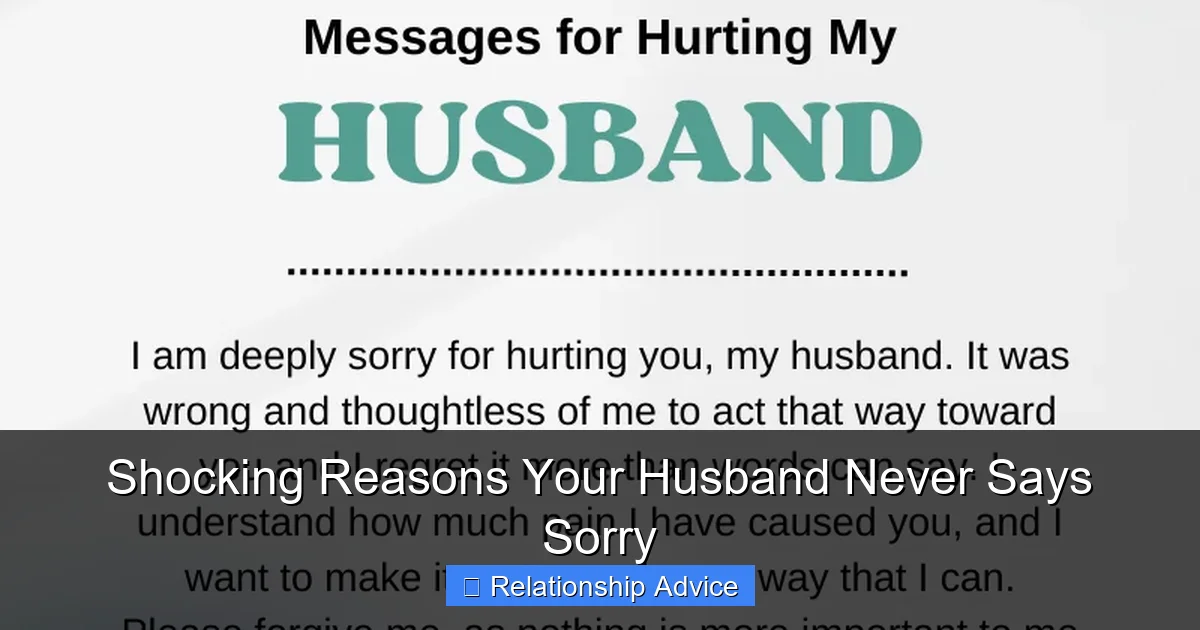
Visual guide about Shocking Reasons Your Husband Never Says Sorry
Image source: greetingsays.com
Let’s be real: pride is a powerful force.
And when it comes to apologies, pride can be a silent saboteur. Your husband may know he’s wrong. He may even feel bad. But his ego won’t let him say it.
When Ego Trumps Empathy
Pride isn’t just about arrogance—it’s about self-image. For some men, admitting fault feels like tarnishing their identity. *I’m the provider. I’m the strong one. I’m the one who has it together.* If he says sorry, that image cracks.
This is especially true if he’s used to being right—or if he’s been praised for being decisive, confident, or in control. Admitting he was wrong can feel like a personal failure.
The “I’m Not Wrong, I’m Just Misunderstood” Trap
Another ego-driven pattern? Reframing the issue so he’s not at fault.
> “I didn’t ignore you—you were busy on your phone.”
> “I didn’t snap—you were nagging me.”
> “I didn’t forget—you didn’t remind me.”
This isn’t always malicious. Sometimes, it’s a subconscious way to protect his self-esteem. But it leaves you feeling dismissed and invalidated.
How to Address It Without Attacking
Instead of saying, “You’re so proud you can’t even apologize,” try:
> “I know it’s hard to admit when we’re wrong. But when you do, it actually makes me respect you more. It shows you’re human—and that you care.”
You’re not attacking his character—you’re affirming his values. You’re saying, *I respect you, and I believe you’re capable of growth.*
You can also use “we” language to reduce defensiveness:
> “We both make mistakes. And when we do, it helps to say sorry so we can move forward together.”
This shifts the focus from blame to partnership.
Misunderstanding What an Apology Really Means
Here’s a surprising truth: many men don’t avoid apologies because they’re selfish—they avoid them because they misunderstand what an apology is supposed to do.
“Apologizing Means I’m 100% to Blame”
Some men believe that saying “I’m sorry” means taking full responsibility—even when the situation is more nuanced.
For example, if you had a fight about chores, he might think: *If I say I’m sorry, it means I’m admitting I’m lazy and you’re perfect. But that’s not fair—you could’ve reminded me too.*
So instead of apologizing, he stays silent. Not because he doesn’t care, but because he feels the apology would be dishonest or unbalanced.
“An Apology Opens the Door to More Conflict”
Others fear that saying sorry will invite more criticism. They think:
> “If I say I’m sorry, she’ll bring up every other time I’ve messed up. It’ll turn into a lecture.”
So they avoid it to prevent escalation.
But here’s the thing: a good apology isn’t about blame—it’s about repair. It’s not “I’m guilty,” it’s “I see that I hurt you, and I want to make it right.”
Teaching the True Purpose of an Apology
Help him understand that apologizing isn’t about winning or losing—it’s about connection.
Say:
> “When I hear ‘I’m sorry,’ it doesn’t mean you’re admitting you’re a bad person. It means you’re saying, ‘I see your pain, and I want to fix it.’ That’s all I need.”
You can also model balanced apologies:
> “I’m sorry I got frustrated earlier. I could’ve handled that better. I know you were stressed too—I appreciate you trying.”
This shows that apologies can be honest, humble, and fair—without placing all the blame on one person.
Emotional Illiteracy: When Feelings Are Hard to Name
Let’s talk about a less obvious but incredibly common reason: emotional illiteracy.
Many men aren’t taught to identify, process, or express their emotions. They grow up learning to “tough it out,” “move on,” or “not make a big deal.” As a result, they don’t have the emotional vocabulary to say, “I’m sorry.”
When “I’m Sorry” Feels Foreign
Imagine trying to speak a language you’ve never learned. That’s what apologizing can feel like for some men. They know they feel bad, but they don’t know how to say it.
They might say things like:
> “I didn’t mean to upset you.”
> “I’ll do better next time.”
> “Let’s just forget about it.”
These aren’t apologies—they’re deflections. But they’re not meant to be hurtful. They’re the best they can do with the tools they have.
The Language of Action Over Words
Some men express remorse through actions, not words. He might bring you coffee, do the dishes without being asked, or plan a surprise date. He’s trying to say, “I’m sorry,” but he’s doing it in a way that feels safer—through behavior, not emotion.
But if you need to hear the words, this can feel like a missed opportunity.
How to Build Emotional Fluency
You can help him grow emotionally—without shaming him.
Start by naming emotions together. Say:
> “When you didn’t call, I felt worried and unimportant. I know you didn’t mean to hurt me, but I needed to hear from you.”
This teaches him how to connect actions to feelings.
You can also encourage journaling, therapy, or even reading books on emotional intelligence. The goal isn’t to “fix” him—it’s to help him expand his emotional toolkit so he can express care in ways that resonate with you.
Conflict Avoidance: When Silence Feels Safer Than Words
Finally, let’s talk about conflict avoidance.
Some men don’t avoid apologies because they’re proud or unfeeling—they avoid them because they’re afraid of what comes next.
Fear of Escalation
He might worry that saying sorry will open a floodgate of emotions—yelling, crying, more arguments. So he stays quiet, hoping the storm will pass.
This isn’t indifference. It’s fear. He’s trying to protect both of you from what he sees as inevitable pain.
The “If I Ignore It, It’ll Go Away” Strategy
Others believe that if they don’t acknowledge the issue, it will fade. They think:
> “If I don’t say anything, she’ll forget about it. We’ll move on.”
But unresolved resentment doesn’t disappear—it festers. And over time, it erodes trust and intimacy.
Creating a Safe Space for Repair
Help him see that apologies don’t have to lead to chaos. They can lead to calm, clarity, and connection.
Say:
> “When we talk about hard things, I don’t want to fight. I just want to understand each other and feel close again. Saying sorry helps me feel safe.”
You can also set ground rules for difficult conversations:
– No yelling
– Take turns speaking
– Focus on feelings, not blame
– End with a hug or kind word
When he sees that apologies lead to peace—not pain—he’ll be more willing to try.
How to Move Forward: Practical Steps for a Healthier Relationship
Understanding why your husband never says sorry is one thing. Changing the pattern is another.
But change is possible—with patience, empathy, and intentional effort.
Start with Self-Reflection
Ask yourself:
– Do I feel safe expressing my feelings?
– Am I open to his apologies, even if they’re imperfect?
– Do I sometimes escalate conflicts when he tries to apologize?
Your own emotional habits matter too.
Have the Conversation—Without Blame
Choose a calm moment. Say:
> “I’ve been thinking about how we handle disagreements. I’ve noticed that when things go wrong, it’s hard for you to say you’re sorry. I’m not trying to criticize you—I just want us to feel closer. Can we talk about what makes it hard for you?”
Listen without interrupting. Validate his feelings. Then share your own.
Set Small, Realistic Goals
Don’t expect a full, heartfelt apology overnight. Start small.
Maybe he says, “I didn’t mean to hurt you.” That’s a start.
Celebrate progress. Say, “Thank you for saying that. It meant a lot to me.”
Seek Support if Needed
If the pattern persists and causes ongoing pain, consider couples therapy. A neutral third party can help you both communicate more effectively and heal old wounds.
Lead with Love
At the end of the day, your husband likely loves you. He may just not know how to show it in the way you need.
By approaching this issue with compassion—not criticism—you give him the chance to grow. And in doing so, you strengthen your bond in ways that go far beyond a simple “I’m sorry.”
Conclusion: Healing Starts with Understanding
When your husband never says sorry, it’s easy to feel unloved, disrespected, or invisible. But before you assume the worst, remember: his silence may not be about you. It may be about fear, pride, upbringing, or emotional confusion.
The shocking truth? Many men want to connect—they just don’t know how.
By understanding the hidden reasons behind his refusal to apologize, you open the door to empathy, growth, and deeper intimacy. You’re not excusing bad behavior. You’re creating space for healing.
And sometimes, that’s the most powerful apology of all.
Frequently Asked Questions
Why won’t my husband say sorry even when he knows he’s wrong?
He may fear vulnerability, equate apologies with weakness, or lack emotional tools to express remorse. It’s often not about you—it’s about his internal struggles with pride, upbringing, or emotional literacy.
Is it selfish if he never apologizes?
Not necessarily. While it can feel selfish, many men avoid apologies due to fear, shame, or misunderstanding—not a lack of care. With patience and communication, change is possible.
Can a man learn to apologize if he never has before?
Absolutely. With support, self-awareness, and practice, men can develop the emotional skills to apologize in healthy, meaningful ways. Therapy or open conversations can help.
What if he says sorry but doesn’t mean it?
Focus on consistency, not perfection. A sincere apology includes accountability and effort to change. If he apologizes but repeats the same behavior, address the pattern calmly and seek solutions together.
Should I apologize first to encourage him?
Yes—modeling vulnerability can create safety. When you apologize first, you show that it’s okay to be human, which may encourage him to do the same over time.
When should I consider couples therapy?
If apologies (or the lack thereof) cause ongoing pain, resentment, or communication breakdowns, therapy can provide tools and a safe space to heal and grow together.
