
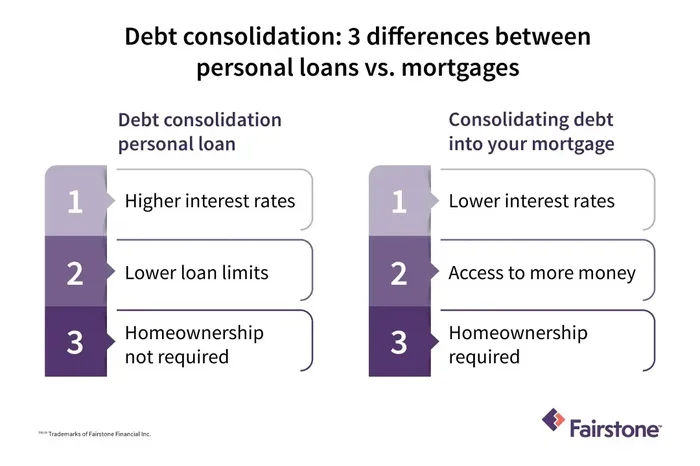
A personal loan vs mortgage loan decision depends on your needs, credit score, and repayment timeline. Personal loans offer fast cash for smaller expenses, while mortgage loans fund major property purchases with lower rates. Understanding the differences helps you pick the right financing path without risking unnecessary debt.
Choosing the right financing can feel overwhelming. You want the best rates, the safest terms, and a plan that fits your life. That is why comparing a personal loan vs mortgage loan matters before you sign anything. Each option serves a different purpose, and the wrong choice can cost you thousands.
Some people need quick cash for renovations, medical bills, or debt consolidation. Others want to buy a home or investment property. The loan you pick should match your goal, your budget, and your comfort with risk. In this guide, we will break down the differences in simple terms so you can decide with confidence.
Key Takeaways
- Loan purpose matters: Personal loans work for short-term expenses, while mortgages suit real estate purchases.
- Interest rates differ: Mortgages usually carry lower rates because they are secured by property.
- Repayment terms vary: Personal loans run shorter, whereas mortgages stretch over decades.
- Collateral requirements: Mortgages need property as security, but personal loans often remain unsecured.
- Credit impact: Both loans affect your credit score, but missed payments hurt more with larger debts.
- Approval speed: Personal loans approve faster, while mortgages require longer verification processes.
- Best fit depends on goals: Match the loan type to your financial situation and long-term plans.
📑 Table of Contents
Personal Loan Vs Mortgage Loan: The Core Differences
When people compare a personal loan vs mortgage loan, they usually want to know which one costs less and which one is easier to get. The short answer is that both can be useful, but they are built for different situations. A personal loan is usually unsecured, which means you do not put up property as collateral. A mortgage loan is secured by the home itself, so the lender can reclaim the property if you stop paying.
This basic difference changes almost everything else. It affects your interest rate, your repayment timeline, your monthly payment, and even your approval chances. If you understand the structure of each loan, you can avoid surprises later. You can also choose the option that supports your financial goals instead of stressing your budget.
What Is a Personal Loan?
A personal loan gives you a lump sum of money that you repay in fixed monthly installments. Most personal loans are unsecured, so you do not need to pledge a house, car, or savings account. Lenders usually look at your credit score, income, and debt-to-income ratio before approving the loan.
People often use personal loans for smaller projects or unexpected costs. Common uses include home repairs, wedding expenses, medical bills, and consolidating high-interest debt. Because the loan amount is usually lower than a mortgage, the approval process can be faster and less complicated.
What Is a Mortgage Loan?
A mortgage loan is designed for buying property, usually a home. The property itself acts as collateral, which gives the lender more security. That security often allows lenders to offer lower interest rates and longer repayment periods.
Mortgages are typically much larger than personal loans, so the application process is more detailed. Lenders may review your employment history, credit report, tax documents, and the property appraisal. They also look closely at your debt-to-income ratio to make sure the monthly payment fits your budget.
Key Comparison At a Glance
Here is a simple comparison to help you see the main differences side by side.
| Feature | Personal Loan | Mortgage Loan |
|---|---|---|
| Collateral | Usually none | Property secures the loan |
| Typical Loan Amount | Smaller to moderate | Larger, often for home purchases |
| Interest Rate | Often higher | Usually lower |
| Repayment Term | Shorter | Longer, often 15 to 30 years |
| Best Use | Expenses, repairs, consolidation | Home buying or refinancing |
| Approval Time | Faster | Slower, more documentation |
Interest Rates, Terms, And Monthly Payments
One of the biggest reasons people weigh a personal loan vs mortgage loan is cost. Interest rates can change the total amount you pay over time, and loan terms affect your monthly budget. A lower rate may sound better, but a longer term can still increase the total interest you pay.
Personal loans often come with shorter repayment periods, which means your monthly payment may be higher. Mortgages usually spread payments across many years, which can lower the monthly amount. That said, a mortgage is often a much larger loan, so even a small rate difference can matter a lot.
How Rates Affect Your Choice
If you are borrowing a smaller amount for a short-term need, a personal loan may make sense even if the rate is higher. The total interest may still be manageable because the loan balance and term are smaller. On the other hand, if you are financing a home, a mortgage usually offers a more affordable rate structure for a large amount.
It helps to look beyond the advertised rate. Ask about fees, closing costs, prepayment penalties, and whether the rate is fixed or variable. These details can change the real cost of the loan. A loan that looks cheap at first may become expensive once you add all the charges.
Monthly Payment Considerations
Your monthly payment should fit comfortably into your budget. If the payment feels too tight, you may struggle when unexpected expenses appear. A personal loan can create a stronger monthly obligation because the term is shorter. A mortgage may feel easier month to month, but it locks you into a long-term commitment.
A good rule is to compare the payment with your income and other obligations. Leave room for savings, emergency costs, and normal living expenses. The best loan is not just the one with the lowest rate. It is the one you can repay without putting your finances under pressure.
Quick Tip
Always compare the total repayment amount, not just the monthly payment. A smaller payment over a longer term can still cost more in the end.
When a Personal Loan Makes More Sense
A personal loan often works best when you need money quickly and do not want to tie the loan to a property. It can be a practical choice for projects that do not require a huge sum. It may also help when you want to combine several debts into one payment.
People sometimes choose personal loans for home improvements that are too small for a mortgage refinance or home equity product. Others use them for urgent expenses when they need a faster approval timeline. If you have solid credit, you may qualify for a reasonable rate and a simple repayment schedule.
Common Uses for Personal Loans
Here are some situations where a personal loan may be a good fit:
- Debt consolidation: You combine multiple balances into one loan with a single payment.
- Home repairs: You cover urgent fixes that do not require a large property-backed loan.
- Medical or emergency costs: You manage unexpected bills without using high-interest credit cards.
- Major life events: You fund planned expenses when saving alone would take too long.
- Short-term cash needs: You borrow a moderate amount and want a straightforward repayment plan.
Pros and Cons of Personal Loans
Personal loans can be convenient, but they are not perfect for every situation. Think about both sides before you apply.
Pros:
- Usually faster approval and funding
- No property collateral required in many cases
- Simple application process
- Useful for a wide range of expenses
Cons:
- Rates can be higher than secured loans
- Loan amounts may be limited
- Shorter terms can raise monthly payments
- Fees may add to the total cost
Common Mistake
Some borrowers focus only on getting approved and ignore the total cost. A personal loan can become expensive if you choose a long repayment plan with high fees or a steep rate.
When a Mortgage Loan Is the Better Fit
A mortgage loan is usually the right choice when you want to buy a home or tap into property value for a major goal. Because the loan is tied to real estate, lenders often offer more favorable terms for large amounts. That makes mortgages a strong option for long-term housing needs.
This type of loan can also be relevant if you are refinancing or restructuring your housing finances. Some borrowers use a mortgage to secure a lower rate or to change the length of their repayment. Others may use one to stabilize their monthly housing costs over time.
Best Scenarios for a Mortgage Loan
A mortgage may be a better match when:
- You are buying a home: The loan is designed for property purchases.
- You need a large amount: Bigger projects often require a more substantial financing option.
- You want a longer repayment window: Spreading payments out can reduce the monthly burden.
- You qualify for a lower rate: Secured loans often come with better pricing.
- You plan to stay long term: A mortgage can align with a stable housing plan.
Pros and Cons of Mortgage Loans
Mortgages can be powerful tools, but they also come with responsibilities. Here is what to consider.
Pros:
- Often lower interest rates
- Built for large property purchases
- Longer terms can ease monthly payments
- May support long-term financial stability
Cons:
- Property serves as collateral
- More paperwork and longer processing
- Closing costs and fees can add up
- Foreclosure risk if payments are missed
Expert Insight
A mortgage is not just a loan. It is a long-term financial commitment tied to your home. Before choosing one, make sure the payment, the timeline, and the total cost match your future plans.
Credit Score, Approval, And Risk Factors
Your credit profile plays a major role in both loan types. Lenders want to see that you can repay on time, and your credit history helps them judge that risk. A stronger credit profile can improve your chances of approval and may help you secure better terms.
With a personal loan, lenders may focus heavily on your credit score and income stability. With a mortgage, they usually dig deeper into your overall financial picture. That can include employment details, existing debts, and the property value. In both cases, a higher debt load can make approval harder.
How Credit Affects Each Loan
A good credit score can open doors, but the loan type still matters. A personal loan may be more accessible for smaller amounts, especially if you have decent credit and steady income. A mortgage may still be possible with a solid profile, but the process is usually more demanding.
If your credit is less strong, you may face higher rates or stricter requirements. That is why it helps to review your credit report before applying. Look for errors, reduce unnecessary debt if you can, and avoid taking on new obligations right before you apply.
Risk Factors to Watch
Every loan carries risk, but the type of risk can differ. With a personal loan, the main risk is often affordability. If the monthly payment is too high, it can strain your budget. With a mortgage, the risk can be both affordability and property loss if payments stop.
It is also smart to think about life changes. A job shift, medical issue, or major expense can affect your ability to repay. Choosing a loan with some breathing room can make those changes easier to handle.
Common Mistake
Many people compare only the monthly payment and forget the long-term obligation. A mortgage can feel manageable at first, but it is a multi-year commitment that should fit your broader financial plan.
How to Decide Between the Two
When you compare a personal loan vs mortgage loan, start with your goal. Ask yourself what the money is for, how much you need, and how long you want to repay it. The best choice is usually the one that matches the purpose of the loan.
Next, look at your budget. Can you handle a higher monthly payment over a shorter term? Or would a longer repayment period make more sense for your income? Then compare the total cost, not just the headline rate. Fees, terms, and loan size all matter.
A Simple Decision Checklist
Use this quick checklist to narrow your options:
- Purpose: Is the loan for a home purchase or a smaller expense?
- Amount: Do you need a large sum or a moderate one?
- Timeline: Do you want a short repayment period or a long one?
- Collateral: Are you comfortable using property as security?
- Budget: Will the monthly payment leave room for other costs?
- Credit profile: Are you in a strong position to qualify for better terms?
Final Thoughts Before You Apply
The right loan should help you move forward without creating unnecessary pressure. If you need a smaller amount quickly, a personal loan may be the simpler path. If you are buying a home or financing a major property-related goal, a mortgage is often the more suitable option.
Take your time, compare offers, and read the fine print. Ask questions about rates, fees, and repayment terms before you commit. A careful choice today can save you money and stress later.
Key Takeaways
- Match the loan to the goal: Personal loans suit smaller needs, while mortgages support property purchases.
- Compare total cost: Look at rates, fees, and repayment length, not just the monthly payment.
- Check your budget: Make sure the payment fits your income and leaves room for emergencies.
- Understand collateral: Mortgages use property as security, while personal loans often do not.
- Review your credit: A stronger profile can improve approval chances and loan terms.
Frequently Asked Questions
What is the main difference between a personal loan and a mortgage loan?
The main difference is that a personal loan is usually unsecured and used for smaller expenses, while a mortgage loan is secured by property and used for home purchases or large real estate goals. Mortgages typically have longer terms and lower rates, while personal loans are often faster to obtain.
Can I use a personal loan instead of a mortgage?
Sometimes, but usually only for smaller amounts. A personal loan may work for minor repairs or short-term needs, but it is rarely practical for buying a home because the loan amount and terms are different.
Which loan usually has a lower interest rate?
A mortgage loan usually has a lower interest rate because it is secured by property. Personal loans often carry higher rates since they are commonly unsecured and carry more risk for the lender.
Is a personal loan harder to qualify for than a mortgage?
Not always. Personal loans can be easier to qualify for in some cases because the process is simpler and the loan amount is smaller. Mortgages usually require more documentation and a deeper review of your finances.
What happens if I miss payments on either loan?
Missed payments can hurt your credit score and may lead to fees or default. With a mortgage, the risk can be more serious because the property is used as collateral, while a personal loan may lead to collections or legal action if left unpaid.
How do I choose the right option for my situation?
Start by identifying your goal, the amount you need, and the repayment timeline you can afford. If you are buying property or need a large secured loan, a mortgage may fit better. If you need a smaller amount quickly, a personal loan may be the simpler choice.
