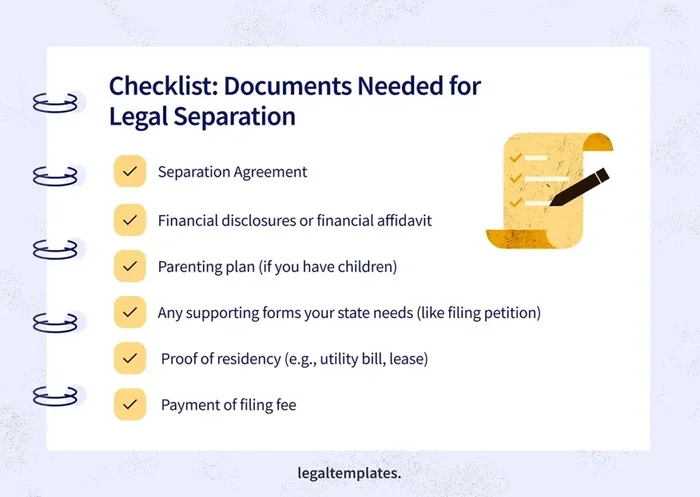
Filing for legal separation is a significant step that requires careful planning and clear understanding of your rights. This guide walks you through the entire process so you can approach it with confidence and clarity. You will learn about the necessary documents, court requirements, and how to protect your financial and personal interests. Taking the right steps early can make a challenging situation much more manageable.
Deciding to live apart from your spouse is never easy. It brings emotional weight, practical questions, and a lot of uncertainty. If you are considering this path, you are not alone. Many couples choose legal separation as a way to create space while keeping their marriage legally intact. It can feel overwhelming at first, but breaking the process into clear steps makes it much more manageable.
This guide will walk you through everything you need to know. You will learn what legal separation actually means, how it differs from divorce, and what paperwork you will need. We will also cover how to prepare your finances, what to expect in court, and how to protect yourself during the transition. By the end, you will feel much more confident about taking the next step.
Key Takeaways
- Understand the difference: Legal separation is not the same as divorce and offers distinct legal protections.
- Check your state laws: Requirements vary significantly by jurisdiction, so research your local rules first.
- Gather financial documents: Bank statements, tax returns, and debt records are essential for the filing process.
- Prepare a separation agreement: This document outlines custody, support, and property division while you remain legally married.
- File with the court: Submit your petition and pay the required fees to officially start the process.
- Consider professional help: A family law attorney can ensure your rights are protected and paperwork is correct.
- Plan for the future: Legal separation can be a stepping stone to divorce or a permanent arrangement depending on your goals.
📑 Table of Contents
- What Is Legal Separation and How Does It Work
- How To Prepare Before Filing for Legal Separation
- Steps To File for Legal Separation
- Creating a Strong Separation Agreement
- Common Challenges and How To Handle Them
- What Happens After You File for Legal Separation
- Final Thoughts on Filing for Legal Separation
What Is Legal Separation and How Does It Work
Legal separation is a formal court process that allows married couples to live apart while remaining legally married. It is not just moving out with a verbal agreement. Instead, it involves a court order that outlines the rights and responsibilities of each spouse during the separation period. This can include child custody arrangements, spousal support, division of debts, and property usage.
Many people confuse legal separation with divorce, but the key difference is that the marriage itself is not dissolved. You are still legally married, which means you cannot remarry. However, you gain many of the same legal protections that come with divorce. This makes it a popular choice for couples who want space but have religious, financial, or personal reasons to stay married.
Common Reasons Couples Choose Legal Separation
There are several reasons why couples opt for this path instead of filing for divorce right away. Some want to give their relationship a chance to heal without the pressure of living together. Others need time to sort out financial matters or protect their health insurance benefits. A few couples use it as a trial period before deciding whether to reconcile or divorce permanently.
- You want to maintain your marital status for religious or cultural reasons.
- You need to keep health insurance or other benefits tied to your marriage.
- You want to establish clear boundaries and financial arrangements before making a final decision.
- You are unsure about divorce and want a structured pause to think things through.
Legal Separation vs Divorce: Key Differences
Understanding the difference between these two options helps you make the right choice for your situation. Both processes involve court filings and agreements about money, children, and property. The main distinction is that divorce ends the marriage completely, while legal separation keeps the marital bond intact.
Here is a quick comparison to help you see the differences clearly:
| Aspect | Legal Separation | Divorce |
|---|---|---|
| Marital Status | Still legally married | Marriage is permanently ended |
| Remarriage | Not allowed | Allowed after finalization |
| Benefits | Health insurance, tax filing, and military benefits may continue | Benefits usually end or must be renegotiated |
| Reversibility | Can sometimes be converted to divorce or reconciliation | Generally final and difficult to reverse |
| Court Process | Similar paperwork and hearings | Similar paperwork and hearings |
As you can see, the practical arrangements can look very similar. The choice often comes down to your long-term goals and personal circumstances. If you think you might reconcile, legal separation gives you that option without losing your legal standing. If you are certain the marriage is over, divorce may be the clearer path.
How To Prepare Before Filing for Legal Separation
Preparation is the most important part of the process. Rushing into filing without a clear plan can lead to mistakes, delays, and unnecessary stress. Taking time to organize your information will make the entire experience smoother and more predictable. Start by gathering your documents and understanding your financial picture.
Gathering Essential Documents
Courts require detailed information about your marriage, finances, and children if applicable. Having these documents ready before you file will save you time and help your attorney or court clerk assist you more efficiently. Make copies of everything and keep them in a safe, organized folder.
- Marriage certificate or proof of your legal marriage
- Recent bank statements for all shared and individual accounts
- Tax returns from the past two to three years
- Pay stubs and proof of income for both spouses if possible
- Mortgage statements, loan documents, and debt records
- Property deeds, vehicle titles, and investment account statements
- Any existing agreements about custody, support, or property
Understanding Your Financial Situation
Money is often one of the biggest sources of stress during separation. Before you file, take a close look at your income, expenses, assets, and debts. Create a simple budget that shows what you need to live on independently. This will help you understand what kind of support you might need and what you can realistically afford.
It is also wise to open your own bank account if you do not already have one. This gives you a separate space for your income and expenses. You should also gather information about any retirement accounts, credit cards, and shared debts. Knowing the full picture now will protect you later and make negotiations much easier.
Steps To File for Legal Separation
Once you are prepared, the actual filing process follows a fairly standard path. The exact steps can vary by state and county, but the general flow is similar in most places. Following each step carefully will help you avoid common pitfalls and keep the process moving forward.
Step 1: Check Your State and Local Requirements
Every jurisdiction has its own rules about residency, paperwork, and filing fees. Some states require you to live in the area for a certain period before you can file. Others have specific forms that must be used for legal separation petitions. Start by visiting your local court website or calling the clerk’s office to get the right information.
You should also check whether your state allows legal separation at all. A few states do not recognize it as a formal legal status, which means you may need to pursue a different option. Knowing this early will save you from wasting time on a process that is not available to you.
Step 2: Complete the Required Forms
After you understand the local rules, you will need to fill out the official forms. These usually include a petition for legal separation, a summons, and sometimes a parenting plan if children are involved. You may also need to submit a financial declaration or a proposed separation agreement.
Take your time with these forms. Read every question carefully and answer honestly. Incomplete or inaccurate information can delay your case or cause problems later. If the paperwork feels confusing, do not hesitate to ask a legal professional for guidance.
Step 3: File the Petition With the Court
Once your forms are complete, you will submit them to the appropriate court along with the required filing fee. The court will stamp your documents and assign a case number. This officially starts the legal separation process. You will then need to serve the papers to your spouse according to your local rules.
Serving the papers means delivering them in a legally recognized way, such as through a process server or certified mail. Your spouse must receive proper notice so they have a chance to respond. Keep proof of service, as the court will likely require it before moving forward.
Step 4: Respond to Your Spouse’s Position
After your spouse receives the papers, they will have a window of time to respond. They may agree to your proposed terms, or they may file their own requests. If both of you can agree on the major issues, the process can be relatively smooth. If there are disagreements, you may need negotiations, mediation, or even a court hearing.
Stay calm and focused during this stage. It is normal for emotions to run high, but keeping communication clear and respectful will help. If you have children, prioritize their needs and try to find common ground wherever possible.
Creating a Strong Separation Agreement
A separation agreement is one of the most important documents in this process. It lays out the terms of your living arrangement and financial responsibilities while you are separated. A well-written agreement can prevent future conflicts and give both parties a clear roadmap to follow.
What To Include in Your Agreement
Your agreement should cover the key areas of your life that will change during the separation. Being thorough now will reduce confusion later. Think about daily logistics, long-term finances, and any responsibilities tied to children or property.
- Where each spouse will live and whether the family home will be sold or kept
- How bills, debts, and daily expenses will be divided
- Whether spousal support will be paid and in what amount
- Child custody schedules, visitation, and decision-making responsibilities
- Child support amounts and how they will be paid
- How shared property, vehicles, and accounts will be handled
- Rules about communication and whether dating is permitted during separation
When To Seek Professional Help
You do not always need a lawyer to create a separation agreement, but professional help can be invaluable in many situations. If you have significant assets, complex debts, or disagreements about custody, an attorney can protect your interests. A lawyer can also make sure your agreement meets legal standards and will hold up in court.
Mediation is another option worth considering. A neutral mediator can help you and your spouse work through disagreements without going to court. This is often less expensive and less stressful than a contested hearing. If you can cooperate, mediation can be a very effective path.
Common Challenges and How To Handle Them
Legal separation can bring up many practical and emotional challenges. Knowing what to expect will help you handle them with more confidence. Below are some of the most common issues and simple ways to address them.
Emotional Stress and Uncertainty
Living apart from your spouse while still married can feel confusing and lonely. You may wonder whether you are making the right choice or what the future will look like. Give yourself permission to feel those emotions without letting them control your decisions. Talking to a counselor or trusted friend can help you stay grounded.
Financial Adjustments
Splitting household expenses and managing separate budgets can be a shock at first. You may need to cut back on certain costs or find new ways to cover your needs. Stick to the budget you created during your preparation phase and track your spending carefully. If you need support, request it through your separation agreement rather than making informal arrangements that are hard to enforce.
Disagreements About Children
If you have children, custody and scheduling disputes can be especially difficult. Focus on what works best for your kids rather than trying to win every point. Keep a written schedule, use a shared calendar, and communicate about school, health, and activities. If conflicts persist, consider mediation before asking the court to decide for you.
What Happens After You File for Legal Separation
Once your separation is officially in place, the real work of adjusting to your new arrangement begins. The court order gives you structure, but daily life will still require effort and communication. Understanding what comes next will help you stay prepared and avoid surprises.
Living Under a Separation Agreement
Your agreement will guide how you handle money, property, and time with your children. Follow it closely and keep records of your payments and communications. If circumstances change, you can ask to modify the agreement through the court or through mutual consent. Staying organized now will make any future changes much easier.
Can Legal Separation Lead to Divorce Later
Yes, legal separation can be a temporary step or a permanent arrangement. Some couples eventually reconcile and end the separation. Others decide to move forward with divorce after living apart for a while. In many places, you can convert a legal separation into a divorce petition without starting from scratch. This flexibility is one reason many people choose separation first.
Protecting Your Well-Being During the Process
Your health and peace of mind matter just as much as the legal details. Try to maintain routines, eat well, and get enough rest. If you are feeling overwhelmed, reach out for support instead of trying to handle everything alone. You may also find it helpful to read about how to stay healthy and positive in personal challenges as you navigate this transition. Taking care of yourself will help you make clearer decisions and move forward with more confidence.
Final Thoughts on Filing for Legal Separation
Filing for legal separation is a serious step, but it does not have to feel impossible. With the right preparation, clear paperwork, and a solid plan, you can move through the process with confidence. Take the time to understand your options, gather your documents, and protect your financial and personal interests. Whether you hope to reconcile or eventually divorce, legal separation gives you a structured way to create space and clarity. Trust yourself, stay organized, and remember that you do not have to face this alone.
Frequently Asked Questions
Do I need a lawyer to file for legal separation?
You do not always need a lawyer, but having one can help you avoid mistakes and protect your rights. A lawyer is especially useful if you have children, significant assets, or disagreements with your spouse.
How long does legal separation take?
The timeline varies by location and how quickly both spouses respond. Some separations are resolved in a few months, while others take longer if there are disputes or court delays.
Can I date while legally separated?
In many places, yes, because you are still legally married but living apart under a court order. However, dating can affect custody or support decisions, so it is wise to understand your local rules first.
Does legal separation affect my taxes?
It can, because you are still married and may file jointly or separately depending on your situation. You should check with a tax professional to see how your separation agreement impacts your filing status.
What if my spouse refuses to agree to the separation?
You can still file, but the court may need to decide the terms if your spouse does not cooperate. Mediation or a hearing can help resolve disagreements about money, custody, or property.
Can legal separation become a divorce later?
Yes, many couples use legal separation as a temporary step before deciding on divorce. In some places, you can convert the separation into a divorce petition without restarting the entire process.