
Deciding should I pay more on my mortgage is a big financial choice that can save you thousands in interest. Paying extra lowers your principal balance faster, but it also ties up cash that could go elsewhere. We will break down the math, the risks, and the best times to make extra payments so you can choose what fits your life and goals.
This is a comprehensive guide about Should I Pay More On My Mortgage.
Key Takeaways
- Extra payments cut interest: Paying more on your mortgage reduces the principal balance, which lowers the total interest you pay over time.
- Check your loan terms first: Some mortgages have prepayment penalties, so always review your contract before sending extra money.
- Emergency funds come first: Never drain your savings to pay down a mortgage if you do not have a safety net for unexpected expenses.
- Compare investment returns: If your mortgage rate is low, you might earn more by investing extra cash instead of paying down debt.
- Small amounts still help: Even one extra payment per year can shave years off your loan and save significant money.
- Use windfalls wisely: Tax refunds, bonuses, and gift money make excellent extra payments without hurting your monthly budget.
- Track your progress: Use a mortgage calculator to see exactly how extra payments change your payoff date and total savings.
[FEATURED_IMAGE_PLACEHOLDER]
Understanding the Mortgage Basics Before You Pay Extra
Many people ask should I pay more on my mortgage when they want to save money. It sounds simple, but your mortgage has rules that change the answer. A mortgage is a loan secured by your home. You pay it back over a set number of years, usually fifteen or thirty. Each month, part of your payment goes to interest and part goes to principal. Principal is the amount you borrowed. Interest is the cost of borrowing that money.
In the early years, most of your payment covers interest. Only a small slice reduces the principal. This is how amortization works. As time passes, more of your payment goes toward principal. When you pay extra, you skip the interest step and push money straight to the balance. That means less interest builds up later. The result is a shorter loan and a smaller total cost.
Before you send extra money, you need to know your loan type. Fixed rate loans keep the same interest rate for the life of the loan. Adjustable rate loans can change after a set period. Some loans have prepayment penalties. These are fees that punish you for paying early. You should also check if your lender applies extra payments to principal or to future months. Many lenders let you choose. Always mark your extra payment as principal only so you get the full benefit.
How Amortization Affects Your Decision
Amortization is the schedule that shows how your loan balance drops over time. At the start, the schedule is heavy on interest. This is why extra payments early in the loan make the biggest impact. A single extra payment in year two can save more than the same payment in year fifteen. The reason is simple. You stop interest from growing on a larger balance.
Think of it like a snowball. The longer you wait, the bigger the snowball gets. When you pay extra, you shrink the snowball before it rolls downhill. This saves you money and gives you freedom sooner. If you are close to the end of your loan, extra payments still help, but the savings are smaller. You should weigh the timing against your other goals.
Quick Tips for Reading Your Mortgage Statement
- Look for the principal and interest breakdown on your monthly statement.
- Find the remaining balance so you know where you stand.
- Check for any fees or penalties tied to extra payments.
- Confirm the lender accepts principal-only payments.
- Note your interest rate so you can compare it to other options.
The Real Math: How Extra Payments Save You Money
When you ask should I pay more on my mortgage, the math gives you a clear answer. Extra payments reduce the principal. A smaller principal means less interest each month. Less interest means more of your regular payment goes to principal. This creates a positive loop that speeds up your payoff. The savings can be large, especially on long loans with higher rates.
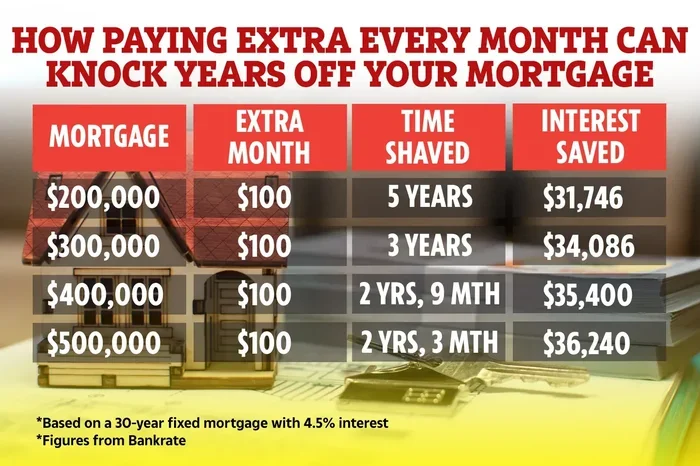
Let us look at a simple example. Imagine a thirty-year loan with a balance of two hundred thousand dollars and an interest rate of six percent. Your monthly principal and interest payment would be around twelve hundred dollars. If you add just one hundred dollars each month, you would pay off the loan several years early. You would also save a good amount of interest. The exact numbers depend on your rate and balance, but the pattern stays the same. Small, steady extra payments add up fast.
You can also make one big extra payment once a year. Some people use their tax refund for this. Others use a work bonus. A single annual payment can cut years off a mortgage. It also gives you flexibility because you do not need to budget for it every month. The best approach depends on your cash flow and your personality. Some people prefer small monthly amounts. Others like a yearly boost. Both work well when you stay consistent.
Comparison Table: Monthly Extra Payment vs. One Annual Payment
Below is a simple comparison to show how different extra payment styles can affect your loan. The numbers are estimates for a two hundred thousand dollar loan at six percent interest over thirty years.
| Strategy | Extra Amount | Estimated Time Saved | Estimated Interest Saved |
|---|---|---|---|
| One extra payment per year | One month of payment (about $1,200) | Around 4 to 5 years | Tens of thousands of dollars |
| Small monthly extra payment | $100 per month | Around 3 to 4 years | Significant interest reduction |
| Larger monthly extra payment | $200 per month | Around 6 to 7 years | Substantial interest reduction |
| No extra payments | $0 | Full thirty years | Highest total interest |
This table shows that consistency matters. You do not need a huge sum to make progress. You just need a plan you can keep. If you want to run your own numbers, use an online mortgage calculator. Enter your balance, rate, and extra payment amount. The results will show your new payoff date and total interest. That makes the decision much easier.
Common Mistakes When Calculating Savings
- Forgetting to account for taxes and insurance in your monthly budget.
- Assuming all extra payments automatically go to principal.
- Ignoring prepayment penalties that can eat into your savings.
- Comparing your loan to someone else without checking the rate difference.
- Stopping extra payments too soon without checking the new balance.
Should I Pay More On My Mortgage Or Invest Instead
This is one of the most common questions in personal finance. You may have extra cash each month. You can send it to your lender or put it into an investment account. The right choice depends on your interest rate, your risk tolerance, and your goals. If your mortgage rate is high, paying it down often feels like a safe win. If your rate is low, investing may offer better long-term growth.
Paying extra on a mortgage gives you a guaranteed return. That return is your interest rate. There is no market risk. You know exactly how much you will save. Investing is different. Markets go up and down. You might earn more than your mortgage rate, or you might earn less. Some people sleep better when they own their home free and clear. Others prefer to build a large investment portfolio. Both mindsets are valid. The key is to be honest about your comfort level.
You should also think about liquidity. Money tied up in home equity is not easy to access. If you need cash for a job change, a repair, or an emergency, you cannot grab it from your mortgage balance. Investments are usually more liquid. You can sell them or withdraw them when needed. This is why many people keep a balanced approach. They pay some extra on the mortgage and also invest for the future.
Expert Insights on Balancing Debt and Investing
Financial experts often say you should compare your mortgage rate to your expected investment return. If your mortgage rate is higher than what you expect to earn, paying extra makes strong sense. If your mortgage rate is lower, investing may win over time. However, numbers are not the only factor. Your stress level matters too. Some people feel weighed down by debt even when the math looks good. For them, paying down the mortgage brings peace of mind. That peace has value.
Another expert tip is to fund your emergency savings first. Life is unpredictable. A solid cash buffer protects you when something goes wrong. After that, you can split extra money between your mortgage and your investments. This gives you both security and growth. It also keeps your options open. You do not have to choose one path forever. You can adjust as your life changes.
Quick Tips for Choosing Between Mortgage Paydown and Investing
- Compare your mortgage rate to a realistic investment return.
- Think about how much debt stress you feel each month.
- Make sure you have a healthy emergency fund first.
- Consider how soon you might need access to cash.
- Review your plan once a year and adjust if needed.
When Paying Extra Makes the Most Sense
There are clear times when the answer to should I pay more on my mortgage leans toward yes. The first is when your interest rate is high. A high rate means the loan is expensive. Extra payments attack that cost directly. The second is when you have a stable income and a strong emergency fund. That means you can afford the extra payments without risking your safety net. The third is when you plan to stay in the home for a long time. If you will not move soon, the savings have time to grow.
Paying extra also makes sense when you want to reduce monthly stress. A smaller mortgage balance can make you feel more secure. It can also free up cash later if you refinance or remove private mortgage insurance. Some homeowners like the idea of owning their home before retirement. That goal is easier to reach with extra payments. If you are nearing retirement, lowering your housing costs can make your budget more comfortable.
Windfalls are another good reason to pay extra. A bonus, a gift, or a tax refund can go straight to principal. This does not strain your monthly budget. It also gives you a quick win. You see the balance drop and feel motivated. If you receive irregular income, you can use the extra dollars for the mortgage when you have a good month. This keeps your plan flexible and realistic.
Signs You Should Hold Back on Extra Payments
There are also times when extra payments are not the best move. If your cash reserve is thin, build savings first. If you have higher-interest debt, like credit cards, pay that down first. Credit card interest is usually much higher than mortgage interest. If you plan to move soon, the savings may be smaller. Selling a home can interrupt the benefit of extra payments. If your mortgage rate is very low, you may prefer to invest instead. These signs do not mean you should never pay extra. They just mean you should think carefully first.
Smart Ways to Pay More Without Stressing Your Budget
You do not need to make huge sacrifices to pay extra. The best plans are small, steady, and easy to maintain. One simple method is to round up your payment. If your payment is twelve hundred and forty dollars, you can pay thirteen hundred. That extra sixty dollars is easy to miss and easy to keep. Over time, it makes a real difference. Another method is to add a fixed amount each month. Even fifty dollars helps. The goal is to make the habit automatic so you do not have to think about it every month.
You can also change how often you pay. Some lenders let you make biweekly payments. That means you pay half your monthly amount every two weeks. Since there are twenty-six half payments in a year, you end up making one extra full payment. This is a quiet way to pay more without feeling the pinch. Just check with your lender first. Some services charge fees for biweekly plans, and you can often do the same thing on your own for free.
Another smart move is to direct any raise or income boost toward the mortgage. If your income goes up, your spending does not have to. You can keep your budget the same and send the extra income to principal. This is one of the easiest ways to pay more because it does not feel like a cut. You are simply using money you already have. The same idea works for side income. If you earn extra from a hobby or freelance work, put part of it toward the loan.
Quick Tips for Building a Stress-Free Extra Payment Plan
- Start small so the habit feels easy and sustainable.
- Automate the extra amount so you do not forget.
- Use raises, bonuses, and tax refunds for lump sum payments.
- Check your lender rules before changing your payment schedule.
- Review your budget each month to stay on track.
What to Watch Out For Before You Send Extra Money
Extra payments are helpful, but they are not risk-free if you are not careful. One big issue is prepayment penalties. Some loans charge a fee if you pay too much too soon. This is more common in certain loan types and older contracts. Always read your mortgage documents before you send extra money. If there is a penalty, calculate whether the savings still make sense. In many cases, the penalty is small compared with the interest savings, but you should know it exists.
Another issue is cash flow. If you send too much to the mortgage and then face a surprise expense, you may need to borrow at a higher cost. That can wipe out your progress. This is why emergency savings matter so much. A good rule is to keep a buffer that covers several months of expenses. Then you can pay extra with confidence. You should also keep retirement savings on track. Your future self needs money too. Balance is the key to long-term success.
You also need to make sure your extra payment is applied correctly. Some lenders automatically push extra money toward future months instead of principal. That does not give you the same benefit. Tell your lender exactly how to handle the payment. Mark it as principal only if that option exists. Keep copies of your payment confirmations. If something looks wrong, fix it quickly. A small mistake can slow down your progress.
Common Mistakes to Avoid
- Paying extra without checking for prepayment penalties.
- Draining your emergency fund to make a large extra payment.
- Letting extra payments replace retirement contributions.
- Assuming the lender will apply the money to principal automatically.
- Forgetting to update your plan after a rate change or life event.
Final Thoughts on Should I Pay More On My Mortgage
The choice to pay extra on your home loan is personal. The math is important, but your life matters just as much. If you want to save thousands in interest and own your home sooner, extra payments can help a lot. If you need flexibility, liquidity, or higher returns, investing may be a better fit. Many people find a middle path that works well for them. They pay some extra, save some cash, and invest for the future.
When you ask should I pay more on my mortgage, start with your numbers. Check your rate, your balance, and your loan terms. Then look at your budget, your savings, and your goals. If you have a stable income and a solid emergency fund, extra payments can be a powerful tool. If your rate is low or your cash is tight, you may want to focus elsewhere first. Either way, a clear plan beats a guess every time.
The best step is to make a simple plan you can keep. Start small, stay consistent, and review your progress each year. That way, you move toward your goal without stress. Your mortgage is a big part of your financial life, and you have more control over it than you might think. With a little attention, you can save money, reduce debt, and feel more secure in the home you worked hard to buy.
Frequently Asked Questions
Does paying extra on my mortgage really save money?
Yes, extra payments reduce your principal balance, which lowers the interest that builds up over time. That can shorten your loan and save you a significant amount of money.
How much extra should I pay each month?
Start with an amount that feels easy, such as fifty or one hundred dollars. Even a small amount helps when you stay consistent. You can always increase it later as your budget allows.
Will my lender apply extra payments to principal automatically?
Not always. Some lenders apply extra money to future payments instead of principal. Always tell your lender to apply the payment to principal only if that option is available.
Should I pay extra on my mortgage or save for emergencies first?
You should usually build an emergency fund before paying extra. A cash buffer protects you from high-cost borrowing if something unexpected happens. Once you have that safety net, extra payments make more sense.
Can I make one large extra payment once a year instead of monthly?
Yes, a yearly extra payment can still cut years off your loan and save interest. Many people use tax refunds or bonuses for this. It is a flexible option if monthly extra payments feel tight.
Is it better to pay off my mortgage early or invest the money?
It depends on your mortgage rate, your investment goals, and how much risk you want. A mortgage payoff gives a guaranteed return equal to your interest rate. Investing may offer higher growth, but it comes with market risk. Many people do a mix of both.
