
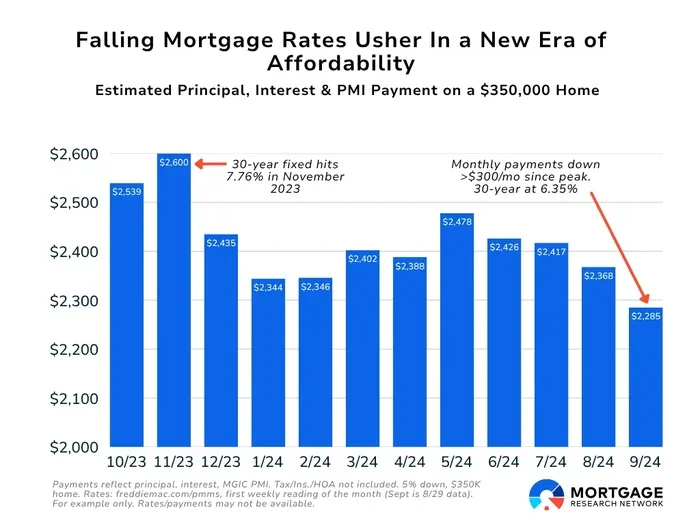
Many homeowners ask does your mortgage payment go down over time, but the answer is rarely simple. Your monthly bill usually stays the same if you have a fixed-rate loan, though the mix of interest and principal shifts. Taxes, insurance, and extra payments can also change what you pay each month. Understanding these parts helps you plan your budget better.
Key Takeaways
- Fixed monthly payments stay steady: Most standard loans keep the same base amount for the full term.
- Interest drops over time: Early payments cover mostly interest, while later payments build more equity.
- Taxes and insurance can change: Escrow items often rise, which may increase your total monthly bill.
- Extra payments lower total interest: Paying more toward principal can shorten your loan and reduce interest costs.
- Refinancing changes your payment: A new loan can lower your rate or extend your term, but it resets your amortization.
- ARM loans can shift: Adjustable-rate mortgages may go up or down after the initial fixed period ends.
- Review your statement regularly: Check for changes in escrow, fees, or insurance so you are not surprised.
📑 Table of Contents
- Does Your Mortgage Payment Go Down Over Time? The Short Answer
- How Your Monthly Payment Is Built
- Principal and Interest: Why the Balance Shifts
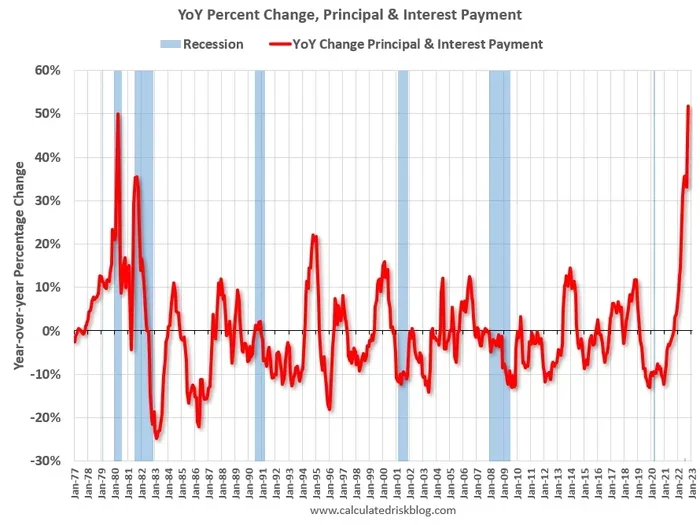
- Why Your Payment Might Go Up Instead
- When Your Payment Can Actually Go Down
- Fixed-Rate vs. Adjustable-Rate Mortgages
- How Extra Payments Change the Picture
- Practical Tips to Keep Your Payment Healthy
- Expert Insight: What Lenders and Advisors Often Say
- Key Takeaways for Homeowners
Does Your Mortgage Payment Go Down Over Time? The Short Answer
If you just bought a home, you may wonder does your mortgage payment go down over time. Most people expect the number to shrink as the years pass. That sounds logical. After all, you owe less money as you pay it off. But your monthly bill does not always drop. In many cases, it stays the same for decades. Sometimes it even goes up.
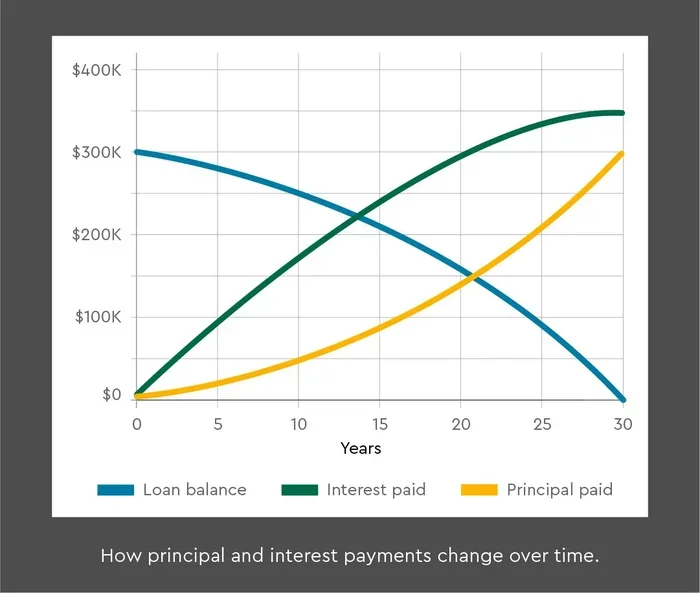
The reason is simple. A mortgage payment is usually made of several parts. The biggest pieces are principal and interest. Principal is the amount you borrowed. Interest is the cost of borrowing that money. On a fixed-rate loan, the total of these two parts stays level. What changes is how much of each payment goes to interest and how much goes to principal. Early on, interest takes most of the money. Later, principal takes more.
Other costs can also affect your total payment. Property taxes and homeowners insurance often get bundled into your monthly bill. If those costs rise, your payment can rise too. This is why your mortgage payment may feel sticky, even when your balance drops. Let’s break this down in plain language so you know what to expect.
How Your Monthly Payment Is Built
Your mortgage payment is not one single thing. It is a bundle of costs. Knowing the parts helps you understand why your bill behaves the way it does. Here are the main pieces:
Visual guide about mortgage payment decreasing over time
Image source: blogger.googleusercontent.com
- Principal: This reduces the loan balance.
- Interest: This is the lender’s fee for lending you money.
- Property taxes: These are collected by your local government.
- Homeowners insurance: This protects your home from damage and loss.
- Mortgage insurance: This may apply if your down payment was small.
When people ask does your mortgage payment go down over time, they often think only about principal and interest. That is a fair starting point. But the full payment includes escrow items too. Escrow is money your lender holds to pay taxes and insurance on your behalf. If your tax bill or insurance premium goes up, your escrow payment goes up. That can raise your total monthly amount.
So, your loan payment may stay fixed while your total bill moves. This is a key point. It means you can owe less on the house and still pay more each month. The change usually comes from outside costs, not the loan itself.
Principal and Interest: Why the Balance Shifts
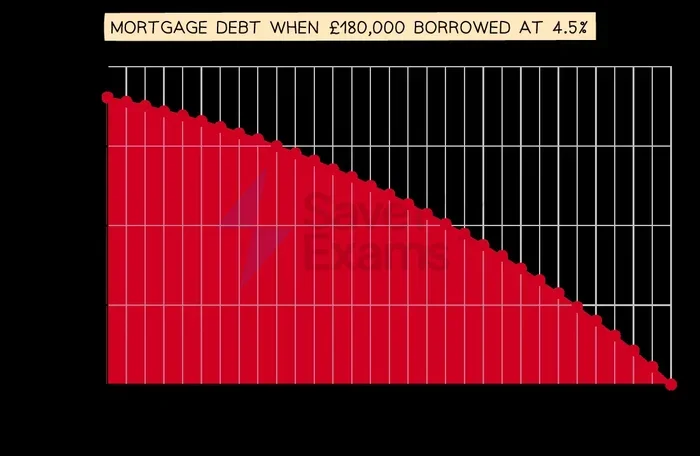
Principal and interest follow a set schedule called amortization. This schedule spreads your payments over the life of the loan. It is designed so you pay the same amount every month. That makes budgeting easier. But the split between principal and interest changes.
Visual guide about mortgage payment decreasing over time
Image source: cdn.savemyexams.com
At the start, your balance is high. Interest is calculated on that high balance. So, most of your early payment goes to interest. Only a small slice reduces the loan. Over time, the balance falls. Less balance means less interest. More of your payment then goes to principal.
This shift matters for a few reasons:
- Equity grows slowly at first: You build ownership faster in later years.
- Interest costs are front-loaded: You pay more interest in the early years.
- Your payment stays level: The total does not drop on a fixed-rate loan.
If you want to see this in action, look at your amortization schedule. It shows every payment and where the money goes. Many lenders provide this at closing. You can also ask for an updated schedule later. It helps you see the long arc of your loan.
A Simple Example
Imagine a $200,000 loan at a fixed rate for 30 years. Your monthly principal and interest might be around $1,200. In the first year, a large share of that $1,200 goes to interest. Only a small part reduces the balance. By year 20, the balance is much lower. Now, more of that same $1,200 goes to principal. The total stays near $1,200, but the mix changes. This is the core answer to does your mortgage payment go down over time for a fixed-rate loan. The base payment stays steady, even as the balance falls.
Why Your Payment Might Go Up Instead
Many homeowners see their payment rise and feel confused. They think the loan should get cheaper over time. But several things can push the bill higher. These are common reasons:
Visual guide about mortgage payment decreasing over time
Image source: commercebank.com
- Property taxes increase: Local governments may raise rates or reassess your home’s value.
- Insurance premiums rise: Homeowners insurance can cost more after claims, inflation, or market changes.
- Mortgage insurance changes: If you have PMI, it may drop off later, but not always in the way you expect.
- Escrow shortages: If your lender underestimates taxes or insurance, you may owe a catch-up amount.
- Fees or adjustments: Some loans have small service fees or annual adjustments.
This is why the question does your mortgage payment go down over time has a mixed answer. The loan portion may stay fixed. The escrow portion may climb. When that happens, your total payment rises. You may also get an annual statement from your lender explaining the change. Read it carefully. It usually shows what went up and why.
Escrow Accounts and Annual Reviews
Lenders often review escrow accounts once a year. They check your expected tax and insurance costs. If those costs are higher than expected, they adjust your monthly escrow payment. They may also ask for a one-time payment to cover a shortfall. If costs are lower, you might get a refund or a smaller monthly amount. This review is a normal part of many mortgages. It is a good habit to check these statements each year.
When Your Payment Can Actually Go Down
There are times when your total payment can drop. It does not happen automatically for most fixed-rate loans. But it can happen in a few situations:
- Property taxes fall: This is less common, but it can happen after a reassessment or local tax change.
- Insurance costs drop: Shopping for a better rate can lower this part of your bill.
- PMI is removed: If your equity reaches the required level, mortgage insurance may end.
- You pay extra toward principal: This does not lower the required payment on most loans, but it reduces the balance faster.
- You refinance: A new loan with a lower rate or different term can reduce your payment.
PMI removal is one of the clearest ways your payment can drop. If you put less than 20% down, you may have PMI. Once your balance falls enough, you can often request cancellation. That can lower your monthly cost. It is worth tracking your equity and asking about the rules for your loan.
Refinancing and the Payment Question
Refinancing is another path people consider when they ask does your mortgage payment go down over time. A refinance replaces your current loan with a new one. You might get a lower interest rate. You might switch from a 30-year loan to a 15-year loan. You might extend the term to lower the monthly payment. Each choice has trade-offs.
A lower rate can reduce your payment and total interest. But refinancing costs money. There are fees, appraisals, and paperwork. You need to stay in the home long enough to benefit. Also, a new loan resets your amortization. That means you may return to a stage where interest takes a bigger share again. So, a lower payment is possible, but it comes with a new loan structure.
Fixed-Rate vs. Adjustable-Rate Mortgages
The type of loan matters a lot. With a fixed-rate mortgage, your interest rate stays the same for the full term. That makes your principal and interest payment predictable. It is one of the main reasons people choose this loan. If you want stability, this is the classic option.
An adjustable-rate mortgage, or ARM, works differently. The rate is fixed for an initial period. After that, it can change based on market conditions. That means your payment can go up or down. Some people like ARMs because the starting rate is often lower. Others avoid them because future payments are less certain. If you have an ARM, the answer to does your mortgage payment go down over time is more unpredictable. It may drop if rates fall. It may rise if rates climb.
Quick Comparison
Here is a simple way to compare the two common loan types:
- Fixed-rate loan: Payment stays steady for principal and interest. Best for predictability.
- Adjustable-rate loan: Payment can change after the initial period. Best if you plan to move or refinance soon.
- Fixed-rate loan: Easier to budget long term. Less surprise.
- Adjustable-rate loan: Lower starting rate may help at first. More risk later.
If stability matters most, a fixed-rate loan is usually the safer choice. If you expect changes in your life, an ARM might fit for a short period. Just know the adjustment rules before you sign.
How Extra Payments Change the Picture
You can also affect your loan by paying extra. This does not usually lower your required monthly payment. But it does reduce your balance faster. That means you pay less interest over the life of the loan. It can also help you reach PMI removal sooner. And it can shorten the time until the loan is paid off.
If you want to use extra payments wisely, keep these tips in mind:
- Specify the extra amount goes to principal: Tell your lender you want it applied to the balance.
- Check for prepayment rules: Some loans have limits or special instructions.
- Use windfalls carefully: Tax refunds or bonuses can make a big dent in the balance.
- Keep an emergency fund: Do not drain your savings just to pay down the house.
Extra payments are a powerful tool. They do not change the scheduled payment amount on most fixed-rate loans. But they change the total cost and the payoff date. That is a meaningful difference. It can free up money later, especially if you plan to stay in the home for a long time.
Practical Tips to Keep Your Payment Healthy
If you want to manage your mortgage well, a few simple habits help. These are practical steps anyone can follow:
- Review your annual escrow statement: Look for changes in taxes or insurance.
- Shop insurance every few years: Compare quotes to see if you can lower your premium.
- Track your equity: Know when you may be able to remove PMI.
- Ask about your amortization schedule: It helps you understand where your money goes.
- Watch for rate opportunities: If rates drop a lot, consider whether refinancing makes sense.
- Keep records: Save statements, payment confirmations, and lender letters.
These steps keep you informed. They also help you answer does your mortgage payment go down over time with more confidence. You will know which parts of your bill can change and which parts stay fixed. That makes financial planning easier.
Common Mistakes to Avoid
A few mistakes show up often. Watch out for these:
- Assuming the payment always drops: It usually does not on a fixed-rate loan.
- Ignoring escrow changes: Taxes and insurance can move your total bill.
- Forgetting to request PMI removal: Do not wait for the lender to act if you qualify.
- Refinancing without doing the math: Fees and reset periods matter.
- Skipping insurance comparisons: Loyalty does not always save money.
Avoiding these mistakes can save you stress and money. It also helps you plan for the real behavior of your loan, not the version you hope for.
Expert Insight: What Lenders and Advisors Often Say
Mortgage professionals often remind people that a mortgage is a long-term contract. The payment structure is designed for predictability. That is helpful for families trying to budget. It also means the loan does not automatically get cheaper each month. The balance drops, yes. But the payment is set to cover interest and principal in a steady way.
Advisors also point out that your total housing cost is bigger than the loan payment. Maintenance, utilities, taxes, and insurance all matter. When people ask does your mortgage payment go down over time, they are often thinking about the whole cost of owning a home. That is a smart way to look at it. A lower loan balance is good, but other costs can rise. A full budget gives you a clearer picture.
Another useful insight is this: the middle of your loan term is when things start to feel different. In the first half, interest dominates. In the second half, principal takes the lead. That does not lower the payment on a fixed-rate loan, but it does build equity faster. If you plan to sell or refinance later, that equity can be very useful.
Key Takeaways for Homeowners
Let’s bring this together. Your mortgage payment is a mix of parts. Some stay fixed. Some can change. Here is what to remember:
- Fixed-rate payments are steady: Principal and interest usually do not drop on their own.
- The balance still falls: You owe less each year, even if the payment stays the same.
- Taxes and insurance matter: These escrow items can raise your total bill.
- PMI can end: This may lower your payment once you reach enough equity.
- Refinancing can reset things: It may lower your payment, but it creates a new loan.
- ARMs can move both ways: Your payment may drop or rise after the initial period.
- Extra payments help long term: They reduce interest and can shorten the loan.
So, if you are asking does your mortgage payment go down over time, the best answer is: the loan portion usually stays level, but the full payment can change for other reasons. Knowing this helps you plan better and avoid surprises.
Frequently Asked Questions
Does your mortgage payment go down over time on a fixed-rate loan?
Usually, no. The principal and interest portion stays the same for the full term. What changes is how much of each payment goes to interest versus principal.
Why did my mortgage payment go up if my balance is lower?
Your total payment can rise if property taxes, insurance, or escrow amounts increase. The loan portion may stay fixed while these other costs go up.
Can my mortgage payment ever go down without refinancing?
Yes, in some cases. Your payment may drop if property taxes fall, insurance costs decrease, or PMI is removed after you build enough equity.
Does paying extra lower my monthly mortgage payment?
Not usually. Extra payments reduce your balance faster and cut total interest, but they do not change the required monthly payment on most standard loans.
How does an adjustable-rate mortgage affect my payment?
An ARM can change after the initial fixed period. Your payment may go down if rates fall, or it may go up if rates rise, so the future amount is less certain.
When can I remove PMI to lower my payment?
PMI can often be removed once your equity reaches the required level, commonly around 20%. Check your loan terms and ask your lender how to request cancellation.