
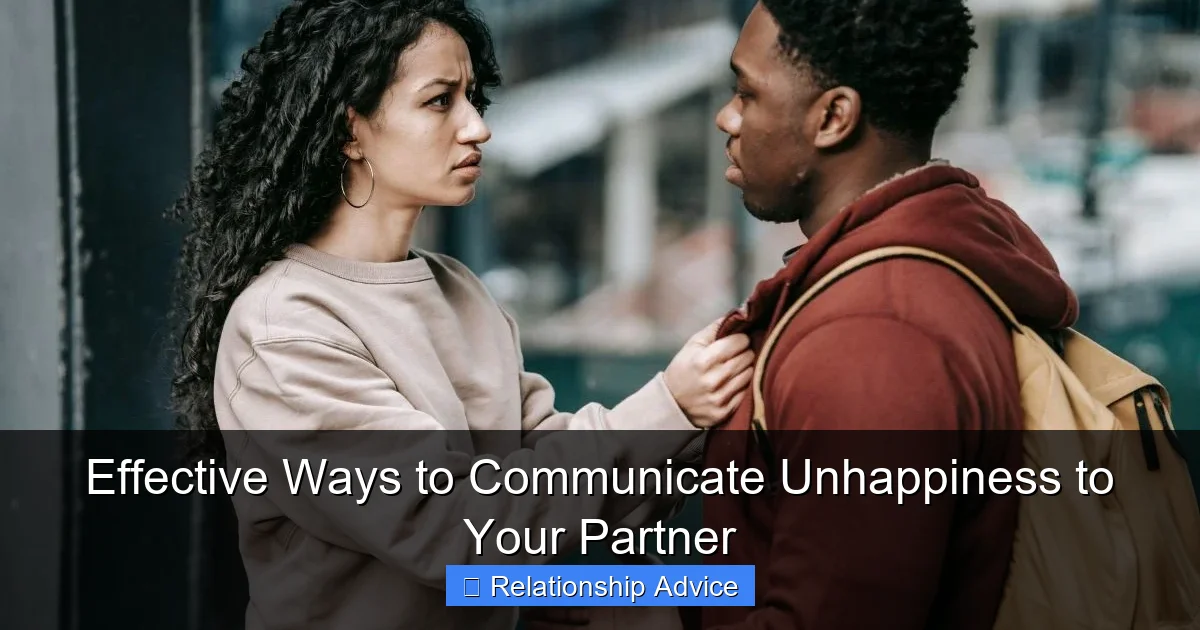
Communicating unhappiness to your partner doesn’t have to be scary or damaging. With the right approach—focused on empathy, timing, and clarity—you can express your feelings in a way that fosters understanding and growth. This guide offers practical, compassionate strategies to help you speak your truth while protecting your relationship.
Key Takeaways
- Use “I” statements: Focus on your feelings instead of blaming your partner to reduce defensiveness and promote openness.
- Choose the right time and place: Avoid heated moments; pick a calm, private setting where both of you can talk without distractions.
- Be specific and honest: Vague complaints lead to confusion. Clearly describe what’s bothering you and why it matters.
- Listen actively: Communication is a two-way street. Give your partner space to respond and truly hear their perspective.
- Focus on solutions, not just problems: Frame the conversation around growth and improvement, not punishment or criticism.
- Practice empathy and patience: Understand that your partner may need time to process. Change takes time and effort from both sides.
- Seek professional support if needed: A couples therapist can guide difficult conversations and help rebuild trust and connection.
📑 Table of Contents
- Why Honest Communication Matters in Relationships
- Understanding Your Own Feelings First
- Choosing the Right Time and Place
- Using “I” Statements to Express Yourself
- Being Specific and Avoiding Generalizations
- Listening to Your Partner’s Response
- Focusing on Solutions, Not Just Problems
- When to Seek Professional Help
- Maintaining Connection After the Conversation
- Final Thoughts: Communication as an Act of Love
Why Honest Communication Matters in Relationships
Let’s be real—no one likes talking about unhappiness. It feels vulnerable, uncomfortable, and sometimes even risky. You might worry about hurting your partner’s feelings, starting an argument, or making things worse. But here’s the truth: avoiding these conversations does far more damage than addressing them with care.
Healthy relationships aren’t built on constant happiness. They’re built on trust, respect, and the willingness to face challenges together. When you suppress your feelings, resentment builds. Small annoyances grow into deep-seated frustrations. Over time, that silence can erode intimacy, create emotional distance, and even lead to breakup or divorce.
On the flip side, when you communicate your unhappiness in a thoughtful, loving way, you open the door to deeper connection. You show your partner that you value the relationship enough to be honest. You give them the chance to understand you better and work with you toward a stronger bond. It’s not about winning an argument—it’s about growing together.
Think of it like tending a garden. You can’t just plant seeds and expect flowers without watering, weeding, and pruning. Relationships need the same kind of attention. And sometimes, that means having tough conversations about what’s not working.
The key is how you say it. You don’t have to be harsh, accusatory, or dramatic. In fact, the most effective way to communicate unhappiness is with kindness, clarity, and a focus on solutions. This article will walk you through practical, proven strategies to help you express your feelings in a way that strengthens—not weakens—your relationship.
Understanding Your Own Feelings First
Visual guide about Effective Ways to Communicate Unhappiness to Your Partner
Image source: realestlove.com
Before you even bring up the topic with your partner, take a moment to understand what you’re really feeling. Are you sad, frustrated, lonely, or unheard? Are you reacting to a specific incident, or is this a pattern that’s been building over time?
It’s easy to mistake surface emotions for the real issue. For example, you might feel angry about your partner leaving dishes in the sink—but the deeper issue could be feeling unappreciated or like your efforts at home aren’t valued. Or maybe you’re upset they canceled plans again, but what you really miss is quality time and emotional connection.
Ask Yourself These Questions
- What exactly made me feel unhappy?
- Is this a one-time thing, or has it happened before?
- What need of mine isn’t being met? (e.g., respect, attention, support)
- Am I reacting to stress from work, family, or other areas of life?
- What would make me feel better in this situation?
Journaling can be a powerful tool here. Write down your thoughts without filtering them. This helps you process your emotions and identify patterns. You might discover that your unhappiness stems from unmet expectations, lack of communication, or even your own stress spilling over into the relationship.
Once you have clarity, you’re in a much better position to communicate effectively. You’re not just reacting emotionally—you’re speaking from a place of self-awareness. That makes your message clearer, more honest, and less likely to come across as an attack.
Choosing the Right Time and Place
Visual guide about Effective Ways to Communicate Unhappiness to Your Partner
Image source: realestlove.com
Timing is everything when it comes to difficult conversations. Bringing up your unhappiness in the middle of an argument, when your partner is stressed, or in a public place is a recipe for disaster. You want both of you to be calm, present, and able to listen.
When NOT to Talk
- Right after a fight or during a heated moment
- When one or both of you are tired, hungry, or distracted
- In front of friends, family, or children
- Over text or social media (tone gets lost, and it’s easy to misinterpret)
Instead, choose a quiet, private moment when you both have time to talk without rushing. Maybe after dinner, during a weekend morning, or before bed—when the house is calm and you’re not distracted by work or screens.
You might say something like, “Hey, I’ve been thinking about something that’s been on my mind. Would you be open to talking about it later today? I really value our relationship and want to share how I’ve been feeling.”
This approach shows respect and gives your partner a heads-up. It also sets a tone of care and intention, rather than confrontation.
Create a Safe Space
Make sure the environment feels safe and neutral. Sit together, not across from each other like in an interrogation. Put away phones. Turn off the TV. Eye contact and body language matter—lean in, nod, and show that you’re engaged.
If your partner seems defensive or shut down, pause and say, “I don’t want this to feel like an attack. I just want us to understand each other better.” Reassurance goes a long way.
Using “I” Statements to Express Yourself
Visual guide about Effective Ways to Communicate Unhappiness to Your Partner
Image source: cdn.fashionpotluck.com
One of the most effective tools in relationship communication is the “I” statement. Instead of saying, “You never listen to me,” try, “I feel unheard when I’m talking and you’re on your phone.”
The difference is huge. The first statement blames and accuses. It puts your partner on the defensive. The second focuses on your feelings and experience. It invites empathy and understanding.
How to Structure an “I” Statement
Use this simple formula:
I feel [emotion] when [specific behavior] because [reason]. I would appreciate [request].
For example:
- “I feel lonely when we don’t spend time together on weekends because I value our connection. I would appreciate it if we could plan one activity just the two of us each week.”
- “I feel stressed when the house is messy because I need a calm environment to relax. I would appreciate it if we could divide cleaning tasks more evenly.”
- “I feel unimportant when you cancel our plans last minute because I was really looking forward to seeing you. I would appreciate a heads-up if something comes up.”
Notice how each statement avoids blame. It doesn’t say, “You’re selfish” or “You don’t care.” Instead, it focuses on your emotional experience and what you need.
Why “I” Statements Work
They reduce defensiveness. When someone feels attacked, their natural response is to fight back or shut down. But when you share your feelings honestly and respectfully, it’s harder to dismiss you.
They promote empathy. Saying “I feel sad” invites your partner to step into your shoes. It’s harder to ignore someone’s pain when they’re expressing it vulnerably.
They keep the focus on solutions. Instead of dwelling on who’s right or wrong, “I” statements shift the conversation toward what can be done differently.
Being Specific and Avoiding Generalizations
Vagueness is the enemy of effective communication. Saying things like “You always ignore me” or “You never help around the house” is not only inaccurate—it’s unhelpful.
Your partner can’t fix a problem they don’t understand. And when you use sweeping statements like “always” or “never,” it feels unfair and exaggerated—even if you’re upset.
Be Clear and Concrete
Instead of: “You never listen to me.”
Try: “Last night when I was telling you about my day, you were scrolling on your phone. I felt like you weren’t really hearing me.”
Instead of: “You’re so selfish.”
Try: “When you made plans with your friends without asking if I wanted to join, I felt left out and like my preferences don’t matter.”
Specific examples help your partner see exactly what you’re referring to. They also make it easier for them to respond constructively.
Avoid the Blame Game
It’s easy to fall into the trap of blaming. But blame creates distance. It makes your partner feel criticized and judged. Instead, focus on the behavior and its impact.
For example:
- ❌ “You’re so lazy. You never do the dishes.”
- ✅ “I’ve noticed the dishes have been piling up, and it makes me feel overwhelmed. I’d love it if we could take turns doing them.”
The second version is more likely to lead to a productive conversation. It’s not about labeling your partner—it’s about addressing a shared issue.
Listening to Your Partner’s Response
Communication isn’t just about talking—it’s about listening. After you’ve shared your feelings, give your partner space to respond. They might be surprised, hurt, or even unaware of how their actions affected you.
Practice Active Listening
Active listening means truly hearing what your partner is saying—not just waiting for your turn to talk. Here’s how:
- Make eye contact and nod to show you’re engaged.
- Paraphrase what they said: “So what I’m hearing is that you’ve been stressed at work and didn’t realize I was feeling neglected.”
- Ask clarifying questions: “Can you tell me more about why that was hard for you?”
- Avoid interrupting or jumping to conclusions.
Your partner might not respond perfectly. They might get defensive, cry, or need time to process. That’s okay. The goal isn’t to win the conversation—it’s to understand each other.
Validate Their Feelings
Even if you disagree, acknowledge their emotions. Say things like:
- “I can see why that would be frustrating for you.”
- “I didn’t realize you were feeling that way.”
- “Thank you for sharing that with me.”
Validation doesn’t mean you have to agree. It means you respect their experience. This builds trust and makes future conversations easier.
Focusing on Solutions, Not Just Problems
It’s easy to get stuck in the complaint phase. But the real goal of communicating unhappiness is to move toward improvement. That means shifting from “Here’s what’s wrong” to “Here’s how we can make it better.”
Collaborate on a Plan
Ask your partner, “What do you think we can do to improve this?” or “How can we work together to fix this?” This turns the conversation into a team effort.
For example:
- If you’re unhappy about lack of quality time: “Could we set aside one evening a week for a date night or just talking without distractions?”
- If you’re feeling unsupported: “Would it help if I shared my weekly schedule with you so you know when I’m stressed?”
- If chores are unbalanced: “Can we make a list of household tasks and divide them based on our schedules and preferences?”
The key is to be open to compromise. Your partner might have ideas you haven’t considered. Maybe they’re willing to help more, but they need clearer expectations. Or maybe they’re dealing with their own stress and need more patience.
Set Small, Achievable Goals
Big changes take time. Start with small steps. Instead of demanding a complete overhaul, agree on one or two changes to try for a week or two.
For example:
- “Let’s try putting our phones away during dinner for the next week and see how it feels.”
- “Can we check in with each other every Sunday to talk about how we’re feeling?”
Then, revisit the conversation later. Ask, “How did that go? What worked? What could we adjust?”
This ongoing dialogue keeps the relationship dynamic and responsive.
When to Seek Professional Help
Sometimes, despite your best efforts, conversations about unhappiness keep going in circles. You bring up the same issues, but nothing changes. Or maybe the conversations become so heated that they’re more damaging than helpful.
That’s when it’s time to consider couples therapy.
Signs You Might Need Help
- You’re having the same argument over and over
- One or both of you shut down or get defensive every time
- There’s a lack of trust or emotional safety
- You feel more disconnected than connected
- You’ve tried communicating but don’t see progress
A trained therapist can help you:
- Learn new communication skills
- Understand underlying patterns in your relationship
- Process past hurts or unresolved conflicts
- Rebuild trust and intimacy
Therapy isn’t a sign of failure—it’s a sign of commitment. It shows that you’re willing to invest in your relationship and grow together.
And remember: you don’t have to wait until things are “bad” to seek help. Many couples go to therapy as a preventive measure—to strengthen their bond before problems arise.
Maintaining Connection After the Conversation
After you’ve had a difficult conversation, it’s important to reconnect emotionally. You’ve just shared something vulnerable, and your partner may feel raw or uncertain.
Reassure and Reconnect
Let your partner know that your love and commitment haven’t changed. Say things like:
- “I shared this because I care about us and want us to be happy together.”
- “I’m not trying to push you away—I’m trying to bring us closer.”
- “Thank you for listening. It means a lot to me.”
Then, do something positive together. Watch a movie, take a walk, cook a meal, or simply sit and hold hands. Physical touch and shared experiences help rebuild emotional safety.
Follow Up
Check in after a few days. Ask, “How are you feeling about our conversation?” or “Is there anything else you’d like to share?” This shows that you’re still engaged and care about their experience.
And be patient. Change doesn’t happen overnight. Your partner might need time to reflect, adjust their behavior, or work through their own feelings.
Final Thoughts: Communication as an Act of Love
Communicating unhappiness to your partner isn’t about being difficult or demanding. It’s an act of love. It’s saying, “I value this relationship enough to be honest. I want us to grow, to understand each other, and to build something stronger.”
It takes courage to speak up. It takes humility to listen. And it takes patience to work through challenges together.
But when you do it with care, clarity, and compassion, you create a relationship that’s not just happy—but deeply connected, resilient, and real.
So the next time you feel unhappy, don’t stay silent. Don’t lash out. Instead, take a breath, choose your words wisely, and open your heart. Because the most beautiful relationships aren’t the ones without conflict—they’re the ones where both people are willing to show up, speak up, and grow together.
Frequently Asked Questions
How do I talk to my partner about unhappiness without starting a fight?
Focus on using “I” statements, choosing a calm moment, and expressing your feelings without blame. Stay respectful and open to their perspective to keep the conversation constructive.
What if my partner gets defensive when I bring up my feelings?
It’s normal for people to feel defensive when criticized. Reassure them you’re not attacking them—you’re sharing your experience. Give them space to respond and validate their feelings.
Is it okay to talk about unhappiness over text or email?
It’s better to have these conversations in person or over video call. Text can be misinterpreted, and tone is easily lost. Save important talks for face-to-face time.
How often should I bring up issues in my relationship?
There’s no set rule, but regular, honest check-ins help prevent resentment. Address concerns early and calmly, rather than letting them build up over time.
What if my partner doesn’t want to talk about it?
Give them time and space, but gently express that the conversation matters to you. Suggest a time that works for both of you, or consider involving a therapist to help facilitate dialogue.
Can talking about unhappiness actually improve a relationship?
Yes—when done with empathy and respect. Honest communication builds trust, deepens understanding, and helps couples grow stronger together over time.
