
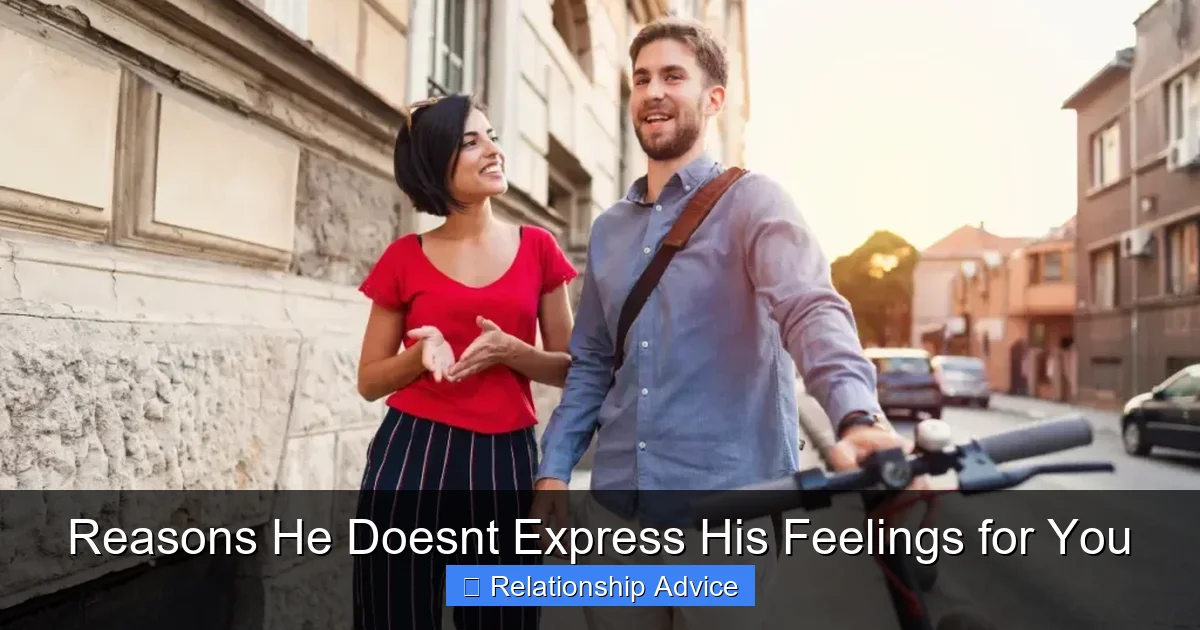
Wondering why he won’t say how he feels? It’s not always about you. Many men struggle to express emotions due to upbringing, fear of rejection, or emotional baggage. Understanding these reasons can help you respond with empathy and clarity.
Key Takeaways
- Fear of rejection: He may worry that confessing his feelings could lead to embarrassment or loss of the relationship.
- Emotional upbringing: If he wasn’t taught to express emotions as a child, he may not know how to do it now.
- Misreading the signs: He might think you’re not interested, so he holds back to protect himself.
- Commitment anxiety: Saying “I love you” or “I like you” can feel like a step toward long-term commitment, which may scare him.
- Different communication styles: Some men show love through actions—not words—and assume you understand.
- Past relationship trauma: A previous heartbreak or betrayal can make him hesitant to open up again.
- Uncertainty about his own feelings: He might genuinely not know what he feels yet, even if he cares deeply.
📑 Table of Contents
- Why He Doesn’t Express His Feelings for You: Understanding the Silence
- Fear of Rejection: The Biggest Emotional Barrier
- Emotional Upbringing: How Childhood Shapes Adult Expression
- Misreading the Signs: He Thinks You’re Not Interested
- Commitment Anxiety: The Fear of What Comes Next
- Different Communication Styles: Actions Over Words
- Past Relationship Trauma: Emotional Baggage from Before
- Conclusion: What You Can Do Moving Forward
Why He Doesn’t Express His Feelings for You: Understanding the Silence
It’s one of the most frustrating and confusing experiences in a budding relationship: you can feel the connection, sense the chemistry, and see the way he looks at you—but he never says a word about how he really feels. You find yourself wondering, “Does he even like me?” or “Why won’t he just tell me what’s going on?”
You’re not alone. Countless women have stood in your shoes, staring at their phones, replaying conversations, and analyzing every text for hidden meaning. The silence can feel like a wall—impenetrable and cold. But here’s the truth: his silence isn’t always a sign that he doesn’t care. In fact, it’s often a sign that he *does* care—but he’s struggling to find the right words, the right moment, or the emotional courage to speak up.
Understanding why he doesn’t express his feelings for you starts with shifting your perspective. Instead of assuming he’s disinterested or playing games, consider that he might be dealing with internal barriers that have nothing to do with you. Men, like women, experience emotions deeply—but they’re often socialized to suppress them. From a young age, many boys are taught to “be strong,” “not cry,” or “tough it out.” These messages can linger into adulthood, making emotional expression feel risky or unnatural.
This article will walk you through the most common reasons men struggle to express their feelings. We’ll explore psychological factors, communication differences, past experiences, and emotional fears—all with real-life examples and practical advice. By the end, you’ll have a clearer picture of what might be going on beneath the surface—and how you can respond in a way that fosters connection, not conflict.
Fear of Rejection: The Biggest Emotional Barrier
Visual guide about Reasons He Doesnt Express His Feelings for You
Image source: shebegan.com
One of the most powerful reasons he doesn’t express his feelings for you is simple: he’s afraid of being rejected.
Let’s be honest—putting your heart on the line is scary. Even if he’s 90% sure you like him back, that 10% of doubt can be enough to keep him silent. He might worry that if he says, “I really like you,” and you respond with hesitation or disinterest, it could damage the friendship or make things awkward between you. For some men, the fear of rejection is so intense that they’d rather keep their feelings hidden than risk losing what they already have.
This fear is often rooted in past experiences. Maybe he’s been turned down before in a way that felt humiliating. Or perhaps he grew up in an environment where vulnerability was punished or mocked. Whatever the source, the result is the same: he protects himself by staying quiet.
How Fear of Rejection Manifests
You might notice subtle signs that he’s holding back because he’s afraid:
– He avoids deep or emotional conversations.
– He pulls away after moments of intimacy or closeness.
– He makes jokes or deflects when you bring up feelings.
– He seems nervous or uncomfortable when the topic of “us” comes up.
For example, imagine you’re out on a date, and the conversation turns to relationships. You say, “I really enjoy spending time with you.” He smiles and says, “Yeah, me too,” but quickly changes the subject to sports or work. That shift isn’t necessarily a red flag—it could be his way of avoiding a conversation that makes him anxious.
What You Can Do
If you suspect fear of rejection is the issue, the best approach is to create a safe space for him to open up. You don’t need to force the conversation, but you can gently encourage honesty by modeling vulnerability yourself.
Try saying something like, “I’ve been thinking a lot about us lately, and I just want you to know that whatever you’re feeling is okay. I’m not looking for anything you’re not ready to give.” This takes the pressure off him and reassures him that you won’t judge or reject him.
Also, pay attention to how he responds to your openness. If he starts to share more over time, that’s a good sign. If he continues to shut down, it might be worth having a direct but gentle conversation about communication.
Emotional Upbringing: How Childhood Shapes Adult Expression
Visual guide about Reasons He Doesnt Express His Feelings for You
Image source: shebegan.com
Another major reason he doesn’t express his feelings for you comes down to how he was raised.
From a young age, boys are often taught to suppress emotions. Phrases like “Big boys don’t cry” or “Don’t be so sensitive” send a clear message: showing feelings is weak. Over time, this can lead to emotional repression—where a person feels their emotions but doesn’t know how to express them in healthy ways.
This doesn’t mean he doesn’t feel deeply. In fact, many men experience emotions just as intensely as women—but they’ve been conditioned to hide them. As a result, they may struggle to identify their feelings, let alone talk about them.
The “Stoic Male” Myth
Society has long promoted the idea of the stoic, unemotional man—the hero who saves the day without shedding a tear. While this image can be inspiring, it’s also damaging. It tells men that vulnerability is a flaw, not a strength.
As a result, many men grow up believing that expressing love, fear, or sadness is “unmanly.” They may equate emotional openness with losing control or appearing weak. This mindset can carry into adulthood, making it hard for them to say “I love you” or even “I miss you.”
Real-Life Example
Consider Mark, a 32-year-old teacher who’s been dating Sarah for six months. They have great chemistry, go on regular dates, and text daily. But Mark has never said “I like you” or “I care about you.” When Sarah asks him about it, he shrugs and says, “I don’t know, I just don’t say stuff like that.”
After a few conversations, Sarah learns that Mark’s father was emotionally distant and rarely expressed affection. His mother worked long hours, and emotional conversations were rare in the household. As a result, Mark never learned how to talk about feelings—even though he feels them deeply.
How to Help Him Open Up
If his emotional silence stems from upbringing, patience is key. You can’t change his past, but you can help create a new model of emotional expression in your relationship.
Start by sharing your own feelings openly and calmly. For example, “I really appreciated how you listened to me last night. It made me feel cared for.” This shows him that expressing emotions is safe and valued.
You can also gently invite him to reflect on his feelings. Try asking, “How did that make you feel?” instead of “Do you love me?” The first question is less intimidating and encourages self-awareness.
Over time, as he sees that vulnerability doesn’t lead to judgment or rejection, he may become more comfortable opening up.
Misreading the Signs: He Thinks You’re Not Interested
Visual guide about Reasons He Doesnt Express His Feelings for You
Image source: shebegan.com
Here’s a surprising but common reason he doesn’t express his feelings: he thinks *you’re* not interested.
Yes, really. Men are just as prone to overanalyzing signals as women are. He might be picking up on subtle cues—your tone of voice, your body language, your responses to his texts—and interpreting them as disinterest.
For example, if you’re busy and don’t always reply to his messages right away, he might assume you’re not that into him. Or if you haven’t initiated plans recently, he could think you’re pulling away. Even something as small as not saying “I miss you” back could be enough to make him doubt your feelings.
The Confidence Gap
Many men struggle with confidence in romantic situations. They may worry that they’re not “good enough” or that you’re out of their league. This insecurity can lead them to assume the worst—even when there’s no evidence to support it.
Imagine he’s been texting you regularly, but you’ve been swamped with work and haven’t replied as quickly as usual. He might think, “She’s not responding—she must not care.” Instead of asking, “Hey, is everything okay?” he stays silent, afraid of confirming his fears.
How to Clarify Your Interest
If you suspect he’s misreading your signals, it’s important to be clear and consistent in your communication.
Start by initiating contact more often. Send a quick text like, “Thinking of you—hope your day is going well.” This shows him that you’re still interested, even if you’re busy.
You can also be direct about your feelings. Try saying, “I really enjoy spending time with you, and I want you to know that I’m interested in seeing where this goes.” This removes ambiguity and gives him the confidence to open up.
Body language matters too. Smile when you see him, lean in when he talks, and make eye contact. These nonverbal cues can speak louder than words.
Commitment Anxiety: The Fear of What Comes Next
Another reason he doesn’t express his feelings for you is that he’s afraid of commitment.
For some men, saying “I love you” or “I want to be with you” feels like stepping off a cliff. It’s not that they don’t care—it’s that they’re terrified of what comes next: labels, expectations, responsibilities, and the possibility of heartbreak.
This anxiety can be especially strong if he’s been hurt before or if he’s not ready for a serious relationship. He might enjoy your company and feel a deep connection, but the idea of defining the relationship makes him nervous.
The “What If” Trap
Commitment anxiety often stems from a series of “what if” questions:
– What if we break up and ruin the friendship?
– What if I’m not ready for a long-term relationship?
– What if I’m not good enough for her?
– What if she expects more than I can give?
These thoughts can paralyze him, making it hard to take the next step—even if he wants to.
Signs of Commitment Anxiety
You might notice patterns that suggest he’s avoiding commitment:
– He avoids labeling the relationship (e.g., “We’re not dating, we’re just seeing each other”).
– He pulls back after moments of intimacy.
– He talks about the future in vague terms or avoids it altogether.
– He seems stressed or distant when you bring up exclusivity.
For example, you might say, “I’d love to be exclusive,” and he responds with, “I don’t know, I’m not really ready for that kind of thing right now.” That’s a clear sign of commitment anxiety.
How to Navigate Commitment Fears
If commitment anxiety is the issue, pushing him won’t help—it will only make him pull away further. Instead, focus on building trust and security.
Let him know that you’re not trying to rush anything. Say something like, “I’m not asking for a ring or a title—I just want to know where we stand.” This takes the pressure off and gives him space to process.
You can also share your own fears. For example, “I get nervous about commitment too. It’s scary to put your heart on the line.” This creates mutual understanding and shows that you’re not expecting perfection.
Over time, as he feels safer and more secure, he may become more willing to express his feelings and take the next step.
Different Communication Styles: Actions Over Words
Sometimes, the reason he doesn’t express his feelings for you isn’t about fear or insecurity—it’s simply that he communicates love differently.
Many men are taught to show affection through actions, not words. They might fix your car, bring you coffee, remember your favorite snack, or plan thoughtful dates—but never say “I love you.” To them, these actions *are* expressions of love. They assume you understand.
This difference in communication styles can lead to misunderstandings. You might be waiting for verbal confirmation, while he’s been showing his feelings all along.
The “Love Language” Gap
According to relationship expert Gary Chapman, there are five love languages: words of affirmation, acts of service, receiving gifts, quality time, and physical touch. Men are more likely to express love through acts of service or quality time, while women often prefer words of affirmation.
If his primary love language is acts of service, he might show he cares by helping you move, cooking you dinner, or driving you to the airport. But if you’re waiting for him to say “I love you,” you might miss the message.
How to Bridge the Gap
To avoid confusion, talk about how you both express and receive love.
You might say, “I really appreciate when you do things like bring me coffee or help me with chores. It makes me feel cared for. But I also love hearing you say nice things about me. It means a lot.”
This opens the door for him to understand your needs—and for you to appreciate his.
You can also encourage him to use words more often. Try saying, “I love it when you tell me you miss me. It makes my day.” Positive reinforcement can go a long way.
Past Relationship Trauma: Emotional Baggage from Before
Finally, one of the most overlooked reasons he doesn’t express his feelings for you is past relationship trauma.
If he’s been hurt before—whether through betrayal, abandonment, or emotional abuse—he may carry emotional scars that make it hard to open up again. He might fear that history will repeat itself, or that you’ll eventually leave him too.
This doesn’t mean he’s broken or incapable of love. It means he’s protecting himself from pain.
Signs of Past Trauma
You might notice behaviors that suggest unresolved trauma:
– He’s hesitant to get close, even when things are going well.
– He reacts strongly to small conflicts or misunderstandings.
– He avoids talking about past relationships.
– He seems guarded or emotionally distant at times.
For example, you might mention an ex in passing, and he suddenly becomes quiet or changes the subject. That could be a sign that past experiences are still affecting him.
How to Support Healing
If past trauma is the issue, your role isn’t to “fix” him—but to be patient and compassionate.
Let him know that you’re not his past. Say, “I know you’ve been hurt before, and I’m not here to hurt you. I care about you, and I want to build something real.”
Encourage him to seek support if needed—whether through therapy, counseling, or talking to a trusted friend. Healing takes time, and you can’t rush it.
Most importantly, be consistent. Show up, keep your word, and prove through your actions that you’re different.
Conclusion: What You Can Do Moving Forward
So, why doesn’t he express his feelings for you? The answer is rarely simple—but it’s almost never because he doesn’t care.
Whether it’s fear of rejection, emotional upbringing, miscommunication, commitment anxiety, different love languages, or past trauma, his silence usually stems from internal struggles, not a lack of interest.
The good news? Understanding these reasons gives you the power to respond with empathy, patience, and clarity. You don’t have to guess or overanalyze. You can create a safe space for him to open up—and in doing so, build a deeper, more honest connection.
Remember: love isn’t just about words. It’s about actions, consistency, and mutual respect. If he shows up for you in meaningful ways, that’s a powerful form of expression—even if he hasn’t said the words yet.
And if, after time and effort, he still can’t express his feelings? That’s information too. You deserve someone who can meet you halfway—emotionally and verbally.
Trust your instincts, communicate openly, and don’t be afraid to ask for what you need. The right person will not only feel deeply—but have the courage to say so.
Frequently Asked Questions
Is it a red flag if he never says “I love you”?
Not necessarily. Some men express love through actions rather than words. However, if he avoids emotional conversations altogether or seems emotionally closed off, it could indicate deeper issues that need addressing.
How long should I wait for him to express his feelings?
There’s no set timeline, but if you’ve been dating for several months and he shows no emotional openness, it’s fair to have a conversation about your needs and expectations.
Can a man love you but not say it?
Yes. Many men feel deeply but struggle to express emotions due to upbringing, fear, or communication style. Love can be shown in many ways—words are just one of them.
What if he says he’s “not good with feelings”?
This is often a sign of emotional repression. Be patient, model vulnerability, and gently encourage him to share. Consider suggesting couples counseling if communication remains a barrier.
Should I tell him how I feel first?
If you feel safe and ready, yes. Sharing your feelings can create space for him to open up. Just be clear that you’re not pressuring him—only expressing your truth.
When should I walk away?
If he consistently avoids emotional intimacy, dismisses your feelings, or shows no effort to communicate, it may be time to reevaluate the relationship. You deserve emotional reciprocity.
