
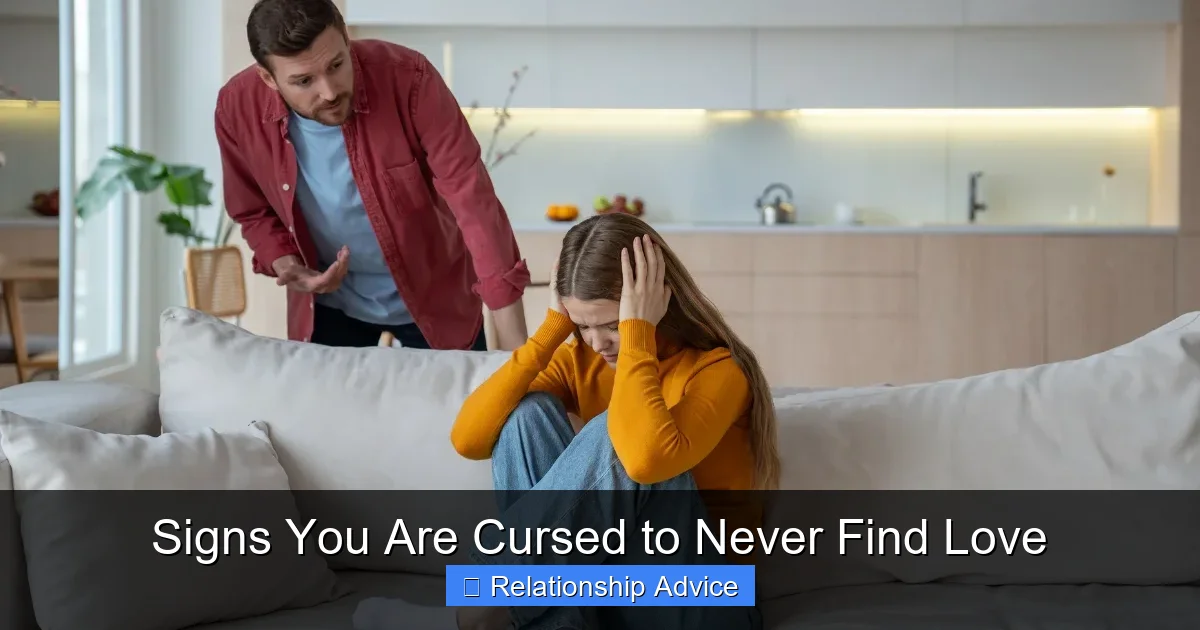
Feeling stuck in a cycle of loneliness or failed relationships? You might be wondering if you’re cursed to never find love. While no magical spell is to blame, certain patterns, mindsets, and behaviors can unintentionally push love away.
Key Takeaways
- You consistently attract the wrong partners: If you keep dating people who are emotionally unavailable or disrespectful, it may signal a pattern rooted in low self-worth or unresolved trauma.
- You sabotage relationships before they begin: Pushing people away, overanalyzing texts, or expecting rejection can create a self-fulfilling prophecy of loneliness.
- You idealize love but avoid vulnerability: Wanting deep connection but refusing to open up emotionally blocks intimacy and genuine bonding.
- You compare your love life to others’ highlight reels: Social media distorts reality and fuels insecurity, making you feel behind or unlovable.
- You’ve stopped believing love is possible for you: A fixed mindset about love can become a psychological barrier that prevents you from recognizing or accepting real opportunities.
- You neglect self-love and personal growth: Without inner fulfillment, you may rely on others to complete you—setting relationships up for failure.
- You’re stuck in past heartbreak: Unhealed wounds from previous relationships can cloud your judgment and distort your ability to trust new partners.
📑 Table of Contents
- Introduction: Is There Really a Curse on Your Love Life?
- You Keep Attracting the Same Type of Unavailable Partner
- You Sabotage Relationships Before They Even Begin
- You Idealize Love But Avoid True Vulnerability
- You Compare Your Love Life to Others’ Highlight Reels
- You’ve Stopped Believing Love Is Possible for You
- You Neglect Self-Love and Personal Growth
- You’re Still Stuck in Past Heartbreak
- Conclusion: You’re Not Cursed—You’re Capable
Introduction: Is There Really a Curse on Your Love Life?
Let’s be honest—there’s nothing more frustrating than wanting love deeply, putting yourself out there, and still ending up alone. You swipe, you date, you open your heart, and yet, nothing sticks. It starts to feel less like bad luck and more like… a curse. Like no matter what you do, love just slips through your fingers. You wonder: Am I cursed to never find love?
Before you start Googling ancient rituals or blaming a jealous ex, take a breath. The truth is, there’s no supernatural force keeping you single. What feels like a curse is often a mix of emotional patterns, limiting beliefs, and behaviors that quietly sabotage your chances at connection. The good news? These aren’t permanent. With awareness and effort, you can break the cycle and invite real, lasting love into your life.
In this article, we’ll explore the most common signs that might make you feel cursed—and more importantly, what you can do about them. Whether you’ve been single for years or keep dating the same type of unavailable person, understanding these patterns is the first step toward change. Love isn’t reserved for the lucky few. It’s available to anyone willing to do the inner work.
You Keep Attracting the Same Type of Unavailable Partner
One of the clearest signs you might feel cursed is when your dating history looks like a rerun of the same disappointing show. You meet someone charming, things start strong, and then—poof—they ghost, pull away, or reveal they’re “not ready for a relationship.” Sound familiar? If this keeps happening, it’s not bad luck. It’s a pattern.
Visual guide about Signs You Are Cursed to Never Find Love
Image source: realestlove.com
Why This Happens
Our subconscious often seeks familiarity, even when it’s unhealthy. If you grew up with emotionally distant parents or experienced early rejection, your brain may interpret “unavailable” as “safe” or “normal.” You’re drawn to people who mirror those early dynamics because, on some level, it feels predictable. But predictability doesn’t equal happiness.
For example, Sarah, a 32-year-old teacher, dated three men in a row who canceled plans last minute, took days to reply to texts, and avoided talking about the future. Each time, she told herself, “Maybe this time will be different.” But it never was. Only after therapy did she realize she was recreating the emotional neglect she experienced as a child.
How to Break the Cycle
- Identify your “type”: Write down the traits of your past partners. Are they all emotionally distant? Commitment-phobic? Do they have a history of failed relationships? Recognizing the pattern is the first step.
- Ask yourself why you’re drawn to them: What need do they fulfill? Is it excitement? Mystery? The thrill of the chase? Often, we’re attracted to what feels familiar, not what’s healthy.
- Set boundaries early: If someone can’t communicate clearly or respect your time, don’t wait for them to “change.” Walk away. Your time and energy are valuable.
- Date with intention: Instead of hoping someone will grow into the partner you want, look for people who already show up consistently. Actions matter more than words.
Breaking this cycle isn’t about finding the “perfect” person—it’s about choosing someone who aligns with the love you truly deserve.
You Sabotage Relationships Before They Even Begin
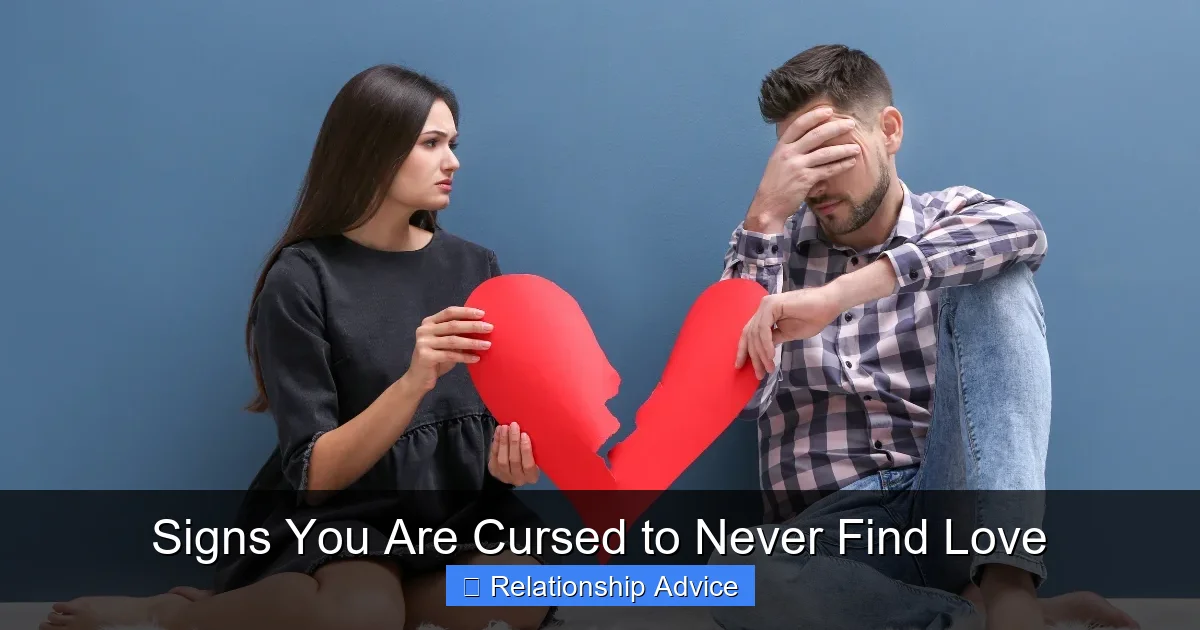
Ever met someone you really liked, only to suddenly find flaws in them? Or maybe you started overanalyzing their texts, convinced they’re losing interest? Or worse—you pulled away first, just to avoid getting hurt? If so, you might be sabotaging your own chances at love.
Visual guide about Signs You Are Cursed to Never Find Love
Image source: realestlove.com
The Psychology of Self-Sabotage
Self-sabotage often stems from fear—fear of rejection, fear of intimacy, or fear of being truly seen. When we expect love to hurt, our brain activates protective mechanisms. We might pick fights, withdraw emotionally, or create drama to push the other person away before they can leave us.
Take Mark, a 29-year-old software developer. He met a woman he really connected with, but after two weeks, he started imagining all the ways she might cheat on him. He began testing her loyalty by canceling plans and seeing if she’d chase him. She didn’t. He took it as proof she wasn’t serious—but really, he’d created the very outcome he feared.
Common Sabotage Behaviors
- Overanalyzing every interaction: Reading too much into a delayed text or a short reply.
- Playing hard to get: Deliberately withholding affection or availability to seem more desirable.
- Creating unnecessary drama: Picking fights or bringing up past issues to test the relationship.
- Pulling away when things get serious: Ending things just as the relationship starts to deepen.
How to Stop Sabotaging Your Love Life
- Practice self-awareness: When you feel the urge to pull back or test someone, pause. Ask yourself: Am I reacting to them, or to my own fears?
- Communicate your fears: Instead of acting out, say, “I really like you, but I get nervous when things move fast. Can we take it slow?” Honesty builds trust.
- Work on self-worth: Remind yourself that you’re worthy of love—even if it doesn’t work out. One rejection doesn’t define your value.
- Seek therapy: A therapist can help you uncover the root of your fears and develop healthier coping strategies.
Remember: Love isn’t a test. It’s a partnership. Stop trying to control the outcome and start allowing connection to unfold naturally.
You Idealize Love But Avoid True Vulnerability
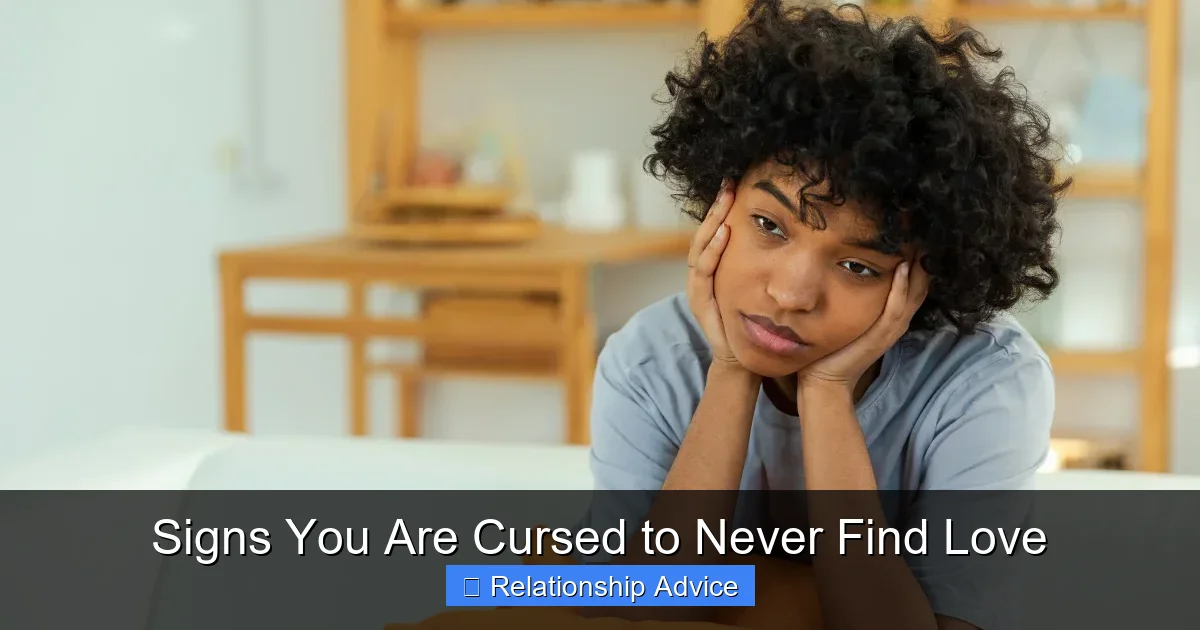
You dream of a fairy-tale romance—soulmates, grand gestures, endless passion. You watch romantic movies and scroll through couples’ photos, sighing, “Why can’t that be me?” But when it comes to real relationships, you shut down. You don’t share your feelings, avoid deep conversations, or keep your walls up. Sound like you?
Visual guide about Signs You Are Cursed to Never Find Love
Image source: realestlove.com
The Myth of the Perfect Love
We’re fed a fantasy of love: effortless, magical, and always exciting. But real love is messy. It requires honesty, compromise, and vulnerability. When we idealize love, we set ourselves up for disappointment. We expect perfection and reject anything that feels ordinary or challenging.
For instance, Lisa, a 35-year-old graphic designer, wanted a partner who would “just know” what she needed without her having to say it. When her boyfriend didn’t plan a surprise weekend getaway, she felt unloved—even though he showed affection in other ways, like cooking dinner and listening to her vent. She couldn’t see his love because it didn’t match her fantasy.
Why Vulnerability Feels Scary
Being vulnerable means risking rejection, judgment, or pain. If you’ve been hurt before, your instinct is to protect yourself. But walls don’t keep love out—they keep it from getting in. True intimacy only happens when both people are willing to be seen, flaws and all.
How to Embrace Vulnerability
- Start small: Share something personal—your favorite childhood memory, a fear, or a dream. Notice how the other person responds.
- Normalize imperfection: Remind yourself that no one is perfect. Love isn’t about finding someone flawless—it’s about accepting each other’s humanity.
- Practice emotional honesty: Instead of saying, “I’m fine,” try, “I’m feeling a bit overwhelmed today.” It invites connection.
- Be patient with yourself: Vulnerability is a skill. It takes time to build trust and feel safe opening up.
Love isn’t about grand gestures. It’s about showing up, being real, and allowing someone to see the real you.
You Compare Your Love Life to Others’ Highlight Reels
Scrolling through Instagram, you see couples posting sunset selfies, anniversary gifts, and “just engaged!” announcements. Your feed is full of love, and yours feels… empty. You start to wonder: Why am I cursed to never find love when everyone else seems to have it so easy?
The Danger of Social Media Comparisons
Social media is a highlight reel—not reality. People share their best moments, not their arguments, insecurities, or lonely nights. When you compare your behind-the-scenes to someone else’s highlight, it’s no wonder you feel behind. But here’s the truth: everyone struggles. Even the happiest couples have tough days.
Jenna, a 27-year-old nurse, felt crushed every time a friend posted a wedding photo. “Why am I still single?” she’d think. But she didn’t see the fights, the financial stress, or the loneliness her friends sometimes confessed in private. She was comparing her entire journey to a single snapshot.
How Comparison Fuels the “Curse” Feeling
- It creates false timelines: You feel like you “should” be in a relationship by now, based on societal expectations.
- It breeds insecurity: You start questioning your worth: “Am I not pretty enough? Funny enough? Worthy enough?”
- It distracts from your own journey: Instead of focusing on your growth, you’re obsessed with where others are.
How to Break Free from Comparison
- Limit social media use: Take breaks or unfollow accounts that trigger negative feelings.
- Remember: visibility ≠ happiness: Just because someone posts about love doesn’t mean they’re truly fulfilled.
- Focus on your progress: Celebrate small wins—going on a great date, having a deep conversation, or simply feeling more confident.
- Practice gratitude: Write down three things you’re grateful for about your life—your friends, your health, your independence.
Your love story isn’t behind. It’s just unfolding at its own pace. And that’s okay.
You’ve Stopped Believing Love Is Possible for You
After years of disappointment, you’ve started to believe that love just isn’t in the cards for you. You say things like, “I’m just not meant to be loved,” or “Maybe I’m better off alone.” This mindset—this belief that you’re cursed—can become a self-fulfilling prophecy.
The Power of Belief
Our beliefs shape our reality. If you believe you’re unlovable, you’ll act in ways that confirm that belief. You might avoid dating altogether, settle for less, or interpret neutral actions as rejection. Over time, this creates a loop: you expect to be alone, so you behave in ways that keep you alone.
David, a 40-year-old accountant, gave up on love after three long-term relationships ended in betrayal. “I’m just not lucky in love,” he’d say. He stopped dating, stopped putting himself out there, and convinced himself he was content alone. But deep down, he was lonely—and his belief kept him stuck.
How to Reclaim Your Belief in Love
- Challenge negative self-talk: When you think, “I’ll never find love,” ask: Is that really true? What evidence do I have?
- Reframe past experiences: Instead of seeing failed relationships as proof you’re cursed, see them as lessons that brought you closer to what you truly want.
- Visualize your ideal relationship: Spend time imagining what love feels like—not the fairy tale, but the everyday moments: laughter, support, shared goals.
- Take small steps: Go on one date. Join a hobby group. Say yes to an invitation. Action builds belief.
Belief isn’t magic—it’s momentum. The more you act as if love is possible, the more likely you are to attract it.
You Neglect Self-Love and Personal Growth
Here’s a hard truth: if you don’t love yourself, you won’t attract someone who truly loves you. Not because you’re unworthy—but because you’ll keep choosing partners who reflect your inner state. If you feel incomplete, you’ll seek someone to “fix” you. If you lack confidence, you’ll tolerate disrespect.
The Link Between Self-Love and Healthy Relationships
Self-love isn’t selfish. It’s the foundation of all healthy connections. When you value yourself, you set boundaries, communicate your needs, and walk away from anything less than you deserve. You don’t need love to feel whole—you bring wholeness to love.
Consider Maya, a 31-year-old writer who always felt “not enough.” She dated men who criticized her, ignored her, or made her feel small—because that’s what she believed she deserved. It wasn’t until she started therapy, journaling, and prioritizing her well-being that she attracted a partner who treated her with kindness and respect.
How to Cultivate Self-Love
- Practice self-compassion: Talk to yourself like you would a good friend. Replace “I’m such a failure” with “I’m learning and growing.”
- Set boundaries: Say no to things that drain you. Protect your time, energy, and peace.
- Invest in yourself: Take a class, start a hobby, travel solo. Build a life you love—with or without a partner.
- Celebrate your strengths: Write down three things you’re proud of about yourself every day.
- Seek support: Therapy, coaching, or support groups can help you heal and grow.
When you love yourself, you stop waiting for someone to complete you. You become the kind of person who attracts—and deserves—real love.
You’re Still Stuck in Past Heartbreak
That breakup from two years ago still stings. You replay the memories, wonder what you did wrong, and feel a pang of sadness when you see their name. Sound familiar? If you’re still emotionally tied to a past relationship, it’s hard to be fully present in a new one.
How Unhealed Wounds Block New Love
Unresolved grief, anger, or betrayal can cloud your judgment. You might project past pain onto new partners, expecting them to hurt you too. Or you might avoid intimacy altogether, fearing another heartbreak. Either way, the past becomes a barrier to the present.
For example, after her fiancé left her, Elena couldn’t trust anyone. She’d accuse new dates of lying or cheating—even when there was no evidence. Her fear wasn’t about them; it was about the pain of being abandoned again.
How to Heal and Move Forward
- Acknowledge your pain: Allow yourself to grieve. Journal, talk to a friend, or cry. Suppressing emotions prolongs healing.
- Forgive—not for them, but for you: Forgiveness doesn’t mean what happened was okay. It means you’re choosing peace over pain.
- Create closure: Write a letter you’ll never send. Burn it. Symbolically release the past.
- Focus on the present: When you catch yourself comparing a new partner to an ex, gently bring your mind back to the here and now.
Healing isn’t about forgetting. It’s about making peace with the past so you can embrace the future.
Conclusion: You’re Not Cursed—You’re Capable
Feeling cursed to never find love is a sign of deep longing, not destiny. It means you care. You want connection. You believe in love. And that’s a beautiful thing. The patterns we’ve explored—attracting the wrong people, sabotaging relationships, avoiding vulnerability—aren’t flaws. They’re survival strategies that once protected you. But now, they’re holding you back.
The good news? You have the power to change. Every step you take toward self-awareness, self-love, and emotional honesty brings you closer to the love you deserve. It won’t happen overnight. But it will happen—if you keep going.
So stop waiting for a miracle. Start with small acts of courage: send that text, share your feelings, believe in your worth. Love isn’t something that happens to you. It’s something you create—through your choices, your growth, and your willingness to be seen.
You’re not cursed. You’re becoming. And one day, you’ll look back and realize the “curse” was just the beginning of your journey to real, lasting love.
Frequently Asked Questions
Is it really possible to be cursed to never find love?
No, there’s no supernatural curse preventing you from finding love. What feels like a curse is usually a pattern of behaviors, beliefs, or emotional wounds that keep you from forming healthy relationships. With self-awareness and effort, these patterns can be changed.
Why do I keep dating the same type of person?
This often happens because your subconscious is drawn to familiar dynamics, even if they’re unhealthy. It may stem from childhood experiences or past relationships. Recognizing the pattern is the first step to breaking it.
How can I stop sabotaging my relationships?
Start by identifying your fears—fear of rejection, intimacy, or abandonment. Practice self-awareness, communicate openly, and consider therapy to uncover the root causes of your behavior.
What if I’ve given up on love?
It’s never too late to believe in love again. Challenge negative thoughts, take small steps toward connection, and focus on building a life you love. When you feel whole on your own, you’re more likely to attract a healthy partner.
How do I know if I’m ready for a relationship?
You’re ready when you’re no longer seeking a partner to fix you or complete you. You should feel relatively stable, self-aware, and willing to be vulnerable. It’s okay to still have fears—what matters is your willingness to grow.
Can therapy really help me find love?
Yes. Therapy can help you heal past wounds, build self-esteem, and develop healthier relationship patterns. Many people find that working on themselves is the most direct path to attracting lasting love.
