
Wondering how to catch a cheater that deletes everything? Even the most secretive partners leave digital and behavioral clues. This guide reveals practical, ethical strategies to uncover the truth—without invading privacy or breaking the law.
Key Takeaways
- Behavioral changes are often the first red flag: Sudden secrecy, emotional distance, or unexplained absences can signal infidelity—even if devices are wiped clean.
- Digital footprints remain even after deletion: Cloud backups, metadata, and app caches can retain traces of deleted messages, photos, or location history.
- Use ethical and legal methods only: Avoid hacking or installing spyware without consent—these can lead to legal trouble and damage trust permanently.
- Communication is key before confrontation: Approach the situation calmly and gather facts before accusing your partner to avoid misunderstandings.
- Professional help may be necessary: Therapists or private investigators can provide objective support when emotions run high.
- Prevention beats detection: Build trust, set boundaries, and maintain open communication to reduce the risk of cheating in the first place.
- Self-care matters most: Whether you confirm cheating or not, prioritize your mental health and well-being throughout the process.
📑 Table of Contents
- Introduction: The Pain of Suspicion in a Digital Age
- Understanding the Mindset of a Cheater Who Deletes Everything
- Behavioral Red Flags: What to Watch For
- Digital Clues: How to Find Evidence Even After Deletion
- Ethical and Legal Ways to Investigate
- What to Do If You Find Proof
- Prevention: Building a Relationship That Resists Cheating
- Conclusion: Truth, Trust, and Moving Forward
Introduction: The Pain of Suspicion in a Digital Age
You’ve noticed the signs—your partner comes home late, jumps at the sound of their phone, or suddenly starts deleting texts the moment you walk into the room. You ask about their day, and they give vague answers. You check their phone when they’re in the shower, only to find nothing. No messages. No photos. No call logs. It’s like they’ve scrubbed their digital life clean.
And that’s exactly what’s happening.
In today’s world, catching a cheater isn’t just about finding a suspicious text or catching them in a lie. It’s about navigating a landscape where people can delete everything—messages, photos, location history—with a few taps. They use encrypted apps, factory reset their devices, or switch to burner phones. They’re smart, careful, and increasingly skilled at covering their tracks.
But here’s the truth: **even the most careful cheater leaves behind clues**. You don’t need to be a detective or a hacker to uncover the truth. What you need is patience, awareness, and the right approach. This guide will walk you through how to catch a cheater that deletes everything—ethically, legally, and effectively.
We’ll explore the behavioral red flags, digital breadcrumbs, and practical steps you can take to protect yourself and your relationship. Whether you’re trying to confirm your suspicions or simply want to understand the signs, this article is for you.
Understanding the Mindset of a Cheater Who Deletes Everything
Visual guide about How to Catch a Cheater That Deletes Everything
Image source: hiddenpineapple.com
Before diving into detection methods, it’s important to understand *why* someone deletes everything. This isn’t just about hiding evidence—it’s about control, guilt, and fear.
Why Do Cheaters Delete Their Digital Traces?
People who cheat and delete everything often do so for several reasons:
– **Guilt and shame:** They know what they’re doing is wrong and want to avoid confrontation.
– **Fear of being caught:** They’re afraid of losing their partner, family, or reputation.
– **Desire to maintain dual lives:** They want to keep their affair secret while preserving their current relationship.
– **Overconfidence in technology:** They believe that deleting messages or using encrypted apps makes them invisible.
But here’s the catch: **deleting data doesn’t erase behavior**. In fact, the act of constant deletion can be a red flag in itself. If your partner is suddenly obsessed with clearing their phone, avoiding eye contact when using it, or refusing to let you see their screen, that’s a sign something’s off.
The Psychology Behind Secretive Behavior
Cheating isn’t just a physical act—it’s emotional. When someone is having an affair, their behavior often shifts in noticeable ways. They may become:
– More defensive or irritable when questioned
– Less emotionally available or affectionate
– Overly concerned with privacy (“Why do you need to see my phone?”)
– Suddenly interested in new hobbies or “working late” more often
These changes aren’t always about the affair itself—they’re about the internal conflict. The cheater is trying to balance two lives, and the stress shows.
Understanding this mindset helps you approach the situation with clarity. You’re not just looking for proof—you’re trying to understand what’s really going on.
Behavioral Red Flags: What to Watch For
Visual guide about How to Catch a Cheater That Deletes Everything
Image source: realestlove.com
Even if your partner deletes everything digital, their behavior often tells the real story. Here are the most common signs to look for.
Sudden Changes in Routine
Has your partner started working late—without a clear reason? Are they suddenly going to the gym every night or taking “business trips” on short notice? These changes might seem innocent, but when combined with other signs, they can be suspicious.
For example, if your partner used to come home by 6 p.m. but now says they’re “stuck at the office” until 8, and you notice they’re dressing nicer or wearing cologne they haven’t used in years, that’s a red flag.
Emotional Distance and Irritability
Cheaters often pull away emotionally. They may seem distant, uninterested in conversations, or quick to argue over small things. This isn’t always because they don’t love you—it’s because they’re emotionally invested elsewhere.
You might notice:
– They stop asking about your day
– They cancel plans last minute
– They seem annoyed when you’re affectionate
– They spend more time on their phone, even when you’re together
This emotional withdrawal is one of the hardest signs to ignore—and one of the most telling.
Increased Secrecy Around Devices
If your partner suddenly starts guarding their phone like it’s a state secret, take note. Examples include:
– Turning the screen away when you walk by
– Deleting messages immediately after reading them
– Using passwords they’ve never used before
– Refusing to let you use their phone, even for a simple task
Even if they claim it’s “just privacy,” this level of secrecy is unusual in a trusting relationship.
Unexplained Expenses or Missing Items
Affairs cost money. Look for:
– Unfamiliar charges on credit card statements (hotels, restaurants, gifts)
– Missing cash or frequent ATM withdrawals
– New clothes, jewelry, or grooming products with no explanation
These financial clues can be harder to hide than digital ones—especially if you share accounts.
Changes in Intimacy
A sudden drop in sexual interest—or, conversely, a sudden increase—can signal infidelity. Some cheaters pull away because they feel guilty. Others become more affectionate to “make up” for their actions.
Pay attention to patterns. Is your partner avoiding intimacy? Or are they suddenly more passionate than usual? Both can be signs of guilt or distraction.
Digital Clues: How to Find Evidence Even After Deletion
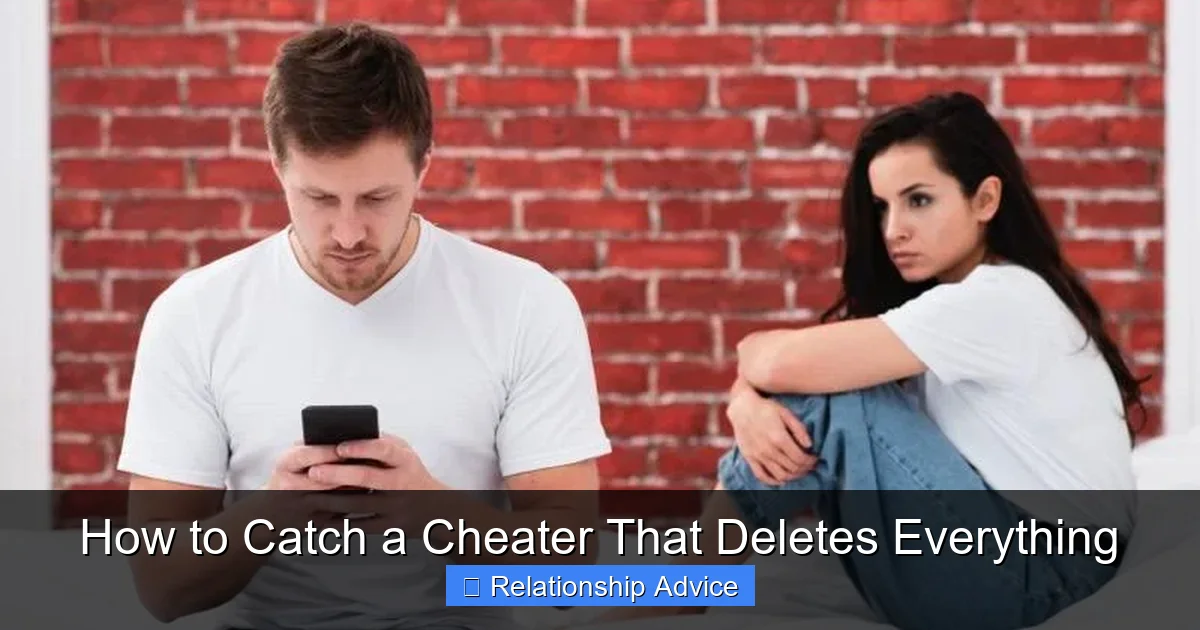
Visual guide about How to Catch a Cheater That Deletes Everything
Image source: famispy.com
Now, let’s talk about the digital side. Even if your partner deletes everything, traces often remain. Here’s how to find them—legally and ethically.
Check Cloud Backups and Syncing Services
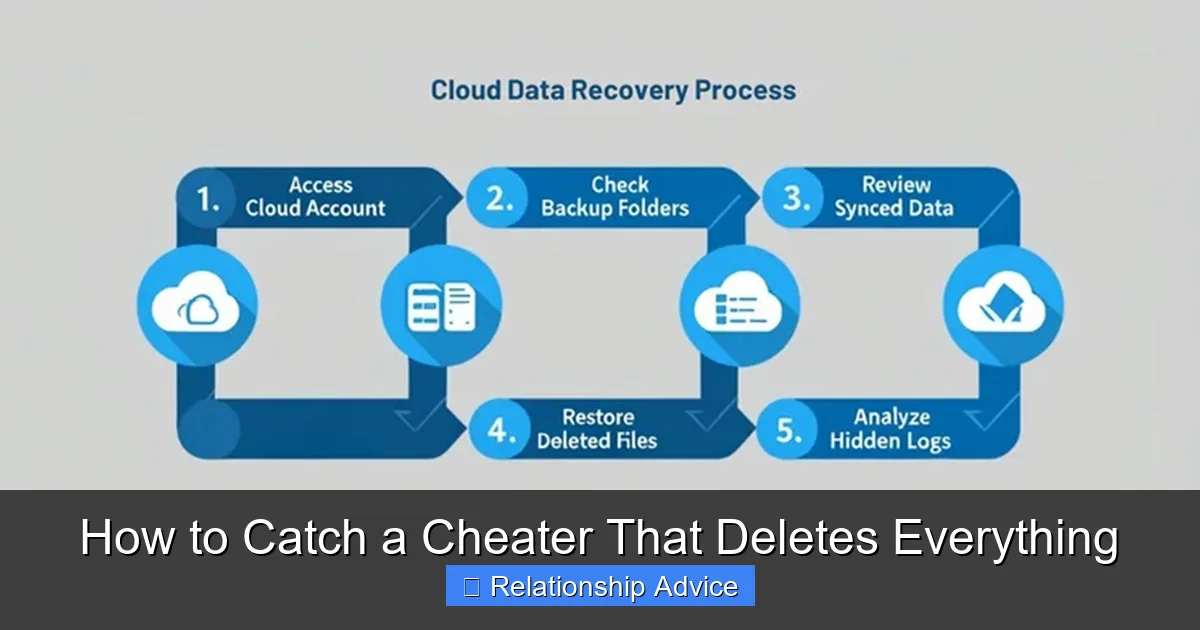
Most smartphones automatically back up data to the cloud—iCloud for iPhones, Google Drive for Android. Even if your partner deletes a photo or message, it may still exist in a backup.
For example:
– **iCloud:** Photos, messages, and call logs can be restored from backups. If your partner uses iCloud, you might find deleted content in the “Recently Deleted” folder (which keeps items for 30 days).
– **Google Photos:** Deleted photos often remain in the “Trash” folder for up to 60 days.
– **Google Messages:** If syncing is enabled, deleted texts may still appear on other devices (like a tablet or computer).
To check:
1. Ask your partner if they use cloud backups (don’t accuse—just ask casually).
2. If you have access to a shared device (like a family tablet), look for synced messages or photos.
3. Use your own account to see if any shared content appears (e.g., shared photo albums).
Look for Metadata in Photos and Files
Metadata is hidden data attached to photos, videos, and documents. It includes:
– Date and time taken
– GPS location
– Device model
– App used to create the file
Even if a photo is deleted, metadata can remain in backups or shared files.
For example, if your partner sends you a photo via email or messaging app, the metadata may still be embedded. You can view it using free tools like:
– **ExifTool** (for desktop)
– **Metapicz** (online metadata viewer)
This can reveal where and when a photo was taken—even if the image itself seems innocent.
Review App Usage and Screen Time
Both iPhone and Android track app usage and screen time. This data can show:
– Which apps are used most
– How long they’re used each day
– When they’re accessed (e.g., late at night)
If your partner suddenly spends hours on a messaging app they never used before—or if their screen time spikes at odd hours—that’s suspicious.
To check:
– On iPhone: Go to Settings > Screen Time > See All Activity
– On Android: Go to Settings > Digital Wellbeing & Parental Controls > Dashboard
You can also look for apps that are hidden or disguised (e.g., a calculator app that’s actually a vault for photos).
Monitor Location History (If Shared)
If you and your partner share location via Find My (iPhone) or Google Maps, you can see where they’ve been—even if they delete location data later.
Look for:
– Frequent visits to unfamiliar places (hotels, apartments, restaurants)
– Location pings at odd hours
– Gaps in location history (which may indicate they turned off sharing)
Note: You should only check location if you have consent or are in a shared account. Spying without permission can damage trust and may be illegal.
Check Email and Social Media for Clues
Even if texts are deleted, emails and social media messages may remain. Look for:
– Flirty or secretive messages in email drafts or sent folders
– Hidden or deleted social media interactions (e.g., old comments on photos)
– New accounts or aliases (search their name or email on platforms like Facebook, Instagram, or LinkedIn)
You can also use reverse image search (Google Images) to see if their photos appear on other profiles.
Ethical and Legal Ways to Investigate
It’s tempting to take drastic measures—install spyware, hack their accounts, or confront them publicly. But these actions can backfire. Here’s how to investigate responsibly.
Avoid Illegal Surveillance
Installing spyware (like mSpy or FlexiSPY) without consent is illegal in most countries. It can lead to:
– Criminal charges
– Civil lawsuits
– Permanent damage to your relationship
Even if you find proof, it may not be admissible in court—and it could make you look like the villain.
Use Open Communication
Instead of spying, try talking. Say something like:
> “I’ve noticed you’ve been distant lately, and I’m worried. Can we talk about what’s going on?”
This opens the door for honesty—without accusations. If they’re guilty, they may confess. If not, you’ve strengthened your communication.
Consider Couples Therapy
A therapist can help you both explore underlying issues—like trust, intimacy, or communication problems—that may be contributing to the suspicion.
Therapy isn’t just for couples on the brink. It’s a safe space to rebuild connection and address concerns before they escalate.
Hire a Licensed Private Investigator
If you’ve tried everything and still suspect cheating, a PI can help. They use legal methods—like surveillance and background checks—to gather evidence.
A good PI will:
– Respect privacy laws
– Provide documented proof (photos, reports)
– Help you make informed decisions
Just make sure they’re licensed and reputable.
What to Do If You Find Proof
Discovering infidelity is devastating. Here’s how to handle it with strength and clarity.
Stay Calm and Gather Your Thoughts
Don’t confront your partner in anger. Take time to process your emotions. Talk to a trusted friend, write in a journal, or see a counselor.
Ask yourself:
– What do I want from this relationship?
– Am I ready to forgive—or walk away?
– What support do I need right now?
Confront with Facts, Not Accusations
When you’re ready, have a calm, private conversation. Say:
> “I found [specific evidence], and I need to understand what’s going on.”
Avoid yelling or blaming. Focus on how their actions made you feel.
Listen to their response—but don’t accept lies or gaslighting.
Decide Your Next Steps
You have options:
– **Work on the relationship:** If both of you are willing, couples therapy can help rebuild trust.
– **Take a break:** Sometimes space is needed to heal and reflect.
– **End the relationship:** If trust is broken beyond repair, it may be time to move on.
There’s no right or wrong answer—only what’s best for you.
Prioritize Your Well-Being
Cheating affects your self-esteem, mental health, and future relationships. Be kind to yourself.
– Seek therapy or support groups
– Lean on friends and family
– Avoid isolating yourself
– Practice self-care (exercise, hobbies, mindfulness)
You deserve love, respect, and honesty.
Prevention: Building a Relationship That Resists Cheating
The best way to catch a cheater is to prevent cheating from happening in the first place. Here’s how.
Foster Open Communication
Talk regularly about your feelings, needs, and concerns. Create a safe space where both of you can be vulnerable.
Ask questions like:
– “How are you feeling about us lately?”
– “Is there anything we could improve?”
– “Do you feel connected to me?”
Set Healthy Boundaries
Discuss what’s acceptable in your relationship. For example:
– Is it okay to text coworkers late at night?
– Should you share passwords?
– How do you handle jealousy?
Clear boundaries reduce misunderstandings and build trust.
Spend Quality Time Together
Affairs often start when emotional needs aren’t met. Make time for each other:
– Date nights
– Shared hobbies
– Deep conversations
The more connected you feel, the less likely either of you is to seek connection elsewhere.
Address Issues Early
Don’t ignore problems like distance, resentment, or lack of intimacy. Address them before they grow.
Remember: Cheating is rarely about one person—it’s often a symptom of deeper issues in the relationship.
Conclusion: Truth, Trust, and Moving Forward
Catching a cheater that deletes everything is challenging—but not impossible. The key is to look beyond the digital void and focus on behavior, patterns, and communication.
You don’t need to become a detective or violate your partner’s privacy. With awareness, patience, and ethical methods, you can uncover the truth—and decide what’s best for your future.
Whether you find proof or not, this journey is about more than catching a cheater. It’s about understanding yourself, your needs, and what you deserve in a relationship.
Trust your instincts. Seek support. And above all, prioritize your well-being.
Because in the end, the most important relationship is the one you have with yourself.
Frequently Asked Questions
Can deleted text messages be recovered?
Yes, in some cases. Deleted messages may remain in cloud backups, app caches, or synced devices for days or weeks. However, recovery depends on the phone model, settings, and whether backups are enabled.
Is it legal to check my partner’s phone without permission?
No, accessing someone’s phone without consent can violate privacy laws and damage trust. Always use ethical, legal methods like open communication or shared accounts.
What if my partner uses encrypted apps like Signal or Telegram?
Encrypted apps are harder to monitor, but behavioral clues—like increased secrecy or emotional distance—can still reveal issues. Focus on patterns, not just digital evidence.
How can I tell if my partner is gaslighting me about cheating?
Gaslighting involves denial, blame-shifting, and making you doubt your reality. If they dismiss your concerns, call you paranoid, or refuse to discuss issues, it may be a red flag.
Should I confront my partner immediately if I suspect cheating?
Not necessarily. Gather your thoughts, consider the evidence, and choose a calm, private moment to talk. Accusations without proof can escalate conflict.
Can couples recover from infidelity?
Yes, many couples rebuild trust through therapy, honesty, and effort. But recovery requires commitment from both partners and a willingness to address underlying issues.
